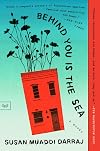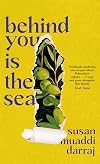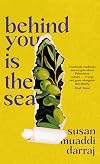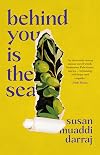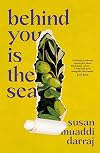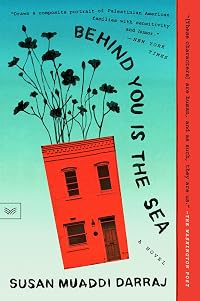
Behind You Is the Sea: A Novel
by Susan Muaddi Darraj
On This Page
Description
An exciting debut novel that gives voice to the diverse residents of a Palestinian American community in Baltimore-from young activists in conflict with their traditional parents to the poor who clean for the rich-lives which intersect across divides of class, generation, and religion. Funny and touching, Behind You Is the Sea brings us into the homes and lives of three main families-the Baladis, the Salamehs, and the Ammars-Palestinian immigrants who've all found a different welcome in show more America. Their various fates and struggles cause their community dynamic to sizzle and sometimes explode: The wealthy Ammar family employs young Maysoon Baladi, whose family struggles financially, to clean up after their spoiled teenagers. Meanwhile, Marcus Salameh, whose aunt married into the wealthy Ammar family, confronts his father in an effort to protect his younger sister for "dishonoring" the family. Only a trip to Palestine, where Marcus experiences an unexpected and dramatic transformation, can bridge this seemingly unbridgeable divide between the two generations. "Behind You Is the Sea" faces stereotypes about Palestinian culture head-on and, shifting perspectives to weave a complex social fabric replete with weddings, funerals, broken hearts, and devastating secrets. show lessTags
Recommendations

















Member Reviews
Book summary: Behind You Is the Sea, Susan Muaddi Darraj’s debut novel, brings readers into the lives of three Palestinian families in and around Baltimore: the Salamehs, the Baladis and the Ammars. Generational disputes form the core of the novel’s action, which unfolds through weddings, graduations, unplanned pregnancies and funerals. Women’s issues are also at the fore, as each of the novel’s chapters, which function as linked stories, reveal families both divided and united by class, gender and traditional values.
In the opening chapter, “A Child of Air,” teenage Reema Baladi resolves to keep her baby, while refusing to marry her Puerto Rican boyfriend. In “Mr. Ammar Gets Drunk at the Wedding,” Walid, patriarch of the show more wealthy Ammar family, despairs at the lack of Arab traditions at his oldest son’s wedding to an American. “Ride Along” focuses on a police officer, Marcus Salameh, and the rift between his father and his sister, Amal, over Amal’s perceived dishonor, a rupture which grows deeper after the death of their mother.
Darraj deftly explores class tensions in the titular chapter: When the Ammars employ young Maysoon Baladi as a housekeeper, she is shocked by the couple’s indolence and their spoiled teenage kids, but flirts openly with father and husband, Demetri. In a later chapter, Demetri’s daughter Hiba moves in with her grandparents after an embarrassing incident in college and an unspoken but deeply felt lack of support from her parents. The final chapter “Escorting the Body,” the only chapter not set in the United States, sees Marcus fulfilling his father’s wish to be buried in his Palestinian village, a visit which reveals dramatic secrets about the life he left behind.
Behind You Is the Sea draws a composite portrait of Palestinian American families with sensitivity and humor, its linked stories breaking down stereotypes and embracing complexity. show less
In the opening chapter, “A Child of Air,” teenage Reema Baladi resolves to keep her baby, while refusing to marry her Puerto Rican boyfriend. In “Mr. Ammar Gets Drunk at the Wedding,” Walid, patriarch of the show more wealthy Ammar family, despairs at the lack of Arab traditions at his oldest son’s wedding to an American. “Ride Along” focuses on a police officer, Marcus Salameh, and the rift between his father and his sister, Amal, over Amal’s perceived dishonor, a rupture which grows deeper after the death of their mother.
Darraj deftly explores class tensions in the titular chapter: When the Ammars employ young Maysoon Baladi as a housekeeper, she is shocked by the couple’s indolence and their spoiled teenage kids, but flirts openly with father and husband, Demetri. In a later chapter, Demetri’s daughter Hiba moves in with her grandparents after an embarrassing incident in college and an unspoken but deeply felt lack of support from her parents. The final chapter “Escorting the Body,” the only chapter not set in the United States, sees Marcus fulfilling his father’s wish to be buried in his Palestinian village, a visit which reveals dramatic secrets about the life he left behind.
Behind You Is the Sea draws a composite portrait of Palestinian American families with sensitivity and humor, its linked stories breaking down stereotypes and embracing complexity. show less
Behind You Is the Sea is a beautifully-written collection of intertwined stories following three different Palestinian-American families in Baltimore. I loved the writing and the way the characters were developed throughout the novel. I think this could have made a great character study given how it was written.
However, it felt like only the first and, occasionally, second chapters of each of these characters' lives. We got enough time with each character to just start to get invested in their stories, then it just ended. Occasionally, the characters would overlap in interactions between the families, but it was not enough to learn more about them or develop a plot. I would have appreciated fewer characters that we could have spent more show more time with, or come back to later. A character map would have also been nice, as it was difficult keeping track of how different characters were related or knew each other because of just how many characters there were. show less
However, it felt like only the first and, occasionally, second chapters of each of these characters' lives. We got enough time with each character to just start to get invested in their stories, then it just ended. Occasionally, the characters would overlap in interactions between the families, but it was not enough to learn more about them or develop a plot. I would have appreciated fewer characters that we could have spent more show more time with, or come back to later. A character map would have also been nice, as it was difficult keeping track of how different characters were related or knew each other because of just how many characters there were. show less
Behind You is the Sea, Susan Muaddi Darraj, author
There are several stories in this book, and most of them deal with the Arab immigrant, the Arab culture, their feelings of anxiety about being separated from their own people in the Middle East, the injustice of their culture toward the behavior of women, the acceptance of abominable behavior by men, the rigidity of some parents and the leniency of others as they adjust to living in the United States. This story takes place in Baltimore, Maryland. It covers the stories of several characters, each of whom finds their own way, coupled with joy and disappointment, success and failures. The difference in the lifestyle, moral and ethical codes of the way of life in their place of ancestry and show more their place of residence now, combined with their hopes and dreams, often created conflicts that became crises and were hard to reconcile, one way or another. In some cases, estrangement with both family members and the Middle East, was the consequence, in some cases, the dream of returning superseded all other aspirations.
My wish was to read this book with an open heart and an open mind ready to be compassionate, hoping to understand and be enlightened about the plight of the Arab who believed that a place called Palestine was their homeland. I hoped the novel would gently air the issue we face today, the issue of the inability to ever find a peaceful solution to the Middle East question.
I realized that the stories highlighted the trials of immigrants as they tried to adjust to the American way of life where it was easy to feel excluded or misunderstood. The main characters in this book are not religious radicals, but they are radically Arab. I do not mean that in a negative way, but to explain that they cling to their customs, as many of all origins cling to their own customs. Dishonoring the family is forbidden. As each character comes of age, or influences other family members, or chooses a life path that leads to either fulfillment or disappointment, their stories inspire empathy and a desire to learn more about their efforts and why their efforts work out happily or unfortunately.
Until the very last pages, the book highlighted the feeling of disappointment many of the characters had for their lives, and also their lack of a sense of responsibility for their failure to succeed. Some, like Marcus, did climb the ladder. He became a police officer and assimilated; some like his father, never would adjust and would always harbor anger and resentment. The stories about Alma, Rania, Reema, et al, all seemed sympathetic, but when it came to burying the father of Marcus and Alma, my understanding of the book’s message became harder to accept.
From the beginning, the book seemed to condemn Americans and their lifestyle, albeit subtly, which made it palatable. However, when the story ended with the body of Marcus Salameh being returned for burial to his family home in the Middle East, the message began to change. The abuses of the country that he blamed for ruling his people, were almost casually suggested, but that country was indeed, Israel. The blame for their lives in exile was placed squarely, not on their own shoulders for declaring war as soon as the state of Israel was recognized, but on the shoulders of the Jewish people who merely wanted to live in peace after the Holocaust. There was no mention of the United Nations vote to approve the state of Israel and a state for the Palestinians or of the refusal of the Arabs to accept the declaration.
The caretaker of Marcus’ father’s home was Rita. She was scarred emotionally and physically, presumably by Israelis, when she was imprisoned for throwing stones in the Intifada, a rebellion against the state of Israel. The reason that they are kept isolated and carefully monitored was not discussed, although it is because of the need to provide safety and security for Israelis. Suicide bombers and their desire to remove Israel from the map, as well as to exterminate the Jews, was never mentioned.
Therefore, the book seemed designed to promote the Arabs and to explain their plight. I get that, however, to ignore the reason for their plight, to place blame elsewhere, seemed disingenuous. Hence, when I got to the end, I was disappointed. I felt betrayed by the author and the publisher for pretending the book was not a “hit job” on Israel and the Jews, however, subtly.
Still, I thought it was written well, but the message for me, was horrific, since on October 7th, the barbaric massacre of Jews in Israel has still not faded from the news. To believe that. that behavior was justified, when no civilized people behave that way, is the theme that the Arabs are presenting to the public, this very day, with great support for antisemitism which should be condemned like any other form of hate, but it is encouraged by the radical left-wing that has taken a prominent place in society. This book is a tool in that tool box.
Therefore, I could not give the book the number of stars the writing perhaps deserved, because the message, for me, was incomplete. When, at the end, Marcus, the policeman expected to uphold the law in America, teaches Rita how to fire an illegal weapon, the book sent me to the depths of despair. That was the wrong message to end with since it is the rebellion, since 1948, that has caused the constant violence. This book too, is part of the problem, not the solution, and can possibly inspire more hatred and violence since it promotes and accepts violence as a viable outcome. The author could not have known, at the time of the writing of this book, of the barbaric attack on Israel on October 7th, that took the lives of more than a thousand Israelis and resulted in the kidnapping of more than 200 hostages. Israelis were murdered in their beds as they slept, were stolen from their beds, babies were roasted in ovens, young and old, male and female, were raped, defiled and mutilated, as the Arabs celebrated and congratulated each other on the death and destruction they had wrought. Israelis and Jews, no matter how you condemn them, have never behaved that way. Only barbarians like NAZIS, ISIS and HAMAS are capable of such inhumanity. Yet the Arabs were proud of their cruelty, and it inspired some to march in support of a system and a people that would just as soon murder them too. I condemn them for their outright genocide, for which they accuse others.
Until this madness ends, there will be more death and destruction. I cannot review the book more than this because I am emotionally involved as a Jewish woman who cannot understand the violence or hate or the lack of the Arab world's acceptance of their own people. They will not allow the Palestinians into their own sphere, yet they want Israel and the Jews to absorb and support them, them… those who want to exterminate them and make them extinct. No, a resounding no, that will never be acceptable. If this review is condemned, so be it. The truth is often hard to swallow. show less
There are several stories in this book, and most of them deal with the Arab immigrant, the Arab culture, their feelings of anxiety about being separated from their own people in the Middle East, the injustice of their culture toward the behavior of women, the acceptance of abominable behavior by men, the rigidity of some parents and the leniency of others as they adjust to living in the United States. This story takes place in Baltimore, Maryland. It covers the stories of several characters, each of whom finds their own way, coupled with joy and disappointment, success and failures. The difference in the lifestyle, moral and ethical codes of the way of life in their place of ancestry and show more their place of residence now, combined with their hopes and dreams, often created conflicts that became crises and were hard to reconcile, one way or another. In some cases, estrangement with both family members and the Middle East, was the consequence, in some cases, the dream of returning superseded all other aspirations.
My wish was to read this book with an open heart and an open mind ready to be compassionate, hoping to understand and be enlightened about the plight of the Arab who believed that a place called Palestine was their homeland. I hoped the novel would gently air the issue we face today, the issue of the inability to ever find a peaceful solution to the Middle East question.
I realized that the stories highlighted the trials of immigrants as they tried to adjust to the American way of life where it was easy to feel excluded or misunderstood. The main characters in this book are not religious radicals, but they are radically Arab. I do not mean that in a negative way, but to explain that they cling to their customs, as many of all origins cling to their own customs. Dishonoring the family is forbidden. As each character comes of age, or influences other family members, or chooses a life path that leads to either fulfillment or disappointment, their stories inspire empathy and a desire to learn more about their efforts and why their efforts work out happily or unfortunately.
Until the very last pages, the book highlighted the feeling of disappointment many of the characters had for their lives, and also their lack of a sense of responsibility for their failure to succeed. Some, like Marcus, did climb the ladder. He became a police officer and assimilated; some like his father, never would adjust and would always harbor anger and resentment. The stories about Alma, Rania, Reema, et al, all seemed sympathetic, but when it came to burying the father of Marcus and Alma, my understanding of the book’s message became harder to accept.
From the beginning, the book seemed to condemn Americans and their lifestyle, albeit subtly, which made it palatable. However, when the story ended with the body of Marcus Salameh being returned for burial to his family home in the Middle East, the message began to change. The abuses of the country that he blamed for ruling his people, were almost casually suggested, but that country was indeed, Israel. The blame for their lives in exile was placed squarely, not on their own shoulders for declaring war as soon as the state of Israel was recognized, but on the shoulders of the Jewish people who merely wanted to live in peace after the Holocaust. There was no mention of the United Nations vote to approve the state of Israel and a state for the Palestinians or of the refusal of the Arabs to accept the declaration.
The caretaker of Marcus’ father’s home was Rita. She was scarred emotionally and physically, presumably by Israelis, when she was imprisoned for throwing stones in the Intifada, a rebellion against the state of Israel. The reason that they are kept isolated and carefully monitored was not discussed, although it is because of the need to provide safety and security for Israelis. Suicide bombers and their desire to remove Israel from the map, as well as to exterminate the Jews, was never mentioned.
Therefore, the book seemed designed to promote the Arabs and to explain their plight. I get that, however, to ignore the reason for their plight, to place blame elsewhere, seemed disingenuous. Hence, when I got to the end, I was disappointed. I felt betrayed by the author and the publisher for pretending the book was not a “hit job” on Israel and the Jews, however, subtly.
Still, I thought it was written well, but the message for me, was horrific, since on October 7th, the barbaric massacre of Jews in Israel has still not faded from the news. To believe that. that behavior was justified, when no civilized people behave that way, is the theme that the Arabs are presenting to the public, this very day, with great support for antisemitism which should be condemned like any other form of hate, but it is encouraged by the radical left-wing that has taken a prominent place in society. This book is a tool in that tool box.
Therefore, I could not give the book the number of stars the writing perhaps deserved, because the message, for me, was incomplete. When, at the end, Marcus, the policeman expected to uphold the law in America, teaches Rita how to fire an illegal weapon, the book sent me to the depths of despair. That was the wrong message to end with since it is the rebellion, since 1948, that has caused the constant violence. This book too, is part of the problem, not the solution, and can possibly inspire more hatred and violence since it promotes and accepts violence as a viable outcome. The author could not have known, at the time of the writing of this book, of the barbaric attack on Israel on October 7th, that took the lives of more than a thousand Israelis and resulted in the kidnapping of more than 200 hostages. Israelis were murdered in their beds as they slept, were stolen from their beds, babies were roasted in ovens, young and old, male and female, were raped, defiled and mutilated, as the Arabs celebrated and congratulated each other on the death and destruction they had wrought. Israelis and Jews, no matter how you condemn them, have never behaved that way. Only barbarians like NAZIS, ISIS and HAMAS are capable of such inhumanity. Yet the Arabs were proud of their cruelty, and it inspired some to march in support of a system and a people that would just as soon murder them too. I condemn them for their outright genocide, for which they accuse others.
Until this madness ends, there will be more death and destruction. I cannot review the book more than this because I am emotionally involved as a Jewish woman who cannot understand the violence or hate or the lack of the Arab world's acceptance of their own people. They will not allow the Palestinians into their own sphere, yet they want Israel and the Jews to absorb and support them, them… those who want to exterminate them and make them extinct. No, a resounding no, that will never be acceptable. If this review is condemned, so be it. The truth is often hard to swallow. show less
A captivating view into the loose ties and close associations that shift with time for a family from a small community within a larger metropolitan area. It's about how people can surprise you, the changing expectations people hold for themselves, and how to boldly forge your own path.
Interconnected short stories told in a variety of voices tell the story of Palestinian Americans in the city of Baltimore in Susan Muaddi Darraj’s Behind You is the Sea. Darraj’s beautiful writing captures the emotions and individuality of a myriad of characters from young women to older men, and each story encapsulates a genuine narrative with deep meaning. Readers who love multi-point-of-view stories, diverse communities, and family sagas will definitely enjoy Behind You is the Sea.
Although the characters are Palestinians and Palestinian-Americans, the situations are universal. For me, it worked best as looking at each narrator individually rather than trying to link them together. I chose this for our library book discussion and it was a success.
I like interconnected stories! This book was that, and I enjoyed spotting the references to each. The timelines weren't always too clear, and probably weren't supposed to be. I kept having to go back and reread certain passages to figure out which timeline, at times. I hate to say that I couldn't really relate. I wanted to. I feel like I wasn't trying hard enough or something. I liked the author's writing style and content. I'm going to look up other works of hers.
Members
- Recently Added By
Lists

History: Asia
103 works; 1 member
Author Information

29+ Works 598 Members
Susan Muaddi Darraj is associate professor of English at Harford Community College in Bel Air, Maryland. She completed her M.A. in English literature at Rutgers University-Camden and has authored several titles for Chelsea House. Her book of short fiction, The Inheritance of Exile, was published in 2007. She currently serves as senior editor of show more the literary journal The Baltimore Review. show less
Awards and Honors
Awards
Distinctions
Notable Lists
Classifications
Statistics
- Members
- 351
- Popularity
- 89,981
- Reviews
- 9
- Rating
- (3.88)
- Languages
- English, Norwegian
- Media
- Paper, Audiobook, Ebook
- ISBNs
- 15
- ASINs
- 3