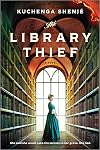
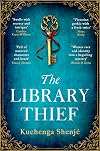
The Library Thief
by Kuchenga Shenjé
On This Page
Description
"A strikingly original and absorbing mystery about a white-passing bookbinder in Victorian England and the secrets lurking on the estate where we she works, for fans of Fingersmith and The Confessions of Frannie Langton The library is under lock and key. But its secrets can't be contained. 1896. After he brought her home from Jamaica as a baby, Florence's father had her hair hot-combed to make her look like the other girls. But as a young woman, Florence is not so easy to tame--and when she show more brings scandal to his door, the bookbinder throws her onto the streets of Manchester. Intercepting her father's latest commission, Florence talks her way into the remote, forbidding Rose Hall to restore its collection of rare books. Lord Francis Belfield's library is old and full of secrets--but none so intriguing as the whispers about his late wife. Then one night, the library is broken into. Strangely, all the priceless tomes remain untouched. Florence is puzzled, until she discovers a half-burned book in the fireplace. She realizes with horror that someone has found and set fire to the secret diary of Lord Belfield's wife-which may hold the clue to her fate.."-- show lessTags
Recommendations



















Member Reviews
It's 1896 and Florence Granger is helping her father in the family business Granger's Bookbinders in Manchester. Florence is disowned when she brings shame upon the family but before her father kicks her out onto the street, Grace intercepts a request from a valued client in Lancashire.
Florence travels to Rose Hall in Lancashire in her father's stead and talks her way into restoring the many rare books held in Lord Francis Belfield's personal library. Her position and standing is precarious, but her secret soon pales against the goings on at Rose Hall. Lord Belfield is a widower and it's not long before Florence becomes curious about his wife's untimely demise, convinced it wasn't an accident.
What transpires next in The Library Thief by show more Kuchenga Shenjé is a gothic mystery and upstairs/downstairs whodunnit and I was entertained the entire way. Early on, Florence is attending church when she gains her first real inkling about her local community and standing of the household she now resides in:
"In the first five pews sat the landed gentry with wives in black or navy satins and velvets, the most ostentatious in deep sapphires, emeralds and violets. All the husbands in the same uniform of morning suit with their hats laid next to them beside their well-trained children praying piously or with their eyes fixed ahead. I knew enough to avoid wearing anything made from loud rustling material, but I felt plain and shabby in my grey dress and threadbare shawl. We sat among the staff. Governesses, footmen, maids and gardeners; all clearly sat in order of importance within the small village, and then their own households." Page 20
Florence then goes on to acknowledge with some surprise that the social standing of her household in the area must be middling, given their pew position so far back in the church.
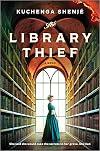
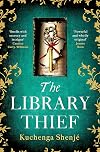
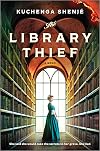
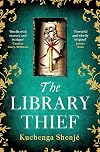
I'm a sucker for historical fiction novels about governesses (Mrs England by Stacey Halls) and I'll be loath to shelve this book because then I won't be able to enjoy seeing the cover design on my desk every day. (This happened with The Silent Companions by Laura Purcell too!)
In fact, The Library Thief by Kuchenga Shenjé definitely gave me Stacey Halls and Laura Purcell vibes, but the writing was definitely unique:
"In my experience, men of the cloth were quite learned folk, but something about him irked me. The smell of him, first of all, was somewhere between offal and the dank emissions from the corners of a pond that got no light." Page 86
What a description! I really enjoyed the setting at Rose Hall, Florence's relationships with the staff and of course Lord Francis. I love a good upstairs / downstairs tale however Shenjé somehow manages to keep the relationships relatable to today's sensibilities without disrespecting the historical setting.
I loved this description, and immediately felt like it could describe the relationship I enjoy with my husband:
"The jocularity between them was so well-grooved, it made me think of a carpenter bevelling the edges of wood, and the peels of wood curling up, making smooth laughing sounds along the way. They jostled and poked each other with the jokes that only they could make." Page 203
The Library Thief by Kuchenga Shenjé has a stunning cover design (the second absolute stand out design this year; the first being The Book of Doors by Gareth Brown) and delivers an historical gothic mystery about secrets, class, race, friendship, love, grief, female agency all wrapped up by a bookbinder poking about and asking questions. Perfect.
It's hard to believe The Library Thief is the author's debut novel, but Kuchenga Shenjé has definitely become an instant auto read for me, easily up there with Laura Purcell and Stacey Halls, highly recommended!
* Copy courtesy of Hachette * show less
Florence travels to Rose Hall in Lancashire in her father's stead and talks her way into restoring the many rare books held in Lord Francis Belfield's personal library. Her position and standing is precarious, but her secret soon pales against the goings on at Rose Hall. Lord Belfield is a widower and it's not long before Florence becomes curious about his wife's untimely demise, convinced it wasn't an accident.
What transpires next in The Library Thief by show more Kuchenga Shenjé is a gothic mystery and upstairs/downstairs whodunnit and I was entertained the entire way. Early on, Florence is attending church when she gains her first real inkling about her local community and standing of the household she now resides in:
"In the first five pews sat the landed gentry with wives in black or navy satins and velvets, the most ostentatious in deep sapphires, emeralds and violets. All the husbands in the same uniform of morning suit with their hats laid next to them beside their well-trained children praying piously or with their eyes fixed ahead. I knew enough to avoid wearing anything made from loud rustling material, but I felt plain and shabby in my grey dress and threadbare shawl. We sat among the staff. Governesses, footmen, maids and gardeners; all clearly sat in order of importance within the small village, and then their own households." Page 20
Florence then goes on to acknowledge with some surprise that the social standing of her household in the area must be middling, given their pew position so far back in the church.
I'm a sucker for historical fiction novels about governesses (Mrs England by Stacey Halls) and I'll be loath to shelve this book because then I won't be able to enjoy seeing the cover design on my desk every day. (This happened with The Silent Companions by Laura Purcell too!)
In fact, The Library Thief by Kuchenga Shenjé definitely gave me Stacey Halls and Laura Purcell vibes, but the writing was definitely unique:
"In my experience, men of the cloth were quite learned folk, but something about him irked me. The smell of him, first of all, was somewhere between offal and the dank emissions from the corners of a pond that got no light." Page 86
What a description! I really enjoyed the setting at Rose Hall, Florence's relationships with the staff and of course Lord Francis. I love a good upstairs / downstairs tale however Shenjé somehow manages to keep the relationships relatable to today's sensibilities without disrespecting the historical setting.
I loved this description, and immediately felt like it could describe the relationship I enjoy with my husband:
"The jocularity between them was so well-grooved, it made me think of a carpenter bevelling the edges of wood, and the peels of wood curling up, making smooth laughing sounds along the way. They jostled and poked each other with the jokes that only they could make." Page 203
The Library Thief by Kuchenga Shenjé has a stunning cover design (the second absolute stand out design this year; the first being The Book of Doors by Gareth Brown) and delivers an historical gothic mystery about secrets, class, race, friendship, love, grief, female agency all wrapped up by a bookbinder poking about and asking questions. Perfect.
It's hard to believe The Library Thief is the author's debut novel, but Kuchenga Shenjé has definitely become an instant auto read for me, easily up there with Laura Purcell and Stacey Halls, highly recommended!
* Copy courtesy of Hachette * show less
This book transported me to Victorian England while weaving a tale of mystery, scandal, and self-discovery against the backdrop of a remote estate and its mysterious inhabitants. Florence Granger, a young woman disowned by her father, finds herself entangled in a web of secrets as she undertakes the task of restoring Lord Francis Belfield's rare book collection at Rose Hall.
Shenjé's debut novel offers a setting reminiscent of classic Gothic mysteries (i.e., Victoria Holt) that drew me into a world filled with intrigue and tension. From the moment Florence arrives at Rose Hall, the sense of foreboding is evident, setting the stage for a compelling narrative filled with twists and turns.
The novel explores complex themes such as racism, show more colorism, sexual abuse, and gender identity within the confines of Victorian society. Shenjé adeptly confronts these issues, providing a thought-provoking examination of the social norms and prejudices of the time. I found it quite “uncomfortable” at times to read.
I did find myself struggling a bit with the execution of the plot. The story became overly complicated and somewhat tedious.
Still, "The Library Thief" is a captivating read with its haunting narrative and fresh take on the Victorian mystery genre.
I received an advance copy from the publisher. The opinions expressed here are my own. show less
Shenjé's debut novel offers a setting reminiscent of classic Gothic mysteries (i.e., Victoria Holt) that drew me into a world filled with intrigue and tension. From the moment Florence arrives at Rose Hall, the sense of foreboding is evident, setting the stage for a compelling narrative filled with twists and turns.
The novel explores complex themes such as racism, show more colorism, sexual abuse, and gender identity within the confines of Victorian society. Shenjé adeptly confronts these issues, providing a thought-provoking examination of the social norms and prejudices of the time. I found it quite “uncomfortable” at times to read.
I did find myself struggling a bit with the execution of the plot. The story became overly complicated and somewhat tedious.
Still, "The Library Thief" is a captivating read with its haunting narrative and fresh take on the Victorian mystery genre.
I received an advance copy from the publisher. The opinions expressed here are my own. show less
First off: if you haven't yet read the publisher's blurb for the The Library Thief at the top of its GoodReads page, DON'T. There's a spoiler in it that will have a significant effect on how you experience the unfolding of the plot.
That said...
The Library Thief is neither a full-on mystery nor a full-on Gothic, but it has elements of both and makes for an engaging read. Florence, a bookbinder's daughter who hopes to work in the same field—and who has been banished from her home—takes on a job doing major repairs on a Lord's rare book collection. A job that just happens to come with room and board.
Florence is living in an uneasy, liminal space. No longer welcome at the not-all-that-welcoming home in which she was raised, she's now show more living on the "downstairs" side of the upstairs-downstairs divide. When Lord Belfield tells her she should give up her dreams of attending university or making a living binding and repairing books, that becoming a governess would be a great step up for her and probably as high as she can hope to go, she smiles politely and nods. His "generosity" in employing Florence is the only thing standing between her and homelessness.
There are tensions and a mystery in Lord Belfield's home. His younger brother, furious at not being the heir, is constantly asking for money and urging Belfield to sell family heirlooms. The brother also feels free to force his sexual "favors" on any woman with a class standing lower than his. The mystery involves the death of Lord Belfield's wife, who apparently went out walking in the middle of the night and fell from a local bridge. Out of respect to Belfield, the death isn't being investigated by police, but it is fodder for lots of local gossip. Most locals are happy to accused Lady Belfield's lady's maid—who just happened to be Black—because, you know, "they're not like us."
This gives you a good sense of all that's roiling beneath the surface in this book. As Florence becomes convinced Lady Belfield was murdered and begins her own hunt for the culprit, her situation grows increasingly dangerous.
If you enjoy mysteries/Gothics with independent heroines who are willing to take all sorts of risks and if you enjoy rooting for downstairs in that upstairs-downstairs divide, you're in for a treat with The Library Thief.
I received a free electronic review copy of this title from the publisher via NetGalley; the opinions are my own. show less
That said...
The Library Thief is neither a full-on mystery nor a full-on Gothic, but it has elements of both and makes for an engaging read. Florence, a bookbinder's daughter who hopes to work in the same field—and who has been banished from her home—takes on a job doing major repairs on a Lord's rare book collection. A job that just happens to come with room and board.
Florence is living in an uneasy, liminal space. No longer welcome at the not-all-that-welcoming home in which she was raised, she's now show more living on the "downstairs" side of the upstairs-downstairs divide. When Lord Belfield tells her she should give up her dreams of attending university or making a living binding and repairing books, that becoming a governess would be a great step up for her and probably as high as she can hope to go, she smiles politely and nods. His "generosity" in employing Florence is the only thing standing between her and homelessness.
There are tensions and a mystery in Lord Belfield's home. His younger brother, furious at not being the heir, is constantly asking for money and urging Belfield to sell family heirlooms. The brother also feels free to force his sexual "favors" on any woman with a class standing lower than his. The mystery involves the death of Lord Belfield's wife, who apparently went out walking in the middle of the night and fell from a local bridge. Out of respect to Belfield, the death isn't being investigated by police, but it is fodder for lots of local gossip. Most locals are happy to accused Lady Belfield's lady's maid—who just happened to be Black—because, you know, "they're not like us."
This gives you a good sense of all that's roiling beneath the surface in this book. As Florence becomes convinced Lady Belfield was murdered and begins her own hunt for the culprit, her situation grows increasingly dangerous.
If you enjoy mysteries/Gothics with independent heroines who are willing to take all sorts of risks and if you enjoy rooting for downstairs in that upstairs-downstairs divide, you're in for a treat with The Library Thief.
I received a free electronic review copy of this title from the publisher via NetGalley; the opinions are my own. show less
A murky, confusing story, deliberately so from what I could tell. The hidden agenda embraced a multitude of topics ranging from feminism and women's suffrage in the late 1800's to rape, the legacy of slavery, and British imperialism ~ all too much to roll into the personal story of a very young woman cast aside by a father for a scandal the reader never discovers.
The plot whipsawed around all these themes and only barely touched on the most expected theme: books, the library and a literary mystery. Chapters hare off tangentially to expound on these political themes only to return to the main characters in the story as if their place in the narrative is to change the course of lives for people of non-white lineage. A most unsatisfying show more read and one that needed a heavy editing before publication. show less
The plot whipsawed around all these themes and only barely touched on the most expected theme: books, the library and a literary mystery. Chapters hare off tangentially to expound on these political themes only to return to the main characters in the story as if their place in the narrative is to change the course of lives for people of non-white lineage. A most unsatisfying show more read and one that needed a heavy editing before publication. show less
“1896. After he brought her home from Jamaica as a baby, Florence's father had her hair hot-combed to make her look like the other girls. But as a young woman, Florence is not so easy to tame—and when she brings scandal to his door, the bookbinder throws her onto the streets of Manchester. Intercepting her father's latest commission, Florence talks her way into the forbidding Rose Hall to restore its rare books. Lord Francis Belfield's library is old and full of secrets—but none so intriguing as the whispers about his late wife…”
This was an enjoyable read, but the ‘surprise twists’ were so clearly telegraphed they weren’t any surprise at all. It also wasn’t nearly as shocking as it tried to be, and the bookish/book show more binding aspect of the story was minimal. That said, it explored the ideas of colonialism, being mixed race in an oppressive society, the feelings and difficulties involved in passing as white in that society. And not only the oppression of being a minority, but a minority woman who isn’t of higher class, at the mercy of “noble” men who are used to getting what they want, when they want it, who consider those beneath them as inherently “lesser.” But it’s also a story of self discovery, community, and found family.
While this is historical fiction, there’s a lot that isn’t necessarily historically accurate, but the broad strokes are there. If you’re interested in stories of Victorian England that aren’t just all about rich, straight, white aristocracy, then there’s a lot in this book to love. show less
This was an enjoyable read, but the ‘surprise twists’ were so clearly telegraphed they weren’t any surprise at all. It also wasn’t nearly as shocking as it tried to be, and the bookish/book show more binding aspect of the story was minimal. That said, it explored the ideas of colonialism, being mixed race in an oppressive society, the feelings and difficulties involved in passing as white in that society. And not only the oppression of being a minority, but a minority woman who isn’t of higher class, at the mercy of “noble” men who are used to getting what they want, when they want it, who consider those beneath them as inherently “lesser.” But it’s also a story of self discovery, community, and found family.
While this is historical fiction, there’s a lot that isn’t necessarily historically accurate, but the broad strokes are there. If you’re interested in stories of Victorian England that aren’t just all about rich, straight, white aristocracy, then there’s a lot in this book to love. show less
Florence arrives on the doorstop of Lord Belfield's home, claiming to have been sent by her father to perform duties as a bookbinder. Through persuasion Florence able to secure employment. As Florence begins the task of repairing the books, she discovers a mystery surrounding the death of Lord Belfield’s wife Persephone. A mystery that Florence is compelled to solve no matter the personal cost.
The main character is Florence, as she goes on her journey, we are allowed to see the influences good and bad that have shaped her past and influence her future. Florence soon realises as a woman she has limited autonomy, an insecure financial outlook and that having a mind of your own can be a dangerous thing. Florence is book-smart she is not show more very life-smart and some of the issues she comes across are completely new to her. As Florence is exposed more to the personal circumstances those around her face, she endeavours to be accepting and supportive. However, seeing this through Florence’s view tends to lessen the impact that they themselves feel in being ostracised. Being limited to experiencing every situation through Florence’s point of view meant a reliance on her empathy and comprehension of the situation. For me, there was just a tad too much character introspection that just slowed the story, as Florence tried to resolve her internal conflicts.
The supporting characters are well drawn on the page, are vibrant and all have secrets. Each of them assists or hinders Florence and invariably become a prime suspect in who murdered Persephone. The relationship between Florence and Lord Belfield is dynamic and complex, as you are never sure just where it will go. Wesley is the much-needed confidante, who is forced to hide their true self. The women who come into Florence’s world, all have their own motives, hopes and dreams.
At the beginning you feel that this is going to be a gothic mystery and there are shades of Rebecca, Jane Eyre, Fingersmith. About the halfway mark, the story takes a slightly different direction and there is a sprinkling of the Dictionary of Lost Words with women’s rights at the time explored.
Shenje has a clear sense of narrative direction and weaves into the story messaging around race, sexuality, identity, violence, social structures, misogyny, and power imbalance. This is not lectured at you but deftly highlighted in the story through the characters and their actions.
It is a strong debut, giving voice to characters normally silenced in history and providing a much needed feeling of hope at the end.
I was provided a copy of the book to review by Hachette Australia & New Zealand. show less
The main character is Florence, as she goes on her journey, we are allowed to see the influences good and bad that have shaped her past and influence her future. Florence soon realises as a woman she has limited autonomy, an insecure financial outlook and that having a mind of your own can be a dangerous thing. Florence is book-smart she is not show more very life-smart and some of the issues she comes across are completely new to her. As Florence is exposed more to the personal circumstances those around her face, she endeavours to be accepting and supportive. However, seeing this through Florence’s view tends to lessen the impact that they themselves feel in being ostracised. Being limited to experiencing every situation through Florence’s point of view meant a reliance on her empathy and comprehension of the situation. For me, there was just a tad too much character introspection that just slowed the story, as Florence tried to resolve her internal conflicts.
The supporting characters are well drawn on the page, are vibrant and all have secrets. Each of them assists or hinders Florence and invariably become a prime suspect in who murdered Persephone. The relationship between Florence and Lord Belfield is dynamic and complex, as you are never sure just where it will go. Wesley is the much-needed confidante, who is forced to hide their true self. The women who come into Florence’s world, all have their own motives, hopes and dreams.
At the beginning you feel that this is going to be a gothic mystery and there are shades of Rebecca, Jane Eyre, Fingersmith. About the halfway mark, the story takes a slightly different direction and there is a sprinkling of the Dictionary of Lost Words with women’s rights at the time explored.
Shenje has a clear sense of narrative direction and weaves into the story messaging around race, sexuality, identity, violence, social structures, misogyny, and power imbalance. This is not lectured at you but deftly highlighted in the story through the characters and their actions.
It is a strong debut, giving voice to characters normally silenced in history and providing a much needed feeling of hope at the end.
I was provided a copy of the book to review by Hachette Australia & New Zealand. show less
According to Florence‘s father, she committed something so immortal he couldn’t have her in his house anymore.
He kicked her out, but not before she saw a letter from a man who needed his books rebound.
Florence scooped up the letter and made her way to Mr. Belfield’s estate Rose Hall.
When she arrived, Mr. Belfield refused to have her there since he had just recently been widowed and it wouldn't look right.
She talked him into keeping her.
Florence really wasn’t welcomed by the household staff except for Wesley.
She made the best of her stay and the best of what Mr. Belfield offered.
She spent her days repairing books and befriending Wesley.
While she was there she found out there was more than rare books needing to be repaired.
Quite a show more few secrets were hiding within the walls of Rose Hall and many conniving characters. There are also some delicate subjects discussed.
The storyline and eloquent writing will pull you into this Gothic-themed book with a mystery to solve and somewhat likable characters. 4/5
Thank you to the publisher for a copy of this book. All opinions are my own. show less
He kicked her out, but not before she saw a letter from a man who needed his books rebound.
Florence scooped up the letter and made her way to Mr. Belfield’s estate Rose Hall.
When she arrived, Mr. Belfield refused to have her there since he had just recently been widowed and it wouldn't look right.
She talked him into keeping her.
Florence really wasn’t welcomed by the household staff except for Wesley.
She made the best of her stay and the best of what Mr. Belfield offered.
She spent her days repairing books and befriending Wesley.
While she was there she found out there was more than rare books needing to be repaired.
Quite a show more few secrets were hiding within the walls of Rose Hall and many conniving characters. There are also some delicate subjects discussed.
The storyline and eloquent writing will pull you into this Gothic-themed book with a mystery to solve and somewhat likable characters. 4/5
Thank you to the publisher for a copy of this book. All opinions are my own. show less
Members
- Recently Added By
Lists

Library Historical Fiction
160 works; 1 member
Author Information
3 Works 168 Members
Some Editions
Awards and Honors
Awards
Common Knowledge
- Canonical title
- The Library Thief
- Original publication date
- 2024
- People/Characters
- Florence Granger; Lord Francis Belfield
- Important places
- Lancashire, England, UK; Manchester, England, UK
- Publisher's editor
- Key, Tilda
- Blurbers
- Carty-Williams, Candice; Burn, Joanne; Thomas, Cari; Berry, Freya; Thomas, Stacey; Lumsden, Katie
Classifications
Statistics
- Members
- 166
- Popularity
- 197,723
- Reviews
- 13
- Rating
- (3.60)
- Languages
- English
- Media
- Paper, Audiobook, Ebook
- ISBNs
- 10
- ASINs
- 2