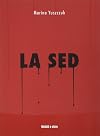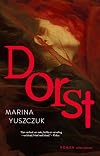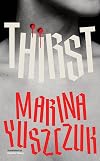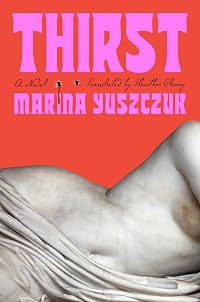
Thirst: A Novel
by Marina Yuszczuk
On This Page
Description
"Across two different time periods, two women confront fear, loneliness, mortality, and a haunting yearning that will not let them rest. A breakout, genre-blurring novel from one of the most exciting new voices of Latin America's feminist Gothic. It is the twilight of Europe's bloody bacchanals, of murder and feasting without end. In the nineteenth century, a vampire arrives from Europe to the coast of Buenos Aires and, for the second time in her life, watches as villages transform into a show more cosmopolitan city, one that will soon be ravaged by yellow fever. She must adapt, intermingle with humans, and be discreet. In present-day Buenos Aires, a woman finds herself at an impasse as she grapples with her mother's terminal illness and her own relationship with motherhood. When she first encounters the vampire in a cemetery, something ignites within the two women - and they cross a threshold from which there's no turning back. With echoes of Mary Shelley's Frankenstein and written in the vein of feminist Gothic writers like Shirley Jackson, Daphne du Maurier, and Carmen Maria Machado, Thirst plays with the boundaries of genre while exploring the limits of female agency, the consuming power of desire, and the fragile vitality of even the most immortal of creatures"-- show lessTags
Recommendations



Member Reviews
"No one knows what it means to be as I am. No one can imagine. Humans have invented countless stories in which those of my kind have no life of our own; if I might be permitted a moment of lyricism, we exist only to populate their nightmares. They could never understand this insatiable thirst."
This is a story in two parts. In part 1, we follow a nameless woman as she is turned into a vampire. She at first is brought into a group of vampires, but they're all killed except for her. She is forced to fend for herself in the shadows and flees from Europe to Argentina.
Part 2 follows a mortal woman named Alma who is distantly connected to our vampire. She is related to a cemetery worker who befriended and protected our vampire. Alma's mother show more is slowly and painfully dying. Before she does pass, her mother gives Alma a key... A key that opens our vampire's coffin.
This is gothic and very lyrical.
3.5 stars rounded up.
Thank you Penguin Group Dutton for giving me an advanced review copy of this book in exchange for an honest review. show less
This is a story in two parts. In part 1, we follow a nameless woman as she is turned into a vampire. She at first is brought into a group of vampires, but they're all killed except for her. She is forced to fend for herself in the shadows and flees from Europe to Argentina.
Part 2 follows a mortal woman named Alma who is distantly connected to our vampire. She is related to a cemetery worker who befriended and protected our vampire. Alma's mother show more is slowly and painfully dying. Before she does pass, her mother gives Alma a key... A key that opens our vampire's coffin.
This is gothic and very lyrical.
3.5 stars rounded up.
Thank you Penguin Group Dutton for giving me an advanced review copy of this book in exchange for an honest review. show less
Dull and flat. This reads like the Wikipedia summary of the prequel to the actual lesbian vampire novel that this is marketed as being; like the author was hoping to blind you with enough Themes and Murder and (Heterosexual) Sex that you don't notice that she doesn't have anything to say. And okay, not every book has to have a Capital P Point, some of them can just be Romps or have Fun Characters. But this is not a romp, it's just campy without any sense that Marina Yuszczuk is having fun with it being campy, and the vampire character is so stupid that it's like reading a book about an amoral golden retriever.
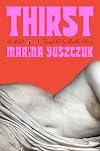
At least the cover is a banger.
At least the cover is a banger.
The two halves of this book felt entirely separate.
The first follows a vampire recounting her life first as a sort of bride of Dracula, then, as times change in Europe, a hunted animal, before fleeing to Buenos Aires where she watches the city change through the 19th century. She is a creature of impulse, driven by her thirst and her lust with regard for little else, even as she is forced to adapt to a developing, urbanized landscape that is increasingly hostile to her kind and her way of life. At times she is a fascinating character to view the history of Buenos Aires through, though there are points where her simple nature makes the narrative a bit repetitive.
In the second half, Alma, a woman in modern-day Buenos Aires, grapples show more with grief and a fixation on death as she tries to balance caring for her young son and making peace with her terminally ill mother’s slow decline. Her story was more grounded and human before its intersection with the vampire plot line and this was quite well written.
While I was intrigued by both halves, they weren’t brought together as well as I hoped and the conclusion was fairly lackluster. The choices the protagonists made at the end felt incongruous with their characterization and priorities up to that point, particularly for Alma whose perspective we follow at the end. show less
The first follows a vampire recounting her life first as a sort of bride of Dracula, then, as times change in Europe, a hunted animal, before fleeing to Buenos Aires where she watches the city change through the 19th century. She is a creature of impulse, driven by her thirst and her lust with regard for little else, even as she is forced to adapt to a developing, urbanized landscape that is increasingly hostile to her kind and her way of life. At times she is a fascinating character to view the history of Buenos Aires through, though there are points where her simple nature makes the narrative a bit repetitive.
In the second half, Alma, a woman in modern-day Buenos Aires, grapples show more with grief and a fixation on death as she tries to balance caring for her young son and making peace with her terminally ill mother’s slow decline. Her story was more grounded and human before its intersection with the vampire plot line and this was quite well written.
While I was intrigued by both halves, they weren’t brought together as well as I hoped and the conclusion was fairly lackluster. The choices the protagonists made at the end felt incongruous with their characterization and priorities up to that point, particularly for Alma whose perspective we follow at the end. show less
Lo bueno: tiene todo el potencial para ser una novela de la concha de la lora.
Lo malo: no lo es, y termina por ser frustrante.
Por un lado se anima a explorar una historia de género y le da unos cuantos giros muy interesantes. La implantación rioplatense y los guiños a personajes y eventos de la historia de Buenos Aires son ingeniosos y a veces hasta relevantes. Pero por otro lado se ciñe tanto a los códigos de la novela de vampiros que termina siendo cliché. La primera parte tiene incluso algunos tropezones que parecen más bien apuro por cerrar el manuscrito final.
La parte más orgánica me pareció la seguidilla de reflexiones y emociones sobre la enfermedad de la madre. Eso, sumado a la suerte de liberación forzada a través show more del duelo y la carga erótica de una vida que se transforma desde una cuasi agresión hipnótica, te dan una aproximación al tema muy inteligente.
Pero siento que le faltan unas cien páginas de desarrollo a la historia y a sus personajes, y que le sobran un montonazo de frases al texto.
Me gustó pero me decepcionó. En cierto momento le dije a alguien "bueno, tiene estos lugares comunes, sí, pero es YA", y cuando me respondieron que supuestamente no lo era fue como... "ah." show less
Lo malo: no lo es, y termina por ser frustrante.
Por un lado se anima a explorar una historia de género y le da unos cuantos giros muy interesantes. La implantación rioplatense y los guiños a personajes y eventos de la historia de Buenos Aires son ingeniosos y a veces hasta relevantes. Pero por otro lado se ciñe tanto a los códigos de la novela de vampiros que termina siendo cliché. La primera parte tiene incluso algunos tropezones que parecen más bien apuro por cerrar el manuscrito final.
La parte más orgánica me pareció la seguidilla de reflexiones y emociones sobre la enfermedad de la madre. Eso, sumado a la suerte de liberación forzada a través show more del duelo y la carga erótica de una vida que se transforma desde una cuasi agresión hipnótica, te dan una aproximación al tema muy inteligente.
Pero siento que le faltan unas cien páginas de desarrollo a la historia y a sus personajes, y que le sobran un montonazo de frases al texto.
Me gustó pero me decepcionó. En cierto momento le dije a alguien "bueno, tiene estos lugares comunes, sí, pero es YA", y cuando me respondieron que supuestamente no lo era fue como... "ah." show less
Review of Uncorrected eBook File
In the nineteenth century, a woman becomes a vampire and travels to a new home, only to discover the area is in the throes of a pandemic. She realizes that no one understands what it is like to be what she is, even though people have invented a variety of stories to explain her kind. As Buenos Aires grows, so does the woman, finding ways to fit in, to keep herself undiscovered.
In the present day, Alma, a woman struggling with her mother’s terminal illness, meets the vampire woman in a cemetery.
What lies ahead for the two women?
=========
The story, told in the first person, follows the lives of two women, the vampire and Alma. Both grab the reader’s attention; their situations are well-explained. The show more portion of the story dealing with the outbreak of yellow fever is particularly strong; throughout the telling of the tale, an eerie feeling underscores the unfolding narrative.
The narrative is atmospheric and melancholy, less a tale of vampires than it is an introspective contemplation of loneliness, grief, and survival. Though the narrative is dark, the emotion-filled prose is lush but the denouement may not be what the reader expects [or desires].
I received a free copy of this book from PENGUIN GROUP Dutton, Dutton and NetGalley and am voluntarily leaving an honest review.
#Thirst #NetGalley show less
In the nineteenth century, a woman becomes a vampire and travels to a new home, only to discover the area is in the throes of a pandemic. She realizes that no one understands what it is like to be what she is, even though people have invented a variety of stories to explain her kind. As Buenos Aires grows, so does the woman, finding ways to fit in, to keep herself undiscovered.
In the present day, Alma, a woman struggling with her mother’s terminal illness, meets the vampire woman in a cemetery.
What lies ahead for the two women?
=========
The story, told in the first person, follows the lives of two women, the vampire and Alma. Both grab the reader’s attention; their situations are well-explained. The show more portion of the story dealing with the outbreak of yellow fever is particularly strong; throughout the telling of the tale, an eerie feeling underscores the unfolding narrative.
The narrative is atmospheric and melancholy, less a tale of vampires than it is an introspective contemplation of loneliness, grief, and survival. Though the narrative is dark, the emotion-filled prose is lush but the denouement may not be what the reader expects [or desires].
I received a free copy of this book from PENGUIN GROUP Dutton, Dutton and NetGalley and am voluntarily leaving an honest review.
#Thirst #NetGalley show less
I def wanted to like this one more than I did, that said, I’m still glad that I read it.
I think the idea I had that I was getting a sapphic vampire lit story was somewhat mis-marketed, though there are sapphic situations happening, it’s really not that or even close to the focus. Which is why I picked it up, so that left something to be desired, for me. I will say that I think the themes of death, rebirth, fear and arousal, and motherhood and grief, were all interesting and there were def lines I highlighted and will stick with me, but the overall story and characters fell a little flat for me in the writing somehow, and I am def more of a character reader over themes, plots, and vibes.
I think the idea I had that I was getting a sapphic vampire lit story was somewhat mis-marketed, though there are sapphic situations happening, it’s really not that or even close to the focus. Which is why I picked it up, so that left something to be desired, for me. I will say that I think the themes of death, rebirth, fear and arousal, and motherhood and grief, were all interesting and there were def lines I highlighted and will stick with me, but the overall story and characters fell a little flat for me in the writing somehow, and I am def more of a character reader over themes, plots, and vibes.
Interesante historia de vampirismo gótico con sabor nacional. Me parecio sobre todo interesante usar el trasfondo real de la epidemia de fiebre amarilla en la Buenos Aires del s.XIX. La historia del presente es baja un poco el interés pero en general muy entretenida y oscura.
Members
- Recently Added By
Lists

Best Lesbian Fiction (And Narrative Non-Fiction)
155 works; 36 members

Best LGBT Fiction
144 works; 25 members

Favorite Books in Translation
320 works; 133 members

2024 Horror Books
121 works; 1 member

LGBTQ+ Speculative Fiction
821 works; 51 members

Best Vampire & Werewolf Fiction
221 works; 146 members
Author Information

8 Works 249 Members
Some Editions
Common Knowledge
- Original title
- La sed
- Original language
- Spanish
Classifications
- Genres
- Fiction and Literature, General Fiction, Horror
- DDC/MDS
- 863.7 — Literature & rhetoric Spanish Literature Spanish fiction 21st Century
- LCC
- PQ7798.435 .U89 .S4313 — Language and Literature French, Italian, Spanish and Portuguese literatures Spanish literature Provincial, local, colonial, etc. Spanish America
- BISAC
Statistics
- Members
- 239
- Popularity
- 136,390
- Reviews
- 12
- Rating
- (3.31)
- Languages
- Dutch, English, Spanish
- Media
- Paper, Audiobook, Ebook
- ISBNs
- 16
- ASINs
- 5