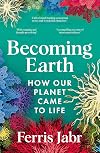
Becoming Earth: How Our Planet Came to Life
by Ferris Jabr
On This Page
Description
"The notion of a living world is one of humanity's oldest beliefs. Though scorned by scientists in the sixties and seventies, the facts supporting this concept have now become tenets of modern Earth system science, a relatively young field that studies the living and nonliving components of the planet as an integrated whole. Life did not evolve passively in response to its environment, as scientists have long assumed. Instead, it evolved with Earth, shaping its climate and terrain at every show more scale, one part in a great orchestra, in which non-living elements-the air, rocks, and water-are the instruments that life, in its multitudes, has emerged to play. Jabr transports the reader to some of the world's most extraordinary places--an underwater kelp forest on the coast of California, a vertiginous tower above the Amazon rainforest, and a former gold mine two miles below the Earth's surface--to explain how these symbiotic relationships evolved. He shows us how plants and other photosynthetic organisms help maintain the right level of atmospheric oxygen to support complex life. We see how microorganisms participate in many geological processes, producing new minerals and converting rock from one state to another; some scientists think they played a crucial role in forming the continents. In these pages we learn that large mammals maintain grasslands and prevent permafrost from melting; coral reefs and shellfish store huge amounts of carbon, buffer ocean acidity, improve water quality, and defend shorelines from severe weather; and so much more"-- show lessTags
Recommendations







Member Reviews
Being not familiar with any of Jabr's previous writing, at least that I can remember, I had mixed reactions to this book. If nothing else though, he does use our increasing understanding of the world as a system to make a pretty good argument for something you might as well call the "Gaia" concept, that living creatures down to the bacterial level (maybe especially so), have a great impact on the wider environment.
Less good is that I probably learned more about Jabr than I really wanted, though that's an occupational hazard of books such as this.
Least good is that this kind of journalism is already a moving target, as Jabr can write how a solid impact has been made on getting world carbon dioxide levels under control, whereas now the show more United States has an administration committed to allowing the fossil-fuel industry to make a fast buck as though tomorrow doesn't matter. show less
Less good is that I probably learned more about Jabr than I really wanted, though that's an occupational hazard of books such as this.
Least good is that this kind of journalism is already a moving target, as Jabr can write how a solid impact has been made on getting world carbon dioxide levels under control, whereas now the show more United States has an administration committed to allowing the fossil-fuel industry to make a fast buck as though tomorrow doesn't matter. show less
A fascinating book. Well written science journalism which is brimming with science. How life transforms earth.
Ratings
Members
- Recently Added By
Lists

2025 Notable Books for Adults
26 works; 1 member
Author Information
1+ Work 168 Members
Awards and Honors
Awards
Distinctions
Notable Lists
Common Knowledge
- Original publication date
- 2024-06-25
Classifications
Statistics
- Members
- 170
- Popularity
- 192,225
- Reviews
- 2
- Rating
- (4.13)
- Languages
- English, Spanish
- Media
- Paper, Audiobook, Ebook
- ISBNs
- 10
- ASINs
- 3