Wide Awake: The Forgotten Force that Elected Lincoln and Spurred the Civil War
by Jon Grinspan
On This Page
Description
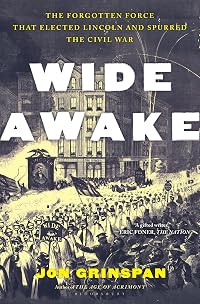
"At the start of the 1860 presidential campaign, a handful of fired-up young Northerners appeared as bodyguards to defend anti-slavery stump speakers from frequent attacks. The group called themselves the Wide Awakes. Soon, hundreds of thousands of young White and Black men, and a number of women, were organizing boisterous, uniformed, torch-bearing brigades of their own. These Wide Awakes--mostly working-class Americans in their twenties--became one of the largest, most spectacular, and show more most influential political movements in our history. To some, it demonstrated the power of a rising majority to push back against slavery. To others, it looked like a paramilitary force training to invade the South. Within a year, the nation would be at war with itself, and many on both sides would point to the Wide Awakes as the mechanism that got them there."-- show lessTags
Recommendations







Member Reviews
Ken Burns has spurred much of my interest in history. The Civil War was one of his first epic series, and I taped it each evening when it was on and wore out the tapes watching it. Then, I moved to Virginia and found myself in the middle of it all. Fortunately, my DH loves being outside so was willing to visit battlefields. He was the one who encouraged me to buy a tiny piece of the Cedar Creek battlefield.
That being said, I had never heard of the Wide Awakes until Jon Grinspan's book describing this organization created by working-class young men in Hartford, Connecticut that spread rapidly across the North in the run up to the war. They were not necessarily abolitionists; instead, they wanted to curtail the Slave Power of the show more Democrats, stop the spread of slavery and keep the union together. They also strongly supported free speech, something that was being challenged in the South as anti-slavery papers were attacked with their presses destroyed and editors beaten and killed.
They would march at midnight, dressed in black capes and brandishing torches. Their symbol was an eye and their main purpose was to wake people up to injustice. They supported Republicans, Lincoln especially, and were themselves financially supported by wealthy, older Republicans who had no interest in marching but could fund uniforms, travel and food expenses for these young rebels. They were largely meant to be anti-violent but as the country inched closer to war, they found themselves frequently met with resistance from Democrats, particularly when they ventured south of the Mason Dixon line. After the election, many of the groups transformed into militias that eventually fought in the war. While white men made up the bulk of the membership, there were Black Wide Awake organizations.
The book was fascinating. Grinspan made a strong case for how important this movement was in getting Lincoln elected. He showed how these young men were connected to the major players from William Seward to Elizabeth Cady Stanton. They marched along with Lincoln when he visited Hartford in 1860. Grinspan followed them into the post-war period when many moved away from their idealism as they gained power, including limiting free speech amongst those they hated including the labor movement. Funny how that happens.
Grinspan does credit them with understanding the importance of show and seeing what was happening in front of them. He suggests that our current situation helps us understand why they were important:
"Among the uncanny elements of their movement, the most recognizable to us today may be the conception of American democracy as a noisy, confrontational, symbolic performance, just on the edge of a fight" (p. 254)
There is a contemporary wide awake movement with the slogan "the past is present." There was much in this book that connected past and present.
If I have an complaint, it is that there were A LOT of names. I could have used an organizational chart and roster.
Grinspan is a curator of political history at the Museum of American History and the museum has a webpage dedicated to them with commentary from Grinspan, images of the artifacts and links to other resources. show less
That being said, I had never heard of the Wide Awakes until Jon Grinspan's book describing this organization created by working-class young men in Hartford, Connecticut that spread rapidly across the North in the run up to the war. They were not necessarily abolitionists; instead, they wanted to curtail the Slave Power of the show more Democrats, stop the spread of slavery and keep the union together. They also strongly supported free speech, something that was being challenged in the South as anti-slavery papers were attacked with their presses destroyed and editors beaten and killed.
They would march at midnight, dressed in black capes and brandishing torches. Their symbol was an eye and their main purpose was to wake people up to injustice. They supported Republicans, Lincoln especially, and were themselves financially supported by wealthy, older Republicans who had no interest in marching but could fund uniforms, travel and food expenses for these young rebels. They were largely meant to be anti-violent but as the country inched closer to war, they found themselves frequently met with resistance from Democrats, particularly when they ventured south of the Mason Dixon line. After the election, many of the groups transformed into militias that eventually fought in the war. While white men made up the bulk of the membership, there were Black Wide Awake organizations.
The book was fascinating. Grinspan made a strong case for how important this movement was in getting Lincoln elected. He showed how these young men were connected to the major players from William Seward to Elizabeth Cady Stanton. They marched along with Lincoln when he visited Hartford in 1860. Grinspan followed them into the post-war period when many moved away from their idealism as they gained power, including limiting free speech amongst those they hated including the labor movement. Funny how that happens.
Grinspan does credit them with understanding the importance of show and seeing what was happening in front of them. He suggests that our current situation helps us understand why they were important:
"Among the uncanny elements of their movement, the most recognizable to us today may be the conception of American democracy as a noisy, confrontational, symbolic performance, just on the edge of a fight" (p. 254)
There is a contemporary wide awake movement with the slogan "the past is present." There was much in this book that connected past and present.
If I have an complaint, it is that there were A LOT of names. I could have used an organizational chart and roster.
Grinspan is a curator of political history at the Museum of American History and the museum has a webpage dedicated to them with commentary from Grinspan, images of the artifacts and links to other resources. show less
atlas obscura - I'm not much into history but this looks absolutely fascinating
Ratings
Members
- Recently Added By
Lists

Thriller Authors to read
59 works; 1 member
Author Information

4 Works 203 Members
Awards and Honors
Awards
Notable Lists
Classifications
- Genres
- History, Nonfiction, General Nonfiction
- DDC/MDS
- 973.7 — History & geography History of North America United States Civil War Era (1857-1865)
- LCC
- E440 .G796 — History of the United States United States Revolution to the Civil War, 1775/1783-1861 By period Middle nineteenth century, 1845/1848-1861 Buchanan's administration, 1857-1861 State of the country, November 1860-
- BISAC
Statistics
- Members
- 78
- Popularity
- 407,033
- Reviews
- 2
- Rating
- (4.33)
- Languages
- English
- Media
- Paper, Audiobook, Ebook
- ISBNs
- 2
- ASINs
- 2