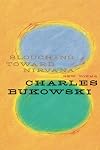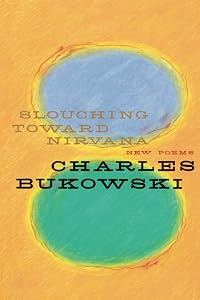
Slouching Toward Nirvana: New Poems
by Charles Bukowski
On This Page
Description
"Charles Bukowski is one of America's best-known contemporary writers of poetry and prose, and, many would claim, its most influential and imitated poet. He was born in Andernach, Germany, to an American soldier father and a German mother in 1920, and brought to the United States at the age of three. He was raised in Los Angeles and lived there for fifty years. He published his first story in 1944 when he was twenty-four and began writing poetry at the age of thirty-five. He died in San show more Pedro, California, on March 9, 1994, at the age of seventy-three, shortly after completing his last novel, Pulp (1994)."--Jacket. show lessTags
Recommendations








Member Reviews
Reading Bukowski I feel a bit like I'm getting away with something and might get caught at any moment. Maybe an English professor will come out of the shadows to sternly admonish me that this is "not real poetry."
Whether it is real or not, Bukowski's writing is uncomfortable to me in all the ways that poetry ought to be. It is rough and the sound is ordinary, but the depth of it is easy to see after only a few poems. I don't want to say that there are hidden meanings or, worse, teachable moments in here, so much as I want to say that I keep sinking into the pieces and they change my mind.
If a professor does come around the corner to admonish me, I'll hit him upside his head with the book and tell him to beat it before I kick his ass.
Whether it is real or not, Bukowski's writing is uncomfortable to me in all the ways that poetry ought to be. It is rough and the sound is ordinary, but the depth of it is easy to see after only a few poems. I don't want to say that there are hidden meanings or, worse, teachable moments in here, so much as I want to say that I keep sinking into the pieces and they change my mind.
If a professor does come around the corner to admonish me, I'll hit him upside his head with the book and tell him to beat it before I kick his ass.
Its a book thats melancholy and makes you wonder what the worth of life is if its just going to turn out like this. I dont know what makes the writing good besides the realism.
Poem after poem after poem....spot on. So much good stuff....
Ratings
Members
- Recently Added By
Published Reviews
ThingScore 50
Bukowski’s free verse is really a series of declarative sentences broken up into a long, narrow column, the short lines giving an impression of speed and terseness even when the language is sentimental or clichéd. The effect is as though some legendary tough guy, a cross between Philip Marlowe and Paul Bunyan, were to take the barstool next to you, buy a round, and start telling his life show more story...
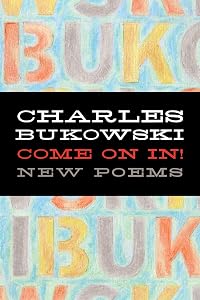
Death has not put a dent in Bukowski’s productivity; this is his ninth posthumous book of poems, and there are more to come. Nor has it changed his style: these “new poems” are just like the old poems, perhaps a shade more repetitive, but not immediately recognizable as second-rate work or leftovers... Even at his most unheroic, he is the hero of his stories and poems, always demanding the reader’s covert approval. That is why he is so easy to love, especially for novice readers with little experience of the genuine challenges of poetry; and why, for more demanding readers, he remains so hard to admire. show less
Death has not put a dent in Bukowski’s productivity; this is his ninth posthumous book of poems, and there are more to come. Nor has it changed his style: these “new poems” are just like the old poems, perhaps a shade more repetitive, but not immediately recognizable as second-rate work or leftovers... Even at his most unheroic, he is the hero of his stories and poems, always demanding the reader’s covert approval. That is why he is so easy to love, especially for novice readers with little experience of the genuine challenges of poetry; and why, for more demanding readers, he remains so hard to admire. show less
added by SnootyBaronet
Author Information

546+ Works 53,005 Members
Charles Bukowski was born in Andernach, Germany, on August 16, 1920. He came to the United States with his parents when he was three years old and spent his early years in poverty. As a young man he was a transient, doing odd jobs. He lived most of his live in boarding houses in the Los Angeles area. He attended Los Angeles City College briefly. show more He worked for the United States Postal Service for about ten years. Bukowski was at home with street people and his work contains a brutal realism and graphic imagery. He began publishing short stories in the mid-1940s. Starting with Flower, Fist and Bestial Wail in 1959, he produced poetry collections almost once a year. His following had grown by the time his collection of poetry about down-and-outers titled It Catches My Heart in Its Hands appeared in 1963. His short story collections include Dirty Old Man and Ejaculations, Exhibitions and General Tales of Ordinary Madness. His novels, with an autobiographical character called Henry Chinaski, include Post Office and Factotum. Bukowski wrote the screenplay for the 1987 motion picture Barfly. He later wrote about the filming of Barfly in his novel, Hollywood. Bukowski died in San Pedro, California, on March 9, 1994. (Bowker Author Biography) show less
Work Relationships
Is abridged in
Common Knowledge
- Original publication date
- 2005
- Dedication
- None
- Publisher's editor
- John Martin
Classifications
Statistics
- Members
- 404
- Popularity
- 77,126
- Reviews
- 3
- Rating
- (3.86)
- Languages
- English
- Media
- Paper, Ebook
- ISBNs
- 3
- ASINs
- 3