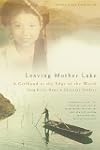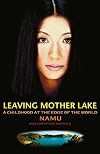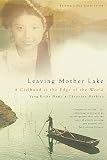
Leaving Mother Lake: A Girlhood at the Edge of the World
by Yang Erche Namu
On This Page
Description
The haunting memoir of a girl growing up in the Moso country in the Himalayas -- a unique matrilineal society. But even in this land of women, familial tension is eternal. Namu is a strong-willed daughter, and conflicts between her and her rebellious mother lead her to break the taboo that holds the Moso world together -- she leaves her mother's house.Tags
Recommendations



Member Reviews
“Moso women are not sullied by sexual shame – for sex, as I have now discovered, is a much-favored source of disgrace in the world. But quite aside from this sexual freedom, which has proved so fascinating to revolutionaries, journalists, social scientists, public health officials, and in more recent years, international tourists, we Moso abide by rules of honor that forbid us the dubious pleasures of malicious gossip.”
And here we are….with, often, puritanical views of sex that lead to shame and guilt, but have no problem tearing others down with malicious gossip. Maybe there’s something to be learned from the Moso people.
This was an interesting and easy to read memoir guided by Yang Erche Namu’s recollections of her show more childhood in the Himalayas in a place the Chinese call “The Country of Daughters,” and written by Christine Matthieu. As the author indicates, what we mostly think of matriarchal societies are mostly matriliny, a system in which inheritance is passed through maternal lines, but women are still often controlled by family males instead of husbands. However, the Moso value women and create their families through the women in their families. The matriarch of the family oversees, but does not rigidly rule, the home and work output. Much has changed for them since the Cultural Revolution and the insistence on declaring “marriages” which went against their tradition of “walking marriage” (the man visits the woman’s bedroom. Incidentally…there is a somewhat humorous anecdote as to how a woman tells a man they are through that would be akin to the modern? Impersonal “texting” termination), tourism, education, younger ones leaving and returning, etc.
However, this book is more than just about the Moso. It’s about the complicated relationship between mothers and daughters and the concept of “coming home” and “feeling at home.” As a refugee child (I came to the US as the age of 10) there were aspects of this book that felt very relatable. The pull between a mother’s traditions and a new way of living. The not feeling like you belong, yet do belong, to both worlds.
📚
I liked it (although there were sections that were a bit drawn out and there were times I felt a little disengaged …not sure if me or the writing), but there was an aspect of it that was “interesting” to me and I need to think more about it. What was it about “Namu” that made her walk away and have the nerve to do all that she did afterward, considering she was a product of such a cloistered (geographically) and women-bound cultural group? Was it that her mother paved her way through her own act of rebellion? Her own unique personality? I wouldn’t mind knowing more about Namu. show less
And here we are….with, often, puritanical views of sex that lead to shame and guilt, but have no problem tearing others down with malicious gossip. Maybe there’s something to be learned from the Moso people.
This was an interesting and easy to read memoir guided by Yang Erche Namu’s recollections of her show more childhood in the Himalayas in a place the Chinese call “The Country of Daughters,” and written by Christine Matthieu. As the author indicates, what we mostly think of matriarchal societies are mostly matriliny, a system in which inheritance is passed through maternal lines, but women are still often controlled by family males instead of husbands. However, the Moso value women and create their families through the women in their families. The matriarch of the family oversees, but does not rigidly rule, the home and work output. Much has changed for them since the Cultural Revolution and the insistence on declaring “marriages” which went against their tradition of “walking marriage” (the man visits the woman’s bedroom. Incidentally…there is a somewhat humorous anecdote as to how a woman tells a man they are through that would be akin to the modern? Impersonal “texting” termination), tourism, education, younger ones leaving and returning, etc.
However, this book is more than just about the Moso. It’s about the complicated relationship between mothers and daughters and the concept of “coming home” and “feeling at home.” As a refugee child (I came to the US as the age of 10) there were aspects of this book that felt very relatable. The pull between a mother’s traditions and a new way of living. The not feeling like you belong, yet do belong, to both worlds.
📚
I liked it (although there were sections that were a bit drawn out and there were times I felt a little disengaged …not sure if me or the writing), but there was an aspect of it that was “interesting” to me and I need to think more about it. What was it about “Namu” that made her walk away and have the nerve to do all that she did afterward, considering she was a product of such a cloistered (geographically) and women-bound cultural group? Was it that her mother paved her way through her own act of rebellion? Her own unique personality? I wouldn’t mind knowing more about Namu. show less
Deep in the mountains on the China-Tibet border, 2685 meters above sea level, lies Lake Lugu and the Moso people. Known as the Country of Daughters, this society has lived relatively cut off from the rest of the world. While these people are said to be matriarchal, it is actually a bit more complex than that, as Mathieu, the anthropologist of this book explains. Because of their remoteness and their customs that seem so unusual to the outside world, the Moso are not easily understood. While they may not be matriarchal, they are matrilineal - blood ties are determined by maternity rather than paternity. This makes complete sense because of their tradition of walking marriages whereby sexual relationships between men and women are not show more monogamous.
With this book, the reader is introduced not only to this culture, but also to a rare example of an individual from this culture that has made a way and a name for herself in the outside world. The daughter of a rebel who wanted to join the communist party, Yang became a rebel herself. As a baby, her mother tried to exchange her for other children, to families who desired a girl or had no children of their own because Yang would not stop crying. Inevitably, however, she always ended up back with her mother. When she was eight, Yang went to live with her uncle herding yaks, and she did not return to live in her village again until she was thirteen. As a teenager, she was invited to sing in the cities in contests, and she was a great success. She returned to her village, but a short time later she ran away to become a singer in the city. As was her mother, Yang was a rebel. She left her family to go it alone as her mother had done, putting strain on this all important relationship.
Yang has a fascinating and unusual life. To Westerners, her upbringing and customs are intriguing; to Moso, her rebelliousness and estrangement are disconcerting. Always the outsider, Yang has overcome some of the most dangerous obstacles to find her place in the world and to tell her story. show less
With this book, the reader is introduced not only to this culture, but also to a rare example of an individual from this culture that has made a way and a name for herself in the outside world. The daughter of a rebel who wanted to join the communist party, Yang became a rebel herself. As a baby, her mother tried to exchange her for other children, to families who desired a girl or had no children of their own because Yang would not stop crying. Inevitably, however, she always ended up back with her mother. When she was eight, Yang went to live with her uncle herding yaks, and she did not return to live in her village again until she was thirteen. As a teenager, she was invited to sing in the cities in contests, and she was a great success. She returned to her village, but a short time later she ran away to become a singer in the city. As was her mother, Yang was a rebel. She left her family to go it alone as her mother had done, putting strain on this all important relationship.
Yang has a fascinating and unusual life. To Westerners, her upbringing and customs are intriguing; to Moso, her rebelliousness and estrangement are disconcerting. Always the outsider, Yang has overcome some of the most dangerous obstacles to find her place in the world and to tell her story. show less
My mom passed me one of her book club books after she mentioned it to me and I remembered that I had seen an interview with Namu on Palin's Himalayas series. The memoir covers most of her girlhood, some of it glossed over, but totally fascinating in the setting and the personality of the girl growing up in the isolated matrilineal culture of the Mosuo.
Leaving Mother Lake is a peek into a different world, one that is completely different from the rest of the world, and fast disappearing. Namu grew up in an isolated section of the Himalayas in China. In her society the women did not marry, they were the ones that owned the property and passed it down to their daughters. The men either live with their mothers or live a mostly nomadic existance, "visiting" women on a temporary basis. There was no word for father in their culture.
Since this author is just about my age I found myself comparing my childhood to what hers much have been like. They had no electricity, no running water, not much schooling.
Namu is lifted out of her childhood home when she is discovered to have a wonderful show more singing voice. She no longer lives there but does go back to visit, where she has a complicated relationship with her mother. This story of her journey is a eye opening read. show less
Since this author is just about my age I found myself comparing my childhood to what hers much have been like. They had no electricity, no running water, not much schooling.
Namu is lifted out of her childhood home when she is discovered to have a wonderful show more singing voice. She no longer lives there but does go back to visit, where she has a complicated relationship with her mother. This story of her journey is a eye opening read. show less
An excellent read, this book charts the life of Yang Erche Namu wellknown in China as a siger of folkmusic.Born into what may well be the only recorded matriarchal society in the world, her story not only provides a valuable record of an age old way of life with its customs, beliefs and rituals but also an endearing and universal story of a woman struggling to find her way and her voice. Yang Erche Namu's story is one of conflict between tradition and family on the onehand, and a talent and ambition on the other. It's a book to be enjoyed on many levels, and one that takes the reader out of their own lives and into a world that ahs all but vainshed.
This memoir was fascinating. It reads like fiction, and unlike so many memoirs, the tone is humble rather than self-glorifying.
by Yang Erche Namu & Christine Mathieu
This was a very good book. It describes the life of a girl raised in a village that is run by the women. It is very interesting to read and I am glad I ran across this. It is unbelievable that this kind of living is still going on in remote villages. No shoes in the winter! Worth the read!
This was a very good book. It describes the life of a girl raised in a village that is run by the women. It is very interesting to read and I am glad I ran across this. It is unbelievable that this kind of living is still going on in remote villages. No shoes in the winter! Worth the read!
Members
- Recently Added By
Lists

Read These Too
458 works; 9 members
Author Information

3 Works 379 Members
Yang Erche Namu divides her time between Beijing, China; Geneva, Switzerland; and San Francisco, California.
Common Knowledge
- Canonical title*
- Namu : tyttö äitien maasta
*Some information comes from Common Knowledge in other languages. Click "Edit" for more information.
Classifications
- Genres
- Anthropology, Biography & Memoir, Nonfiction
- DDC/MDS
- 782.42163092 — Arts & recreation Music Vocal Music, Singing Secular forms of vocal music Songs General principles and musical forms Traditions of secular songs {genres} Popular music [world] History, geographic treatment, biography
- LCC
- ML420 .Y38 .A3 — Music Literature on music Literature on music History and criticism Biography
- BISAC
Statistics
- Members
- 374
- Popularity
- 83,222
- Reviews
- 13
- Rating
- (4.00)
- Languages
- 7 — Dutch, English, Finnish, German, Italian, Spanish, Swedish
- Media
- Paper, Ebook
- ISBNs
- 17
- ASINs
- 2