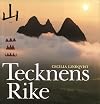
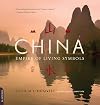
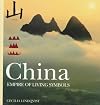
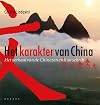
China: Empire of Living Symbols
by Cecilia Lindqvist
On This Page
Description
The origins of Chinese ideographs were not known until 1899, when a scholar went to an apothecary for some medicine made of "dragon bone." To his surprise, the bone, which had not yet been ground into powder, contained a number of carved inscriptions. Thus began the exploration of the 3000-year-old sources of the written characters still used in China today. In this unparalleled and deeply researched book, Cecilia Lindqvist tells the story of these characters and shows how their shapes and show more concepts have permeated all of Chinese thought, architecture, art, and culture. show lessTags
Recommendations






















Member Reviews
I was extremely taken with this book. The author is honest about the sometimes contested or unclear explanation of some of the characters but she mostly comes up with well researched explanations or at least very educated and convincing theses. When you say it's a book about the Chinese symbols for writing - people think it sounds fearfully dull and technical and academic. I know nothing about China but found this an incredibly approachable and fascinating book that really was eye-opening about the different ways of seeing and representing the world. Magical.
A creative look at the development and use of Chinese characters, by someone who loves the language and its expression. Lindqvist shows how many of the Chinese character were originallyy written and then evolved. She has an uncanny look at Chinese civilization.
Fantastisch beschrijvend boek over de evolutie van het chinese schrift (= Unesco werelderfgoed). Opmerkelijk is de uitbreiding naar de regio's en context van de oorsprong. Het totaalbeeld dat hiermee gegeven wordt is bijzonder nuttig voor mensen zoals ik die chinees leren en worstelen met het lezen en schrijven van de karakters. Hierdoor krijg je een grondige beschrijving van het oude chinese leven en hun evolutie om het gesproken woord om te zetten in een geschreven erfenis. Chapeau.
Feb 13, 2024Dutch
En av de böcker som jag alltid kan ta till när annat inte faller i smaken. Tröttnar aldrig. Cecilia Lindqvist har en otrolig förmåga att levandegöra och förklara den snåriga historien bakom de kinesiska tecknen. Man häpnar över hennes djupa kunskaper.
Rikt illustrerad med fotografier, målningar teckningar och kalligrafi. Oerhört fängslande.
Rikt illustrerad med fotografier, målningar teckningar och kalligrafi. Oerhört fängslande.
Mar 30, 2008Swedish
Fantastiskt vacker bok där författaren visar upp hur olika kinesiska tecken har ändrats under årens lopp. Många bra inblickar i den kinesiska historian och kulturen. Men man bör nog inte läsa den från pärm till pärm för då blir det för mycket information på en gång.
Sep 11, 2006Swedish
Ratings
Members
- Recently Added By
Author Information

8 Works 338 Members
Some Editions
Awards and Honors
Awards
Common Knowledge
- Canonical title
- China: Empire of Living Symbols
- Original title
- Tecknens rike : en berättelse om kineserna och deras skrivtecken
- Original publication date
- 1989 (Swedish original) (Swedish original); 1991 (English translation) (English translation)
- First words
- One summer's day in 1889, Liu E., an author and scholar, went into the Da Ren Tang apothecary to buy medicine for his friend Wang Yirong, who was ill with malaria.
- Last words
- (Click to show. Warning: May contain spoilers.)One never comes closer to China, the empire of symbols, than one does in her characters.
- Original language
- Swedish
Classifications
Statistics
- Members
- 287
- Popularity
- 111,845
- Reviews
- 5
- Rating
- (4.30)
- Languages
- 7 — Chinese, Dutch, English, Finnish, German, Norwegian (Bokmål), Swedish
- Media
- Paper, Ebook
- ISBNs
- 11
- ASINs
- 4