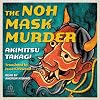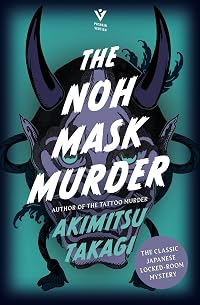
The Noh Mask Murder
by Akimitsu Takagi
On This Page
Description
In the Chizurui family mansion, a haunting presence casts a shadow over its residents. By night, an eerie figure, clad in a sinister Hannya mask is seen roaming around the house. An amateur murder mystery writer, Akimitsu Takagi, is sent to investigate--but his investigation takes a harrowing turn as tragedy strikes the Chizurui family. Within the confines of a locked study, the head of the family is found dead, with only an ominous Hannya mask lying on the floor by his side and the show more lingering scent of jasmine in the air as clues to his mysterious murder. As Takagi delves deeper into the perplexing case, he discovers a tangled web of secrets and grudges. Can he discover the link between the family and the curse of the Hannya mask? Who was the person who called the undertaker and asked for three coffins on the night of the murder? And do those three coffins mean the curse of the Hannya mask is about to strike again? show lessTags
Recommendations









Member Reviews
A previous reviewer had noted that this book had all the desired Gothic elements: an isolated estate, storms and lightning, a dark secret, locked rooms, a sinister aristocrat or two, and madness run amok. Indeed, it does have all of those elements.
But what kept me engaged as I read [The Noh Mask Murder] was the way in which an author from a non-Western tradition took a Western form (the mystery novel), wove in a variety of literary references to previous work in that genre, and then turned it all into something both familiar and unfamiliar. Akimitsu Takagi’s mystery references various books by John Dickson Carr, S.S. Van Dine, and Agatha Christie. He points as well to Shakespeare (Hamlet, Julius Caesar) and Robert Lewis Stevenson. show more There was (I believe, although I didn’t mark it in my copy) an allusion to a specific Sherlock Holmes story by Conan Doyle. The author, Takagi, inserts himself as a character at the crime scene – another means of playing with conventions of the form.
The Noh Mask Murder is Takagi’s 1949 novel featuring Prosecutor Ishikari as the figure of the law, Takagi as the figure of the mystery author and amateur detective, and a young man Koichi Yanagi as a family friend who is tied into the general discomfiture of death.
I enjoyed this one, recognizing as I did so many of the literary references. When an undertaker shows up at the family home with the understanding that three coffins have been ordered, of course, my mind went to John Dickson Carr. Even more so, when there was a discussion of the types of locked-room mysteries. When early in the book, there was a glancing reference to Philo Vance, of course, I was tickled. Even more so, when Takagi brought forward The Greene Murder Mystery.
This is something of a meditation on the Western view of death, written for a Japanese readership in post WWII Japan. But it’s also a warning about the lingering influence of a desire for power, for vengeance. The fact that we have all the Gothic elements – darkness, an asylum for the mad woman, a cursed theater prop, and deaths of both the innocent as well as the guilty – makes it a compelling read. show less
But what kept me engaged as I read [The Noh Mask Murder] was the way in which an author from a non-Western tradition took a Western form (the mystery novel), wove in a variety of literary references to previous work in that genre, and then turned it all into something both familiar and unfamiliar. Akimitsu Takagi’s mystery references various books by John Dickson Carr, S.S. Van Dine, and Agatha Christie. He points as well to Shakespeare (Hamlet, Julius Caesar) and Robert Lewis Stevenson. show more There was (I believe, although I didn’t mark it in my copy) an allusion to a specific Sherlock Holmes story by Conan Doyle. The author, Takagi, inserts himself as a character at the crime scene – another means of playing with conventions of the form.
The Noh Mask Murder is Takagi’s 1949 novel featuring Prosecutor Ishikari as the figure of the law, Takagi as the figure of the mystery author and amateur detective, and a young man Koichi Yanagi as a family friend who is tied into the general discomfiture of death.
I enjoyed this one, recognizing as I did so many of the literary references. When an undertaker shows up at the family home with the understanding that three coffins have been ordered, of course, my mind went to John Dickson Carr. Even more so, when there was a discussion of the types of locked-room mysteries. When early in the book, there was a glancing reference to Philo Vance, of course, I was tickled. Even more so, when Takagi brought forward The Greene Murder Mystery.
This is something of a meditation on the Western view of death, written for a Japanese readership in post WWII Japan. But it’s also a warning about the lingering influence of a desire for power, for vengeance. The fact that we have all the Gothic elements – darkness, an asylum for the mad woman, a cursed theater prop, and deaths of both the innocent as well as the guilty – makes it a compelling read. show less
Rating: 4* of five
The Publisher Says: A bewildering locked-room murder occurs as an amateur crime writer investigates strange events in the Chizurui mansion in this prizewinning classic Japanese mystery.
This ingenously constructed masterpiece, written by one of Japan’s most celebrated crime writers and translated into English for the first time, is perfect for locked-room mystery fans who can’t resist a breathtaking conclusion.
In the Chizurui family mansion, a haunting presence casts a shadow over its residents. By night, an eerie figure, clad in a sinister Hannya mask is seen roaming around the house. An amateur murder mystery writer, Akimitsu Takagi, is sent to investigate — but his investigation takes a harrowing turn as show more tragedy strikes the Chizurui family.
Within the confines of a locked study, the head of the family is found dead, with only an ominous Hannya mask lying on the floor by his side and the lingering scent of jasmine in the air as clues to his mysterious murder.
As Takagi delves deeper into the perplexing case, he discovers a tangled web of secrets and grudges. Can he discover the link between the family and the curse of the Hannya mask? Who was the person who called the undertaker and asked for three coffins on the night of the murder? And do those three coffins mean the curse of the Hannya mask is about to strike again?
The Noh Mask Murder’s legendary ending offers locked-room mystery fans the perfect coda to an ingenously constructed mystery.
I RECEIVED A DRC FROM THE PUBLISHER VIA NETGALLEY. THANK YOU.
My Review: A fun framing device of the author as a clumsy amateur sleuth, and a puzzle that really absorbed me. Set in a time and place...midcentury Japan...that's just foreign enough to make the attitudes and beliefs necessary for the plot to work credible.
I suppose that's a roundabout way to say "this story is of its time." I think that's okay...you should know that the conventions of that day aren't always polite to twenty-first century ears.
The locked-room aspects of the plot are the bits that get the praise. I'm always glad to read these because I don't expect to solve them. I didn't this time either. The resolution felt of a piece with the story, not pulled out of the parts bin and welded onto the frame built whether it fits or not. That made it satisfying to me, despite the reveal eliciting from me, "...really...?" when I first read it. Remember what I said about of its time. There's no way it would work in 2020s Japan.
So read it as an historical novel, a gothic-inflected piece of a past very much passed, and you're very likely to enjoy this trip into eighty-years-gone Japan.
Award-winning in its time, The Noh Mask Murder launched the career of an author synonymous with Japanese crime writing. It's clear from the translation that translator Jesse Kirkwood had a book to work with that was very well-crafted, and a job translating it that was enjoyable. There's that unexplainable sense of freshness that hangs over work that someone liked doing.
Four well-earned stars. show less
The Publisher Says: A bewildering locked-room murder occurs as an amateur crime writer investigates strange events in the Chizurui mansion in this prizewinning classic Japanese mystery.
This ingenously constructed masterpiece, written by one of Japan’s most celebrated crime writers and translated into English for the first time, is perfect for locked-room mystery fans who can’t resist a breathtaking conclusion.
In the Chizurui family mansion, a haunting presence casts a shadow over its residents. By night, an eerie figure, clad in a sinister Hannya mask is seen roaming around the house. An amateur murder mystery writer, Akimitsu Takagi, is sent to investigate — but his investigation takes a harrowing turn as show more tragedy strikes the Chizurui family.
Within the confines of a locked study, the head of the family is found dead, with only an ominous Hannya mask lying on the floor by his side and the lingering scent of jasmine in the air as clues to his mysterious murder.
As Takagi delves deeper into the perplexing case, he discovers a tangled web of secrets and grudges. Can he discover the link between the family and the curse of the Hannya mask? Who was the person who called the undertaker and asked for three coffins on the night of the murder? And do those three coffins mean the curse of the Hannya mask is about to strike again?
The Noh Mask Murder’s legendary ending offers locked-room mystery fans the perfect coda to an ingenously constructed mystery.
I RECEIVED A DRC FROM THE PUBLISHER VIA NETGALLEY. THANK YOU.
My Review: A fun framing device of the author as a clumsy amateur sleuth, and a puzzle that really absorbed me. Set in a time and place...midcentury Japan...that's just foreign enough to make the attitudes and beliefs necessary for the plot to work credible.
I suppose that's a roundabout way to say "this story is of its time." I think that's okay...you should know that the conventions of that day aren't always polite to twenty-first century ears.
The locked-room aspects of the plot are the bits that get the praise. I'm always glad to read these because I don't expect to solve them. I didn't this time either. The resolution felt of a piece with the story, not pulled out of the parts bin and welded onto the frame built whether it fits or not. That made it satisfying to me, despite the reveal eliciting from me, "...really...?" when I first read it. Remember what I said about of its time. There's no way it would work in 2020s Japan.
So read it as an historical novel, a gothic-inflected piece of a past very much passed, and you're very likely to enjoy this trip into eighty-years-gone Japan.
Award-winning in its time, The Noh Mask Murder launched the career of an author synonymous with Japanese crime writing. It's clear from the translation that translator Jesse Kirkwood had a book to work with that was very well-crafted, and a job translating it that was enjoyable. There's that unexplainable sense of freshness that hangs over work that someone liked doing.
Four well-earned stars. show less
A locked-room mystery with lots of twists
I liked Akimitsu Takagi’s "The Tattoo Murder", so the logical next step was to read another of his mysteries.
Our narrator is called Akimitsu Takagi (yes, indeed) and he is a big fan of mystery novels. He would really like to write a novel about a detective solving a true crime case! And what do you know, a crime does land in his lap. It’s locked-room murder. Well, it seems that Akimitsu then leaves the solving of the crime to somebody else, a friend of his, Koichi Yanagi. It’s Koichi’s journal that we’ll be reading.
The murder victim is the head of a most dysfunctional and horrific Chizui family. They live in an old mansion by the sea. For two hundred years, the family has owned a show more cursed Noh mask. It seems to have played a role in this tragedy. Why would you keep a cursed object in the family for generations? Asking for a friend. Wait, am I reading yet another book that plays with gothic tropes, just like "All of Us Murderers"? Cool. This novel plays with many other tropes from the “golden age” mysteries too, and there are lots of references to classic detective stories.
There will be more murders. There will be twists! I did see one of the big ones coming (the author was jumping and waving), but not the other. It was satisfying.
The dialogues and interactions between the characters are great. I enjoyed them very much, especially the ones between Rintaro Chizui and Koichi. There are discussions about power, justice, revenge, morality, the ideas of good and evil.
If you like your mysteries very classic, a bit slow, and very-very Japanese, then give this one a try by all means.
Quotes:
”This really isn’t like you, Akimitsu. It’s not just your approach that is entirely illogical – you’re surprisingly short on convincing ideas, too.”
”Well, there’s never been a murder like this in any of the novels I’ve read.” show less
I liked Akimitsu Takagi’s "The Tattoo Murder", so the logical next step was to read another of his mysteries.
Our narrator is called Akimitsu Takagi (yes, indeed) and he is a big fan of mystery novels. He would really like to write a novel about a detective solving a true crime case! And what do you know, a crime does land in his lap. It’s locked-room murder. Well, it seems that Akimitsu then leaves the solving of the crime to somebody else, a friend of his, Koichi Yanagi. It’s Koichi’s journal that we’ll be reading.
The murder victim is the head of a most dysfunctional and horrific Chizui family. They live in an old mansion by the sea. For two hundred years, the family has owned a show more cursed Noh mask. It seems to have played a role in this tragedy. Why would you keep a cursed object in the family for generations? Asking for a friend. Wait, am I reading yet another book that plays with gothic tropes, just like "All of Us Murderers"? Cool. This novel plays with many other tropes from the “golden age” mysteries too, and there are lots of references to classic detective stories.
There will be more murders. There will be twists! I did see one of the big ones coming (the author was jumping and waving), but not the other. It was satisfying.
The dialogues and interactions between the characters are great. I enjoyed them very much, especially the ones between Rintaro Chizui and Koichi. There are discussions about power, justice, revenge, morality, the ideas of good and evil.
If you like your mysteries very classic, a bit slow, and very-very Japanese, then give this one a try by all means.
Quotes:
”This really isn’t like you, Akimitsu. It’s not just your approach that is entirely illogical – you’re surprisingly short on convincing ideas, too.”
”Well, there’s never been a murder like this in any of the novels I’ve read.” show less
Consider this a spoiler review.
****
Sometimes “locked-room” mysteries work for me, and sometimes they really don’t. This one is closer to the “doesn’t work for me” end of the spectrum. It’s the sort of mystery in which the narrator withholds information from the reader until it’s time for the reveal, and I exclaimed “Oh, come ON” once the culprit was revealed.
To be fair to the book, the idea of the author self-insert is amusing, even though I don’t share the self-insert’s taste in Golden Age detective fiction. And the most despicable person in the book does get his comeuppance, so there’s that. But overall, not a success for me.
****
To be fair to the book, the idea of the author self-insert is amusing, even though I don’t share the self-insert’s taste in Golden Age detective fiction. And the most despicable person in the book does get his comeuppance, so there’s that. But overall, not a success for me.
I have loved every Japanese murder mystery I've read so far, but this was a new author to me. I like that Japanese mysteries stick so close to the facts, are brief and give you a good puzzle rather than a dramatic story. This one was different, in that it tries to be both puzzle and melodrama, and I could really have done without the melodrama. The schtick that frames this whole mystery is that the author has inserted himself into this whole thing as the aspiring and bumbling detective. I think the mystery itself could have been stronger if there weren't so much emphasis on that.
The Noh Mask Murder by Akimitsu Takagi, translated by Jesse Kirkwood pp223 Pushkin Vertigo 2024 First published in Japanese in 1951
Would I read another novel by this author?
Yes.
Would I recommend this book?
Yes.
To whom would I recommend it?
People interested in murder mysteries, especially golden age mysteries.
Did this book inspire me to do anything?
I was inspired to buy a book read by one of the characters, “The Greene Murder case”. I was also triggered to look into the life of the author, Akimitsu Takagi.
I found this book very informative on several topics, in particular the principals behind Noh theatre and the Noh masks.
The structure of this novel is intriguing and, as the author explains in his Prologue, it is quite experimental. show more In the Prologue he explains that the bulk of the book is a journal prepared by a friend who involved the author in a murder investigation and who journaled his experiences during the investigation. The book also includes the text of a prosecutor who was involved in the murder case and who provided him with their mutual friend’s journal.
If you can get your mind around the slightly convoluted structure of an author involved in the story of the murder investigation, then you should enjoy this story.
As with many of the Japanese novels I read it is fascinating to read about Japanese culture and pick up interesting detail and learn how the norm in Japan, in particular during the years after WWII, is different in many ways to European culture.
I think this is a must read for completists who want to get a feel for the nature of murder mystery novels across the world, especially novels that are trying something new. show less
Would I read another novel by this author?
Yes.
Would I recommend this book?
Yes.
To whom would I recommend it?
People interested in murder mysteries, especially golden age mysteries.
Did this book inspire me to do anything?
I was inspired to buy a book read by one of the characters, “The Greene Murder case”. I was also triggered to look into the life of the author, Akimitsu Takagi.
I found this book very informative on several topics, in particular the principals behind Noh theatre and the Noh masks.
The structure of this novel is intriguing and, as the author explains in his Prologue, it is quite experimental. show more In the Prologue he explains that the bulk of the book is a journal prepared by a friend who involved the author in a murder investigation and who journaled his experiences during the investigation. The book also includes the text of a prosecutor who was involved in the murder case and who provided him with their mutual friend’s journal.
If you can get your mind around the slightly convoluted structure of an author involved in the story of the murder investigation, then you should enjoy this story.
As with many of the Japanese novels I read it is fascinating to read about Japanese culture and pick up interesting detail and learn how the norm in Japan, in particular during the years after WWII, is different in many ways to European culture.
I think this is a must read for completists who want to get a feel for the nature of murder mystery novels across the world, especially novels that are trying something new. show less
An old seaside mansion. Dark gothic atmosphere. An exotic setting. Sinister locked-room mystery. Depraved and broken characters. A public prosecutor in search of the truth. Unreliable narrators.
Japan, unsettled nation during the aftermath of WWII. Multiple elaborate murders. Elegant, refined prose. An outstanding translation.
Eerieness creeps through the pages like the seaside mist underlying the story.
Historical murder mystery, social commentary, character study, domestic thriller, gothic literature.
Maybe the perfect book for the perfect time exists. The Noh Mask Murder has it all.
Thank you, NetGalley and Pushkin Press, for the ARC in exchange for an honest review! All viewpoints are entirely my own.
Japan, unsettled nation during the aftermath of WWII. Multiple elaborate murders. Elegant, refined prose. An outstanding translation.
Eerieness creeps through the pages like the seaside mist underlying the story.
Historical murder mystery, social commentary, character study, domestic thriller, gothic literature.
Maybe the perfect book for the perfect time exists. The Noh Mask Murder has it all.
Thank you, NetGalley and Pushkin Press, for the ARC in exchange for an honest review! All viewpoints are entirely my own.
Members
- Recently Added By
Lists

Top Five Books of 2024
795 works; 264 members

Books Read in 2026
1,955 works; 66 members

#MysteryBingo2026Gold(Original)
1 work; 1 member
#MysteryBingo2026Gold(Revised)
1 work; 1 member

#ReadingBingo2024
15 works; 1 member
Author Information

28+ Works 895 Members
Some Editions
Common Knowledge
- Canonical title
- The Noh Mask Murder
- Original title
- 能面殺人事件
- Original publication date
- 1951
- People/Characters
- Akimitsu Takagi; Koichi Yanagi; Hiroyuki Ishikari; Taijiro Chizui; Hisako Chizui; Rintaro Chizui (show all 13); Sawako Chizui; Kenkichi Chizui; Yojiro Chizui; Sonoe Chizui; Dr. Yamamoto; Kayoko Chizui; Inspector Yoshino
- Important places
- Miura Peninsula, Kanagawa Prefecture, Japan; Chizui mansion, Miura Peninsula, Kanagawa Prefecture, Japan; Marine Hotel, Miura Peninsula, Kanagawa Prefecture, Japan
- Original language
- Japanese
Classifications
- Genres
- Fiction and Literature, Mystery
- DDC/MDS
- 895.635 — Literature & rhetoric Literatures of other languages Literatures of East and Southeast Asia Japanese Japanese fiction 1945–2000
- LCC
- PL862 .A4 .N613 — Language and Literature Languages and literatures of Eastern Asia, Africa, Oceania Languages of Eastern Asia, Africa, Oceania Japanese language and literature Japanese literature Individual authors and works
- BISAC
Statistics
- Members
- 115
- Popularity
- 283,156
- Reviews
- 8
- Rating
- (3.85)
- Languages
- English
- Media
- Paper, Audiobook, Ebook
- ISBNs
- 3
- ASINs
- 3