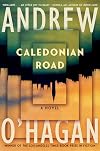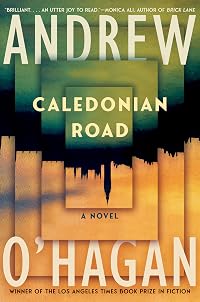
Caledonian Road
by Andrew O'Hagan
On This Page
Description
May 2021. London. Campbell Flynn - art historian and celebrity intellectual - is entering the empire of middle age. Fuelled by an appetite for admiration and the finer things, controversy and novelty, he doesn't take people half as seriously as they take themselves. Which will prove the first of his huge mistakes. The second? Milo Manghasa, his beguiling and provocative student. Milo inhabits a more precarious world, has experiences and ideas which excite his teacher. He also has a plan. show more Over the course of an incendiary year, a web of crimes and secrets and scandals will be revealed, and Campbell Flynn may not be able to protect himself from the shattering exposure of all his privilege really involves. But then, he always knew: when his life came tumbling down, it would occur in public. show lessTags
Recommendations










Member Reviews
London is changing, the old guard of family wealth is being usurped by new foreign wealth. Traditional roles are being sidelined and art, fashion and crime is becoming the role of youth. Meanwhile exploitation is still happening and no-one is safe. Following a group of people centred around academic and art critic Campbell Flynn, Caledonian Road explores how London has changed.
I really like O'Hagan's writing and this book is superb. The length may seem daunting but the prose skips along and it doesn't feel excessive. It may be high praise but I feel this book is like and update to the classic 19th century novels of life by Thackeray. The details are fantastic and nuanced, there's a gentle push at the woke generation and a stronger push show more at corrupt businessmen, the downstairs tenant is a real Dickensian character and the whole is so enjoyable that, for me, it sits at the top of the books I've read this year! show less
I really like O'Hagan's writing and this book is superb. The length may seem daunting but the prose skips along and it doesn't feel excessive. It may be high praise but I feel this book is like and update to the classic 19th century novels of life by Thackeray. The details are fantastic and nuanced, there's a gentle push at the woke generation and a stronger push show more at corrupt businessmen, the downstairs tenant is a real Dickensian character and the whole is so enjoyable that, for me, it sits at the top of the books I've read this year! show less
Caledonian Road: Class-bound satire and sentimentality
Reviewed in the United States on February 4, 2025
This (2024) doorstop novel, modeled on Bonfire of the Vanities, veers between satire and sentimentality, describing how contemporary Britain has been been undermined by immigration. The novel gets off to a good start and shows some wit, then bogs into a tedious midsection, and picks up at chapter 32. The deteriorating main character is well-described, along with the particularities of London real estate and effects of corrupt Russian money in Great Britain. A hotshot London academic art historian from an impoverished background is having a midlife meltdown assisted by his bond with a more-worldly Cambridge University mate with shady show more business interests who has behaved badly. Because of his social connections and media profile, the Professor falls under the influence of a subversive graduate student who uses the dark web and scandal mongering to expose and shakedown Establishment power. Polish, Irish, Scottish, and Ethiopian characters are depicted with love. Upper-class English characters and their enablers are shown as sleazy and ridiculous. The Professor's psychoanalytic wife offers good insight into what sustains art and what is wrong. show less
Reviewed in the United States on February 4, 2025
This (2024) doorstop novel, modeled on Bonfire of the Vanities, veers between satire and sentimentality, describing how contemporary Britain has been been undermined by immigration. The novel gets off to a good start and shows some wit, then bogs into a tedious midsection, and picks up at chapter 32. The deteriorating main character is well-described, along with the particularities of London real estate and effects of corrupt Russian money in Great Britain. A hotshot London academic art historian from an impoverished background is having a midlife meltdown assisted by his bond with a more-worldly Cambridge University mate with shady show more business interests who has behaved badly. Because of his social connections and media profile, the Professor falls under the influence of a subversive graduate student who uses the dark web and scandal mongering to expose and shakedown Establishment power. Polish, Irish, Scottish, and Ethiopian characters are depicted with love. Upper-class English characters and their enablers are shown as sleazy and ridiculous. The Professor's psychoanalytic wife offers good insight into what sustains art and what is wrong. show less
Caledonian Road, for a person who's never experienced London and may never get there, is a complicatedly woven textile of life-approximating (in the sense of many threads and a mosaic of activity) human interactions and zeitgeistian snapshots. Characters are given fitting conceits and thoughts relevant to their personalities, quite believably. There's a soupçon of brandname- and cultural-icon name-dropping (clothing brands, Vermeer, Rembrandt, booze handles and rarefied foods) reflecting image presentation and knowledge signification. Here we have the Russian profiteers trying to deke around the sanctions imposed by the world against Putin's Russia, allusions to Prince Andrew-like and Jeffrey Epstein-like figures, human trafficking and show more sweatshops, anti-migrant sentiment, inexplicably popular DJs, nice young people getting killed and in legal trouble due to their skin colour and fate ... And let's not forget our protagonist, a talented silver-tongued writer/personality/art historian who's deeply worried about keeping up his end against his wife's relative wealth and MP security. A masterfully woven tapestry that lets in the strivers and misfits amongst the born-with-good-fortune. Brilliant. show less
Over 600 pages long and with a cast of characters so complex that it comes with a two page dramatis personae section, this is clearly aimed as a “condition of Britain” novel in the same tradition as The way we live now, The Forsyte saga and A dance to the music of time. It’s set in the London of the brief gap between Covid-19 and the Ukraine war, richly peopled as it was with Russian oligarchs, contemporary artists, hackers, Polish gangsters, fashionistas, drug-dealers and corrupt members of the House of Lords. At the centre of all this is art historian Campbell Flynn, very much a man of his time with two TV series and a bestselling Vermeer biography under his belt.
Beyond simply exposing the corruption and hypocrisy of the last show more years of post-Cameron Tory rule, O’Hagan seems to be trying to show us how pervasive and destructive that kind of atmosphere can be. When Campbell and other damaged-but-not-actually-evil characters try to break out of the cycle of self-interest and self-protection and do something altruistic, it almost invariably bounces back on them and causes worse harm, with the most prominent symbol of this being Campbell’s downstairs tenant Mrs Voyles, who lives in the most appalling squalor and loves to complain about it, but only becomes more and more hostile and defensive whenever Campbell tries to get repairs done in her flat.
As in Trollope, this is largely a novel about unreasonable male stubbornness, in particular Campbell’s refusal to open up about his problems to the people around him. The impact of the moral fable is, however, undermined a little by O’Hagan’s ”good” characters, who are all implausibly saintly and female (apart from one who is a gay Polish gardener). Even in a Trollope novel they might stretch credulity a little. Another weakness, typical for the genre, is that all the most interesting characters come from either the “top” or the “bottom” of society. Ordinary people only really feature as innocent bystanders caught up in the crossfire.
But still, it’s an absorbing read, and a fitting monument to an era we would probably rather forget about. show less
Beyond simply exposing the corruption and hypocrisy of the last show more years of post-Cameron Tory rule, O’Hagan seems to be trying to show us how pervasive and destructive that kind of atmosphere can be. When Campbell and other damaged-but-not-actually-evil characters try to break out of the cycle of self-interest and self-protection and do something altruistic, it almost invariably bounces back on them and causes worse harm, with the most prominent symbol of this being Campbell’s downstairs tenant Mrs Voyles, who lives in the most appalling squalor and loves to complain about it, but only becomes more and more hostile and defensive whenever Campbell tries to get repairs done in her flat.
As in Trollope, this is largely a novel about unreasonable male stubbornness, in particular Campbell’s refusal to open up about his problems to the people around him. The impact of the moral fable is, however, undermined a little by O’Hagan’s ”good” characters, who are all implausibly saintly and female (apart from one who is a gay Polish gardener). Even in a Trollope novel they might stretch credulity a little. Another weakness, typical for the genre, is that all the most interesting characters come from either the “top” or the “bottom” of society. Ordinary people only really feature as innocent bystanders caught up in the crossfire.
But still, it’s an absorbing read, and a fitting monument to an era we would probably rather forget about. show less
This is two very different novels put together, although the second half could not exist without the first. In the mid-eighties, a time of miners' strikes, Margaret Thatcher and the peak of indie rock, a group of young Scottish men plan a weekend trip to Manchester for a music festival headlined by The Smiths. James, called Noodles by his friends, is the first of his family and neighborhood to be accepted into university. Tully is his best friend, a charismatic, easy-going, always in the center of things guy, whose playful exterior hides anxiety about his future.
This is a joy-filled romp of a perfect weekend and I loved every single paragraph. O'Hagan perfectly captures that moment of young adulthood when the world opens up and music show more is the most important thing. I'm not that much younger than the boys in this story and their adventures brought back so many memories of small clubs and perfect nights out.
The second half of the book concerns Tully and James, now three decades older. Tully is diagnosed with cancer and he's determined to go out on his own terms and his best friend, James, is the person he most trusts to stand by him. This half has a much more serious tone, despite the unemployed workers and casual racism of the first half. But the fun of the beginning gives an earned emotional depth to this story of a man supporting his best friend. show less
This is a joy-filled romp of a perfect weekend and I loved every single paragraph. O'Hagan perfectly captures that moment of young adulthood when the world opens up and music show more is the most important thing. I'm not that much younger than the boys in this story and their adventures brought back so many memories of small clubs and perfect nights out.
The second half of the book concerns Tully and James, now three decades older. Tully is diagnosed with cancer and he's determined to go out on his own terms and his best friend, James, is the person he most trusts to stand by him. This half has a much more serious tone, despite the unemployed workers and casual racism of the first half. But the fun of the beginning gives an earned emotional depth to this story of a man supporting his best friend. show less
A big meaty saga pulling in lots of threads of modern British life. I think it does a good job of showing the connections that hold all of society together, how the upper classes exploit the lower and under classes and require illegal immigration to keep the factories running. You've also got the unravelling central character, not quite sure of his position in life, heading for an inevitable crash of some sort. Its a great read, sometimes a bit excessive, but mostly very plausible and with plenty of recognisable (but renamed) characters from real life.
This is a grand and ambitious state of the nation book, with a cast of oligarchs and refugees, dukes and MPs, wannabe gangsters and aspirational art critics. Centred around Caledonian Road, home to new arrivals, remnants of the working class and the upwardly mobile, this book skewers liberal complacency and shows the soft underbelly of London, England, the UK, where old and new money wins every fight for survival. This will be looked back on as a snapshot of a particular time and place in our culture; reading it now felt slightly exhausting; I was begging for one character who would simply exist and live outside the programmatic nature of the narrative; someone who did not symbolise anything other than themselves…
Members
- Recently Added By
Lists

The Guardian Books of the Year 2020
126 works; 8 members

Top Five Books of 2021
604 works; 181 members

Animals in the Title
498 works; 11 members

Books Read in 2024
4,727 works; 128 members

Books We Discovered On LibraryThing
530 works; 130 members

The LonesomeReader Book Club
36 works; 1 member

Take Four Books
130 works; 1 member
Author Information

29+ Works 2,957 Members
Andrew O'Hagan was born in 1968 in Glasgow, Scotland. He studied at the University of Strathclyde. He is an Editor at Large for Esquire, London Review of Books and Critic at Large for T: The New York Times Style Magazine. He is a creative writing fellow at King's College London. He has worked as an editor and ghostwriter. He has twice been show more nominated for the Man Booker Prize. He was voted one of Granta's Best of Young British Novelists in 2003. He has won the Los Angeles Times Book Award and the E.M. Forster Award from the American Academy of Arts & Letters, made Honorary Doctor of Letters by University of Strathclyde in 2008, and was made Fellow of the Royal Society of Literature in 2010. His book awards include the 2000 Winifred Holtby Memorial Prize for Our Fathers, the 2003 James Tait Black Memorial Prize (fiction), for Personality, and the 2010 Glenfiddich Spirit of Scotland Award for Writing. His fiction includes Our Fathers, Personality, Be Near Me, The Life and Opinions of Maf the Dog, and of His Friend Marilyn Monroe, The Illuminations. His non-fiction includes The Missing and The Atlantic Ocean. He also has written short stories and book reviews. (Bowker Author Biography) show less
Awards and Honors
Awards
Distinctions
Notable Lists
Common Knowledge
- Canonical title
- Caledonian Road
- Original publication date
- 2024
Classifications
Statistics
- Members
- 510
- Popularity
- 59,024
- Reviews
- 27
- Rating
- (3.67)
- Languages
- 6 — Catalan, Dutch, English, German, Italian, Spanish
- Media
- Paper, Audiobook, Ebook
- ISBNs
- 17
- ASINs
- 8