Akin to Anne: Tales of Other Orphans
by L. M. Montgomery
On This Page
Description
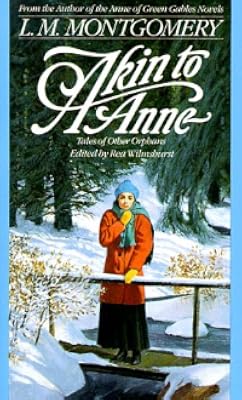
In this heartwarming collection of nineteen short stories L.M. Montgomery returns to the enchanting shores of beautiful Prince Edward Island to tell about orphans much like Anne of Green Gables -- vulnerable, sensitive, and full of hope and courage. There's the lonely young girl on a quest for a real-life mother, a budding artist who dreams of fame and fortune, and old family quilt that unites two sisters with a long-lost relative, an ancient Egyptian doll that show more invokes an unusual spell for a little girl yearning for a special friend. L.M. Montgomery brings to life a magical place and a circle of characters who will long be treasured and remembered. show lessTags
Recommendations






Member Reviews
This has not been my week, and I desperately needed some comfort reading. I reached for a collection of short stories by LM Montgomery and found exactly what I wanted and needed.
This is, as the title says, a collection of stories about orphans. The introduction says that these stories culminated in the making of LMM's most famous work, but actually, only *some* of these stories were published before Anne of Green Gables. There is a common thread to all, however: people longing for family. The orphans in this collection range in age from young children to grown adults. Almost all of them follow the same story arc: a poor orphan discovers long-lost blood relatives who welcome them with open arms, generally because they bear an uncanny show more resemblance to long-dead siblings.
My personal favorites are "The Running Away of Chester" (by far the longest story, with the best developed characters), "Charlotte's Quest," and "Freda's Adopted Grave."
If you're looking for variety, look elsewhere: this is all about the cozy feeling that these sorts of sentimental stories evoke. If you need or want a good dose of it, this is an excellent collection! show less
This is, as the title says, a collection of stories about orphans. The introduction says that these stories culminated in the making of LMM's most famous work, but actually, only *some* of these stories were published before Anne of Green Gables. There is a common thread to all, however: people longing for family. The orphans in this collection range in age from young children to grown adults. Almost all of them follow the same story arc: a poor orphan discovers long-lost blood relatives who welcome them with open arms, generally because they bear an uncanny show more resemblance to long-dead siblings.
My personal favorites are "The Running Away of Chester" (by far the longest story, with the best developed characters), "Charlotte's Quest," and "Freda's Adopted Grave."
If you're looking for variety, look elsewhere: this is all about the cozy feeling that these sorts of sentimental stories evoke. If you need or want a good dose of it, this is an excellent collection! show less
With the publication of this initial volume of tales in 1988, L.M. Montgomery scholar Rea Wilmshurst began presenting the author's long-forgotten shorter fiction - Montgomery published over five hundred stories in various magazines and journals, in her lifetime - to the world, making much of it available to contemporary readers for the very first time. Seven more collections, all arranged thematically, were to follow, from Along the Shore: Tales by the Sea, published the year after this debut title, to Christmas with Anne and Other Holiday Stories, the eighth and final Montgomery anthology to be edited by Wilmshurst. Akin to Anne: Tales of Other Orphans, as its title and subtitle suggest, contains selections whose protagonist are in show more some way akin to Anne Shirley, Montgomery's most famous creation. Whether young orphans in need of a home, or struggling students and/or shop-girls who could use a little help, these characters all share the desire for a family to love, and a home in which they can feel safe and secure. The fulfillment of that desire, through story-lines sentimental or poignant, might be said to be the overarching theme of the book. Here we have:
Charlotte's Quest, in which quiet, grave young Charlotte Laurence, unhappy in the boisterous, crowded home of her Aunt Florence, in whose care she had been placed by her mountain-climbing father, sets out to see Witch Penny, in the hopes of finding a mother of her own. Carefully following the instructions she is given, Charlotte finds her way to the "grey stone house with the door like a cat's tongue," where she finds, not a mother, but someone almost as dear...
Marcella's Reward, which sees shop-girl Marcella Langley - tired, worn out, and terribly worried about her frail younger sister Patty, for whom she can do so little on her modest salary - enduring a trying morning at the hands of a rude and abusive customer. Her hard-won self control brings its reward, however, when an observer, commiserating with her afterward, uncovers a most unexpected connection.
An Invitation Given on Impulse, which chronicles the wholly unexpected (and delightful) results, when popular Carol Golden, nicknamed "Golden Carol" by her fellow students at Oaklawn, decides to invite the quiet, prickly school outcast, Ruth Mannering, home with her for the Christmas holidays.
Freda's Adopted Grave, which relates the story of a ten-year-old orphan who, being the only girl in the village of North Point without a grave to tend, on Graveyard Day, adopts the neglected, long-forgotten resting place of a local convict, tending to it as if its occupant were her own kin. When someone with a connection to that grave unexpectedly turns up, Freda's unintentional kindness leads to a new friendship, and eventually, to a new life.
Ted's Afternoon Off, in which a much-overworked farm boy, looking forward to his first afternoon off in four years, instead sacrifices his long anticipated treat (the Sunday School picnic) to keep a crippled young neighbor company, when his mother is called away. Ted's remarkable skill with a violin, employed in full to entertain his young charge, leads to an unexpected friendship, when a noted concert violinist - who, naturally, just happens to be passing - hears his playing.
The Girl Who Drove the Cows, in which Pauline Palmer, a city girl vacationing in the country, strikes up a friendship with local farm-girl Ada Cameron, despite the objections of her (Pauline's) snobby Aunt Olivia, and, through a photograph of her new companion, brings to light her connection tothe Morgan Knowles - the very wealthy family that Aunt Olivia admires above all others .
Why Not Ask Miss Price?, which sees two sisters, Frances and Alma Allan, extending an unexpected invitation for Thanksgiving dinner to local schoolteacher Miss Bertha Price, when their own Aunt Clara cannot attend, thereby effecting a reunion between long-lost siblings.
Jane Lavinia, in which the eponymous heroine, a talented young artist all set to leave her harsh and frequently sarcastic Aunt Rebecca for a stay in New York, where her talent will be cultivated, makes a surprising discovery about her seemingly uncaring relative - a discovery that casts a new light on her choice to leave her behind.
The Running Away of Chester, which follows the adventures of young Chester Stephens, an overworked and much-abused young orphan boy, nominally being 'cared for' by his step-aunt, Mrs. Harriet Elwell, but in reality being asked to do the work of a grown man, for very little in return, who runs away, first to the city, and then to another country village. Here he finds work at Mount Hope Farm, the home of kindly Miss Salome Whitney, and her stern (but equally kind) handmaiden, Clemantiny. Treated kindly for the first time in his life, Chester grows to love his benefactress, but also comes to believe that she would never approve of his actions, in running away.
Millicent's Double, in which two schoolgirls of a remarkably similar appearance - Millicent Moore and Worth Gordon - strike up a friendship, and find themselves constantly being mistaken for one another. When Millicent asks her 'double' to go in her place to a dinner party, because she has had two invitations, neither of which she feels she can turn down, Worth agrees, only to realize later that her masquerade is a form of dishonesty. In the course of setting matters straight, she discovers something extraordinary about her host and hostess.
Penelope's Party Waist, which sees sisters Doris and Penelope Hunter just barely scraping by on Doris' modest earnings as typewriter, with nothing left over for little extras like new party clothes. When Penelope turns down an invitation, because she has nothing to wear to the occasion, Doris, determined that her younger sister shall have a treat, takes matters into her own hands, and uses the lining of an heirloom family quilt to make a new party waist for her. This seemingly sacrilegious act brings unexpected blessings to the pair, when someone recognizes the material in Penolope's 'new' garment.
The Little Black Doll, in which Joyce, an awkward and plain young orphan in the care of her Grandmother Marshall, who seems only to value those with beauty or talent, sets out to find the famed soprano Madame Laurin, in the hopes of convincing her to sing for Denise, the family's fatally ill French maid, and Joyce's only friend. Willing to sacrifice her only possession of value - a four-thousand year-old Egyptian doll - to convince Madame Laurin to sing, Joyce instead finds a champion, someone who recognizes her own special musical gift, and who makes Grandmother Marshall aware of it.
The Fraser Scholarship, in which a poor but studious boy, going by the name Elliott Campbell, wins the coveted Fraser Scholarship, only to discover that the conditions of the scholarship trust eliminate him as a candidate, if he is honest about his true birth name. After a sharp struggle, Elliott tells the truth - Campbell is his adoptive name, not his birth name - but rather than losing out, he finds something even better than the scholarship.
Her Own People, which sees schoolteacher Miss Constance Foster, embittered by the hardships of her life, even to the point of feeling hostile indifference to God, softened by a summer stay in the lovely village of Pine Valley, where she finds the family she has always wanted - people she can call her own.
Miss Sally's Company, in which Mary and Ida Seymour, the daughters of one of Trenton's preeminent citizens, find themselves wishing they were "Cousin Abner's girls," when they stumble across the lovely seaside cottage of Golden Gate, during a country cycle, and meet its charming, sweet-natured owner, Miss Sally Temple. The Seymour sisters soon learn that Miss Sally is continually hoping for a visit from her cousin's daughters, Beatrice and Helen, and through their influence as social leaders, they see to it that she gets the company she both desires and deserves.
The Story of an Invitation, which sees Bertha Sutherland, conscious that Grace Maxwell, her roommate and friend at Dartmouth Academy, is in poor health, and unable to withstand the rigors of working all summer - something she would need to do, to earn her keep, having no family or friends to visit - scheming to have her own invitation to her Aunt Margaret's for the summer, transferred to her companion. Although regretting the sacrifice of her aunt's company, Bertha is rewarded by the long-term consequences of her choice, and the happiness it brings both Grace and Aunt Margaret.
The Softening of Miss Cynthia, in which spinster Cynthia Henderson, finding a young orphan boy - the son of her step-brother John, long ago emigrated to California - deposited on her doorstep, hardheartedly refuses him a home, sending him to a neighbor to work as a farm-hand instead. But as the year wears on, and young Wilbur begins to fail under the harsh treatment he receives, Cynthia slowly begins to soften, and to recall the love she once had for the boy's father. Will she be in time to put right her mistake, when Wilbur falls deathly ill...?
Margaret's Patient sees its eponymous heroine, Margaret Campbell, happily settled with a small inheritance left to her by a cantankerous and demanding former patient, faced with a difficult choice when the local schoolteacher falls ill and needs care, and the doctor asks her to lend a hand. After years of being a paid companion and nurse, Margaret is finally independent and free, and planning a trip to Vancouver. But can she leave poor Freda Martin, with no family and no resources, to her fate, having once been as poor and friendless as she? Her eventual decision, although seemingly a sacrifice, brings a discovery that more than compensates for her temporary trouble.
Finally, ending with a Charlotte (as we began), we have Charlotte's Ladies, which sees a young orphan names Charlotte Turner befriending two women she "meets," through gaps in the orphan asylum's fence. The Pretty Lady with the Blue Eyes and the Tall Lady with the Black Eyes (and the VERY Handsome Cat), make wonderful friends, but when they both end up wanting to adopt Charlotte, problems ensue, for they are none other than two bitterly estranged sisters. Can their love for her overcome their long quarrel?
As the above précis no doubt make plain, there is a great deal of repetition of theme (and even of plot-line) in these nineteen stories, which were not, after all, originally written to be collected together, as they are in this volume, but for individual publication in far-flung periodicals. I can certainly understand why this repetitiveness might irritate some readers - I see that quite a few online reviewers have less-than-positive feelings about Akin to Anne - but the truth is, I have always loved this collection! Yes, the theme of finding long-lost relatives, and/or safe homes, recurs again and again, but since I enjoy that type of story, this doesn't concern me unduly. Some of the selections here are rather slight - Her Own People feels the least convincing to me - but others are just lovely. Many of them were written before Montgomery's classic Anne of Green Gables, and I have always thought that they indicate how she was working her way through this idea of the orphan seeking a family and a home, slowly perfecting it. It's not perfect here, in these stories - Montgomery isn't there yet - but it's still quite engaging. Highly recommended to all L.M. Montgomery fans, and to any reader who enjoys orphan stories! show less
Charlotte's Quest, in which quiet, grave young Charlotte Laurence, unhappy in the boisterous, crowded home of her Aunt Florence, in whose care she had been placed by her mountain-climbing father, sets out to see Witch Penny, in the hopes of finding a mother of her own. Carefully following the instructions she is given, Charlotte finds her way to the "grey stone house with the door like a cat's tongue," where she finds, not a mother, but someone almost as dear...
Marcella's Reward, which sees shop-girl Marcella Langley - tired, worn out, and terribly worried about her frail younger sister Patty, for whom she can do so little on her modest salary - enduring a trying morning at the hands of a rude and abusive customer. Her hard-won self control brings its reward, however, when an observer, commiserating with her afterward, uncovers a most unexpected connection.
An Invitation Given on Impulse, which chronicles the wholly unexpected (and delightful) results, when popular Carol Golden, nicknamed "Golden Carol" by her fellow students at Oaklawn, decides to invite the quiet, prickly school outcast, Ruth Mannering, home with her for the Christmas holidays.
Freda's Adopted Grave, which relates the story of a ten-year-old orphan who, being the only girl in the village of North Point without a grave to tend, on Graveyard Day, adopts the neglected, long-forgotten resting place of a local convict, tending to it as if its occupant were her own kin. When someone with a connection to that grave unexpectedly turns up, Freda's unintentional kindness leads to a new friendship, and eventually, to a new life.
Ted's Afternoon Off, in which a much-overworked farm boy, looking forward to his first afternoon off in four years, instead sacrifices his long anticipated treat (the Sunday School picnic) to keep a crippled young neighbor company, when his mother is called away. Ted's remarkable skill with a violin, employed in full to entertain his young charge, leads to an unexpected friendship, when a noted concert violinist - who, naturally, just happens to be passing - hears his playing.
The Girl Who Drove the Cows, in which Pauline Palmer, a city girl vacationing in the country, strikes up a friendship with local farm-girl Ada Cameron, despite the objections of her (Pauline's) snobby Aunt Olivia, and, through a photograph of her new companion, brings to light her connection to
Why Not Ask Miss Price?, which sees two sisters, Frances and Alma Allan, extending an unexpected invitation for Thanksgiving dinner to local schoolteacher Miss Bertha Price, when their own Aunt Clara cannot attend, thereby effecting a reunion between long-lost siblings.
Jane Lavinia, in which the eponymous heroine, a talented young artist all set to leave her harsh and frequently sarcastic Aunt Rebecca for a stay in New York, where her talent will be cultivated, makes a surprising discovery about her seemingly uncaring relative - a discovery that casts a new light on her choice to leave her behind.
The Running Away of Chester, which follows the adventures of young Chester Stephens, an overworked and much-abused young orphan boy, nominally being 'cared for' by his step-aunt, Mrs. Harriet Elwell, but in reality being asked to do the work of a grown man, for very little in return, who runs away, first to the city, and then to another country village. Here he finds work at Mount Hope Farm, the home of kindly Miss Salome Whitney, and her stern (but equally kind) handmaiden, Clemantiny. Treated kindly for the first time in his life, Chester grows to love his benefactress, but also comes to believe that she would never approve of his actions, in running away.
Millicent's Double, in which two schoolgirls of a remarkably similar appearance - Millicent Moore and Worth Gordon - strike up a friendship, and find themselves constantly being mistaken for one another. When Millicent asks her 'double' to go in her place to a dinner party, because she has had two invitations, neither of which she feels she can turn down, Worth agrees, only to realize later that her masquerade is a form of dishonesty. In the course of setting matters straight, she discovers something extraordinary about her host and hostess.
Penelope's Party Waist, which sees sisters Doris and Penelope Hunter just barely scraping by on Doris' modest earnings as typewriter, with nothing left over for little extras like new party clothes. When Penelope turns down an invitation, because she has nothing to wear to the occasion, Doris, determined that her younger sister shall have a treat, takes matters into her own hands, and uses the lining of an heirloom family quilt to make a new party waist for her. This seemingly sacrilegious act brings unexpected blessings to the pair, when someone recognizes the material in Penolope's 'new' garment.
The Little Black Doll, in which Joyce, an awkward and plain young orphan in the care of her Grandmother Marshall, who seems only to value those with beauty or talent, sets out to find the famed soprano Madame Laurin, in the hopes of convincing her to sing for Denise, the family's fatally ill French maid, and Joyce's only friend. Willing to sacrifice her only possession of value - a four-thousand year-old Egyptian doll - to convince Madame Laurin to sing, Joyce instead finds a champion, someone who recognizes her own special musical gift, and who makes Grandmother Marshall aware of it.
The Fraser Scholarship, in which a poor but studious boy, going by the name Elliott Campbell, wins the coveted Fraser Scholarship, only to discover that the conditions of the scholarship trust eliminate him as a candidate, if he is honest about his true birth name. After a sharp struggle, Elliott tells the truth - Campbell is his adoptive name, not his birth name - but rather than losing out, he finds something even better than the scholarship.
Her Own People, which sees schoolteacher Miss Constance Foster, embittered by the hardships of her life, even to the point of feeling hostile indifference to God, softened by a summer stay in the lovely village of Pine Valley, where she finds the family she has always wanted - people she can call her own.
Miss Sally's Company, in which Mary and Ida Seymour, the daughters of one of Trenton's preeminent citizens, find themselves wishing they were "Cousin Abner's girls," when they stumble across the lovely seaside cottage of Golden Gate, during a country cycle, and meet its charming, sweet-natured owner, Miss Sally Temple. The Seymour sisters soon learn that Miss Sally is continually hoping for a visit from her cousin's daughters, Beatrice and Helen, and through their influence as social leaders, they see to it that she gets the company she both desires and deserves.
The Story of an Invitation, which sees Bertha Sutherland, conscious that Grace Maxwell, her roommate and friend at Dartmouth Academy, is in poor health, and unable to withstand the rigors of working all summer - something she would need to do, to earn her keep, having no family or friends to visit - scheming to have her own invitation to her Aunt Margaret's for the summer, transferred to her companion. Although regretting the sacrifice of her aunt's company, Bertha is rewarded by the long-term consequences of her choice, and the happiness it brings both Grace and Aunt Margaret.
The Softening of Miss Cynthia, in which spinster Cynthia Henderson, finding a young orphan boy - the son of her step-brother John, long ago emigrated to California - deposited on her doorstep, hardheartedly refuses him a home, sending him to a neighbor to work as a farm-hand instead. But as the year wears on, and young Wilbur begins to fail under the harsh treatment he receives, Cynthia slowly begins to soften, and to recall the love she once had for the boy's father. Will she be in time to put right her mistake, when Wilbur falls deathly ill...?
Margaret's Patient sees its eponymous heroine, Margaret Campbell, happily settled with a small inheritance left to her by a cantankerous and demanding former patient, faced with a difficult choice when the local schoolteacher falls ill and needs care, and the doctor asks her to lend a hand. After years of being a paid companion and nurse, Margaret is finally independent and free, and planning a trip to Vancouver. But can she leave poor Freda Martin, with no family and no resources, to her fate, having once been as poor and friendless as she? Her eventual decision, although seemingly a sacrifice, brings a discovery that more than compensates for her temporary trouble.
Finally, ending with a Charlotte (as we began), we have Charlotte's Ladies, which sees a young orphan names Charlotte Turner befriending two women she "meets," through gaps in the orphan asylum's fence. The Pretty Lady with the Blue Eyes and the Tall Lady with the Black Eyes (and the VERY Handsome Cat), make wonderful friends, but when they both end up wanting to adopt Charlotte, problems ensue, for they are none other than two bitterly estranged sisters. Can their love for her overcome their long quarrel?
As the above précis no doubt make plain, there is a great deal of repetition of theme (and even of plot-line) in these nineteen stories, which were not, after all, originally written to be collected together, as they are in this volume, but for individual publication in far-flung periodicals. I can certainly understand why this repetitiveness might irritate some readers - I see that quite a few online reviewers have less-than-positive feelings about Akin to Anne - but the truth is, I have always loved this collection! Yes, the theme of finding long-lost relatives, and/or safe homes, recurs again and again, but since I enjoy that type of story, this doesn't concern me unduly. Some of the selections here are rather slight - Her Own People feels the least convincing to me - but others are just lovely. Many of them were written before Montgomery's classic Anne of Green Gables, and I have always thought that they indicate how she was working her way through this idea of the orphan seeking a family and a home, slowly perfecting it. It's not perfect here, in these stories - Montgomery isn't there yet - but it's still quite engaging. Highly recommended to all L.M. Montgomery fans, and to any reader who enjoys orphan stories! show less
Very sweet. The biggest problem with this collection was the repetitiveness - which wouldn't, of course, have been a problem in the original individual magazine publications. Reading them all together they feel rather Horatio Alger. The themes are very similar - the obvious one of "orphan finds home and/or family", but also "you look just like him/her" or "I recognize that name" as a means of identifying a lost or unknown family member. And (the most Alger-like aspect) - doing the right thing is the most likely trigger for recognition - admitting to a false name, a prank, or running away immediately gets you recognized as family. I can also see the proto-Anne in many of the orphans here - dreamers of various sorts. Still, each story was show more quite sweet, and many brought tears to my eyes. One story cuts off too soon - there seems to be a missing page or so on The Softening of Miss Cynthia, as it stops before the happy ending (though what the end will be is already obvious - it's not that we're left hanging). I'm glad I read it, but I don't think I need to reread. show less
If you're a LM Montgomery enthusiast, then you will want to check this book out. If you've never read LM Montgomery, then avoid this book. Some of the stories are just not that good, and many have cheesy/happy endings. Some of the endings are so convenient and happy that you kind of want to gag. The collection is nothing special on its own, really. It's kinda like a collection of 'scribbles' from the mind of an author who came up with many good stories (Anne of Green Gables, Emily of New Moon, The Blue Castle, etc) It should only be read as part of the LM Montgomery collection - read Anne of Green Gables first. and if you've already read/are a fan of her works, then try this one. Just don't expect anything spectacular, this book is a show more fairly quick read. show less
In this heartwarming collection of nineteen short stories L.M. Montgomery returns to the enchanting shores of beautiful Prince Edward Island to tell about orphans much like Anne of Green Gables -- vulnerable, sensitive, and full of hope and courage. There's the lonely young girl on a quest for a real-life mother, a budding artist who dreams of fame and fortune, an old family quilt that unites two sisters with a long-lost relative, an ancient Egyptian doll that invokes an unusual spell for a little girl yearning for a special friend. L.M. Montgomery brings to life a magical place and a circle of characters who will long be treasured and remembered.
These stories are primarily ones that never saw the light of day after being published in magazines in Montgomery's lifetime. There's a reason for that. I love reading more my L.M. Montgomery, but these are not my favorites. Maybe because they're grouped together by theme? The stories get very repetitive. And some of the stories showed up as scenes in her books. Fans of Montgomery should read these, but don't pick this up expecting to fall in love with it.
I loved these stories as a child--even more than the other books by this author. I think if I went back and read it now that I would probably cringe at the cheesiness.
Members
- Recently Added By
Author Information

383+ Works 158,938 Members
One of the best-loved children's/young adult authors, Lucy Maud Montgomery was born on November 30, 1874 in Clifton, Prince Edward Island, Canada, the daughter of Hugh John and Clara Woolner. After attending Prince of Wales College and Dalhouse College in Halifax, she became a certified teacher, eventually teaching in Bideford, Prince Edward show more Island. She also served as an assistant at the post office and as a writer for the local newspaper, The Halifax Daily Echo. Best known for her Anne of Avonlea and Anne of Green Gables books, Montgomery received many high honors. She was named a Fellow of the Royal Society of Arts in 1923 and a Canadian stamp commemorates Montgomery and Anne of Green Gables. In addition, various museums dedicated to the book series and Montgomery's life dot Prince Edward Island. The books in the Anne series follow the growth and adventures of a red-haired, spritely, high-spirited and imaginative orphan named Anne who lives on Prince Edward Island. The success of these books rested in Montgomery's ability to vividly recollect childhood and her easy storytelling ability. They are tremendously popular to this day and have been translated into more than 35 languages and adapted as movies and PBS television productions. On July 5, 1911, L.M. Montgomery married Ewan Macdonald, a Presbyterian minister, and the marriage produced three children. She died on April 24, 1942. (Bowker Author Biography) show less
All Editions
Common Knowledge
- Canonical title
- Akin to Anne: Tales of Other Orphans
- Original publication date
- 1988
- Important places
- Prince Edward Island, Canada
Classifications
Statistics
- Members
- 814
- Popularity
- 33,820
- Reviews
- 14
- Rating
- (3.70)
- Languages
- English, French, Japanese, Polish
- Media
- Paper
- ISBNs
- 12
- ASINs
- 3