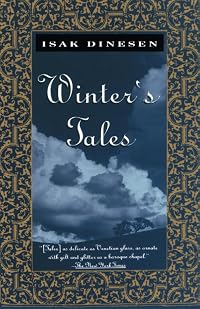
Winter's Tales
by Isak Dinesen 
On This Page
Description
Tells the stories of a struggling author, Danish country life, a brave Frenchwoman, a young sailor, a young married couple, a dreamer, and a wealthy child.Tags
Recommendations















Member Reviews
These short stories are thoughtful, romantic in the old sense of the word, and very introspective. Slow going- the style is very different from modern narrative prose- a lot about each character's inner thoughts and perceptions of the world and their past relationships to other people and their half-formed dreams of the future and so on- there is very little conversation and nothing much seems to happen until you get to the end when there is a often a sudden inexplicable connection to something else, which makes you sit up and take notice. The endings can be very odd, and often leave the reader with more questions- I frequently had a wait, what? type of response.
There is a story about an adopted child who naturally assumes himself to be show more from a grand family, even though he was raised in squalor, and the gracious airs he puts on affects everyone around him. There is a story about a pastor's daughter who helps her orphaned cousin (adopted into the household) fulfill his wish to run away to sea- meeting their disaster together. A young sailor rescues a falcon that tangled itself in the rigging, and later his compassionate act is repaid in a strange manner, when he runs afoul of some drunken men while trying to court a young girl in a town their ship stops at. A king muses on his past actions and friendships, rides down to the sea to speak to a hermit who used to be in his service, and finds something unexpected when a fish is presented to him for a meal. A young man falls in love with a beautiful lady at a resort (such establishments were called "the watering place" in these stories, which sounded quaint) only to find out all his assumptions about her position in life were wrong. And so on.
It's hard to describe the stories. They feel very old-fashioned, they are often solemn. The viewpoints in them sometimes baffled me- not just the stern religious feeling, but also the rather stereotypical notion that poor people felt content with their lot in life and were simple, dull folk and that on the other hand folk born into high station felt an inherent nobility- even if they had not been raised in a grand household. Hm.
I'm not sure if I can say I enjoyed them all, but they certainly made me think and the mood in them is very tangible, like a dark landscape that presses on you. Many of them have a fantastic element just a bit removed from normalcy, which is more unsettling and surprising than delightful or wondrous. I feel like I ought to read them all over again just to puzzle out the characters' separate motives and try to understand what was the point.
from the Dogear Diary show less
There is a story about an adopted child who naturally assumes himself to be show more from a grand family, even though he was raised in squalor, and the gracious airs he puts on affects everyone around him. There is a story about a pastor's daughter who helps her orphaned cousin (adopted into the household) fulfill his wish to run away to sea- meeting their disaster together. A young sailor rescues a falcon that tangled itself in the rigging, and later his compassionate act is repaid in a strange manner, when he runs afoul of some drunken men while trying to court a young girl in a town their ship stops at. A king muses on his past actions and friendships, rides down to the sea to speak to a hermit who used to be in his service, and finds something unexpected when a fish is presented to him for a meal. A young man falls in love with a beautiful lady at a resort (such establishments were called "the watering place" in these stories, which sounded quaint) only to find out all his assumptions about her position in life were wrong. And so on.
It's hard to describe the stories. They feel very old-fashioned, they are often solemn. The viewpoints in them sometimes baffled me- not just the stern religious feeling, but also the rather stereotypical notion that poor people felt content with their lot in life and were simple, dull folk and that on the other hand folk born into high station felt an inherent nobility- even if they had not been raised in a grand household. Hm.
I'm not sure if I can say I enjoyed them all, but they certainly made me think and the mood in them is very tangible, like a dark landscape that presses on you. Many of them have a fantastic element just a bit removed from normalcy, which is more unsettling and surprising than delightful or wondrous. I feel like I ought to read them all over again just to puzzle out the characters' separate motives and try to understand what was the point.
from the Dogear Diary show less
Blixen impressed me with her story ‘Tempests’ in Anecdotes of Destiny (AKA Babette’s Feast and Other Stories), and so resolved to read more by her. (I’d also enjoyed the three films made of her works: Out of Africa, Babette’s Feast and The Immortal Story.) Winter’s Tales contains 11 stories, some of which are better than others, but all of which are good and all of which have an almost mythical feel to them. In some it’s quite overt – ‘The Fish’, for example, reads like mannered high fantasy but is about an actual king of Denmark. Most of the stories are historical, typically set in the eighteenth or nineteenth centuries. Some are twist-in-the-tale type stories, such as ‘The Young Man with the Carnation’, in show more which a young husband reconsiders the future of his marriage after the eponymous person appears in the middle of the night at the door of the hotel room he is sharing with his wife. Only later, does the young husband realise he had been in the wrong room (whoops, spoiler). ‘The Heroine’ is a cautionary tale in which a French woman saves a group of travellers from being shot by Prussian soldiers (during the Franco-Prussian War) by refusing the Prussian commander’s offer. There was something quite DH Lawrence about the story. ‘The Pearls’ reminded me of Blixen’s own ‘The Immortal Story’, although its plot was very different. A woman marries a fearless man and her own sense of adventure is abruptly threatened when she realises the two of them skirt much too closely to danger – a realisation embodied in a string of pearls he gives her and which she inadvertently breaks… There is, as I’ve said, a near-mythical to these stories, almost as if they’re parables. It’s a type of story that seems to have mostly fallen out of favour; and while that does make the contents seem of their time, there’s also a timelessness to them because they’re set in earlier decades and centuries. I’ll be reading more Dinesen/Blixen. show less
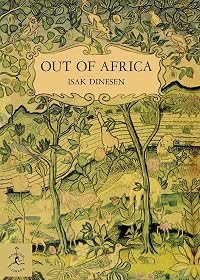
I wasn't sure what to expect from this collection of short stories by Isak Dinesen (aka Karen Blixen, the Danish author most known for writing Out of Africa), but they were just enchanting and now I want to read everything she wrote. The stories are set in the late 19th / early 20th century, sometimes in Denmark, but not exclusively. They have a fairytale / fable otherworldliness to them and her skill with quickly building the world of story and surgically precise and crisp descriptions make each story unique and engaging. Dinesen was in her mid-50s when these were published in 1941 during the Nazi occupation of Denmark, and several of the stories resonate with that moment in history. Highly recommended.
‘’You have drunk with Sunniva now,’’ she said. ‘’You have drunk down a little wisdom, so that in the future all your thoughts shall not fall like raindrops into the salt sea.’’
The Sailor - Boy’s Tale: A sailor-boy meets a strange falcon, kisses a girl and kills a man for love. A mystical tale of a boy reaching manhood.
The Young Man with the Carnation: A young writer in search of inspiration comes across a company of sailors whose tale of a woman’s search for the perfect Blue opens his eyes and understands that his wife is his Muse.
The Pearls: A pearl becomes a metaphor for the wonder, insecurity and fragility of marriage.
The Invincible Slave-Owners: The sorrows of young love through misunderstandings and secrecy.
The show more Heroine: A myseterious woman becomes the symbol of pride, resilience and dignity as the Franco-Prussian war unfolds…
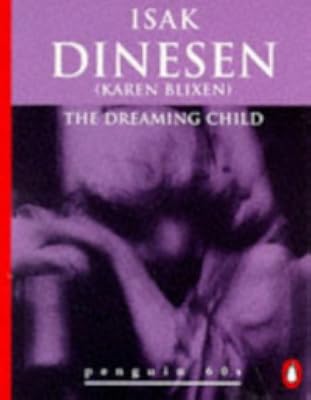
The Dreaming Child: Life brings a lonely woman and an abandoned child together in a story that starts as a Dickensian tale that turns rather eerie until its powerful closure.
Alkmene: The arrival of a young girl in a parsonage turns the household upside down and seals the fate of a boy who desperately searches for affection.
The Fish: King Erik of Denmark muses on Religion and the unattainable, seeing himself as the old Wanderer without knowing that he is soon to meet his end at the hands of a jealous husband. A haunting story for a midsummer’s night that reminded me of Oscar Wilde’s tales.
Peter and Rosa: The wind and the North Sea become the scenery of a young couple’s star-crossed love.
‘’The low, undulating Danish landscape was silent and serene, mysteriously wide-awake, in the hour before sunrise. There was not a cloud in the pale sky, not a shadow along the dim, pearly fields, hills and woods. The mist was lifting from the valleys and hollows, the air was cool, the grass and the foliage dripping wet with morning dew. Unwatched by the eyes of man, and undisturbed bu his activity, the country breathed a timeless life, to which language was inadequate.’’
Sorrow-Acre: A lyrical ode to the nature, history and legends of Denmark, told through the bitter story of a woman and her son.
A Consolatory Tale: This story could have been narrated by Scheherazade to the ones who long to open the caskets of Life and Death…
Blixen’s characters search for love, for a place to belong, for the great unknown. The seam the wind, the Northern land, the mysticism and lyricism echo through her hauntingly unique writer. Although much more earthly than her Seven Gothic Tales, this collection is a fable for daily life and the proof that the physical and the spiritual are one.
‘’I have now reconciled the heart of man with the conditions of the earth. I have persecuted, I have shown him how to get himself spat upon and scourged, I have taught him how to get himself hung upon a cross. I have given to man that solution of his riddle, that he begged of me, I have consigned to him his salvation.’’
My reviews can also be found on https://theopinionatedreaderblog.wordpress.com/ show less
The Sailor - Boy’s Tale: A sailor-boy meets a strange falcon, kisses a girl and kills a man for love. A mystical tale of a boy reaching manhood.
The Young Man with the Carnation: A young writer in search of inspiration comes across a company of sailors whose tale of a woman’s search for the perfect Blue opens his eyes and understands that his wife is his Muse.
The Pearls: A pearl becomes a metaphor for the wonder, insecurity and fragility of marriage.
The Invincible Slave-Owners: The sorrows of young love through misunderstandings and secrecy.
The show more Heroine: A myseterious woman becomes the symbol of pride, resilience and dignity as the Franco-Prussian war unfolds…
The Dreaming Child: Life brings a lonely woman and an abandoned child together in a story that starts as a Dickensian tale that turns rather eerie until its powerful closure.
Alkmene: The arrival of a young girl in a parsonage turns the household upside down and seals the fate of a boy who desperately searches for affection.
The Fish: King Erik of Denmark muses on Religion and the unattainable, seeing himself as the old Wanderer without knowing that he is soon to meet his end at the hands of a jealous husband. A haunting story for a midsummer’s night that reminded me of Oscar Wilde’s tales.
Peter and Rosa: The wind and the North Sea become the scenery of a young couple’s star-crossed love.
‘’The low, undulating Danish landscape was silent and serene, mysteriously wide-awake, in the hour before sunrise. There was not a cloud in the pale sky, not a shadow along the dim, pearly fields, hills and woods. The mist was lifting from the valleys and hollows, the air was cool, the grass and the foliage dripping wet with morning dew. Unwatched by the eyes of man, and undisturbed bu his activity, the country breathed a timeless life, to which language was inadequate.’’
Sorrow-Acre: A lyrical ode to the nature, history and legends of Denmark, told through the bitter story of a woman and her son.
A Consolatory Tale: This story could have been narrated by Scheherazade to the ones who long to open the caskets of Life and Death…
Blixen’s characters search for love, for a place to belong, for the great unknown. The seam the wind, the Northern land, the mysticism and lyricism echo through her hauntingly unique writer. Although much more earthly than her Seven Gothic Tales, this collection is a fable for daily life and the proof that the physical and the spiritual are one.
‘’I have now reconciled the heart of man with the conditions of the earth. I have persecuted, I have shown him how to get himself spat upon and scourged, I have taught him how to get himself hung upon a cross. I have given to man that solution of his riddle, that he begged of me, I have consigned to him his salvation.’’
My reviews can also be found on https://theopinionatedreaderblog.wordpress.com/ show less
Perhaps I can be forgiven for thinking Isak Dinesen was a 19th century writer. The opening passage from her short story "Sorrow-acre" quote above certainly sounds like 19th century writing to me, not something a mid-20th century author admired by Ernest Hemingway would produce. Isak Dinesen's writing seems world's away from the writing in "A Clean Well-Lighted Place," in fact, it seems a century away. Isak Dinesen (Karen Blixen) did not become a writer until mid-life. Born in Denmark in 1885, she married, divorced and ran a coffee plantation in Kenya until the early 1930's when the depression brought it to an end. This experience was the basis for her memoir Out of Africa. She returned to Denmark where she lived until her death in 1962. show more While she is a 20th century writer, she is also a writer in love with the past. The stories in Winter's Tale are set in the previous century which suits her formal, elegant writing style.
"Sorrow-acre" is set in the Danish countryside during the closing days of the manor system. A young man, Adam, has returned to his family estate to visit his uncle, the lord of the manor, and his uncle's new, much younger wife. Adam's cousin has recently died, making Adam the next-in-line to inherit the estate unless the new wife can bear his uncle a son. Much is at stake for the current lord of the manor. Should Adam decide to remain in Denmark the situation could become very difficult.
"Sorrow-acre" takes place over a single day. In the early morning one of the local peasants, an old woman, comes to the lord of the manor to plead for her son who has been sentenced to ten years in prison for a crime she says he did not commit. The woman insists that this will be the death of her as she has no one but her son to take care of her in her old age. The lord agrees that he will pardon her son if she can harvest the grain on the plot of land in front of them. The woman agrees without hesitation, though everyone knows the plot is too big for a single person, let alone and old woman, to harvest in one day. The lord of the manor insists that no one help the woman and stations his men around the field to ensure that no one does. The woman works steadily throughout the morning without stopping and soon it becomes clear that she may actually complete the task before nightfall. Everyone from the surrounding area abandons their work to watch the old woman. Adam and his uncle watch as well. Once, Adam understands that while the old woman may earn her son's freedom, she is clearly working herself to death, he abandons his uncle and Denmark and heads back to his new home in England.
Dinesen creates a different kind of heroic female in "The Heroine." The main character in "The Heroine" is Frederick, an Englishman who is studying in Berlin in the 1870's. When the Franco-Prussian War breaks out he is forced to join a group of refugees fleeing for France. He is arrested by the Germans in a border town and faces execution for espionage along with the priest, two nuns, a commercial travelers and the beautiful young woman, Heloise, who shared the hotel he was staying in. A German officer offers them all their freedom if Heloise will come to his rooms in the nude. She replies:
"Why do you ask me? ....Ask those who are with me. These are poor people, hard-working, and used to hardships. Here is a French priest," she went on very slowly, "the consoler of many poor souls; here are two French sisters, who have nursed the sick and dying. The two others have children in France, who will fare ill without them. Their salvation is, to each one of them, more important than mine. Let them decide for themselves if they will buy it at your price. You will be answered by them in French."
None of her party agree to the German officer's demands so they are all taken into the courtyard to be shot. At the last minute, the officer relents and gives them all a pass to return to France. Years later, Frederick meets Heloise again when he finds her performing on stage and in the nude. His conversation with her after the show sheds a new light on everything that happened with the German officer. Like the last few lines in a Henry James story, the ending forces the reader to see that nothing was as it first seemed.
Now, tell me, honestly, does this sound like the work of a 20th century author to you? show less
"Sorrow-acre" is set in the Danish countryside during the closing days of the manor system. A young man, Adam, has returned to his family estate to visit his uncle, the lord of the manor, and his uncle's new, much younger wife. Adam's cousin has recently died, making Adam the next-in-line to inherit the estate unless the new wife can bear his uncle a son. Much is at stake for the current lord of the manor. Should Adam decide to remain in Denmark the situation could become very difficult.
"Sorrow-acre" takes place over a single day. In the early morning one of the local peasants, an old woman, comes to the lord of the manor to plead for her son who has been sentenced to ten years in prison for a crime she says he did not commit. The woman insists that this will be the death of her as she has no one but her son to take care of her in her old age. The lord agrees that he will pardon her son if she can harvest the grain on the plot of land in front of them. The woman agrees without hesitation, though everyone knows the plot is too big for a single person, let alone and old woman, to harvest in one day. The lord of the manor insists that no one help the woman and stations his men around the field to ensure that no one does. The woman works steadily throughout the morning without stopping and soon it becomes clear that she may actually complete the task before nightfall. Everyone from the surrounding area abandons their work to watch the old woman. Adam and his uncle watch as well. Once, Adam understands that while the old woman may earn her son's freedom, she is clearly working herself to death, he abandons his uncle and Denmark and heads back to his new home in England.
Dinesen creates a different kind of heroic female in "The Heroine." The main character in "The Heroine" is Frederick, an Englishman who is studying in Berlin in the 1870's. When the Franco-Prussian War breaks out he is forced to join a group of refugees fleeing for France. He is arrested by the Germans in a border town and faces execution for espionage along with the priest, two nuns, a commercial travelers and the beautiful young woman, Heloise, who shared the hotel he was staying in. A German officer offers them all their freedom if Heloise will come to his rooms in the nude. She replies:
"Why do you ask me? ....Ask those who are with me. These are poor people, hard-working, and used to hardships. Here is a French priest," she went on very slowly, "the consoler of many poor souls; here are two French sisters, who have nursed the sick and dying. The two others have children in France, who will fare ill without them. Their salvation is, to each one of them, more important than mine. Let them decide for themselves if they will buy it at your price. You will be answered by them in French."
None of her party agree to the German officer's demands so they are all taken into the courtyard to be shot. At the last minute, the officer relents and gives them all a pass to return to France. Years later, Frederick meets Heloise again when he finds her performing on stage and in the nude. His conversation with her after the show sheds a new light on everything that happened with the German officer. Like the last few lines in a Henry James story, the ending forces the reader to see that nothing was as it first seemed.
Now, tell me, honestly, does this sound like the work of a 20th century author to you? show less
Most of the stories in this collection kept me spellbound. Most stories are set in Dinesen’s native Denmark, with occasional ventures into France, Germany, Norway, and other European countries. One story-with-in-a-story is set in Tehran. Dinesen was a master of short story literature. I happened to read this collection as I reached the end of a months-long read of Ralph Manheim’s translation of Grimms’ fairy tales, so I noted the influence of fairy tales and legends on Dinesen’s work.
Karen von Blixen-Finecke, here using the pen name Isak Dinesen, has the pen names and is best known for Out of Africa. Here she produced a collection of short stories with a faint hint of ghost stories about them. Mildly fantastic and otherworldly, they make for cozy winter time reading. Inevitably, the tales are of life-changing moments observer or experienced. These crucial moments can overtly magical ("The Sailor-Boy's Tale") or merely inexplicable like the strange meetings in "The Young Man with the Carnation". The life-long and life-affecting love of a wife figure into "The Pearls" and "Peter and Rosa". A mother taking the punishment her child cannot endure is the striking "Sorrow-Acre".
Largely set in the late 19th Century, the show more foreboding winds of European war cast a pall over many of the nearly dozen stories. show less
Largely set in the late 19th Century, the show more foreboding winds of European war cast a pall over many of the nearly dozen stories. show less
Members
- Recently Added By
Lists

Five star books
1,767 works; 110 members

Read These Too
458 works; 9 members

Harold Bloom - The Western Canon: D. The Chaotic Age
833 works; 24 members

Mustich's 1000 Books to Read Before You Die: A Life Changing List
1,001 works; 19 members

2025 Christmas Gifts
70 works; 19 members
Author Information

239+ Works 18,150 Members
Isak Dinesen was born Karen Christentze Dinesen in Rungsted, Denmark on April 17, 1885. She studied English at Oxford University and painting at the Academy of Fine Arts in Copenhagen. During her lifetime, she wrote plays, short stories, novels, poetry, and nonfiction works. Her career as a writer spanned from 1907 to 1962. She was published in show more Danish under the name of Karen Blixen and in English under the pseudonym of Isak Dinesen. Her short story collections include Seven Gothic Tales, Winter Tales, and Last Tales. Her nonfiction book, Out of Africa, was published in 1937 and was adapted into an Oscar-winning film starring Meryl Streep in 1985. She died of emaciation September 7, 1962. (Bowker Author Biography) show less
Isak Dinesen has a Legacy Library. Legacy libraries are the personal libraries of famous readers, entered by LibraryThing members from the Legacy Libraries group.
Some Editions
Awards and Honors
Awards
Distinctions
Notable Lists
Series
Belongs to Publisher Series
Work Relationships
Is contained in
Contains
Is abridged in
Common Knowledge
- Canonical title*
- Wintergeschichten
- Original title
- Winter's Tales
- Original publication date
- 1942; 1958 (revised edition) (revised edition)
- Important places
- Denmark
*Some information comes from Common Knowledge in other languages. Click "Edit" for more information.
Classifications
- Genres
- Fiction and Literature, General Fiction
- DDC/MDS
- 839.81372 — Literature & rhetoric German & related literatures Other Germanic literatures Danish and Norwegian literatures Danish Danish fiction 1900–2000 Early 20th century 1900–1945
- LCC
- PT8175 .B545 .V513 — Language and Literature German, Dutch and Scandinavian literatures Danish literature Individual authors or works 1900-1960
- BISAC
Statistics
- Members
- 1,791
- Popularity
- 12,235
- Reviews
- 21
- Rating
- (3.88)
- Languages
- 15 — Catalan, Czech, Danish, Dutch, English, Finnish, French, German, Hebrew, Italian, Norwegian (Bokmål), Polish, Portuguese, Spanish, Swedish
- Media
- Paper, Audiobook, Ebook
- ISBNs
- 53
- ASINs
- 52