
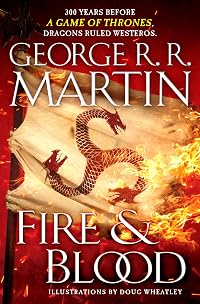
Fire and Blood: A History of the Targaryen Kings from Aegon the Conqueror to Aegon III
by George R. R. Martin
A Song of Ice and Fire (Prequel Novels — Prequel 1)
On This Page
Description
#1 NEW YORK TIMES BESTSELLER • The thrilling history of the Targaryens comes to life in this masterly work, the inspiration for HBO’s upcoming Game of Thrones prequel series House of the Dragon“The thrill of Fire & Blood is the thrill of all Martin’s fantasy work: familiar myths debunked, the whole trope table flipped.”—Entertainment Weekly
Centuries before the events of A Game of Thrones, House Targaryen—the only family of dragonlords to survive the Doom of Valyria—took show more up residence on Dragonstone. Fire & Blood begins their tale with the legendary Aegon the Conqueror, creator of the Iron Throne, and goes on to recount the generations of Targaryens who fought to hold that iconic seat, all the way up to the civil war that nearly tore their dynasty apart.
What really happened during the Dance of the Dragons? Why was it so deadly to visit Valyria after the Doom? What were Maegor the Cruel’s worst crimes? What was it like in Westeros when dragons ruled the skies? These are but a few of the questions answered in this essential chronicle, as related by a learned maester of the Citadel and featuring more than eighty all-new black-and-white illustrations by artist Doug Wheatley—including five all-new illustrations exclusive to this edition. Readers have glimpsed small parts of this narrative in such volumes as The World of Ice & Fire, but now, for the first time, the full tapestry of Targaryen history is revealed.
With all the scope and grandeur of Gibbon’s The History of the Decline and Fall of the Roman Empire, Fire & Blood is the the first volume of the definitive two-part history of the Targaryens, giving readers a whole new appreciation for the dynamic, often bloody, and always fascinating history of Westeros.
Includes a bonus PDF of illustrations from the book
Praise for Fire & Blood
“A masterpiece of popular historical fiction.”—The Sunday Times
“The saga is a rich and dark one, full of both the title’s promised elements. . . . It’s hard not to thrill to the descriptions of dragons engaging in airborne combat, or the dilemma of whether defeated rulers should ‘bend the knee,’ ‘take the black’ and join the Night’s Watch, or simply meet an inventive and horrible end.”—The Guardian. show less
Tags
Recommendations

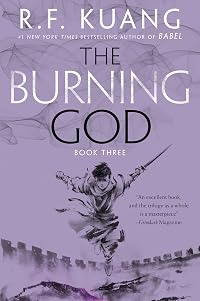
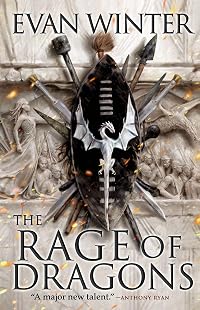
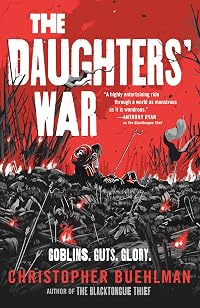
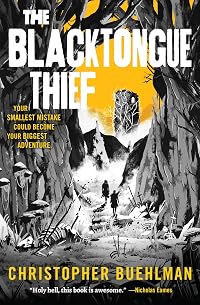
Member Reviews
I'd be hard pressed to imagine a better written "fake history" style book than this. It reads as any real life one (albeit with a heightened amount of awesome or horrid stuff happening, and dragons), meaning it is full intriguing omissions, wild rumour, attempted objectivity, dry lists, exciting machinations and most of all, truly human characters that you only glimpse as the narrative sometimes covers a month in a sentence, or a year in a paragraph. Imagine Suetonius' Twelve Caesars, but in Westeros. The fictional author's personality shines through just enough to be entertaining in his own right, while still clearly being an attempt at coming off as a neutral chronicler. The referencing other chronicles as primary sources is show more believably haphazard, and on those occasions when it is done, creates a real tapestry of possibilities, biases and sense of realism.
Of course it has lulls. Any real life history would, and this really reads as such (if, again, a heightened one). Of course there are a lot of names, but Martin's trademark ability to infuse even the briefest sketches of a figure with a distinct personality, agenda and (perhaps most important) humanity is all the more impressive for here being done entirely without the main series' usual tools of introspection and point of view-based storytelling.
If you're expecting a novel, with a novel's structure and drive, this is not for you. If you enjoy ancient biographies that just happen to be set in the invented world of Westeros and Essos, however, I don't see how this would disappoint anyone. If Martin's ever able to finish his main saga, I truly hope he finds the time to go back to write and finish the second volume of this. Based on the fictional author's supposed lifespan, that should take it up past the "Dunk and Egg" stories in the continuity, still leaving a few generations of unexplored territory before Robert's Rebellion -- but I'll happily take whatever I can get. show less
Of course it has lulls. Any real life history would, and this really reads as such (if, again, a heightened one). Of course there are a lot of names, but Martin's trademark ability to infuse even the briefest sketches of a figure with a distinct personality, agenda and (perhaps most important) humanity is all the more impressive for here being done entirely without the main series' usual tools of introspection and point of view-based storytelling.
If you're expecting a novel, with a novel's structure and drive, this is not for you. If you enjoy ancient biographies that just happen to be set in the invented world of Westeros and Essos, however, I don't see how this would disappoint anyone. If Martin's ever able to finish his main saga, I truly hope he finds the time to go back to write and finish the second volume of this. Based on the fictional author's supposed lifespan, that should take it up past the "Dunk and Egg" stories in the continuity, still leaving a few generations of unexplored territory before Robert's Rebellion -- but I'll happily take whatever I can get. show less
This is phenomenal--just don't go into it thinking it's like the main series.
In short, this is a "history" book. It's a scholar compiling accounts of the earlier Targaryans. So it reads more like a textbook. There are multiple accounts of the same scenarios as this scholar pulls from different sources, and the veracity of various ones are up for debate. But if you go into it seeing it for what it is--an extra lore book--this is a great read. It's got great art, neat family trees, further accounts of things that were mentioned in the books but not really delved into, and so on.
In short, this is a "history" book. It's a scholar compiling accounts of the earlier Targaryans. So it reads more like a textbook. There are multiple accounts of the same scenarios as this scholar pulls from different sources, and the veracity of various ones are up for debate. But if you go into it seeing it for what it is--an extra lore book--this is a great read. It's got great art, neat family trees, further accounts of things that were mentioned in the books but not really delved into, and so on.
This is a fictional work masquerading as non-fiction history. Which is fun. It is also accordingly dry, as a real history of important peoples and places is dry. It's a framed narrative within a frame, written by Archmaester Gyldayn, transcribed by George R. R. Martin. Gyldayn is not interested in providing and entertaining narrative for the reader, he is writing history! Though he does a good job spicing up the story with gossip from "Mushroom" the fool. It's also fun because we are reading the history of Daenerys Targaryen's family, though it doesn't connect with the "present" Song of Ice and Fire series quite as much as I thought it would, but it isn't any less interesting for that. I was especially enthralled with the Dying of the show more Dragons sections, as they are very tragic.
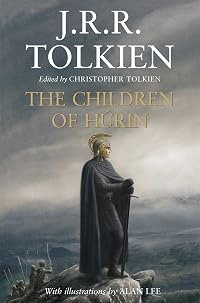
But I wish that people would stop comparing Martin to Tolkien. Yes, they both write fantasy, and yes, they both have two middle names. But Tolkien's history of the Elves of Middle Earth is epic in scope, on the level of the old myths and sagas of Europe, while Fire and Blood is a history of a family. Tolkien starts with creation myth, and in his works we actually see little of the minutiae of internal character struggle that we see in A Song of Ice and Fire, and in Fire and Blood. show less
But I wish that people would stop comparing Martin to Tolkien. Yes, they both write fantasy, and yes, they both have two middle names. But Tolkien's history of the Elves of Middle Earth is epic in scope, on the level of the old myths and sagas of Europe, while Fire and Blood is a history of a family. Tolkien starts with creation myth, and in his works we actually see little of the minutiae of internal character struggle that we see in A Song of Ice and Fire, and in Fire and Blood. show less
There is a moment when you're reading a really hefty book, usually around the 600-page mark when the end is in sight, when you either rush through the final pages, eager to have it finished so you can start something else, or you slow down, not wanting it to end, savouring the cadences which have been swirling in your brain for however long it has taken you to read it. Surprisingly, the mock-history tome Fire and Blood proved to be the latter.
I bought it out of a sense of duty, in a way – I am a big fan of Game of Thrones and the wider Westerosi mythology George R. R. Martin has created, but even I was intimidated by the prospect of a huge, 700-page lorebook (Volume One of two!), covering half the Targaryen dynasty in what I imagined show more would be affected, mock-academic prose. My strategy was that I would read it piecemeal, short doses of lore to drag myself through in between other books on my reading list.
This strategy didn't last more than thirty pages. Far from being a pseudo-historical slog or a procession of names and lineages, Fire and Blood is a vividly-realised tome that has whet my appetite (as if that were needed) for the upcoming final season of Game of Thrones. The historian-narrator conceit doesn't wear out, even in 700 pages, and the book is meticulously plotted, distilling one of the best things about A Song of Ice and Fire. The plotting and the backstabbing over who sits on the Iron Throne is as engrossing as it is in the main novels, and is similarly laced with sex and appalling violence. It lacks some of the character texture you would get in the main novels, and other reviewers are right to decry the lack of a map, but I was drawn in powerfully to GRRM's dynastic story and did not touch another book for the entire week it took me to read it. So much for strategy, or for judging a book by its cover.
The book has variety too: there is the swords-and-sandals fantasy of Aegon's martial conquest of Westeros, aided by three dragons; the grey morality of Maegor's reign that we expect from the writer of Game of Thrones; the bittersweet reign of the good king Jaehaerys I; the ferocious blood-letting of the Dance of the Dragons, and much else besides. We even get some backstory on the three dragon eggs that Daenerys is gifted in A Game of Thrones (pg. 209). GRRM's inability to complete the main novel cycle has become infamous, and it is certainly sad to see a storyteller of his calibre be defeated by his own story, but his fantasy world is a magnificent achievement, with a richness and a hard-won coherence that fans perhaps take for granted sometimes.
This volume ends with the ascension of Aegon III to the throne, and though the final chapter seems like an anti-climax given all the fire and blood of the previous 700 pages, this is a good place to end. A short appendix tells us that the last Targaryen dragon dies in this Aegon's reign, and the second volume will no doubt have as its theme the fall of House Targaryen, from Aegon III through to the Mad King and Robert's Rebellion (and the start of A Game of Thrones). Along the way it will take in Baelor the Blessed, Aemon the Dragonknight and Aegon V ('Egg' from the Dunk and Egg stories). 700 pages ago, I would never have thought I would be looking forward to it, but I am. I really am. show less
I bought it out of a sense of duty, in a way – I am a big fan of Game of Thrones and the wider Westerosi mythology George R. R. Martin has created, but even I was intimidated by the prospect of a huge, 700-page lorebook (Volume One of two!), covering half the Targaryen dynasty in what I imagined show more would be affected, mock-academic prose. My strategy was that I would read it piecemeal, short doses of lore to drag myself through in between other books on my reading list.
This strategy didn't last more than thirty pages. Far from being a pseudo-historical slog or a procession of names and lineages, Fire and Blood is a vividly-realised tome that has whet my appetite (as if that were needed) for the upcoming final season of Game of Thrones. The historian-narrator conceit doesn't wear out, even in 700 pages, and the book is meticulously plotted, distilling one of the best things about A Song of Ice and Fire. The plotting and the backstabbing over who sits on the Iron Throne is as engrossing as it is in the main novels, and is similarly laced with sex and appalling violence. It lacks some of the character texture you would get in the main novels, and other reviewers are right to decry the lack of a map, but I was drawn in powerfully to GRRM's dynastic story and did not touch another book for the entire week it took me to read it. So much for strategy, or for judging a book by its cover.
The book has variety too: there is the swords-and-sandals fantasy of Aegon's martial conquest of Westeros, aided by three dragons; the grey morality of Maegor's reign that we expect from the writer of Game of Thrones; the bittersweet reign of the good king Jaehaerys I; the ferocious blood-letting of the Dance of the Dragons, and much else besides. We even get some backstory on the three dragon eggs that Daenerys is gifted in A Game of Thrones (pg. 209). GRRM's inability to complete the main novel cycle has become infamous, and it is certainly sad to see a storyteller of his calibre be defeated by his own story, but his fantasy world is a magnificent achievement, with a richness and a hard-won coherence that fans perhaps take for granted sometimes.
This volume ends with the ascension of Aegon III to the throne, and though the final chapter seems like an anti-climax given all the fire and blood of the previous 700 pages, this is a good place to end. A short appendix tells us that the last Targaryen dragon dies in this Aegon's reign, and the second volume will no doubt have as its theme the fall of House Targaryen, from Aegon III through to the Mad King and Robert's Rebellion (and the start of A Game of Thrones). Along the way it will take in Baelor the Blessed, Aemon the Dragonknight and Aegon V ('Egg' from the Dunk and Egg stories). 700 pages ago, I would never have thought I would be looking forward to it, but I am. I really am. show less
GRRM's Fire & Blood is a history of Westeros under the Targaryens from Aegon I through the regency of Aegon III. This is NOT the Winds of Winter or anything like the Ice & Fire series. This is a history book which would be considered non-fiction if Westeros was a real country. Think Ian Mortimer, Niall Ferguson, David Starkey, or other noted historians of the British Isles.
That said, I loved this book. The history of the Targaryens is fascinating, on par with the Plantagenets except they have dragons. Martin has created such a rich and detailed world that he could write dozens of future books to expand on various people and events included as snippets here. Who wouldn't want to read more about the Red Kraken, the other sea voyages of show more Alyn Velaryon, Saera Targaryen, and so on?
I love the way Martin incorporates 'sources' into his writing. He's very careful to attribute certain incidents to previously written histories of maesters or the more dubious and bawdy memoir of Mushroom, the court fool. Like any historian, he must reconcile varying sources as he recounts various events.
Martin has always used bits of English history in his stories, and I had fun trying to decipher various characters and incidents from real history. He never copies directly (there are dragons after all) but sneaks little scenes into the story. I think I recognized the first and second battles of St Albans, Richard III's fatal charge at Bosworth, the Peasant's Rebellion, as well as more bits from the Wars of the Roses. The war called the Dance of Dragons could well be the Anarchy (the civil war between Stephen and Matilda). Aegon III's regency could be drawn from the minority of Richard II.
This is a 700 page book, and I could go on, but now, along with the Winds of Winter, I'm waiting for A Targaryen History #2. show less
That said, I loved this book. The history of the Targaryens is fascinating, on par with the Plantagenets except they have dragons. Martin has created such a rich and detailed world that he could write dozens of future books to expand on various people and events included as snippets here. Who wouldn't want to read more about the Red Kraken, the other sea voyages of show more Alyn Velaryon, Saera Targaryen, and so on?
I love the way Martin incorporates 'sources' into his writing. He's very careful to attribute certain incidents to previously written histories of maesters or the more dubious and bawdy memoir of Mushroom, the court fool. Like any historian, he must reconcile varying sources as he recounts various events.
Martin has always used bits of English history in his stories, and I had fun trying to decipher various characters and incidents from real history. He never copies directly (there are dragons after all) but sneaks little scenes into the story. I think I recognized the first and second battles of St Albans, Richard III's fatal charge at Bosworth, the Peasant's Rebellion, as well as more bits from the Wars of the Roses. The war called the Dance of Dragons could well be the Anarchy (the civil war between Stephen and Matilda). Aegon III's regency could be drawn from the minority of Richard II.
This is a 700 page book, and I could go on, but now, along with the Winds of Winter, I'm waiting for A Targaryen History #2. show less
Well this is riveting fiction, methodically dubious “history,” and a rollicking good time... until it just ENDS SUDDENLY. Damnit, George.
Anyway, I loved it. But I’m starting to think George RR Martin is allergic to real endings.
Anyway, I loved it. But I’m starting to think George RR Martin is allergic to real endings.
Listening to this as an audiobook felt like someone was reading a medieval chronicle to me, with the addition of dragons. And I intend that as a good thing, because, for the record, medieval history is fascinating. If you are familiar with medieval British history, some of the stories are vaguely familiar - one struck me in particular as a refashioning of the Anarchy period when Empress Matilda and King Stephen fought for the English crown. That being said, if you're looking for a novel that tells a concise story, you'll likely find this book lacking. If you're a fan of Martin's Song of Ice and Fire series, you'll appreciate learning about the predecessors to the families featured in those books.
Members
- Recently Added By
Lists

Read the book and saw the movie
1,170 works; 195 members

Top Five Books of 2022
736 works; 272 members

Amazon best fictional genre picks monthly for 2018
418 works; 9 members

Books read in 2019
15 works; 1 member

Kirkus Starred Fiction Reviews of Books Published in 2018
330 works; 3 members

Books Read in 2021
5,361 works; 113 members

Mind Expanding Books by hackerkid
581 works; 8 members

2019 Hugo Eligible Novels
40 works; 12 members
Author Information

719+ Works 243,194 Members
George R. R. Martin was born on September 20, 1948 in Bayonne, New Jersey. He began writing at an early age, selling monster stories for pennies to neighborhood children. He received B.S. and M.S. degrees in Journalism from Northwestern University. In 1986, he worked as a story editor for the CBS series The Twilight Zone. He was also an executive show more story consultant, producer and co-supervising producer for CBS's Beauty and the Beast. In 1970, he sold the story The Hero to Galaxy magazine. Since becoming a full-time writer in 1979, he has written many novels, stories, and series including A Song for Lya, Portraits of His Children, The Pear-Shaped Man, and the Song of Ice and Fire series. He has won numerous awards including five Locus Awards, three Hugo Awards and two Nebula awards. In 2013 he made The New York Times Best Seller List with his titles A Dance with Dragons and A Game of Thrones: a Clash of Kings, a Storm of Swords, a Feast for Crows. His title's Rogues and The Ice Dragon made the New York Times List in 2014. Martin's title, A Knight of Seven Kingdoms, A Song of Fire and Ice novel, made the New York Times bestseller list in 2015. He is number 4 on the Hollywood Reporter's '25 Most Powerful Authors' 2016 list. (Bowker Author Biography) show less
All Editions
Some Editions
Awards and Honors
Awards
Series

Work Relationships
Common Knowledge
- Canonical title
- Fire and Blood: A History of the Targaryen Kings from Aegon the Conqueror to Aegon III
- Original title
- Fire and Blood
- Original publication date
- 2018-11-20
- People/Characters
- Targaryens
- Dedication
- For Lenore, Elias, Andrea, and Sid, the Mountain Minions
- Publisher's editor
- Groell, Anne Lesley
- Original language
- English
Classifications
Statistics
- Members
- 5,436
- Popularity
- 2,462
- Reviews
- 75
- Rating
- (3.76)
- Languages
- 16 — Catalan, Czech, Danish, Dutch, English, Estonian, Finnish, French, German, Hungarian, Italian, Polish, Portuguese, Slovenian, Spanish, Turkish
- Media
- Paper, Audiobook, Ebook
- ISBNs
- 74
- ASINs
- 12