On This Page
Description
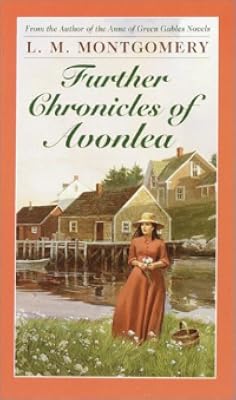
Travel to the tranquil seaside village of Avonlea in this charming collection of tales from acclaimed author L. M. Montgomery. From lighthearted stories about pampered pets and love triangles to more serious accounts of tragic loss, this varied volume is sure to please readers who fell in love with Chronicles of Avonlea or Montgomery's masterpiece, Anne of Green Gables..
Tags
Recommendations








Member Reviews
Originally published in 1920, Further Chronicles of Avonlea was the second collection of short stories by L.M. Montgomery, the author of such beloved children's classics as Anne of Green Gables and Emily of New Moon. It is my understanding that Montgomery never gave her permission for this project, and successfully sued her publisher - who culled these selections from those rejected during the editing of the 1912 Chronicles of Avonlea. In light of that fact, I sometimes wonder if she would have chosen to suppress some of these tales. Of course, that is most likely wishful thinking on my part...
The truth is, I have always felt that Further Chronicles of Avonlea shows L.M. Montgomery at her best, which is very good indeed; and her worst, show more which - as a devoted admirer of her work - I'm sorry to say, is simply atrocious. This collection contains one of my all-time favorite short-stories by Montgomery: the somewhat moralistic, but deeply moving The Brother Who Failed. Sadly, it also contains the repugnant Tannis of the Flats, a story whose matter-of-fact racism makes we wish I could expunge it from my memory.
In between these two covers, the reader will encounter:
Aunt Cynthia's Persian Cat, in which a young woman's courtship is brought to a conclusion by a troublesome cat left in her care...
The Materialization of Cecil, in which lonely spinster Charlotte Holmes invents a long-ago suitor for herself, in order to avoid the pity of the young women in her sewing circle, only to have the mythical Cecil Fenwick appear for real in Avonlea. This story, like others here and in Chronicles of Avonlea, was used (in an altered form) in the television show The Road to Avonlea.
Her Father's Daughter, in which young Rachel Spencer, about to be married, insists that her long estranged father must be present at her wedding, setting off a chain of events that reconciles her bitterly separated parents...
Jane's Baby, in which two estranged sisters, both widows, fight over their cousin Jane's baby...
The Dream-Child, an eerie tale in which a bereaved mother comes to believe that her dead child is calling to her from the sea...
The Brother Who Failed, in which the Monroe clan gathers for a family reunion, and honors the quiet Robert for his many acts of kindness and wisdom...
The Return of Hester, in which the eponymous Hester returns from the dead, to undo the harm she had done in life, by forbidding her younger sister's marriage...
The Little Brown Book of Miss Emily, in which Anne Shirley and Diana Barry (of Anne of Green Gables fame), read the diary of an old maid, and gain an appreciation for the romantic sorrow of her youth...
Sara's Way, in which the stubborn Sara Andrews refuses to marry the worthy Lige Baxter, until misfortune brings him low...
The Son of His Mother, in which near tragedy teaches a fiercely devoted mother to share her son's love...
The Education of Betty, in which a man takes a hand in raising his best friend's child, eventually falling in love with her...
In Her Selfless Mood, in which the unloved Eunice Carr sacrifices everything for her scapegrace brother...
The Conscience Case of David Bell, in which a church elder finds himself unable to testify at a revival meeting, until he makes a public confession of his transgression...
Only a Common Fellow, in which a seemingly vulgar young man rises to the height of self-sacrifice and nobility, when the long-missing true love of the woman he himself adores, returns unexpectedly...
And finally, the terrible Tannis of the Flats, in which a love-triangle involving an exiled Englishman and a mixed-blood Native Canadian woman leads to tragedy...
When I think of this last selection, I often wonder how it is that a woman with such an intimate understanding of human nature, such a perceptive appreciation for questions of morality, and such an eye for beauty, could have failed to perceive the ignorance and stupidity, the sheer immorality, and the downright ugliness of racism. But then, I suppose we are all products of our time, and our humanity goes hand-in-hand with our inhumanity. A difficult idea to accept, when it comes to a much-beloved author, but there you have it: Montgomery too had feet of clay... show less
The truth is, I have always felt that Further Chronicles of Avonlea shows L.M. Montgomery at her best, which is very good indeed; and her worst, show more which - as a devoted admirer of her work - I'm sorry to say, is simply atrocious. This collection contains one of my all-time favorite short-stories by Montgomery: the somewhat moralistic, but deeply moving The Brother Who Failed. Sadly, it also contains the repugnant Tannis of the Flats, a story whose matter-of-fact racism makes we wish I could expunge it from my memory.
In between these two covers, the reader will encounter:
Aunt Cynthia's Persian Cat, in which a young woman's courtship is brought to a conclusion by a troublesome cat left in her care...
The Materialization of Cecil, in which lonely spinster Charlotte Holmes invents a long-ago suitor for herself, in order to avoid the pity of the young women in her sewing circle, only to have the mythical Cecil Fenwick appear for real in Avonlea. This story, like others here and in Chronicles of Avonlea, was used (in an altered form) in the television show The Road to Avonlea.
Her Father's Daughter, in which young Rachel Spencer, about to be married, insists that her long estranged father must be present at her wedding, setting off a chain of events that reconciles her bitterly separated parents...
Jane's Baby, in which two estranged sisters, both widows, fight over their cousin Jane's baby...
The Dream-Child, an eerie tale in which a bereaved mother comes to believe that her dead child is calling to her from the sea...
The Brother Who Failed, in which the Monroe clan gathers for a family reunion, and honors the quiet Robert for his many acts of kindness and wisdom...
The Return of Hester, in which the eponymous Hester returns from the dead, to undo the harm she had done in life, by forbidding her younger sister's marriage...
The Little Brown Book of Miss Emily, in which Anne Shirley and Diana Barry (of Anne of Green Gables fame), read the diary of an old maid, and gain an appreciation for the romantic sorrow of her youth...
Sara's Way, in which the stubborn Sara Andrews refuses to marry the worthy Lige Baxter, until misfortune brings him low...
The Son of His Mother, in which near tragedy teaches a fiercely devoted mother to share her son's love...
The Education of Betty, in which a man takes a hand in raising his best friend's child, eventually falling in love with her...
In Her Selfless Mood, in which the unloved Eunice Carr sacrifices everything for her scapegrace brother...
The Conscience Case of David Bell, in which a church elder finds himself unable to testify at a revival meeting, until he makes a public confession of his transgression...
Only a Common Fellow, in which a seemingly vulgar young man rises to the height of self-sacrifice and nobility, when the long-missing true love of the woman he himself adores, returns unexpectedly...
And finally, the terrible Tannis of the Flats, in which a love-triangle involving an exiled Englishman and a mixed-blood Native Canadian woman leads to tragedy...
When I think of this last selection, I often wonder how it is that a woman with such an intimate understanding of human nature, such a perceptive appreciation for questions of morality, and such an eye for beauty, could have failed to perceive the ignorance and stupidity, the sheer immorality, and the downright ugliness of racism. But then, I suppose we are all products of our time, and our humanity goes hand-in-hand with our inhumanity. A difficult idea to accept, when it comes to a much-beloved author, but there you have it: Montgomery too had feet of clay... show less
I like to think of Avonlea as my happy place, and its one I've sunk deeply into over this holiday weekend. Unfortunately, Further Chronicles of Avonlea is not a happy place. This book is populated by mean, spiteful, bitter, nasty people, to the point where I wonder if LMM had developed a complex about being deeply unhappy with her life and decided to inflict it upon the place she was best known for.
It's not all bad, mind. "The Brother Who Failed" brought me to tears over the kindness paid to its gentle main character. "The Materializing of Cecil" was repurposed for the Duncan MacTavish episode of Road to Avonlea. There is an Anne + Diana short, "The Little Brown Book of Miss Emily," though it is a sad one.
But when the stories in this show more collection are bad, they are awful. "The Education of Betty" is basically about a man grooming a little girl to be his wife (GROSS). "Tannis of the Flats" is horribly racist through and through - actually an impressive feat, considering the way it starts with Tannis being described as a ~beautiful half-breed~.
But yeah. My main takeaway from this collection is that LMM was deeply unhappy when she wrote it, populating it with so many women who are bitter, jealous, angry creatures with either way too much agency (one mother declaring that no woman will ever steal her son and making him swear that he'll never marry), or absolutely none (one woman bound by her dying mother to care for her selfish brother, to the point of losing her own home at his whim). show less
It's not all bad, mind. "The Brother Who Failed" brought me to tears over the kindness paid to its gentle main character. "The Materializing of Cecil" was repurposed for the Duncan MacTavish episode of Road to Avonlea. There is an Anne + Diana short, "The Little Brown Book of Miss Emily," though it is a sad one.
But when the stories in this show more collection are bad, they are awful. "The Education of Betty" is basically about a man grooming a little girl to be his wife (GROSS). "Tannis of the Flats" is horribly racist through and through - actually an impressive feat, considering the way it starts with Tannis being described as a ~beautiful half-breed~.
But yeah. My main takeaway from this collection is that LMM was deeply unhappy when she wrote it, populating it with so many women who are bitter, jealous, angry creatures with either way too much agency (one mother declaring that no woman will ever steal her son and making him swear that he'll never marry), or absolutely none (one woman bound by her dying mother to care for her selfish brother, to the point of losing her own home at his whim). show less
Really nice collection of short stories set in Avonlea. Unfortunately the last story has prejudice portrayal of the "half-breed" and "Indian" girl.
So this was a really odd mix of short stories. I say "odd" because I think I'm comparing it to "Anne of Green Gables," not even really meaning to. It's just that the "Anne" series is so iconic and such a big part of my reading life, that it's hard not to compare.
These short stories were sometimes laugh-out-loud funny, sometimes freakishly disturbing, and sometimes downright sorrowful.
I listened to the audiobook so sometimes it felt like the stories ended quickly, but I think that's because I was listening.
My favorite stories were the one about the Persian cat, the ghostly appearance in the garden and what happens when an imaginary lover actually comes to town.
These short stories were sometimes laugh-out-loud funny, sometimes freakishly disturbing, and sometimes downright sorrowful.
I listened to the audiobook so sometimes it felt like the stories ended quickly, but I think that's because I was listening.
My favorite stories were the one about the Persian cat, the ghostly appearance in the garden and what happens when an imaginary lover actually comes to town.
Lest one think Ms. Montgomery only wrote Pollyannish tales where everything comes right in the end, a reading of such tales as "In Her Selfless Mood" or "Tannis of the Flats" will quickly cure that misapprehension. Though there are tales of romance gone right and some humor as well, there is more tragedy in these tales than in the first "Chronicles of Avonlea" collection. Like many good short stories, there are some good "twists in the tale" and a knack for capturing personalities.
Similar to its predecessor, these are short stories set in Avonlea. Out of 15 stories, Anne only appears (and narrates) one story. I believe she was also mentioned in one or two others. Other characters such as Marilla and Matthew are also mentioned in passing. But outside of this, these stories have nothing to do with the main series.
That being said, there is a major difference between this book and the previous one. This one was actually published without permission from L. M. Montgomery. I am not certain what the state of the stories were in before they were released, but it's clear that she didn't want them to be published. So much so that she sued the publisher and even won after a lengthy legal battle.
I kept going back and forth show more about whether or not to read this one. Ultimately, I was too curious. And well, this is one of the cases where curiosity killed the cat.
While the stories feature many of the common themes we see in L. M. Montgomery stories (such as: Orphans finding a new chosen family, family members with secrets, couples marrying after years of separation due to silly arguments or misunderstandings, etc), the stories themselves aren't as good. Some are questionable even.
Like the last collection, I'll be reviewing each story on its own then using the average rating for the whole book.
NOTE: While I try to avoid spoilers and I will keep things very vague, I feel I need to reveal some things as content warnings!
1. "Aunt Cynthia's Persian Cat" (3 stars): I honestly don't remember much about the story. It was short and uneventful mostly. I didn't like it but didn't dislike it either.
2. "The Materializing of Cecil" (4 stars): This is a silly story that I ended up enjoying more than I expected. A woman makes up a long, forgotten suitor only for her lie to start chasing her.
3. "Her Father's Daughter" (3.5 stars): This was not bad, but the ending ended up feeling a bit too cliche and cheesy even if it did have some good emotional moments in the middle.
4. "Jane's Baby" (2 stars): I really didn't like this one. The characters are all very selfish and illogical. The resolution was fine but felt forced.
5. "The Dream-Child" (4 stars): This story ended up haunting me. Something about L. M. Montgomery's writing in this one is different. Much darker. Much more painful. Good enough resolution (at least to me)
6. "The Brother Who Failed" (3.5 stars): The idea for the story itself is a bit cheesy, but honestly a good message. It benefited from not being overly long.
7. "The Return of Hester" (2 stars): Not our beloved Hester Gray, no. I'm honestly not entirely sure what to make of this one. While there are hints of hauntings and mystery in Anne books, in general, this one took it to the extreme where we actually see a paranormal event.
8. " The Little Brown Book of Miss Emily " (2 stars): Even though this is the only story that primarily features Anne, and is actually the only time we get first-person narration by Anne in general, I didn't like the story. Anne and Diana are unfortunately very self-possessed and judgmental in it. And not for any good reason. They learn a good lesson in it, but I didn't enjoy the story.
9. "Sara's Way" (2 stars): I didn't hate anything particular in this story. It just felt like ... nothing happens per se. One moment, the main characters dislikes a person. Then, suddenly, likes him because everyone else is against him. Only because of that.
10. "The Son of his Mother" (2 stars): The story covers mothers' jealousies and over-protectiveness. Ultimately, the ending was okay, but the mother is unhinged and it comes off as very unhealthy and creepy. Granted the mother also learns an important lesson, but...
11. "The Education of Betty" (0 stars): I never thought I'd ever give an L. M. Montgomery story this low of a rating. And, in her defense, apparently and unfortunately, cases like this were acceptable at the time. I still felt very uncomfortable and was in denial that it could possibly be leading towards that ending. CW: Practically child grooming.
12. "In Her Selfless Mood" (2.5 stars): I don't know what the intention of this story was. The self-less character got to die in the room she wished for in the end. That's it. She was used by everyone around her all her life and accepted that. And that was the pay-off of the story in the end.
13. "The Conscience Case of David Bell" (2 stars): I... honestly don't even know what to say here, haha. It's fine. Was too long for what it tried to do in the end. Don't be judgmental, you don't know what people are actually thinking or going through.
14. "Only a Common Fellow" (3 stars): A story about second chances, staying true to your word and reuniting lovers. It was too short, I believe, but ultimately I enjoyed it enough.
15. "Tannis of the Flats" (0 stars): Includes racist stereotyping against Native Canadians. I don't believe that L. M. Montogomery herself meant harm. She does show the main character as the one who is actually selfless and good-hearted and I believe the actual questionable wording is through the eyes of a racist, pompous jerk of a character. But still I really hated this story and ultimately felt uncomfortable with the depictions. show less
That being said, there is a major difference between this book and the previous one. This one was actually published without permission from L. M. Montgomery. I am not certain what the state of the stories were in before they were released, but it's clear that she didn't want them to be published. So much so that she sued the publisher and even won after a lengthy legal battle.
I kept going back and forth show more about whether or not to read this one. Ultimately, I was too curious. And well, this is one of the cases where curiosity killed the cat.
While the stories feature many of the common themes we see in L. M. Montgomery stories (such as: Orphans finding a new chosen family, family members with secrets, couples marrying after years of separation due to silly arguments or misunderstandings, etc), the stories themselves aren't as good. Some are questionable even.
Like the last collection, I'll be reviewing each story on its own then using the average rating for the whole book.
NOTE: While I try to avoid spoilers and I will keep things very vague, I feel I need to reveal some things as content warnings!
1. "Aunt Cynthia's Persian Cat" (3 stars): I honestly don't remember much about the story. It was short and uneventful mostly. I didn't like it but didn't dislike it either.
2. "The Materializing of Cecil" (4 stars): This is a silly story that I ended up enjoying more than I expected. A woman makes up a long, forgotten suitor only for her lie to start chasing her.
3. "Her Father's Daughter" (3.5 stars): This was not bad, but the ending ended up feeling a bit too cliche and cheesy even if it did have some good emotional moments in the middle.
4. "Jane's Baby" (2 stars): I really didn't like this one. The characters are all very selfish and illogical. The resolution was fine but felt forced.
5. "The Dream-Child" (4 stars): This story ended up haunting me. Something about L. M. Montgomery's writing in this one is different. Much darker. Much more painful. Good enough resolution (at least to me)
6. "The Brother Who Failed" (3.5 stars): The idea for the story itself is a bit cheesy, but honestly a good message. It benefited from not being overly long.
7. "The Return of Hester" (2 stars): Not our beloved Hester Gray, no. I'm honestly not entirely sure what to make of this one. While there are hints of hauntings and mystery in Anne books, in general, this one took it to the extreme where we actually see a paranormal event.
8. " The Little Brown Book of Miss Emily " (2 stars): Even though this is the only story that primarily features Anne, and is actually the only time we get first-person narration by Anne in general, I didn't like the story. Anne and Diana are unfortunately very self-possessed and judgmental in it. And not for any good reason. They learn a good lesson in it, but I didn't enjoy the story.
9. "Sara's Way" (2 stars): I didn't hate anything particular in this story. It just felt like ... nothing happens per se. One moment, the main characters dislikes a person. Then, suddenly, likes him because everyone else is against him. Only because of that.
10. "The Son of his Mother" (2 stars): The story covers mothers' jealousies and over-protectiveness. Ultimately, the ending was okay, but the mother is unhinged and it comes off as very unhealthy and creepy. Granted the mother also learns an important lesson, but...
11. "The Education of Betty" (0 stars): I never thought I'd ever give an L. M. Montgomery story this low of a rating. And, in her defense, apparently and unfortunately, cases like this were acceptable at the time. I still felt very uncomfortable and was in denial that it could possibly be leading towards that ending. CW: Practically child grooming.
12. "In Her Selfless Mood" (2.5 stars): I don't know what the intention of this story was. The self-less character got to die in the room she wished for in the end. That's it. She was used by everyone around her all her life and accepted that. And that was the pay-off of the story in the end.
13. "The Conscience Case of David Bell" (2 stars): I... honestly don't even know what to say here, haha. It's fine. Was too long for what it tried to do in the end. Don't be judgmental, you don't know what people are actually thinking or going through.
14. "Only a Common Fellow" (3 stars): A story about second chances, staying true to your word and reuniting lovers. It was too short, I believe, but ultimately I enjoyed it enough.
15. "Tannis of the Flats" (0 stars): Includes racist stereotyping against Native Canadians. I don't believe that L. M. Montogomery herself meant harm. She does show the main character as the one who is actually selfless and good-hearted and I believe the actual questionable wording is through the eyes of a racist, pompous jerk of a character. But still I really hated this story and ultimately felt uncomfortable with the depictions. show less
This is a rather nice collection of short stories, if you're already a L.M. Montgomery fan, you will enjoy this. I know I did, BUT be aware of racist overtones (Tannis of the Flats) as well as some slightly sexist ones. These stories need to be read/understood within context, so should not be given to young ones to read. Definitely more of a Young Adults book than a children's one, but some of the stories are enjoyable.
Members
- Recently Added By
Lists

NPRs Ultimate Backseat Bookshelf: 100 Must-Reads for kids 9-14
222 works; 30 members

NPRs your favorites: 100 Best Ever Teen Novels
237 works; 49 members
Talk Discussions
Past Discussions
Spinster lies about a romance in her past in Name that Book (January 2017)
Author Information

383+ Works 159,635 Members
One of the best-loved children's/young adult authors, Lucy Maud Montgomery was born on November 30, 1874 in Clifton, Prince Edward Island, Canada, the daughter of Hugh John and Clara Woolner. After attending Prince of Wales College and Dalhouse College in Halifax, she became a certified teacher, eventually teaching in Bideford, Prince Edward show more Island. She also served as an assistant at the post office and as a writer for the local newspaper, The Halifax Daily Echo. Best known for her Anne of Avonlea and Anne of Green Gables books, Montgomery received many high honors. She was named a Fellow of the Royal Society of Arts in 1923 and a Canadian stamp commemorates Montgomery and Anne of Green Gables. In addition, various museums dedicated to the book series and Montgomery's life dot Prince Edward Island. The books in the Anne series follow the growth and adventures of a red-haired, spritely, high-spirited and imaginative orphan named Anne who lives on Prince Edward Island. The success of these books rested in Montgomery's ability to vividly recollect childhood and her easy storytelling ability. They are tremendously popular to this day and have been translated into more than 35 languages and adapted as movies and PBS television productions. On July 5, 1911, L.M. Montgomery married Ewan Macdonald, a Presbyterian minister, and the marriage produced three children. She died on April 24, 1942. (Bowker Author Biography) show less
Some Editions
Series

Work Relationships
Common Knowledge
- Canonical title
- Further Chronicles of Avonlea
- Original title
- Chronicles of Avonlea; Further Chronicles of Avonlea
- Original publication date
- 1920; 1998 (Nouvelle édition française, Presses de la Cité) (Nouvelle édition française, Presses de la Cité)
- Important places
- Prince Edward Island, Canada
- First words
- Max always blesses the animal when it is referred to; and I don't deny that things have worked together for good after all.
- Last words
- (Click to show. Warning: May contain spoilers.)And Elinor, reluctant, sorrowful, yet swayed by a will and an emotion stronger than her own, went slowly out, leaving Tannis of the Flats alone with her dead.
- Original language
- English
Classifications
- Genres
- Fiction and Literature, Children's Books
- DDC/MDS
- 813.52 — Literature & rhetoric American literature in English American fiction in English 1900-1999 1900-1945
- LCC
- PZ7 .M768 — Language and Literature Fiction and juvenile belles lettres Fiction and juvenile belles lettres Juvenile belles lettres
- BISAC
Statistics
- Members
- 1,963
- Popularity
- 10,824
- Reviews
- 17
- Rating
- (3.69)
- Languages
- 8 — Chinese, English, French, German, Hebrew, Italian, Polish, Portuguese (Portugal)
- Media
- Paper, Audiobook, Ebook
- ISBNs
- 119
- ASINs
- 43