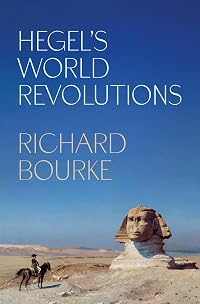
Hegel’s World Revolutions
by Richard Bourke
20 Members (3.50)
On This Page
Description
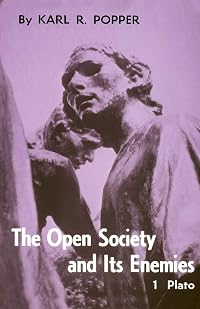
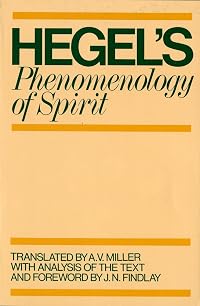
"A new account of the relevance of Hegel's ideas for today's world, countering the postwar anti-Hegel "insurgency"G.W.F. Hegel was widely seen as the greatest philosopher of his age. Ever since, his work has shaped debates about issues as varied as religion, aesthetics and metaphysics. His most lasting contribution was his vision of history and politics. In Hegel's World Revolutions, Richard Bourke returns to Hegel's original arguments, clarifying their true import and illuminating their show more relevance to contemporary society. Bourke shows that central to Hegel's thought was his anatomy of the modern world. On the one hand he claimed that modernity was a deliverance from subjection, but on the other he saw it as having unleashed the spirit of critical reflection. Bourke explores this predicament in terms of a series of world revolutions that Hegel believed had ushered in the rise of civil society and the emergence of the constitutional state.Bourke interprets Hegel's thought, with particular reference to his philosophy of history, placing it in the context of his own time. He then recounts the reception of Hegel's political ideas, largely over the course of the twentieth century. Countering the postwar revolt against Hegel, Bourke argues that his disparagement by major philosophers has impoverished our approach to history and politics alike. Challenging the condescension of leading thinkers-from Heidegger and Popper to Levi-Strauss and Foucault-the book revises prevailing views of the relationship between historical ideas and present circumstances"-- "This book offers the first historical treatment of Hegel's political ideas since the 1970s. It completely revises our understanding of his response to the French Revolution, the most dramatic and significant event of his age. A fresh account of his take on the Revolution itself provides a new perspective on his thought as a whole. It also illuminates Hegel's relevance to modern politics. Dominant strands of post-War thought have taken the form of a repudiation of Hegel. This reaction has largely been based on dubious arguments and poor scholarship. The alternative analysis offered here contextualizes attempts to disparage Hegel as pursued by strands of critical theory associated with postmodernism. In the process, the book challenges recent onslaughts against so-called "Western" rationalism. It takes issue with the ambition to relativize all values and to represent knowledge as an effect of power"-- show lessTags
Recommendations













Member Reviews
Members
- Recently Added By
Author Information
9+ Works 181 Members
Common Knowledge
- Original publication date
- 2023
Classifications
- Genres
- Nonfiction, Philosophy, History, Politics and Government, Literature Studies and Criticism, General Nonfiction
- DDC/MDS
- 944.04 — History & geography History of Europe France and Monaco France Revolution 1789-1804
- LCC
- JC233 .H46 .B664 — Political Science Political theory Political theory. The state. Theories of the state Modern state
- BISAC
Statistics
- Members
- 20
- Popularity
- 1,277,108
- Rating
- (3.50)
- Languages
- English
- Media
- Paper, Ebook
- ISBNs
- 3