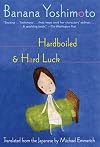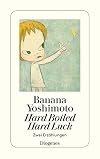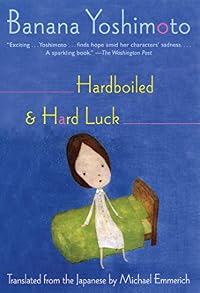
Hardboiled and Hard Luck
by Banana Yoshimoto
On This Page
Description
In cherished novels such as Kitchen and Goodbye Tsugumi, Banana Yoshimoto's warm, witty, and heartfelt depictions of the lives of young Japanese have earned her international acclaim and best-seller status. Her insightful, spare vision returns in two novellas possessed by the ghosts of love found and lost. In Hardboiled, the unnamed narrator is hiking in the mountains on an anniversary she has forgotten about, the anniversary of her ex-lover's death. As she nears her hotel-stopping on the show more way at a hillside shrine and a strange soba shop-a sense of haunting falls over her. Perhaps these eerie events will help her make peace with her loss. Hard Luck is about another young woman, whose sister is dying and lies in a coma. Kuni's fiancé left her after the accident, but his brother Sakai continues to visit, and the two of them gradually grow closer as they make peace with the impending loss of their loved one. Yoshimoto's voice is clear, assured, and deeply moving, displaying again why she is one of Japan's, and the world's, most beloved writers. show lessTags
Recommendations





Member Reviews
These two stories share loss as their centerpiece. Loss of love, loss of life, loss of identity, loss of time. The English translation is composed of quite minimal prose, which I find to be an initially alienating stylistic choice when writing about death. Such simple words smack one of copping out, shirking the hard work of describing death more meticulously. But if done well, it can feel like one of the sole means of doing it justice.
Loss imparts such cloudy, slow-moving sensations & emotions, passing through you like a glacier. Coincidentally, the iceberg theory is most relevant when examining minimalist portrayals of grief and bereavement. Like in Ivan Ivanovich, the death is simply the catalyst for everything else in the story. show more While the depiction of the material death is blunt and therefore jarring to read - one feels the dead deserve more respect than a one-sentence summary of their final breath - the loss permeates the story and augments their existence more than any rote description of death ever could.
Stories like these focus on the space any given person can occupy in the mind of another, how much their life figures into our perception, decisions, senses, and so on. These folks become a constituent part of our subjectivity, and to lose them means losing a piece of ourselves. For Yashimoto's narrators, the losses manifest in the paranormal or surreal. In "Hardboiled," the narrator encounters ghosts both in reality and in dreams. Her partner's last request is that the narrator live "hardboiled." To live hardboiled would presumably be to live life in direct confrontation with the rough and uncomfortable. Her partner's death is an accident, a house fire. The end of their relationship was just as abrupt and traumatic. One can't prepare for the loss of love, the loss of life. Deaths will spring on you the same way the realization of love lost will emerge from unconscious deaths.
"Hard Luck" is a title that, like the minimalist prose, feels understated given the subject matter. However, suffering a cerebral hemorrhage may be reduced to hard luck, same as accidental deaths like in the story prior. Loss is unpredictable in most cases. What holds me from liking these stories though is most observable in this story. While minimalism does not often detract from death, clichés do. Aligning the end of life with the end of autumn and arrival of winter is a hardboiled trope. The narrator in the story complains of hearing the same condolences repeatedly (which is admittedly annoying, and one of those social obligations that feels totally hollow for both parties), yet using these ancient tropes as a joint for your story's movement has the same effect. It does not have the same surreal atmosphere as "Hardboiled," and feels more like a straightforward story of a death, unfortunately. show less
Loss imparts such cloudy, slow-moving sensations & emotions, passing through you like a glacier. Coincidentally, the iceberg theory is most relevant when examining minimalist portrayals of grief and bereavement. Like in Ivan Ivanovich, the death is simply the catalyst for everything else in the story. show more While the depiction of the material death is blunt and therefore jarring to read - one feels the dead deserve more respect than a one-sentence summary of their final breath - the loss permeates the story and augments their existence more than any rote description of death ever could.
Stories like these focus on the space any given person can occupy in the mind of another, how much their life figures into our perception, decisions, senses, and so on. These folks become a constituent part of our subjectivity, and to lose them means losing a piece of ourselves. For Yashimoto's narrators, the losses manifest in the paranormal or surreal. In "Hardboiled," the narrator encounters ghosts both in reality and in dreams. Her partner's last request is that the narrator live "hardboiled." To live hardboiled would presumably be to live life in direct confrontation with the rough and uncomfortable. Her partner's death is an accident, a house fire. The end of their relationship was just as abrupt and traumatic. One can't prepare for the loss of love, the loss of life. Deaths will spring on you the same way the realization of love lost will emerge from unconscious deaths.
"Hard Luck" is a title that, like the minimalist prose, feels understated given the subject matter. However, suffering a cerebral hemorrhage may be reduced to hard luck, same as accidental deaths like in the story prior. Loss is unpredictable in most cases. What holds me from liking these stories though is most observable in this story. While minimalism does not often detract from death, clichés do. Aligning the end of life with the end of autumn and arrival of winter is a hardboiled trope. The narrator in the story complains of hearing the same condolences repeatedly (which is admittedly annoying, and one of those social obligations that feels totally hollow for both parties), yet using these ancient tropes as a joint for your story's movement has the same effect. It does not have the same surreal atmosphere as "Hardboiled," and feels more like a straightforward story of a death, unfortunately. show less
Ms. Lizzie D’souza used to make the most decadent marzipan Easter eggs a palate has ever savored. Nestled oh so cozily among the delicate weaves of satin cradles, unwearyingly waiting for enthusiastic strangers through the glass casement, somehow brought ephemeral magic to the quaint bakery down the leafy street; evermore dazzling with Lizzie’s welcoming smile. Easter is still a month away, but the commencing of Lent has brought in an inventory of pre-orders of the sugary almond confectionery. “We take Easter egg orders- original, caramel and chocolate” ; shone through the marble interiors of a grand patisserie. I put in my order for a two dozen of lavender hued and beige marzipan goodies with sugary icing. They now come in show more stylish boxes and not in those satin cradles. Ms. Lizzie has been dead for more than a decade now and the bakery has been lost somewhere in the gigantic commercialized edifice. The misty eyes and half-woken smile that followed me home was not in the commemoration of the deceased bakery or Ms. Lizzie , it was the wakeful memory of my first ever road tantrum ; an obstinate demeanor that soulfully made my grandfather splurge our cab fare on Ms. Lizzie’s marzipan creations. I was the happiest 4-yr old carrying my prize all the way home.
Closure is the trickiest word in the human psyche. Closure -- the desire or need individuals have for information that will allow them to conclude an issue that had previously been clouded in ambiguity and uncertainty.
I am way too old to be in denial of my grandpa’s demise, but, undying memories never seem to be fading. Although, the conclusion of existing physicality two decades ago seems a distant past to those copious tears that flowed in the initial years, yet dormant emotions triggering with the slightest hint of nostalgia can never bring the said rational closure. Maybe, because I never got say a proper goodbye. I was in school when he departed this very earth. Closure is certainly the most passive sentiment.
“Time expands and contracts. When it expands, it’s like pitch; it folds people in its arms and holds them forever in its embrace. It doesn't let us go very easily. Sometime you go back again to the place you've come from and close your eyes and realize that not a second has passed, and time just leaves you there, stranded, in the darkness.”
Chizuru was an enigmatic personality. External noises striding through her apartment walls never bothered her, if truth be told; they actually comforted her in some weird ways. I reckon her alienated life yearned for sounds all round. The music prancing around the CD player, couples sharing intimate conversations in the neighboring flat; the resonating gradations reassured her anxious disposition. Chizuru’s untimely death left her lover in a quandary of mystifying culpability. Mr. John belting out “sorry seems to be the hardest word” in the background questions the narrator’s supernatural illusions on a mountainous trek and begs the validity of Elton’s words. Did Chizuru’s baffling death left a hollow space in the chronicler’s burdensome heart? Would she attain the said closure of over her lover’s demise if only she could tell Chizuru how her decision to end the relationship was entirely her doing and if she could she would have stayed back? Incomplete farewells weigh one’s heart down more than the encumbered consequences of a hardboiled life; mystical reveries being the definitive pied piper to the veiled fretfulness.
“Death isn't sad. What hurts is being drowned with emotions”.
Kuni’s hard luck distorted her sister’s sanity with tearful valedictions each day as Kuni slowly succumbed to obscure comatose depths. Coming to terms with the frozen reality of bereavement as the boundless spirit flies from the morbid bodily haven; undoubtedly the nastiest occurrence of life and death. Emptiness looms its ghastly countenance when we move from old to new relationships; the living endures the melancholic adversities of the departed.
"To focus on the unbearable only marred what was scared…….. If any thing was a miracle, it was the lovely moments we experienced during the small, almost imperceptible period of relief”.
'Rest in peace', as we bless the departed soul, the genuine prayer is sermonic for serenity of the living. Yoshimoto’s undemanding prose may not be alarming and plays around surrealism similar to other Japanese literary compatriots, but, its fateful characters are memorable. Indeed, there is no closure to a heartfelt remembrance.
show less
Closure is the trickiest word in the human psyche. Closure -- the desire or need individuals have for information that will allow them to conclude an issue that had previously been clouded in ambiguity and uncertainty.
I am way too old to be in denial of my grandpa’s demise, but, undying memories never seem to be fading. Although, the conclusion of existing physicality two decades ago seems a distant past to those copious tears that flowed in the initial years, yet dormant emotions triggering with the slightest hint of nostalgia can never bring the said rational closure. Maybe, because I never got say a proper goodbye. I was in school when he departed this very earth. Closure is certainly the most passive sentiment.
“Time expands and contracts. When it expands, it’s like pitch; it folds people in its arms and holds them forever in its embrace. It doesn't let us go very easily. Sometime you go back again to the place you've come from and close your eyes and realize that not a second has passed, and time just leaves you there, stranded, in the darkness.”
Chizuru was an enigmatic personality. External noises striding through her apartment walls never bothered her, if truth be told; they actually comforted her in some weird ways. I reckon her alienated life yearned for sounds all round. The music prancing around the CD player, couples sharing intimate conversations in the neighboring flat; the resonating gradations reassured her anxious disposition. Chizuru’s untimely death left her lover in a quandary of mystifying culpability. Mr. John belting out “sorry seems to be the hardest word” in the background questions the narrator’s supernatural illusions on a mountainous trek and begs the validity of Elton’s words. Did Chizuru’s baffling death left a hollow space in the chronicler’s burdensome heart? Would she attain the said closure of over her lover’s demise if only she could tell Chizuru how her decision to end the relationship was entirely her doing and if she could she would have stayed back? Incomplete farewells weigh one’s heart down more than the encumbered consequences of a hardboiled life; mystical reveries being the definitive pied piper to the veiled fretfulness.
“Death isn't sad. What hurts is being drowned with emotions”.
Kuni’s hard luck distorted her sister’s sanity with tearful valedictions each day as Kuni slowly succumbed to obscure comatose depths. Coming to terms with the frozen reality of bereavement as the boundless spirit flies from the morbid bodily haven; undoubtedly the nastiest occurrence of life and death. Emptiness looms its ghastly countenance when we move from old to new relationships; the living endures the melancholic adversities of the departed.
"To focus on the unbearable only marred what was scared…….. If any thing was a miracle, it was the lovely moments we experienced during the small, almost imperceptible period of relief”.
'Rest in peace', as we bless the departed soul, the genuine prayer is sermonic for serenity of the living. Yoshimoto’s undemanding prose may not be alarming and plays around surrealism similar to other Japanese literary compatriots, but, its fateful characters are memorable. Indeed, there is no closure to a heartfelt remembrance.
show less
Argh. Is it the translation that makes the voice seem mundane, or perhaps even childlike? Is it that the stories are *L*iterary and I'm not so much into fancy stuff? Despite the fact that when my dad died a couple of months ago we went through the same deterioration of hope (though fortunately over only 10 days, not a couple of months) the characters in the second story go through, I felt no resonance. I don't think it's a bad book, but whatever is there is def. slipping right past me.
Đọc Hardboiled có chút lạ lẫm, nhưng sang đến Hard Luck thì lại nhận ra đúng phong cách quen thuộc của cô Chuối đây rồi. Cái chết, những mảnh đời chịu tổn thương, tình cảm đồng giới, những gia đình khuyết thiếu, năng lực siêu nhiên,... vẫn hiện diện nhưng bao trùm lên tất cả là một sự dịu dàng nữ tính đầy bao dung và thấu hiểu.
2 câu chuyện rất khác nhau, nhưng đều khá là hay.
Rất là thích một phân đoạn trong Harboiled: cô gái đến nhà mới của người mẹ (không phải mẹ ruột, bà này nuôi cô lớn đến khi bố cô mất đi, tức giận vì không được thừa kế xu teng nào nên đã show more cuỗm tiền con dấu các thứ của con gái rồi đến nơi khác sống với bồ) .
Như nhiều người đã review, bản dịch tiếng Anh có một chút trúc trắc. Muốn đọc bằng tiếng Nhật.
p/s: Sách xin được của chú Lương Việt Dũng :D show less
2 câu chuyện rất khác nhau, nhưng đều khá là hay.
Rất là thích một phân đoạn trong Harboiled: cô gái đến nhà mới của người mẹ (không phải mẹ ruột, bà này nuôi cô lớn đến khi bố cô mất đi, tức giận vì không được thừa kế xu teng nào nên đã show more cuỗm tiền con dấu các thứ của con gái rồi đến nơi khác sống với bồ) .
Như nhiều người đã review, bản dịch tiếng Anh có một chút trúc trắc. Muốn đọc bằng tiếng Nhật.
p/s: Sách xin được của chú Lương Việt Dũng :D show less
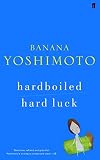
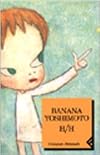
Not having read a lot of Japanese fiction, I wasn't sure to expect from this little volume based on it's quirky cover.
It certainly wasn't two bewildered, sad little stories--one about a ghost, the other about death. Both stories are spare and sparse and very sad. Neither were anticipated, and Hard Luck actually made tear up in a few places.
They're not perfect-a little too spare and sparse, and the first story sets up a lot of spookiness with no real payoff. However they're a great wistful, introspective fall read that only takes a few hours
It certainly wasn't two bewildered, sad little stories--one about a ghost, the other about death. Both stories are spare and sparse and very sad. Neither were anticipated, and Hard Luck actually made tear up in a few places.
They're not perfect-a little too spare and sparse, and the first story sets up a lot of spookiness with no real payoff. However they're a great wistful, introspective fall read that only takes a few hours
A trifle forgettable but nonetheless readable, Yoshimoto's two novellas are musings on the living dealing with death and the supernatural . The stories are not morbid however, they are light and thoughtful and a nice vehicle to entertaining ideas that are slightly far-fetched and otherworldly. I have also read Kitchen by Yoshimoto and even though I don't think Banana is the greatest novelist, I like her innocent and airy style and have enjoyed her offerings thus far!
For my first foray into the writing of Banana Yoshimoto, I can say that I enjoyed her style. It's simple and fresh (and quick) but a little light and easy.
The first, tells the story of a woman who is traipsing around the countryside and for whatever reason gets an ominous feeling after passing a temple/shrine in the woods. She then proceeds to remember a woman from her past, who had certain abilities or experiences with the supernatural and the like. Her girlfriend, Chizoku, wasn't all about that and I liked how she would replay the relationship out in her mind (or through dreams) because she had lots of regrets about it and how it ended. The end was very satisfying and sweet.
The second story (my favorite) tells the story of a sister show more who tries to come to terms with her sister, Kuni, who is lying in a vegetative state and has no chance of recovering. Her family is trying to deal with it and basically 'wrap things up' and get on with their lives even though it is obviously very painful - they are in a way numb and try to cope with it like everyone eventually does. She relives her life, experiences with her sister .. think about what kind of person her sister was etc. Maybe because I have a sister and am that close to her as well, that it had a strong reaction in me. Perhaps.
I also liked how it didn't have anything to do with sex or men. It sounds strange but it always needs to be inserted here or there in most contemporary books, even if it was a one-sentence thing. Essentially pointless to the plot. Like a woman couldn't function without a man, that a woman MUST have a man etc.
In these stories, it was only about the women - eventhough the latter had a man, Sakai, her sister's fiance's brother .. who was somewhat of an integral part of the story (though in retrospect it was just to have someone to bounce things off and hint at something in the future "if the timing was right").
The only thing I somewhat disliked was how flip the character would get at the end of the chapter, as if it was just done in the whole "Oh well .. " style just to end the chapter. show less
The first, tells the story of a woman who is traipsing around the countryside and for whatever reason gets an ominous feeling after passing a temple/shrine in the woods. She then proceeds to remember a woman from her past, who had certain abilities or experiences with the supernatural and the like. Her girlfriend, Chizoku, wasn't all about that and I liked how she would replay the relationship out in her mind (or through dreams) because she had lots of regrets about it and how it ended. The end was very satisfying and sweet.
The second story (my favorite) tells the story of a sister show more who tries to come to terms with her sister, Kuni, who is lying in a vegetative state and has no chance of recovering. Her family is trying to deal with it and basically 'wrap things up' and get on with their lives even though it is obviously very painful - they are in a way numb and try to cope with it like everyone eventually does. She relives her life, experiences with her sister .. think about what kind of person her sister was etc. Maybe because I have a sister and am that close to her as well, that it had a strong reaction in me. Perhaps.
I also liked how it didn't have anything to do with sex or men. It sounds strange but it always needs to be inserted here or there in most contemporary books, even if it was a one-sentence thing. Essentially pointless to the plot. Like a woman couldn't function without a man, that a woman MUST have a man etc.
In these stories, it was only about the women - eventhough the latter had a man, Sakai, her sister's fiance's brother .. who was somewhat of an integral part of the story (though in retrospect it was just to have someone to bounce things off and hint at something in the future "if the timing was right").
The only thing I somewhat disliked was how flip the character would get at the end of the chapter, as if it was just done in the whole "Oh well .. " style just to end the chapter. show less
Members
- Recently Added By
Author Information

97+ Works 15,934 Members
Banana Yoshimoto, 1964 - Novelist Banana Yoshimoto was born Mahoko Yoshimoto on July 24, 1964 in Tokyo, Japan. She is the daughter of poet and commentator Yoshimoto Ryumei, who had an impact on the radical student movement of the late 1960's. She attended Tokyo's Nihon University, where she studied creative writing and won a faculty award for her show more 1987 graduation novel "Moonlight Shadow." While working as a waitress, she took moments out of her day to write a novel and, at the age of 24, the result was "Kitchen" (1988), which is the story of a lonely woman who moves her bed into the kitchen, finding comfort in the humming of the refrigerator. She also wrote "Pineapple Pudding" and "Fruit Basket," which were both bestsellers. Her novel "Lizard" was dedicated to the memory of the late rocker Kurt Cobain and the novel "Long Night of Marika/Bali Dream Diary" (1996) was considered a flop. (Bowker Author Biography) show less
Some Editions
Classifications
- Genres
- General Fiction, Fiction and Literature
- DDC/MDS
- 813 — Literature & rhetoric American literature in English American fiction in English
- LCC
- PL865 .O7138 .H3313 — Language and Literature Languages and literatures of Eastern Asia, Africa, Oceania Languages of Eastern Asia, Africa, Oceania Japanese language and literature Japanese literature Individual authors and works
- BISAC
Statistics
- Members
- 726
- Popularity
- 38,798
- Reviews
- 12
- Rating
- (3.49)
- Languages
- 8 — Chinese, English, French, German, Hungarian, Italian, Japanese, Russian
- Media
- Paper, Ebook
- ISBNs
- 22
- ASINs
- 7