On This Page
Description
In The Haunted House, Charles Dickens weaves a captivating tale of mystery and the supernatural, set in a remote, abandoned mansion. The story is part of a collection that features a group of people coming together to recount ghostly encounters and eerie experiences in the haunted house. With each chapter revealing a new chilling narrative, Dickens expertly explores themes of fear, the unknown, and the darker side of human imagination. Narrated by Michael Lyons, this audiobook brings show more Dickens' ghostly tales to life with an engaging and atmospheric performance, drawing listeners into the haunting and suspenseful world of Victorian horror. Perfect for fans of classic literature, ghost stories, and supernatural fiction, The Haunted House is a timeless collection of eerie tales that continue to haunt readers and listeners alike. show lessTags
Recommendations











Member Reviews
Charles Dickens is often credited with having “invented” Christmas as we know it. This claim might be exaggerated (as is argued here), but one can hardly contest the fact that his “Christmas novels” are a major contribution not only to the literature of this feast, but also to what might be termed its “social iconography”. Works such as “A Christmas Carol” or “The Chimes” both fed and met the expectations of the periodical-reading public whilst tapping into the tradition of telling ghost stories during long December nights.
“The Haunted House” dates from 1859 and was published in Dickens’s weekly periodical 'All the Year Round'. It is a collective effort featuring contributions from several of Dickens’s show more friends and regular collaborators. Dickens himself acts as master of ceremonies and provides the frame-story, about a group of acquaintances who spend Christmas at an allegedly haunted house, with an agreement that they recount their experiences on Twelfth Night. Given the title and premise, one would be forgiven for expecting a supernatural work or even a prototype “Haunting of Hill House”. Alas, this is nothing of the sort. Many of the contributors either interpret “haunting” in a metaphorical sense or else merely use the ghost as a “prop” for a totally different sort of tale. Just to give an example, [a:Hesba Stretton|66559|Hesba Stretton|https://images.gr-assets.com/authors/1386205566p2/66559.jpg] writes a moralistic love story whilst [a:George Augustus Sala|964877|George Augustus Sala|https://images.gr-assets.com/authors/1389721210p2/964877.jpg]’s narrator claims to have been visited by “the Ghost of the Ague”, prompting a rather tiresome slapstick piece about a wretch with an uncontrollable tremor.
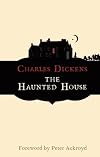
This Hesperus Press edition includes a foreword by novelist and Dickens biographer [a:Peter Ackroyd|16881|Peter Ackroyd|https://images.gr-assets.com/authors/1232835556p2/16881.jpg]. He is decidedly lukewarm in his praise for this work, singling out only Dickens’s contributions for their quality. Even about these, he has some serious reservations which are, frankly, justified. Indeed, apart from the background narrative, Dickens contributes a strange and rather uncomfortable story about a group of infants at a school who decide to set up a harem. It is likely that Dickens meant to satirise a contemporary fad for “Orientalism”, but to a modern reader, his tale raises disturbing spectres of both paedophilia and (although Ackroyd does not specifically mention this) racism.
Ackroyd still considers the remaining chapters as inferior, and here I beg to differ. I must confess that, except when I’m in the mood for him, I tend to find Dickens’s prose heavy and his humour smug. In The Haunted House, for instance, I much preferred his friend [a:Wilkie Collins|4012|Wilkie Collins|https://images.gr-assets.com/authors/1192222099p2/4012.jpg]’s rollicking seafaring tale or, despite its streak of melodrama, [a:Elizabeth Gaskell|1413437|Elizabeth Gaskell|https://images.gr-assets.com/authors/1223499865p2/1413437.jpg]’s domestic tragedy about a son who disappoints his simple parents’ expectations. And yes, [a:Adelaide Ann Procter|14667489|Adelaide Ann Procter|https://s.gr-assets.com/assets/nophoto/user/u_50x66-632230dc9882b4352d753eedf9396530.png]’s “sacred legend in verse” (featuring a nun visited by the Virgin Mary) is over-written at times, but its Medieval setting and deliberate archaisms give it pleasant Pre-Raphaelite and Gothic overtones, not unlike Flaubert’s [b:The Legend of Saint-Julian the Hospitaller|6450340|The Legend of Saint-Julian the Hospitaller|Gustave Flaubert|https://i.gr-assets.com/images/S/compressed.photo.goodreads.com/books/1348094971l/6450340._SY75_.jpg|3214483].
Still, a few ghostly scares would not have been amiss...
Visit: https://endsoftheword.blogspot.com/2019/12/The-haunted-house-Charles-Dickens.htm... show less
“The Haunted House” dates from 1859 and was published in Dickens’s weekly periodical 'All the Year Round'. It is a collective effort featuring contributions from several of Dickens’s show more friends and regular collaborators. Dickens himself acts as master of ceremonies and provides the frame-story, about a group of acquaintances who spend Christmas at an allegedly haunted house, with an agreement that they recount their experiences on Twelfth Night. Given the title and premise, one would be forgiven for expecting a supernatural work or even a prototype “Haunting of Hill House”. Alas, this is nothing of the sort. Many of the contributors either interpret “haunting” in a metaphorical sense or else merely use the ghost as a “prop” for a totally different sort of tale. Just to give an example, [a:Hesba Stretton|66559|Hesba Stretton|https://images.gr-assets.com/authors/1386205566p2/66559.jpg] writes a moralistic love story whilst [a:George Augustus Sala|964877|George Augustus Sala|https://images.gr-assets.com/authors/1389721210p2/964877.jpg]’s narrator claims to have been visited by “the Ghost of the Ague”, prompting a rather tiresome slapstick piece about a wretch with an uncontrollable tremor.
This Hesperus Press edition includes a foreword by novelist and Dickens biographer [a:Peter Ackroyd|16881|Peter Ackroyd|https://images.gr-assets.com/authors/1232835556p2/16881.jpg]. He is decidedly lukewarm in his praise for this work, singling out only Dickens’s contributions for their quality. Even about these, he has some serious reservations which are, frankly, justified. Indeed, apart from the background narrative, Dickens contributes a strange and rather uncomfortable story about a group of infants at a school who decide to set up a harem. It is likely that Dickens meant to satirise a contemporary fad for “Orientalism”, but to a modern reader, his tale raises disturbing spectres of both paedophilia and (although Ackroyd does not specifically mention this) racism.
Ackroyd still considers the remaining chapters as inferior, and here I beg to differ. I must confess that, except when I’m in the mood for him, I tend to find Dickens’s prose heavy and his humour smug. In The Haunted House, for instance, I much preferred his friend [a:Wilkie Collins|4012|Wilkie Collins|https://images.gr-assets.com/authors/1192222099p2/4012.jpg]’s rollicking seafaring tale or, despite its streak of melodrama, [a:Elizabeth Gaskell|1413437|Elizabeth Gaskell|https://images.gr-assets.com/authors/1223499865p2/1413437.jpg]’s domestic tragedy about a son who disappoints his simple parents’ expectations. And yes, [a:Adelaide Ann Procter|14667489|Adelaide Ann Procter|https://s.gr-assets.com/assets/nophoto/user/u_50x66-632230dc9882b4352d753eedf9396530.png]’s “sacred legend in verse” (featuring a nun visited by the Virgin Mary) is over-written at times, but its Medieval setting and deliberate archaisms give it pleasant Pre-Raphaelite and Gothic overtones, not unlike Flaubert’s [b:The Legend of Saint-Julian the Hospitaller|6450340|The Legend of Saint-Julian the Hospitaller|Gustave Flaubert|https://i.gr-assets.com/images/S/compressed.photo.goodreads.com/books/1348094971l/6450340._SY75_.jpg|3214483].
Still, a few ghostly scares would not have been amiss...
Visit: https://endsoftheword.blogspot.com/2019/12/The-haunted-house-Charles-Dickens.htm... show less
Having read (and loved) Dickens's short ghost story The Signalman and being somewhat familiar with the works of Wilkie Collins, I was hoping for a literary experience of the same or at least similar calibre. Sadly, I was distinctly underwhelmed by the collection of short stories on offer here. The Haunted House appeared in Dickens's magazine All the Year Round in 1862 and features contributions by his friends Elizabeth Gaskell and Wilkie Collins, as well as the now rather unknown authors Hesba Stretton, George Augustus Sala and Adelaide Anne Procter. It consists of several unrelated short stories linked together by a frame narrative, in this case nine friends spending the Christmas holidays in a supposedly haunted house and describing show more their experiences on Twelfth Night. Apart from the rather melodramatic and moralistic overtones typical of the time, the stories had virtually nothing to do with what I understand by a haunted house or ghost story but dealt with rather more personal issues of hauntings. I'm sorry to say that I found the majority of them slightly baffling and not in the slightest bit affecting, the exception being Wilkie Collins's story Blow up with the Brig that at least raised the tension during reading. Unfortunately, this volume isn't exactly what I'd describe as a classic. show less
Charles Dickens is often credited with having “invented” Christmas as we know it. This claim might be exaggerated (as is argued here), but one can hardly contest the fact that his “Christmas novels” are a major contribution not only to the literature of this feast, but also to what might be termed its “social iconography”. Works such as “A Christmas Carol” or “The Chimes” both fed and met the expectations of the periodical-reading public whilst tapping into the tradition of telling ghost stories during long December nights.
“The Haunted House” dates from 1859 and was published in Dickens’s weekly periodical 'All the Year Round'. It is a collective effort featuring contributions from several of Dickens’s show more friends and regular collaborators. Dickens himself acts as master of ceremonies and provides the frame-story, about a group of acquaintances who spend Christmas at an allegedly haunted house, with an agreement that they recount their experiences on Twelfth Night. Given the title and premise, one would be forgiven for expecting a supernatural work or even a prototype “Haunting of Hill House”. Alas, this is nothing of the sort. Many of the contributors either interpret “haunting” in a metaphorical sense or else merely use the ghost as a “prop” for a totally different sort of tale. Just to give an example, [a:Hesba Stretton|66559|Hesba Stretton|https://images.gr-assets.com/authors/1386205566p2/66559.jpg] writes a moralistic love story whilst [a:George Augustus Sala|964877|George Augustus Sala|https://images.gr-assets.com/authors/1389721210p2/964877.jpg]’s narrator claims to have been visited by “the Ghost of the Ague”, prompting a rather tiresome slapstick piece about a wretch with an uncontrollable tremor.
This Hesperus Press edition includes a foreword by novelist and Dickens biographer [a:Peter Ackroyd|16881|Peter Ackroyd|https://images.gr-assets.com/authors/1232835556p2/16881.jpg]. He is decidedly lukewarm in his praise for this work, singling out only Dickens’s contributions for their quality. Even about these, he has some serious reservations which are, frankly, justified. Indeed, apart from the background narrative, Dickens contributes a strange and rather uncomfortable story about a group of infants at a school who decide to set up a harem. It is likely that Dickens meant to satirise a contemporary fad for “Orientalism”, but to a modern reader, his tale raises disturbing spectres of both paedophilia and (although Ackroyd does not specifically mention this) racism.
Ackroyd still considers the remaining chapters as inferior, and here I beg to differ. I must confess that, except when I’m in the mood for him, I tend to find Dickens’s prose heavy and his humour smug. In The Haunted House, for instance, I much preferred his friend [a:Wilkie Collins|4012|Wilkie Collins|https://images.gr-assets.com/authors/1192222099p2/4012.jpg]’s rollicking seafaring tale or, despite its streak of melodrama, [a:Elizabeth Gaskell|1413437|Elizabeth Gaskell|https://images.gr-assets.com/authors/1223499865p2/1413437.jpg]’s domestic tragedy about a son who disappoints his simple parents’ expectations. And yes, [a:Adelaide Ann Procter|14667489|Adelaide Ann Procter|https://s.gr-assets.com/assets/nophoto/user/u_50x66-632230dc9882b4352d753eedf9396530.png]’s “sacred legend in verse” (featuring a nun visited by the Virgin Mary) is over-written at times, but its Medieval setting and deliberate archaisms give it pleasant Pre-Raphaelite and Gothic overtones, not unlike Flaubert’s [b:The Legend of Saint-Julian the Hospitaller|6450340|The Legend of Saint-Julian the Hospitaller|Gustave Flaubert|https://i.gr-assets.com/images/S/compressed.photo.goodreads.com/books/1348094971l/6450340._SY75_.jpg|3214483].
Still, a few ghostly scares would not have been amiss...
Visit: https://endsoftheword.blogspot.com/2019/12/The-haunted-house-Charles-Dickens.htm... show less
“The Haunted House” dates from 1859 and was published in Dickens’s weekly periodical 'All the Year Round'. It is a collective effort featuring contributions from several of Dickens’s show more friends and regular collaborators. Dickens himself acts as master of ceremonies and provides the frame-story, about a group of acquaintances who spend Christmas at an allegedly haunted house, with an agreement that they recount their experiences on Twelfth Night. Given the title and premise, one would be forgiven for expecting a supernatural work or even a prototype “Haunting of Hill House”. Alas, this is nothing of the sort. Many of the contributors either interpret “haunting” in a metaphorical sense or else merely use the ghost as a “prop” for a totally different sort of tale. Just to give an example, [a:Hesba Stretton|66559|Hesba Stretton|https://images.gr-assets.com/authors/1386205566p2/66559.jpg] writes a moralistic love story whilst [a:George Augustus Sala|964877|George Augustus Sala|https://images.gr-assets.com/authors/1389721210p2/964877.jpg]’s narrator claims to have been visited by “the Ghost of the Ague”, prompting a rather tiresome slapstick piece about a wretch with an uncontrollable tremor.
This Hesperus Press edition includes a foreword by novelist and Dickens biographer [a:Peter Ackroyd|16881|Peter Ackroyd|https://images.gr-assets.com/authors/1232835556p2/16881.jpg]. He is decidedly lukewarm in his praise for this work, singling out only Dickens’s contributions for their quality. Even about these, he has some serious reservations which are, frankly, justified. Indeed, apart from the background narrative, Dickens contributes a strange and rather uncomfortable story about a group of infants at a school who decide to set up a harem. It is likely that Dickens meant to satirise a contemporary fad for “Orientalism”, but to a modern reader, his tale raises disturbing spectres of both paedophilia and (although Ackroyd does not specifically mention this) racism.
Ackroyd still considers the remaining chapters as inferior, and here I beg to differ. I must confess that, except when I’m in the mood for him, I tend to find Dickens’s prose heavy and his humour smug. In The Haunted House, for instance, I much preferred his friend [a:Wilkie Collins|4012|Wilkie Collins|https://images.gr-assets.com/authors/1192222099p2/4012.jpg]’s rollicking seafaring tale or, despite its streak of melodrama, [a:Elizabeth Gaskell|1413437|Elizabeth Gaskell|https://images.gr-assets.com/authors/1223499865p2/1413437.jpg]’s domestic tragedy about a son who disappoints his simple parents’ expectations. And yes, [a:Adelaide Ann Procter|14667489|Adelaide Ann Procter|https://s.gr-assets.com/assets/nophoto/user/u_50x66-632230dc9882b4352d753eedf9396530.png]’s “sacred legend in verse” (featuring a nun visited by the Virgin Mary) is over-written at times, but its Medieval setting and deliberate archaisms give it pleasant Pre-Raphaelite and Gothic overtones, not unlike Flaubert’s [b:The Legend of Saint-Julian the Hospitaller|6450340|The Legend of Saint-Julian the Hospitaller|Gustave Flaubert|https://i.gr-assets.com/images/S/compressed.photo.goodreads.com/books/1348094971l/6450340._SY75_.jpg|3214483].
Still, a few ghostly scares would not have been amiss...
Visit: https://endsoftheword.blogspot.com/2019/12/The-haunted-house-Charles-Dickens.htm... show less
What a hot mess. Apparently, the story was a compilation of contributions from several writers. It lacks any coherence and is confusing as hell. Which is unfortunate because it actually started out well and incorporated a lot of humor, but then it devolved badly.
This is a collection of short stories, brought together weakly by a surrounding plot. The haunted house of the title is spotted by the author from the train, who decides it would be a good idea to rent it for a few months and stay there with a group of friends over the Christmas season. They have until the 12th Night to sleep in their allotted and supposedly haunted room, at which point they will regale the whole group with their own experiences. Here an added twist comes in - each of the stories was written by a contemporary of Dickens, who invited his literary friends to contribute alongside himself. The quality and style of the tales thus vary, and generally they have not aged well at all. What they all have in common is that there show more is very little in the way of ghosts or hauntings, which is somewhat disappointing. While the concept behind this is in my opinion a very good one, it is let down by its execution. show less
The House would be a better option for the title of this book. I just wasn’t as impressed by the ghostly tales in this compilation as I have been in other books in this genre from the same time period. They didn’t seem to warrant any chills or fear at all. Some of the stories were well written, but lacked the elements I was hoping for.
A gentleman moves into a reputedly haunted country house; soon the servants are scared witless but the master is not convinced. Plays with different attitudes to paranormal activity.
Members
- Recently Added By
Author Information

2,578+ Works 313,139 Members
Charles Dickens, perhaps the best British novelist of the Victorian era, was born in Portsmouth, Hampshire, England on February 7, 1812. His happy early childhood was interrupted when his father was sent to debtors' prison, and young Dickens had to go to work in a factory at age twelve. Later, he took jobs as an office boy and journalist before show more publishing essays and stories in the 1830s. His first novel, The Pickwick Papers, made him a famous and popular author at the age of twenty-five. Subsequent works were published serially in periodicals and cemented his reputation as a master of colorful characterization, and as a harsh critic of social evils and corrupt institutions. His many books include Oliver Twist, David Copperfield, Bleak House, Great Expectations, Little Dorrit, A Christmas Carol, and A Tale of Two Cities. Dickens married Catherine Hogarth in 1836, and the couple had nine children before separating in 1858 when he began a long affair with Ellen Ternan, a young actress. Despite the scandal, Dickens remained a public figure, appearing often to read his fiction. He died in 1870, leaving his final novel, The Mystery of Edwin Drood, unfinished. (Bowker Author Biography) show less
All Editions
Some Editions
Series

Belongs to Publisher Series
Work Relationships
Common Knowledge
- Canonical title
- The Haunted House
- Original title
- [The Haunted House]
- Original publication date
- 1859 (in magazine 'All The Year Round') (in magazine 'All The Year Round')
- First words
- Under none of the accredited ghostly circumstances, and environed by none of the conventional ghostly surroundings, did I first make acquaintance with the house which is the subject of this Christmas piece.
- Last words
- (Click to show. Warning: May contain spoilers.)Let us use the great virtue, Faith, but not abuse it, and let us put it to its best use, by having faith in the great Christmas book of the New Testament, and in one another.
- Blurbers
- Ackroyd, Peter
Classifications
Statistics
- Members
- 429
- Popularity
- 71,658
- Reviews
- 18
- Rating
- (3.27)
- Languages
- 9 — Czech, Dutch, English, Italian, Multiple languages, Polish, Spanish, Turkish, Ukrainian
- Media
- Paper, Audiobook, Ebook
- ISBNs
- 57
- UPCs
- 1
- ASINs
- 20