On This Page
Description
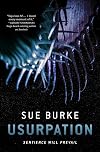
"Stevland, the dominant sentient lifeform of Pax, has clandestinely sent some of its progeny to Earth. To explore, to spread, to report back. Since their germination, Earth has been a powder keg. Human rebellion, robot uprisings, and global pandemics have created chaos, distrust, and deaths. As more and more conflicts break out across Earth, Stevland's children work in the background, in an attempt to control human behavior and perhaps, bring peace to the planet. Stevland took control of show more Pax. Earth shouldn't be too difficult..."-- show lessTags
Recommendations











Member Reviews
I am grateful to NetGalley for providing an advance copy of this book in exchange for my honest review.
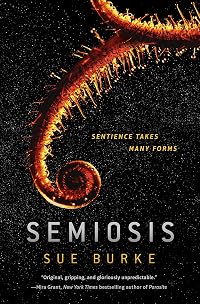
‘Usurpation’ is a new Science Fiction novel from the author Sue Burke. It is the third book in a series that began with ‘Semiosis’ and was followed by ‘Interference’. Whilst each book could be read in isolation, I would recommend reading them in order for a more rewarding and richer experience.
This book is based some time in the future, indeed centuries after the events of Semiosis and Interference. The second book ended with seeds from a sentient plant life-form being transported from the distant planet Pax to Earth. This life-form, and I don’t think I’m revealing any spoilers, is the powerful yet benevolent Stevland, show more a Rainbow Bamboo, which cultivates (excuse the pun) relationships with other sentient flora and fauna on Pax, including humans. Indeed, the fate of the humans on Pax was largely due to the actions and character of Stevland. Naturally I was intrigued as to what might happen in this new book, largely situated on Earth should such a powerful, yet benevolent non-human entity thrive.
The early chapters describe the unrest on Earth between the major political and cultural entities. A modern world but with various levels of technology and interconnectivity. Although the European area is largely peaceful and stable, parts of the world are in turmoil and conflict. Communities also exit in Earth’s orbit and at sea, where a community of humans revere and commune with whales, now recognised as sentient and somewhat intelligent beings. Adding to these communities and conflicts are numerous robots performing a range of activities from basic household duties to high-end and powerful military models. To make life even more uncertain, some of the robots have gone ‘wild’ and are no longer under human control. WIid robot affinities and alliances seem uncertain, fluid or undefined.
In these troubled times, we find the seeds from Stevland, have been disseminated worldwide, providing beauty, decoration and sustenance through multiple Rainbow Bamboo groves. To those living in close proximity to these offspring Rainbow Bamboo, or to those who study them closely, a low-level of sentience is suspected. Some Rainbow Bamboo groves have been ‘chipped’ in order to further understanding and possibly enable communications. On Pax, Stevland was thoughtful, powerful and benevolent. On Earth, her offspring, growing in interconnected but distinct groves, has more diverse personalities. From mild mannered and well-balanced to excitable, obnoxious, ambitious and even psychotic ! They consciously maintain a low-profile and passive presence, concerned that if their level of intelligence was to become known, they might be considered a threat to humans and eradicated. The Rainbow Bamboo groves nevertheless are very sociable, at least within their own communities and local fauna and flora. They tolerate the presence of humans but do not seek to dominate or even influence the world in any great way. That is until earth-wide human conflicts threaten to damage or destroy many of the lifeforms currently inhibition Earth.
Thankfully at least one of the groves of Rainbow Bamboo, situated in a Bamboo Research institute, seems to have a caring, nurturing and thoughtful personality. This entity and other Rainbow Bamboo groves are unsure about what to do, if anything, to alleviate the growing crisis on Earth. They seek advice from Stevland, but communications are slow, uncertain and infrequent.
The author takes this third book in unexpected directions due to the multi-faceted nature of the Rainbow Bamboos and its lack of hegemony on Earth. Human characters are well-developed, sometime exotic or unusual but always compelling. While some behaviours and relationships are usual, from todays perspective, others are fascinating and thought-provoking adding layers of interest to the plot.
Vivid descriptions allow the reader to build an empathy with or at least an opinion of the participants in this story. Sometimes joyous, due to the developing relationships and events, at other times, a profound sadness. The plot is well thought-out and developed, with interesting side excursions. Early chapters build an ominous tension foretelling the dramatic and global events that may eventuate. The momentum build slowly as alliances shift or become stronger as circumstances and events evolve.
In addition to these events, the author occasionally adds an aside, such as a thought or comment from a Rainbow Bamboo grove, exposing their personality. These may provoke a chuckle or smile from the reader, and are a nice touch. Even if they do not drive the plot forward, they add depth to the characters. Tulips, considered pretty but with a low-intelligence, do not appear to have evolved much and still suffer from old stereotypes ! Other plants, perhaps not living up to expectations might be considered “a waste of soil” !
The concluding chapters are ultimately rewarding and satisfying. Events and outcomes are sometimes sad or bittersweet but ultimately uplifting and life-affirming. Despite the futuristic setting, this is a story of bravery, love, sacrifice and optimism. A moving story with unexpected emotions and relationships displayed within and between species.
The events and characters from this book will remain with me for some time.
I certainly hope so as I continue to better appreciate the world of plants, what they mean to each other, their neighbours, communities and to the wider animal and human world. An excellent and satisfying book. A wonderful addition to Ms Burke’s body of work. I wish her all the very best with the publication. show less
‘Usurpation’ is a new Science Fiction novel from the author Sue Burke. It is the third book in a series that began with ‘Semiosis’ and was followed by ‘Interference’. Whilst each book could be read in isolation, I would recommend reading them in order for a more rewarding and richer experience.
This book is based some time in the future, indeed centuries after the events of Semiosis and Interference. The second book ended with seeds from a sentient plant life-form being transported from the distant planet Pax to Earth. This life-form, and I don’t think I’m revealing any spoilers, is the powerful yet benevolent Stevland, show more a Rainbow Bamboo, which cultivates (excuse the pun) relationships with other sentient flora and fauna on Pax, including humans. Indeed, the fate of the humans on Pax was largely due to the actions and character of Stevland. Naturally I was intrigued as to what might happen in this new book, largely situated on Earth should such a powerful, yet benevolent non-human entity thrive.
The early chapters describe the unrest on Earth between the major political and cultural entities. A modern world but with various levels of technology and interconnectivity. Although the European area is largely peaceful and stable, parts of the world are in turmoil and conflict. Communities also exit in Earth’s orbit and at sea, where a community of humans revere and commune with whales, now recognised as sentient and somewhat intelligent beings. Adding to these communities and conflicts are numerous robots performing a range of activities from basic household duties to high-end and powerful military models. To make life even more uncertain, some of the robots have gone ‘wild’ and are no longer under human control. WIid robot affinities and alliances seem uncertain, fluid or undefined.
In these troubled times, we find the seeds from Stevland, have been disseminated worldwide, providing beauty, decoration and sustenance through multiple Rainbow Bamboo groves. To those living in close proximity to these offspring Rainbow Bamboo, or to those who study them closely, a low-level of sentience is suspected. Some Rainbow Bamboo groves have been ‘chipped’ in order to further understanding and possibly enable communications. On Pax, Stevland was thoughtful, powerful and benevolent. On Earth, her offspring, growing in interconnected but distinct groves, has more diverse personalities. From mild mannered and well-balanced to excitable, obnoxious, ambitious and even psychotic ! They consciously maintain a low-profile and passive presence, concerned that if their level of intelligence was to become known, they might be considered a threat to humans and eradicated. The Rainbow Bamboo groves nevertheless are very sociable, at least within their own communities and local fauna and flora. They tolerate the presence of humans but do not seek to dominate or even influence the world in any great way. That is until earth-wide human conflicts threaten to damage or destroy many of the lifeforms currently inhibition Earth.
Thankfully at least one of the groves of Rainbow Bamboo, situated in a Bamboo Research institute, seems to have a caring, nurturing and thoughtful personality. This entity and other Rainbow Bamboo groves are unsure about what to do, if anything, to alleviate the growing crisis on Earth. They seek advice from Stevland, but communications are slow, uncertain and infrequent.
The author takes this third book in unexpected directions due to the multi-faceted nature of the Rainbow Bamboos and its lack of hegemony on Earth. Human characters are well-developed, sometime exotic or unusual but always compelling. While some behaviours and relationships are usual, from todays perspective, others are fascinating and thought-provoking adding layers of interest to the plot.
Vivid descriptions allow the reader to build an empathy with or at least an opinion of the participants in this story. Sometimes joyous, due to the developing relationships and events, at other times, a profound sadness. The plot is well thought-out and developed, with interesting side excursions. Early chapters build an ominous tension foretelling the dramatic and global events that may eventuate. The momentum build slowly as alliances shift or become stronger as circumstances and events evolve.
In addition to these events, the author occasionally adds an aside, such as a thought or comment from a Rainbow Bamboo grove, exposing their personality. These may provoke a chuckle or smile from the reader, and are a nice touch. Even if they do not drive the plot forward, they add depth to the characters. Tulips, considered pretty but with a low-intelligence, do not appear to have evolved much and still suffer from old stereotypes ! Other plants, perhaps not living up to expectations might be considered “a waste of soil” !
The concluding chapters are ultimately rewarding and satisfying. Events and outcomes are sometimes sad or bittersweet but ultimately uplifting and life-affirming. Despite the futuristic setting, this is a story of bravery, love, sacrifice and optimism. A moving story with unexpected emotions and relationships displayed within and between species.
The events and characters from this book will remain with me for some time.
I certainly hope so as I continue to better appreciate the world of plants, what they mean to each other, their neighbours, communities and to the wider animal and human world. An excellent and satisfying book. A wonderful addition to Ms Burke’s body of work. I wish her all the very best with the publication. show less
An excellent addition to this thought-provoking series. I hope Burke can come up with more.
Ratings
Members
- Recently Added By
Published Reviews
This is is a story of bravery, love, sacrifice and optimism. A moving story with unexpected emotions and relationships displayed within and between species.
added by lachlanfinlayson
Lists

2025 Hugo Awards -- Eligible Works -- Novels
33 works; 2 members
Author Information

14+ Works 1,665 Members
Series

Common Knowledge
- Canonical title
- Usurpation
- Original publication date
- 2024
- Epigraph
- The question is not 'Can they reason?' or 'Can they talk?' but 'Can they suffer?'
-Jeremy Bentham - First words
- Confusion-I felt sudden confusion, then pain, then horror.
- Last words
- (Click to show. Warning: May contain spoilers.)...Stevland is waiting."
- Blurbers
- Tchaikovsky, Adrian
Classifications
Statistics
- Members
- 63
- Popularity
- 493,736
- Reviews
- 2
- Rating
- (3.95)
- Languages
- English
- Media
- Paper, Audiobook, Ebook
- ISBNs
- 4
- ASINs
- 2