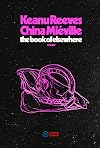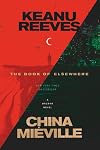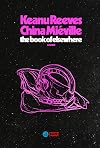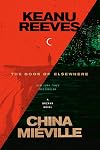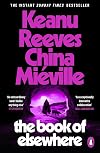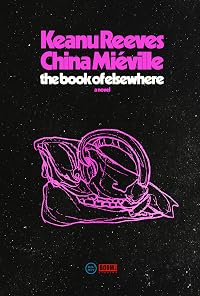
The Book of Elsewhere
by Keanu Reeves, China Miéville
On This Page
Description
A mind-blowing epic from Keanu Reeves and China Miéville, unlike anything these two genre-bending pioneers have created before, inspired by the world of the BRZRKR comic books She said, We needed a tool. So I asked the gods. There have always been whispers. Legends. The warrior who cannot be killed. Who's seen a thousand civilizations rise and fall. He has had many names: Unute, Child of Lightning, Death himself. These days, he's known simply as "B." And he wants to be able to die. In show more the present day, a U.S. black-ops group has promised him they can help with that. And all he needs to do is help them in return. But when an all-too-mortal soldier comes back to life, the impossible event ultimately points toward a force even more mysterious than B himself. One at least as strong. And one with a plan all its own. In a collaboration that combines Miéville's singular style and creativity with Reeves's haunting and soul-stirring narrative, these two inimitable artists have created something utterly unique, sure to delight existing fans and to create scores of new ones. show lessTags
Recommendations



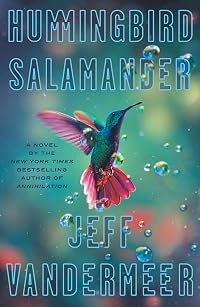

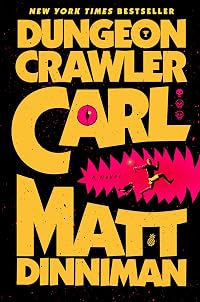
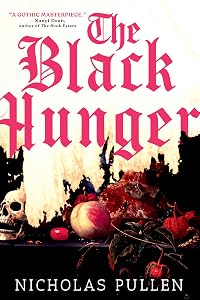
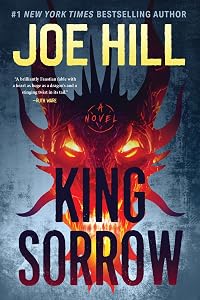

Member Reviews
NOTE: I am a librarian and I received a free ebook copy of this book from NetGalley.
I am a huge Keanu Reeves fan. Like, HUGE. Naturally I snapped up his debut novel as soon as I could! That said, Keanu's first foray into prose fiction isn't perfect, but still a commendable effort, helped along by the literary talents of coauthor China Miéville. Die-hard Reeves fans will recognize the basic story and characters from his previous project, the comic book series "BRZRKR." This novel expands upon the backstory, motivations, and themes of "BRZRKR," painting a picture of an immortal super-assassin whose history is just as conflicted as those of his antagonists.
I liked that this tale did not make any quick judgments about who was in the right show more or in the wrong, and explored the complex implications of what it means to live forever, as well as humanity's conflicted relationship with life and death. Much like Reeves' own persona, the entire novel is shrouded in an air of mystery; many chapters will come across as arcane or esoteric to general readers. I found the final third of the novel somewhat confusing, like there were too many loose ends to tie up at once. Yet there are moments of brilliance as well, namely in the flashback chapters whose titles allude to episodes in "The Canterbury Tales" and that depict encounters with Unute across history. My favorite episode was "water," a chapter written entirely in the second-person that could stand on its own as a short story. Reading that chapter made me long for an annotated critical edition of this book, in which passages penned by Reeves and passages penned by Miéville are clearly marked and identified.
Even though "The Book of Elsewhere" wasn't always my cup of tea, I always enjoy following Reeves' muse with all of his creative projects and I look forward to seeing what he has in store for us in the future. show less
I am a huge Keanu Reeves fan. Like, HUGE. Naturally I snapped up his debut novel as soon as I could! That said, Keanu's first foray into prose fiction isn't perfect, but still a commendable effort, helped along by the literary talents of coauthor China Miéville. Die-hard Reeves fans will recognize the basic story and characters from his previous project, the comic book series "BRZRKR." This novel expands upon the backstory, motivations, and themes of "BRZRKR," painting a picture of an immortal super-assassin whose history is just as conflicted as those of his antagonists.
I liked that this tale did not make any quick judgments about who was in the right show more or in the wrong, and explored the complex implications of what it means to live forever, as well as humanity's conflicted relationship with life and death. Much like Reeves' own persona, the entire novel is shrouded in an air of mystery; many chapters will come across as arcane or esoteric to general readers. I found the final third of the novel somewhat confusing, like there were too many loose ends to tie up at once. Yet there are moments of brilliance as well, namely in the flashback chapters whose titles allude to episodes in "The Canterbury Tales" and that depict encounters with Unute across history. My favorite episode was "water," a chapter written entirely in the second-person that could stand on its own as a short story. Reading that chapter made me long for an annotated critical edition of this book, in which passages penned by Reeves and passages penned by Miéville are clearly marked and identified.
Even though "The Book of Elsewhere" wasn't always my cup of tea, I always enjoy following Reeves' muse with all of his creative projects and I look forward to seeing what he has in store for us in the future. show less
I really enjoyed the slightly surreal mystery of this, and the alternating chapters with all kinds of perspective changes on the history of our mysterious main character were really interesting. The more mysteries were revealed the less I was into it—although I know it's a requirement to reveal some secrets, I kind of liked it better when most of everything was weird and inexplicable. I found some of the explanations less compelling than the experience. I enjoyed it most when it was all vibes!
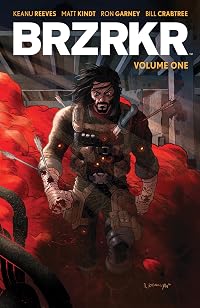
The actor Keanu Reeves has lately created a graphic novel series about an undying warrior, BRZRKR, in collaboration with other artists and writers. The novel at hand is set in that continuity. Not something I'd look at, but, hey, China Mieville fiction has been scarce in recent years.
The man called Unute has superhuman strength and speed, and can heal immediately from almost any injury. Machine-gun fire? Grenade? No problem - except that his pain is as great as any mortal would feel. Wounds too severe even for these powers result in death, followed by the formation of a large, leathery egg from which Unute will issue forth after a time in a newly created body. When fighting, he often goes into a transcendent rage, becoming even show more stronger, focused only on destruction, dangerous to friend as well as foe, a state that leaves him without memory of the battle.
He's described as looking a lot like Keanu Reeves.
He remembers his non-raging moments perfectly, all eighty thousand years of them. Through the millennia he has been king and vagabond, loner and husband, object of worship and fear, kind and cruel - but always killer - as we see through his own eyes and those of people whose brief, mortal spans he sometimes shares. Now he works with a top secret US military unit, which uses him in wetwork operations, while its scientists try to understand how he can possibly exist. A job gone wrong begins to reveal unknown aspects of his organization and the world he thought he knew.
I couldn't help wondering how much of this is China, how much Reeves. The plot is intricate; flashbacks within flashbacks. The prose style is one that Mieville uses often. Lots of sentences more complex than, I think, to the taste of your typical action-movie/comic fan:
And if that was what he craved, wasn't that, though he hadn't said that to her either, to suggest that he was not, now, living? What could it be, to exist with the banality of endlessness?
And in the midst of a thriller ending, the book supplies a very Mievillian inversion. Modern comic writers aim for sophistication too, but the book does feel like it's not just a novelization of the comics.
I liked this, but be warned that it would be easy to finish this book with the main impression being violence upon violence. show less
The man called Unute has superhuman strength and speed, and can heal immediately from almost any injury. Machine-gun fire? Grenade? No problem - except that his pain is as great as any mortal would feel. Wounds too severe even for these powers result in death, followed by the formation of a large, leathery egg from which Unute will issue forth after a time in a newly created body. When fighting, he often goes into a transcendent rage, becoming even show more stronger, focused only on destruction, dangerous to friend as well as foe, a state that leaves him without memory of the battle.
He's described as looking a lot like Keanu Reeves.
He remembers his non-raging moments perfectly, all eighty thousand years of them. Through the millennia he has been king and vagabond, loner and husband, object of worship and fear, kind and cruel - but always killer - as we see through his own eyes and those of people whose brief, mortal spans he sometimes shares. Now he works with a top secret US military unit, which uses him in wetwork operations, while its scientists try to understand how he can possibly exist. A job gone wrong begins to reveal unknown aspects of his organization and the world he thought he knew.
I couldn't help wondering how much of this is China, how much Reeves. The plot is intricate; flashbacks within flashbacks. The prose style is one that Mieville uses often. Lots of sentences more complex than, I think, to the taste of your typical action-movie/comic fan:
And if that was what he craved, wasn't that, though he hadn't said that to her either, to suggest that he was not, now, living? What could it be, to exist with the banality of endlessness?
And in the midst of a thriller ending, the book supplies a very Mievillian inversion. Modern comic writers aim for sophistication too, but the book does feel like it's not just a novelization of the comics.
I liked this, but be warned that it would be easy to finish this book with the main impression being violence upon violence. show less
Yeah, this one's a hard no.
Now, I've read every single issue of the BRZRKR comic series that this book is based on, and I catch the references. And no, no one will ever mistake any issue of that series as Important Literature. But the comic has two things going for it that are completely missing here.
The first is, the series tells a story and for the most part, it's clear and understandable. The second is, the series is written well. Not overwritten, not underwritten. Not fantastic, but not terrible.
This book though? I have no idea how much—if any—input Reeves had in it, and I do get the impression they wanted to both broaden and deepen the mythos of Unute (aka B) which isn't a bad thing. But—and again, I'm guessing here, but I'm show more guessing China Miéville is the sole writer—the various narrative voices in this book, because we're literally bouncing from narrator to narrator, is both confusing as hell, as well as terribly written.
I tried, because I'm a fan of the comic. I really tried.
But with every book that ultimately ends up a DNF, there's a point where I stop reading and just ask myself, "do I care what happens next? Have I cared at any point in this story?" And if the answers are "no" to both, as they were with this book, I stop reading.
But you know what? Typically, I still usually keep the book, or donate it. This one? This one's getting returned for a refund.
No rating, because of the DNF. show less
Now, I've read every single issue of the BRZRKR comic series that this book is based on, and I catch the references. And no, no one will ever mistake any issue of that series as Important Literature. But the comic has two things going for it that are completely missing here.
The first is, the series tells a story and for the most part, it's clear and understandable. The second is, the series is written well. Not overwritten, not underwritten. Not fantastic, but not terrible.
This book though? I have no idea how much—if any—input Reeves had in it, and I do get the impression they wanted to both broaden and deepen the mythos of Unute (aka B) which isn't a bad thing. But—and again, I'm guessing here, but I'm show more guessing China Miéville is the sole writer—the various narrative voices in this book, because we're literally bouncing from narrator to narrator, is both confusing as hell, as well as terribly written.
I tried, because I'm a fan of the comic. I really tried.
But with every book that ultimately ends up a DNF, there's a point where I stop reading and just ask myself, "do I care what happens next? Have I cared at any point in this story?" And if the answers are "no" to both, as they were with this book, I stop reading.
But you know what? Typically, I still usually keep the book, or donate it. This one? This one's getting returned for a refund.
No rating, because of the DNF. show less
If this wasn't written by China Mieville, I might have expected some type of John Wick slaughter-a-thon, but after you read a couple Mieville books you learn to expect the unexpected. I have a feeling that Keanu was very pleased with the end product.
I loved the mystery of B's origin, the flash backs, and the other supernatural creatures/people. Writing was topnotch, of course. But, it didn't really blow me away, like the Bas-Lag novels. Of course that kind of fantasy is much more "my jam", than modern day settings.
Saw an interview with both of them and they were talking about a Netflix series. Would definitely like to see that. Also interested in the comics now.
I loved the mystery of B's origin, the flash backs, and the other supernatural creatures/people. Writing was topnotch, of course. But, it didn't really blow me away, like the Bas-Lag novels. Of course that kind of fantasy is much more "my jam", than modern day settings.
Saw an interview with both of them and they were talking about a Netflix series. Would definitely like to see that. Also interested in the comics now.
Rating: 3.5 out of 5
My thanks to NetGalley and Random House - Ballantine for the Advance Reader Copy
I was given an ‘uncorrected proof’ and asked not to provide direct excerpts, hence, the lack of quotes. I will gush about Miéville’s prose nonetheless.
A man who cannot die, or rather, a man who can die, but is stuck in an endless cycle of hatching reincarnations. The plot of this book is a little cliché, a government agency studying a semi-immortal person in order to further research with the ostensible aim of creating weapons. It burns slowly, and as it does, there are flashbacks and alternate storylines that introduce new puzzle pieces and bits of information around our pupating protagonist, Unute, B, etc. etc. (Yes, I just show more needed an excuse to alliterate that p. Can I get a pass on using extravagant words please? I’m coming down from a Miéville high, but unlike Miéville, who could make a car repair manual ooze with beautiful prose, and I’d just like to be selectively pretentious.) The Book of Elsewhere can be read as a standalone novel (as I did) but it is situated in a larger world that Keanu Reeves put together in the BRZRKR comics. Larger world is perhaps a wrong phrase, as B seems to be the main character in that series. B’s trying to figure out his place in the world (because, after 80,000 years of life you can still have existential crises), is he the protective figure of a tribe of people? Is he a demi-god? Is he death incarnate? Is he just an average joe excepting the fact that he occasionally goes on battlefield killing sprees?
I really struggled with the first couple sections of the book. Miéville drops you entirely In medias res and leaves you to struggle through it, gasping for air and a reaching for the closest dictionary simultaneously. I completely floundered through that bit, and ended up re-reading the opening scenes after they kept being referenced later on in the text. The book hits its stride after that, becoming more interesting and readable. There are a lot of flashbacks and historic scenes, and there are points at which they overshadow the main storyline. I feel like Miéville got handed a short story and made it into a full-length novel. The side stories are never not interesting, they just don’t fuse entirely well into a coherent narrative. Sure, they reflect different aspects of Unute’s character through time, but they felt like page padding to a certain extent.
B is the only character who is really fleshed out well. Keever and Diana, a soldier and a scientist, respectively, who fraternize with B, are somewhat developed, but never reach full potential. To be fair, anyone’s personality and personhood would be dwarfed by someone who’s been alive since before the earliest known bits of prehistoric art, but I would have liked to have seen more of the other characters, as I didn’t harbor any overly fond feelings for B.
As for the writing, Miéville is of course, a master of prose. I actually enjoyed how the second person narration was used, a first for me. Normally, I’m also a stickler for punctuation and grammar, there are plenty of ways for an author to be creative without tampering with basic linguistic structures (José Saramago you get a pass). Miéville created cramped prose that actively contributed to the atmosphere of the scene, rather than simply being flashy. The writing in this book was all Miéville, and accordingly, it was a delight to read, however the plot was simultaneously confusing and lacking. I was able to follow along well enough, but wasn’t ever fully invested. As always Miéville threw in a bunch of thought provoking bits of philosophy, but this was no Embassytown.
All in all, I liked this more than The Last Days of New Paris, a little more than This Census Taker, but a lot less than Embassytown, Railsea, and the Bas-Lag books. If you’re a Miéville fan, read this book, but its not his best. The plot was the weak link, but it’s smashed between stimulating themes and excellent writing. show less
My thanks to NetGalley and Random House - Ballantine for the Advance Reader Copy
I was given an ‘uncorrected proof’ and asked not to provide direct excerpts, hence, the lack of quotes. I will gush about Miéville’s prose nonetheless.
A man who cannot die, or rather, a man who can die, but is stuck in an endless cycle of hatching reincarnations. The plot of this book is a little cliché, a government agency studying a semi-immortal person in order to further research with the ostensible aim of creating weapons. It burns slowly, and as it does, there are flashbacks and alternate storylines that introduce new puzzle pieces and bits of information around our pupating protagonist, Unute, B, etc. etc. (Yes, I just show more needed an excuse to alliterate that p. Can I get a pass on using extravagant words please? I’m coming down from a Miéville high, but unlike Miéville, who could make a car repair manual ooze with beautiful prose, and I’d just like to be selectively pretentious.) The Book of Elsewhere can be read as a standalone novel (as I did) but it is situated in a larger world that Keanu Reeves put together in the BRZRKR comics. Larger world is perhaps a wrong phrase, as B seems to be the main character in that series. B’s trying to figure out his place in the world (because, after 80,000 years of life you can still have existential crises), is he the protective figure of a tribe of people? Is he a demi-god? Is he death incarnate? Is he just an average joe excepting the fact that he occasionally goes on battlefield killing sprees?
I really struggled with the first couple sections of the book. Miéville drops you entirely In medias res and leaves you to struggle through it, gasping for air and a reaching for the closest dictionary simultaneously. I completely floundered through that bit, and ended up re-reading the opening scenes after they kept being referenced later on in the text. The book hits its stride after that, becoming more interesting and readable. There are a lot of flashbacks and historic scenes, and there are points at which they overshadow the main storyline. I feel like Miéville got handed a short story and made it into a full-length novel. The side stories are never not interesting, they just don’t fuse entirely well into a coherent narrative. Sure, they reflect different aspects of Unute’s character through time, but they felt like page padding to a certain extent.
B is the only character who is really fleshed out well. Keever and Diana, a soldier and a scientist, respectively, who fraternize with B, are somewhat developed, but never reach full potential. To be fair, anyone’s personality and personhood would be dwarfed by someone who’s been alive since before the earliest known bits of prehistoric art, but I would have liked to have seen more of the other characters, as I didn’t harbor any overly fond feelings for B.
As for the writing, Miéville is of course, a master of prose. I actually enjoyed how the second person narration was used, a first for me. Normally, I’m also a stickler for punctuation and grammar, there are plenty of ways for an author to be creative without tampering with basic linguistic structures (José Saramago you get a pass). Miéville created cramped prose that actively contributed to the atmosphere of the scene, rather than simply being flashy. The writing in this book was all Miéville, and accordingly, it was a delight to read, however the plot was simultaneously confusing and lacking. I was able to follow along well enough, but wasn’t ever fully invested. As always Miéville threw in a bunch of thought provoking bits of philosophy, but this was no Embassytown.
All in all, I liked this more than The Last Days of New Paris, a little more than This Census Taker, but a lot less than Embassytown, Railsea, and the Bas-Lag books. If you’re a Miéville fan, read this book, but its not his best. The plot was the weak link, but it’s smashed between stimulating themes and excellent writing. show less
What an incredibly weird book. Extremely well written and engaging, fantastic ideas presented throughout. I have no idea what the ending was supposed to mean. Honestly the entire thing seems like how a person would experience Unute - just a small part of his very long story that we get to glimpse.
Members
- Recently Added By
Lists

LoanStars | Adult List: July 2024
10 works; 1 member

Globe and Mail | Canadian Fiction: August 3, 2024
10 works; 1 member

Globe and Mail | Canadian Fiction: August 10, 2024
10 works; 1 member
Globe and Mail | Canadian Fiction: August 17, 2024
10 works; 1 member

Books Read in 2024
4,727 works; 128 members

2025 Hugo Awards -- Eligible Works -- Novels
33 works; 2 members

Books Read in 2025
4,128 works; 98 members
Author Information

54+ Works 2,269 Members
36+ Works 22,787 Members
Awards and Honors
Common Knowledge
- Canonical title
- The Book of Elsewhere
- Original title
- The Book of Elsewhere
- Original language
- English
Classifications
Statistics
- Members
- 981
- Popularity
- 26,878
- Reviews
- 34
- Rating
- (3.30)
- Languages
- Catalan, English, German, Spanish
- Media
- Paper, Audiobook, Ebook
- ISBNs
- 23
- ASINs
- 5