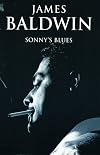
Sonny's Blues and Other Stories
by James Baldwin
On This Page
Tags
Recommendations





































Member Reviews
The nameless narrator gently led me through 1950s Harlem. He has an eye for beauty, scarred with memories of vicarious pain, dulled and lifted by a crescendo of jazz piano, played by a tortured soul, seeking release.
It opens with a teacher travelling to work, learning from the newspaper that his younger brother has been arrested for peddling and using heroin. He feels ice in his belly: he can't believe it, and yet he acknowledges his own denial of Sonny's problems over many years.
His musings swish back and forth, recalling Sonny as a child with “light in his face”, how he promised his mother to look out for Sonny but didn't, the likely futures of the boys he teaches, and his own escape from youthful indiscretions to professional show more respectability. But at what cost?
“Those who got out always left something of themselves behind, as some animals amputate a leg and leave it in the trap.”
Sonny's escape was piano - and drugs. Or drugs and piano. Can he have one without the other?
Image: Hands on a keyboard, in sepia (Source)
Suffering, beauty, and transcendence
Suffering is unavoidable. We can only strive to constrain and ameliorate it. But from the deepest pain can come the greatest beauty. It's only when the narrator suffers that he reaches out to his brother again:
“My trouble made his real.”
And Sonny opens up to his brother who finally wants to understand. It's raw.
“It was actually when I was most out of the world, I felt that I was in it, that I was with it, really, and I could play or I didn't really have to play, it just came out of me, it was there.”...
“‘When she was singing before… her voice reminded me for a minute of what heroin feels like sometimes - when it's in your veins. It makes you feel sort of warm and cool at the same time. And distant. And - and sure.’"
Music transcends and transports:
“And the face I saw on Sonny I'd never seen before. Everything had been burned out of it, and, at the same time, things usually hidden were being burned in, by the fire and fury of the battle which was occurring in him up there.”...
“Sonny's fingers filled the air with life, his life. But that life contained so many others.”
What price freedom?
“Freedom lurked around us and I understood, at last, that he could help us to be free if we would listen, that he would never be free until we did.”
But free from what?
“For me, then, as they began to play again, it glowed and shook above my brother's head like the very cup of trembling.”
So ends the story. The cup of trembling could be a nod to at least two Old Testament verses (Baldwin was raised by a preacher), each suggesting a slightly different interpretation:
• Zechariah 12:2
• Isaiah 51:22
Quotes
• “They were filled with rage. All they really knew were two darknesses, the darkness of their lives, which was now closing in on them, and the darkness of the movies, which had blinded them to that other darkness, and in which they now, vindictively, dreamed, at once more together than they were at any other time, and more alone.” [Harlem boys]
• “Most of the houses in which we had grown up had vanished, as had the stores from which we had stolen, the basements in which we had first tried sex, the rooftops from which we had hurled tin cans and bricks. But houses exactly like the houses of our past yet dominated the landscape, boys exactly like the boys we once had been found themselves smothering in these houses, came down into the streets for light and air and found themselves encircled by disaster.”
• “When she smiled one saw the little girl, one sensed the doomed, still-struggling woman beneath the battered face of the semi-whore.” [Barmaid]
• “It ain't a question of his being a good boy… nor of his having good sense. It ain't only the bad ones, nor yet the dumb ones that gets sucked under.’...
• ‘You may not be able to stop nothing from happening. But you got to let him know you's there.’” [Opposite of victim blaming]
Short story club
I read this as one of the stories in The Art of the Short Story, by Dana Gioia, from which I'm aiming to read one story a week with The Short Story Club, starting 2 May 2022.
You can read this story here.
You can join the group here. show less
It opens with a teacher travelling to work, learning from the newspaper that his younger brother has been arrested for peddling and using heroin. He feels ice in his belly: he can't believe it, and yet he acknowledges his own denial of Sonny's problems over many years.
His musings swish back and forth, recalling Sonny as a child with “light in his face”, how he promised his mother to look out for Sonny but didn't, the likely futures of the boys he teaches, and his own escape from youthful indiscretions to professional show more respectability. But at what cost?
“Those who got out always left something of themselves behind, as some animals amputate a leg and leave it in the trap.”
Sonny's escape was piano - and drugs. Or drugs and piano. Can he have one without the other?
Image: Hands on a keyboard, in sepia (Source)
Suffering, beauty, and transcendence
Suffering is unavoidable. We can only strive to constrain and ameliorate it. But from the deepest pain can come the greatest beauty. It's only when the narrator suffers that he reaches out to his brother again:
“My trouble made his real.”
And Sonny opens up to his brother who finally wants to understand. It's raw.
“It was actually when I was most out of the world, I felt that I was in it, that I was with it, really, and I could play or I didn't really have to play, it just came out of me, it was there.”...
“‘When she was singing before… her voice reminded me for a minute of what heroin feels like sometimes - when it's in your veins. It makes you feel sort of warm and cool at the same time. And distant. And - and sure.’"
Music transcends and transports:
“And the face I saw on Sonny I'd never seen before. Everything had been burned out of it, and, at the same time, things usually hidden were being burned in, by the fire and fury of the battle which was occurring in him up there.”...
“Sonny's fingers filled the air with life, his life. But that life contained so many others.”
What price freedom?
“Freedom lurked around us and I understood, at last, that he could help us to be free if we would listen, that he would never be free until we did.”
But free from what?
“For me, then, as they began to play again, it glowed and shook above my brother's head like the very cup of trembling.”
So ends the story. The cup of trembling could be a nod to at least two Old Testament verses (Baldwin was raised by a preacher), each suggesting a slightly different interpretation:
• Zechariah 12:2
• Isaiah 51:22
Quotes
• “They were filled with rage. All they really knew were two darknesses, the darkness of their lives, which was now closing in on them, and the darkness of the movies, which had blinded them to that other darkness, and in which they now, vindictively, dreamed, at once more together than they were at any other time, and more alone.” [Harlem boys]
• “Most of the houses in which we had grown up had vanished, as had the stores from which we had stolen, the basements in which we had first tried sex, the rooftops from which we had hurled tin cans and bricks. But houses exactly like the houses of our past yet dominated the landscape, boys exactly like the boys we once had been found themselves smothering in these houses, came down into the streets for light and air and found themselves encircled by disaster.”
• “When she smiled one saw the little girl, one sensed the doomed, still-struggling woman beneath the battered face of the semi-whore.” [Barmaid]
• “It ain't a question of his being a good boy… nor of his having good sense. It ain't only the bad ones, nor yet the dumb ones that gets sucked under.’...
• ‘You may not be able to stop nothing from happening. But you got to let him know you's there.’” [Opposite of victim blaming]
Short story club
I read this as one of the stories in The Art of the Short Story, by Dana Gioia, from which I'm aiming to read one story a week with The Short Story Club, starting 2 May 2022.
You can read this story here.
You can join the group here. show less
Short story read for TIOLI. This is a short story that explores themes of suffering, racial identity, familiar relationships, transformative power of art and oppression. The story explores and older brother’s desire to protect his brother at his mother’s request. In the story we view a personal and universal suffering, societies desire to suppress the reality, how art can confront pain. Harlem is a character also in the story. This quote I found by Baldwin is great. “Harlem is not a place. It is a condition of despair that breeds resilience and creativity. It constantly threatens to devour its people.” I found this short story on line.
He turned back to the window, looking out. 'All that hatred down there,' he said, 'all that hatred and misery and love. It's a wonder it doesn't blow the avenue apart.
This small book contains three short stories of African-American life in New York, one each from the 1940s, 1950s and 1960s. "Sonny's Blues" is a teacher's tale about his brother, a jazz pianist and heroin addict. "The Rockpile" is about the conflicts within a preacher's family and "Previous Condition" is about a New Jersey-born actor, who finds himself feeling out of place everywhere he goes, including Harlem.
This small book contains three short stories of African-American life in New York, one each from the 1940s, 1950s and 1960s. "Sonny's Blues" is a teacher's tale about his brother, a jazz pianist and heroin addict. "The Rockpile" is about the conflicts within a preacher's family and "Previous Condition" is about a New Jersey-born actor, who finds himself feeling out of place everywhere he goes, including Harlem.
An incredibly touching piece of writing, beautifully executed
two brothers differ over lifestyle
read Sonny's Blues but not the other stories
Members
- Recently Added By
Author Information

120+ Works 41,816 Members
James Baldwin was born on August 2, 1924, in New York. Baldwin's father was a pastor who subjected his children to poverty, abuse, and religious fanaticism. As a result, many of Baldwin's recurring themes, such as alienation and rejection, are attributable to his upbringing. Living the life of a starving artist, Baldwin went through numerous jobs, show more including dishwasher, office boy, factory worker, and waiter. In 1948, he moved to France, where much work originated. Baldwin published Go Tell It on the Mountain in 1953. A largely autobiographical work, it tells of the religious awakening of a fourteen-year-old. In addition to his childhood experiences, his experiences as a black man and a homosexual provided inspiration for such works as Giovanni's Room, Nobody Knows My Name, and Another Country. Baldwin holds a distinguished place in American history as one of the foremost writers of both black and gay literature. He was an active participant in the Civil Rights movement. Baldwin succumbed to cancer on December 1, 1987. (Bowker Author Biography) show less
Series
Belongs to Publisher Series
Penguin 60s (4)
Insel-Bücherei (Nr. 999/1)
Work Relationships
Is contained in
Contains
Common Knowledge
- Canonical title
- Sonny's Blues and Other Stories
Classifications
Statistics
- Members
- 296
- Popularity
- 108,978
- Reviews
- 7
- Rating
- (4.02)
- Languages
- English, German
- Media
- Paper, Ebook
- ISBNs
- 4
- ASINs
- 3