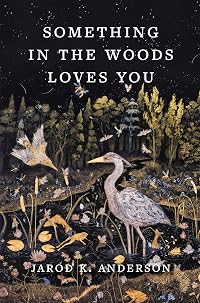
Something in the Woods Loves You
by Jarod K. Anderson
On This Page
Description
An inspiring blend of nature writing and memoir that explores nature's crucial role in our emotional and mental healthBats can hear shapes, plants can eat light, and bees can dance maps. When his life took him to a painfully dark place, the poet behind The CryptoNaturalist, Jarod K. Anderson, found comfort and redemption in these facts and the shift in perspective that comes from paying a new kind of attention to nature.
Something in the Woods Loves You tells the story of the darkest show more stretch of a young person's life, and how deliberate and meditative encounters with plants and animals helped him see the light at every turn. Ranging from optimistic contemplations of mortality to appreciations of a single mushroom, Anderson has written a lyrical love letter to the natural world and given us the tools to see it all anew.
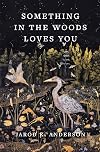
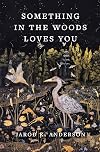
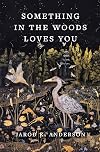
Cover image copyright the Artist (Tuesday Riddell), reproduced with grateful thanks to MESSUMS ORG. Photo: Steve Russell.
. show less
Tags
Recommendations










Member Reviews
It's rare that I start reading a book and almost immediately know it will become a forever favorite, but that's the case here. In this powerful book full of wisdom--maybe more wisdom than I've ever seen in one book--Anderson's gorgeous writing and humor come together to offer a powerful mix of nature writing, self-help, memoir, and lessons we can all use on controlling what we can control and understanding our place in this huge, strange world. Here's a quick excerpt that spoke to me, and which I absolutely fell in love with:
"Something else, something with furry little hands, tapped at the backdoor of my thoughts.
Sometimes I need a heron to be my contemplative guide. Sometimes I need a deer, antler-crowned, or a bluebird like a living show more shard of cloudless summer sky. But that autumn when my newfound mental health was collapsing around me, bedraggled in sweatpants, hounded by barking worries like hunting dogs, I needed a raccoon, a trash-goblin, a clever little cutthroat with Dorito dust on his whiskers to stand among my dirty dishes and whisper, "It's not what you eat or how you eat, but that you eat.
Yes, nature is soaring eagles, hundred-foot pines, and leaping marlins glistening above the seafoam, but it's also raccoons armpit deep in a discarded peanut butter jar."
Anderson's stories are all the more powerful because they're talking about the nature that so many of us take for granted--raccoons, deer, backyard birds, and even flowers. They're anecdotes about being powerless, and yet discovering one's own agency to find power again, and about overcoming depression and helplessness step by step. And through it all, there is such wonderful humor and observation here.
If I could put a copy of this book in every person's hands, I would. If you're even remotely tempted--even if you avoid self-help, or avoid memoir, or avoid nature writing, or don't particularly care for raccoons!--I hope you'll read this book. show less
"Something else, something with furry little hands, tapped at the backdoor of my thoughts.
Sometimes I need a heron to be my contemplative guide. Sometimes I need a deer, antler-crowned, or a bluebird like a living show more shard of cloudless summer sky. But that autumn when my newfound mental health was collapsing around me, bedraggled in sweatpants, hounded by barking worries like hunting dogs, I needed a raccoon, a trash-goblin, a clever little cutthroat with Dorito dust on his whiskers to stand among my dirty dishes and whisper, "It's not what you eat or how you eat, but that you eat.
Yes, nature is soaring eagles, hundred-foot pines, and leaping marlins glistening above the seafoam, but it's also raccoons armpit deep in a discarded peanut butter jar."
Anderson's stories are all the more powerful because they're talking about the nature that so many of us take for granted--raccoons, deer, backyard birds, and even flowers. They're anecdotes about being powerless, and yet discovering one's own agency to find power again, and about overcoming depression and helplessness step by step. And through it all, there is such wonderful humor and observation here.
If I could put a copy of this book in every person's hands, I would. If you're even remotely tempted--even if you avoid self-help, or avoid memoir, or avoid nature writing, or don't particularly care for raccoons!--I hope you'll read this book. show less
A beautiful, philosophical, and poetic memoir about depression and how the author found that being out in nature helped him to cope with it. It got pretty didactic in the later “Summer” chapters, which I started to find tiresome. But aside from those few chapters, it was a lovely and comforting read. It’s definitely something I’ll return to when I’m feeling depressed myself.
The book requires more of my attention than I can give it right now (not TTS enabled), but I will finish it after I buy my own audio copy to keep. The narrative takes us through the seasons, flora, fauna, and the healing power of nature (best combined with professional help in the case of depression and its depths) based upon his personal journey. The writing is deeply affective.
I requested and received a free temporary PDF from Timber Press via NetGalley. Thank you
I requested and received a free temporary PDF from Timber Press via NetGalley. Thank you
Ratings
Members
- Recently Added By
Lists

Psychology: Abuse, Grief, Self-Help
189 works; 1 member

Books Read in 2026
1,962 works; 66 members
Author Information

8+ Works 432 Members
Awards and Honors
Awards
Classifications
Statistics
- Members
- 152
- Popularity
- 215,577
- Reviews
- 4
- Rating
- (4.35)
- Languages
- English
- Media
- Paper, Audiobook, Ebook
- ISBNs
- 3
- ASINs
- 3