On This Page
Description
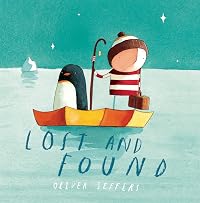
While trying his best to help a penguin that has shown up at his door, a boy journeys all the way to the South Pole, only to realize that the penguin was never lost.Tags
Recommendations









Member Reviews
"Once there was a boy who found a penguin at his door..." So begins this sweet, heartwarming tale, the second of four to feature the aforementioned boy and his adventures. Determining that his penguin visitor is lost, the boy sets out to return him to his home in the South Pole. After a long voyage, one featuring plenty of stories and good fellowship, the two arrive at their destination. But although he has reached his goal, the boy isn't happy...
Like its predecessor, How to Catch a Star, Lost and Found features an engaging young protagonist who longs for something - in that earlier book, it was a star, here it is to make his penguin friend happy - and finds it in an unexpected way. Like Shaun Tan's marvelous The Lost Thing, Jeffers' show more Lost and Found was made into a short animated film in 2008, and after reading the picture-book, I'd definitely like to track down and watch the movie. This is one I'd recommend to those looking for children's stories about friendship - the loneliness its absence creates, and the unexpected ways one finds and creates it - as well as to anyone who read and enjoyed the earlier story about this boy-character and his life. show less
Like its predecessor, How to Catch a Star, Lost and Found features an engaging young protagonist who longs for something - in that earlier book, it was a star, here it is to make his penguin friend happy - and finds it in an unexpected way. Like Shaun Tan's marvelous The Lost Thing, Jeffers' show more Lost and Found was made into a short animated film in 2008, and after reading the picture-book, I'd definitely like to track down and watch the movie. This is one I'd recommend to those looking for children's stories about friendship - the loneliness its absence creates, and the unexpected ways one finds and creates it - as well as to anyone who read and enjoyed the earlier story about this boy-character and his life. show less
Once there was a boy who found a penguin at his door. From this opening line to the very end, this gentle story of friendship will capture young readers' imaginations. The child assumes that the penguin is lost, which is logical since the lumpy black-and-white bird does look awfully forlorn. Determined to help the creature find its way home, he discovers that penguins come from the South Pole, and the two board a rowing boat. During their long sea voyage, the youngster passes the time by telling his companion many stories. However, when they finally reach their destination, he realises that the penguin was not lost, but just lonely and looking for a friend. The soft watercolor paintings feature simple shapes and a palette that ranges show more from pale to bold. The boy has a square body, stick legs, and a round head with tiny dot eyes and an expressive mouth. For much of the tale, the characters are placed on crisp white backdrops, while colorful ocean scenes depict their journey. The text's subtle humour and the appealing visuals make this title a wonderful read.
On his doorstep, a little boy finds a penguin looking sad and lost, and he tries to help the wordless bird. When the boy discovers that penguins come from the South Pole, he takes his new friend there by rowing boat, telling him stories along the way. He helps the penguin ashore and casts off. The penguin sadly watches him float away. Realising his mistake, the boy returns for the penguin, misses him, finds him, hugs him, and takes him back in his boat. A sense of restraint underlies the illustrations, from the spare use of colour to the isolation of the individual characters on the page. With clean lines and varied compositions, the watercolor paintings tell the story with a minimum of fuss but no lack of feeling. But unlike characters in the soppier sort of picture books on friendship, the boy and the penguin don't gush; they just quietly enjoy being together. With a succinct narrative text and a series of expressive illustrations, this is a fine choice for reading aloud. show less
On his doorstep, a little boy finds a penguin looking sad and lost, and he tries to help the wordless bird. When the boy discovers that penguins come from the South Pole, he takes his new friend there by rowing boat, telling him stories along the way. He helps the penguin ashore and casts off. The penguin sadly watches him float away. Realising his mistake, the boy returns for the penguin, misses him, finds him, hugs him, and takes him back in his boat. A sense of restraint underlies the illustrations, from the spare use of colour to the isolation of the individual characters on the page. With clean lines and varied compositions, the watercolor paintings tell the story with a minimum of fuss but no lack of feeling. But unlike characters in the soppier sort of picture books on friendship, the boy and the penguin don't gush; they just quietly enjoy being together. With a succinct narrative text and a series of expressive illustrations, this is a fine choice for reading aloud. show less
I thought that "Lost and Found" written and illustrated by Oliver Jeffers was a great book. I like the fact that Jeffer's watercolor illustrations are at times both simple and straightforward expressing emotion like the illustration of the penguin alone on page 4 that emphasizes the penguins loneliness and sadness. At the same time Jeffer's uses framing, as he does on page 3, to express the movement of time as the the penguin follows the young boy wherever he goes. I really enjoyed the story especially the boys comic and exaggerated attempts to return what he believes is a "lost" penguin. Its clear early on that the penguin is not as concerned with returning to the south pole as the boy is in getting him there and the conclusion does a show more great job of describing how the boy comes to the realization that the penguin was never really lost at all. Themes of friendship and an understanding of what makes a place "home" are clear throughout and the author does a great job of expressing these through the narrative. show less
One day a little boy finds a penguin on his doorstep. He assumes the penguin is lost, and makes it his mission to get it back to its home. But, once they reach Antarctica (by rowboat, improbably), the boy realizes the penguin wasn't looking for help getting home - he was looking for a friend.
There's a beautiful ~25 minute short film of this book, with a few added scenes, voiceover by Jim Broadbent, and lovely music.
*
Re-read March 2026
There's a beautiful ~25 minute short film of this book, with a few added scenes, voiceover by Jim Broadbent, and lovely music.
*
Re-read March 2026
Featured at An Abundance of Books
The boy from How To Catch a Star is back in Oliver Jeffers' second book, Lost and Found. The boy discovers a penguin at his door one day. The penguin follows him around looking sad. Deciding that he must be lost, the boy endeavors to help the him find his way home. He asked at the lost and found office, he asked some birds, he even asked his rubber duck - nobody seemed to know where the penguin belonged.
Finally the boy discovers that penguins come from the South Pole. The next challenge was getting there. Eventually the boy and the penguin build a row boat and row for many days and nights. After floating through seas filled with varying degrees of calm and danger the finally arrive at the South show more Pole.
"The boy was delighted, but the penguin said nothing. Suddenly it looked sad again as the boy helped it out of the boat."
As the boy rows home he feels strange to be alone again. He eventually realizes that he made a big mistake - the penguin had not been lost, it had been lonely. He begins to row back as quickly as possible, unfortunately missing that the penguin had chased after him using an umbrella as a boat. Once back at the South Pole the boy looks everywhere but cannot find his friend. He sadly sets off for home once more. Ahead of him he sees something in the water and is reunited with his friend.
"And so the boy and his friend went home together, talking of wonderful things all the way."
My love for Oliver Jeffers' books and illustrations cannot be verbalized, but I will try. The story is simple, sweet, and even my 4 year olds become emotionally invested in the book. The illustrations are spare and humorous but use beautiful colors and a water color technique that gives depth and movement to each painting. I love the expressiveness of the characters, the ridiculousness of the boy's stick legs holding up a solid body, the wonderful lollipop trees that have square shapes overlaid, and the fantastically pudgy penguin! Oh, how I love the penguin.
I LOVE THIS BOOK and everybody would have a copy. Well, if you like picture books or have kids, then you should have a copy. The watercolor illustrations and story are lovely and the penguin is so cute readers lose the power of speech and can only make squeaking sounds. (When I say "readers" I mean me and most of my first graders.) I give it 6 stars because I think is fantastic!
Read full review HERE show less
The boy from How To Catch a Star is back in Oliver Jeffers' second book, Lost and Found. The boy discovers a penguin at his door one day. The penguin follows him around looking sad. Deciding that he must be lost, the boy endeavors to help the him find his way home. He asked at the lost and found office, he asked some birds, he even asked his rubber duck - nobody seemed to know where the penguin belonged.
Finally the boy discovers that penguins come from the South Pole. The next challenge was getting there. Eventually the boy and the penguin build a row boat and row for many days and nights. After floating through seas filled with varying degrees of calm and danger the finally arrive at the South show more Pole.
"The boy was delighted, but the penguin said nothing. Suddenly it looked sad again as the boy helped it out of the boat."
As the boy rows home he feels strange to be alone again. He eventually realizes that he made a big mistake - the penguin had not been lost, it had been lonely. He begins to row back as quickly as possible, unfortunately missing that the penguin had chased after him using an umbrella as a boat. Once back at the South Pole the boy looks everywhere but cannot find his friend. He sadly sets off for home once more. Ahead of him he sees something in the water and is reunited with his friend.
"And so the boy and his friend went home together, talking of wonderful things all the way."
My love for Oliver Jeffers' books and illustrations cannot be verbalized, but I will try. The story is simple, sweet, and even my 4 year olds become emotionally invested in the book. The illustrations are spare and humorous but use beautiful colors and a water color technique that gives depth and movement to each painting. I love the expressiveness of the characters, the ridiculousness of the boy's stick legs holding up a solid body, the wonderful lollipop trees that have square shapes overlaid, and the fantastically pudgy penguin! Oh, how I love the penguin.
I LOVE THIS BOOK and everybody would have a copy. Well, if you like picture books or have kids, then you should have a copy. The watercolor illustrations and story are lovely and the penguin is so cute readers lose the power of speech and can only make squeaking sounds. (When I say "readers" I mean me and most of my first graders.) I give it 6 stars because I think is fantastic!
Read full review HERE show less
This is a heart warming story. It talks about a penguin who shows up at a boys house. The boy searched to find out where the penguin came from and decided to take him to the South pole. They travelled in a boat there together, sharing stories with one another. The boy dropped the penguin off and as he was leaving in his boat, he saw how sad the penguin looked. It talks about how he is lonely, which could be a good book to introduce the emotion of being lonely. It has a happy ending and I really enjoyed all the pictures!
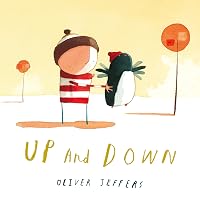
There is a playfulness and sweetness about Oliver Jeffers' books that catches me. This and Up and Down are about a friendship formed when a penguin gets lost and a boy tries to help him.
Members
- Recently Added By
Lists

Puffin Books 70th anniversary handbook recommendations
537 works; 10 members

Written and Illustrated By
805 works; 1 member

Favorite Picture and Board Books
480 works; 1 member
Author Information

82+ Works 20,886 Members
Oliver Jeffers was born in Port Hedland, Western Australia in 1977. He grew up in Belfast, Northern Ireland. He received a First Class Honors Degree in illustration and visual communication and certificate of foundation studies from the University of Ulster, School of Art and Design in 2001. His work has been exhibited in multiple cities, show more including the National Portrait Gallery in London, the Brooklyn Museum, and Gestalten Space in Berlin. He writes and illustrates picture books. His debut book, How to Catch a Star, was published in 2004 and won a Merit Award at the CBI/Bisto Book of Year Awards. His second book, Lost and Found, won the Gold Award at Nestle Children's Book Prize and was developed into an animated short film, which has received over sixty awards including a BAFTA for Best Animated Short Film. His other books include The Incredible Book Eating Boy, The Great Paper Caper, Up and Down, Stuck, This Moose Belongs to Me, Once upon an Alphabet: Short Stories for All Letters, The Hueys series and A Child of Books. He has won numerous awards including the Smarties Award, Irish Book of the Year, The Blue Peter Book of the Year, and the 2017 Academy of British Cover Design Award in the Children's category. (Bowker Author Biography) show less
Awards and Honors
Awards
Series

Work Relationships
Is contained in
Has the adaptation
Common Knowledge
- Original title
- Lost and Found
- Original publication date
- 2005
- People/Characters
- The Boy; The Penguin
- Important places
- South Pole
- Dedication
- For Rory, Peter and Brian
- First words
- Once there was a boy and one day he found a penguin at his door.
- Last words
- (Click to show. Warning: May contain spoilers.)And so the boy and his friend went home together, talking of wonderful things all the way.
- Original language
- English
Classifications
Statistics
- Members
- 2,462
- Popularity
- 7,905
- Reviews
- 43
- Rating
- (4.23)
- Languages
- 12 — Chinese, Dutch, English, Finnish, French, German, Scottish Gaelic, Galician, Italian, Polish, Portuguese, Spanish
- Media
- Paper, Audiobook, Ebook
- ISBNs
- 38
- ASINs
- 11