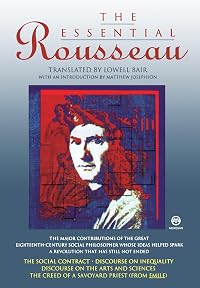
The Essential Rousseau (Essentials)
by Jean-Jacques Rousseau
211 Members (3.45)
On This Page
Description
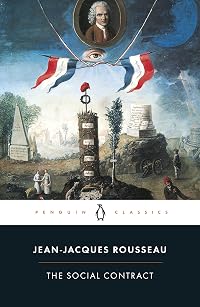
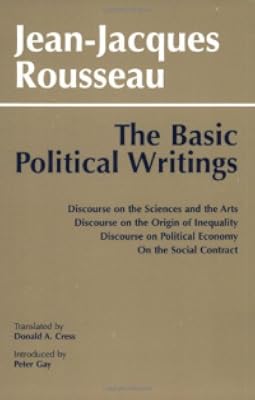
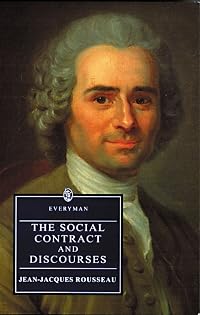
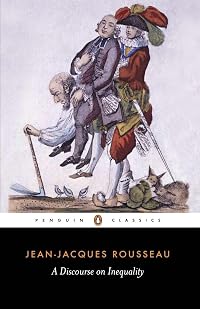
With splendid new translations, these four major works offer a superlative introduction to a great social philosopher whose ideas helped spark a revolution that has still not ended. Can individual freedom and social stability be reconciled? What is the function of government? What are the benefits and liabilities of civilization? What is the original nature of man, and how can he most fully realize his potential? These were the questions that Jean-Jacques Rousseau investigated in show more works that helped set the stage for the French Revolution and have since stood as eloquent expressions of revolutionary views, not only in politics but also in such areas as personal lifestyles and educational practices. Rousseau's concepts of the natural goodness of man, the corrupting influence of social institutions, and the right and the power of the people to overthrow their oppressors and create new and more responsive forms of government and society are as richly relevant today as they were in eighteenth-century France. Includes: The Social Contract Discourse on Inequality Discourse on the Arts and Sciences "The Creed of a Savoyard Priest" (from Emile) show lessTags
Recommendations








Member Reviews
Members
- Recently Added By
Author Information

915+ Works 27,600 Members
Jean Jacques Rousseau was a Swiss philosopher and political theorist who lived much of his life in France. Many reference books describe him as French, but he generally added "Citizen of Geneva" whenever he signed his name. He presented his theory of education in Emile (1762), a novel, the first book to link the educational process to a scientific show more understanding of children; Rousseau is thus regarded as the precursor, if not the founder, of child psychology. "The greatest good is not authority, but liberty," he wrote, and in The Social Contract (1762) Rousseau moved from a study of the individual to an analysis of the relationship of the individual to the state: "The art of politics consists of making each citizen extremely dependent upon the polis in order to free him from dependence upon other citizens." This doctrine of sovereignty, the absolute supremacy of the state over its members, has led many to accuse Rousseau of opening the doors to despotism, collectivism, and totalitarianism. Others say that this is the opposite of Rousseau's intent, that the surrender of rights is only apparent, and that in the end individuals retain the rights that they appear to have given up. In effect, these Rousseau supporters say, the social contract is designed to secure or to restore to individuals in the state of civilization the equivalent of the rights they enjoyed in the state of nature. Rousseau was a passionate man who lived in passionate times, and he still stirs passion in those who write about him today. (Bowker Author Biography) show less
All Editions
Classifications
- Genres
- Philosophy, Nonfiction, Politics and Government, General Nonfiction
- DDC/MDS
- 320.01 — Society, government, & culture Political science Types of Government Political Science Philosophy and Theory
- LCC
- JC179 .R7 — Political Science Political theory Political theory. The state. Theories of the state Modern state
- BISAC
Statistics
- Members
- 211
- Popularity
- 155,296
- Rating
- (3.45)
- Languages
- English, French
- Media
- Paper
- ISBNs
- 6
- ASINs
- 4