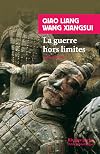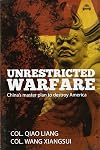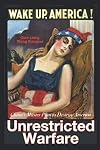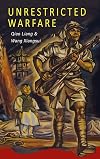
Unrestricted Warfare: China's Master Plan to Destroy America
by Liang Qiao
On This Page
Description
As incredible as it may be to believe, three years before the September 11 bombing of the World Trade Center-a Chinese military manual called Unrestricted Warfare touted such an attack-suggesting it would be difficult for the United States military to cope with. Now NewsMax.com is making the CIA translation of this shocking book available to all Americans. In reading China's military manual Unrestricted Warfare, you will learn that the events of September ll were not a random act perpetrated show more by independent agents. Instead, Chinese military planners believe that terrorism is just one of the many tools at the hands of nations and their terrorists allies to wage total war against the United States. The doctrine of total war outlined in Unrestricted Warfare clearly demonstrates that the People's Republic of China is preparing to confront the United States and our allies by conducting "asymmetrical" or multidimensional attack on almost every aspect of our social, economic and political life. show lessTags
Recommendations





Member Reviews
Strategy is not an American strength. Strategic plans are written to serve the interests of political parties and the election cycle, factions within the Pentagon and military industrial complex seeking billions of dollars for next-gen weapons system, or at best a small group of dissident colonels seeking promotion or post-retirement sinecures. Everybody has an agenda, and almost nobody is conducting honest analysis in search of the truth. The authors of Unrestricted Warfare are coming from outside the Beltway; way outside the Beltway, as they're officers in the People Liberation Army. With no DC career to worry about, there's at least the potential of some candid truth about the future of warfare, and besides as a Chinese strategic show more plan, reading this has the same kind of vicarious thrill as reading Guderian's Achtung-Panzer! in 1938.
The book begins promisingly enough, with chapters like "The War God's Face Has Become Indistinct" and "What Do Americans Gain By Touching the Elephant?". The introduction offers as a sensible reframing of modern warfare as I've ever seen. "We acknowledge that the new principles of war are no longer 'using armed force to compel the enemy to submit to one's will,' but rather are 'using all means, including armed force or non-armed force, military and non-military, and lethal and non-lethal means to compel the enemy to accept one's interests'"
The authors take as their key examples Operation Desert Storm, the 1997 Southeast Asia Financial Crisis, and the unlimited potential of cyberattacks carried out by hackers. Their analysis of Desert Storm is perhaps the most conventional section, examining in detail the successful organization of the operation under Norman Schwarzkopf, and the use of precision air power as the preeminent arm. Unfortunately, the financial crisis and the role of George Soros fails to illuminate what I can only describe as the 'Soros Conspiracy Twilight Zone.' While several Asian economies suffered massive reverses, and George Soros made a lot of money in the process, the accusation that he was responsible is not sustained (or unsustained for that matter. The issue remains open, as far as I can tell). Given the centrality of financial, economic, and media warfare to the concept of unresistricted warfare, this section deserves better. Finally, cyber attacks are treated mostly anecdotally, without a rigorous idea of the linkages between cyberspace and physical systems, or virtual attacks and real damage.
That said, there are some very clever insights into the strengths and limitations of America's high-tech Battlespace model of combat, where every soldier is networked into a regional grid that can cause any location to precisely explode at short notice (the deadliest environment on Earth, short of a nuclear firestorm) in terms of it's cost and inability to counter low-tech insurgent forces. For a pre-9/11 work, this book is horrifically prescient in linking Al Qaeda and airplanes. Conversely, key topics in strengthening local governance and legitimacy and fostering robust innovative economies not vulnerable to unrestricted warfare are mostly left out.
The original lacks the hyperbolic and inaccurate subtitle 'China's Master Plan to Destroy America' (my copy is from the nice folks at www.c4i.org). The examples are American, because America is the world's premier power, and are fairly critiqued on their strengths and weaknesses. While some parts of China's military are clearly aimed American capabilities, the ideas advanced here are seem to be more about countering and emulating American power, rather than crippling it.
As a guide to the future, Unrestricted Warfare will probably not have the impact of Clausewitz, Liddell Hart, or John Boyd. While it offers a important alternative perspective to the conventional wisdom, it's too foreign, too abstract, too hard to apply. By the standards of this book, the last 10 years of American foreign policy have been an unmitigated disaster, but I don't think the American government could ever act in such an integrated manner without a clear existential threat. I think the most trenchant critique of this book is that more than 10 years later, it's difficult to detect a coherent unrestricted warfare strategy behind China's domestic policies, provocations in the South China Sea, and African development projects. For now, unrestricted warfare is more theory than practice. show less
The book begins promisingly enough, with chapters like "The War God's Face Has Become Indistinct" and "What Do Americans Gain By Touching the Elephant?". The introduction offers as a sensible reframing of modern warfare as I've ever seen. "We acknowledge that the new principles of war are no longer 'using armed force to compel the enemy to submit to one's will,' but rather are 'using all means, including armed force or non-armed force, military and non-military, and lethal and non-lethal means to compel the enemy to accept one's interests'"
The authors take as their key examples Operation Desert Storm, the 1997 Southeast Asia Financial Crisis, and the unlimited potential of cyberattacks carried out by hackers. Their analysis of Desert Storm is perhaps the most conventional section, examining in detail the successful organization of the operation under Norman Schwarzkopf, and the use of precision air power as the preeminent arm. Unfortunately, the financial crisis and the role of George Soros fails to illuminate what I can only describe as the 'Soros Conspiracy Twilight Zone.' While several Asian economies suffered massive reverses, and George Soros made a lot of money in the process, the accusation that he was responsible is not sustained (or unsustained for that matter. The issue remains open, as far as I can tell). Given the centrality of financial, economic, and media warfare to the concept of unresistricted warfare, this section deserves better. Finally, cyber attacks are treated mostly anecdotally, without a rigorous idea of the linkages between cyberspace and physical systems, or virtual attacks and real damage.
That said, there are some very clever insights into the strengths and limitations of America's high-tech Battlespace model of combat, where every soldier is networked into a regional grid that can cause any location to precisely explode at short notice (the deadliest environment on Earth, short of a nuclear firestorm) in terms of it's cost and inability to counter low-tech insurgent forces. For a pre-9/11 work, this book is horrifically prescient in linking Al Qaeda and airplanes. Conversely, key topics in strengthening local governance and legitimacy and fostering robust innovative economies not vulnerable to unrestricted warfare are mostly left out.
The original lacks the hyperbolic and inaccurate subtitle 'China's Master Plan to Destroy America' (my copy is from the nice folks at www.c4i.org). The examples are American, because America is the world's premier power, and are fairly critiqued on their strengths and weaknesses. While some parts of China's military are clearly aimed American capabilities, the ideas advanced here are seem to be more about countering and emulating American power, rather than crippling it.
As a guide to the future, Unrestricted Warfare will probably not have the impact of Clausewitz, Liddell Hart, or John Boyd. While it offers a important alternative perspective to the conventional wisdom, it's too foreign, too abstract, too hard to apply. By the standards of this book, the last 10 years of American foreign policy have been an unmitigated disaster, but I don't think the American government could ever act in such an integrated manner without a clear existential threat. I think the most trenchant critique of this book is that more than 10 years later, it's difficult to detect a coherent unrestricted warfare strategy behind China's domestic policies, provocations in the South China Sea, and African development projects. For now, unrestricted warfare is more theory than practice. show less
Substance: a witches brew of poisonous ideas which if implemented will backfire and cripple Chinese foreign policy. At its foundation it's Thrasymachus's argument or that of the Athenians to the Melians. Purportedly, state-to-state relations are all force and fraud. Happily that's not true, one ought read Marcus Tullius Cicero to understand why. In any case, if China is so foolish as to try pursuing lawless asymmetric constant low-risk attacks on the USA it will learn, and already is, that this is a really foolish policy, and will not lead to anything solid, since who could trust the state capitalist mercantilist dictators, whose very army claims not to believe in law, and thus lacks any sense of justice. Hitler tried a policy of force show more and fraud too, and look where that led?
The translation is fluid, well written, and since contemporary Chinese is much less pithy than classical and contemporary translators have much better tools than our forbears I presume it's a good translation. Translations' quality tends to reflect the original work.
It's a must read, but partily since it is so very wrong, and also to understand how to school the fools who would run such catastrophically foolish foreign policies.
Let's hope the smarter and saner elements in the PRC remember: "Politics must control the gun, and the gun must not control politics" -Mao Zedong show less
The translation is fluid, well written, and since contemporary Chinese is much less pithy than classical and contemporary translators have much better tools than our forbears I presume it's a good translation. Translations' quality tends to reflect the original work.
It's a must read, but partily since it is so very wrong, and also to understand how to school the fools who would run such catastrophically foolish foreign policies.
Let's hope the smarter and saner elements in the PRC remember: "Politics must control the gun, and the gun must not control politics" -Mao Zedong show less
If this book was a breakthrough for Western militaries in 1990's and a wake up call at current time then I can say only it is great disappointment especially concerning the modern Western military thought.
First, concept of total war (or what is called unrestricted warfare here) is as old as Roman campaigns in Dalmatia and today's Spain. Whoever read anything about the Peninsular campaign and Napoleon's campaign in Russia or WW2 Poland military actions or SOE actions and sabotages of industry and means of production, Germany's constant play of Ireland against UK from WW1 till the end of WW2, IRA and ETA, Middle East, assassinations, guerilla warfare and especially anti-guerilla warfare in the Balkans that resulted in high civilian show more casualties etc etc will recognize all of the above when reading this book's mentions of state and non-state actors.
Full scale psychological operations against civilian populations during Cold War (Africa, Asia, South America, Italy, contested areas near Iron curtain) using media outlets, mind-messing, changes of the regimes directly or indirectly, introducing blockades and sanctions ..... this was all as old as at least 1960's. So in general nothing new and breathtaking, except that these are writings of officers from a foreign country about use of all these measures against the America (primary opposition to China's interests). Even actions of non-state entities (cartels especially but also almost every Middle-Eastern militia) should not be a surprise since 1980's - by undermining the government they de-facto became the governments with their economy, politics, armed forces and security services.
So basically only value of the book is the way Chinese military views the US actions and doctrine starting from the First Gulf war (last old-style inter-nation war) to the time book was published. I have to say that they have a very keen eye and are very capable to link policy papers, military doctrines and non-military elements. This must be a single book where economic-hitmen are portrayed as what they are in context of military operations, very dangerous actors capable of plunging foreign markets into abyss. Although they are not directly connected with the government they are like wild dogs unleashed on any new market, acting as frauds and tricksters in order to extricate as much loot as possible - all within the law of course, because they know all the small writings. They have made huge disservice to the West at the end of Cold War and are main (or to be honest the single) reason for dislike of West in all Eastern European countries that went through so called transition period.
Since they are what you might call deniable asset they are used indirectly to strengthen the policy goals.
So, as I said very keen eye and very much aware of the IT technologies and the support role cyber warfare plays in the new world. I especially like how they are adamant that only combined use of all of the means at hand will result in victory (which is the main challenge they see - ability to adapt to ever emerging new circumstances). This view that cyber warfare plays only role of one of the arms deployed into the theater matches some of the other works I came across. On its own various arms disciplines cannot succeed. Combined they will subdue any opponent.
Also interesting point is how putting full control of means of war into hands of politicians actually produces more stress and possible vectors for conflict because they just do not know when to stop when they take the wrong turn (just look at Vietnam war, almost regular bombardment of Iraq after every affair during Clinton's presidency, not to mention occupation of Iraq during Bush (the son) in search of phantasm called WMD etc and finally way politicians handled the crisis last and this year] - they just know only to press forward because to admit they made a mistake is something only intelligent people do and lets be honest people that get elected are only nominally in this group. If you do not believe look at the episode or two of "Yes, Prime Minister" to see who actually pulls the strings and how they just keep digging deeper and deeper after first mistake they make. But I am getting off topic.
As an insight into Chinese military practice and doctrine very interesting book. It shows Chinese ability to blend experience of others with their own history.
As a breakthrough book (even at the time when it was written) ..... I dont see it as such because all of the elements presented are taken and re-arranged from the US military approach [only that Chinese at the time saw US army as able to see where it needs to go, but completely unwilling to change itself to reach the goal because they might lose funding for some of the expensive technologies - which might not be the case post 2001, when US military started to transform into highly efficient and deadly war machine)].
Only reason I gave this book 4 stars is terrible translation for this edition. Man it took me sometimes an hour to connect the dots and link finalized sentences with parts of text in the parenthesis, not to mention some weird.... weird!.....sentence structures that have no start or end. They truly need to improve editing.
Recommended as an introductory work into old/new theory of war where nothing is sacrosanct and everything is eligible target. show less
First, concept of total war (or what is called unrestricted warfare here) is as old as Roman campaigns in Dalmatia and today's Spain. Whoever read anything about the Peninsular campaign and Napoleon's campaign in Russia or WW2 Poland military actions or SOE actions and sabotages of industry and means of production, Germany's constant play of Ireland against UK from WW1 till the end of WW2, IRA and ETA, Middle East, assassinations, guerilla warfare and especially anti-guerilla warfare in the Balkans that resulted in high civilian show more casualties etc etc will recognize all of the above when reading this book's mentions of state and non-state actors.
Full scale psychological operations against civilian populations during Cold War (Africa, Asia, South America, Italy, contested areas near Iron curtain) using media outlets, mind-messing, changes of the regimes directly or indirectly, introducing blockades and sanctions ..... this was all as old as at least 1960's. So in general nothing new and breathtaking, except that these are writings of officers from a foreign country about use of all these measures against the America (primary opposition to China's interests). Even actions of non-state entities (cartels especially but also almost every Middle-Eastern militia) should not be a surprise since 1980's - by undermining the government they de-facto became the governments with their economy, politics, armed forces and security services.
So basically only value of the book is the way Chinese military views the US actions and doctrine starting from the First Gulf war (last old-style inter-nation war) to the time book was published. I have to say that they have a very keen eye and are very capable to link policy papers, military doctrines and non-military elements. This must be a single book where economic-hitmen are portrayed as what they are in context of military operations, very dangerous actors capable of plunging foreign markets into abyss. Although they are not directly connected with the government they are like wild dogs unleashed on any new market, acting as frauds and tricksters in order to extricate as much loot as possible - all within the law of course, because they know all the small writings. They have made huge disservice to the West at the end of Cold War and are main (or to be honest the single) reason for dislike of West in all Eastern European countries that went through so called transition period.
Since they are what you might call deniable asset they are used indirectly to strengthen the policy goals.
So, as I said very keen eye and very much aware of the IT technologies and the support role cyber warfare plays in the new world. I especially like how they are adamant that only combined use of all of the means at hand will result in victory (which is the main challenge they see - ability to adapt to ever emerging new circumstances). This view that cyber warfare plays only role of one of the arms deployed into the theater matches some of the other works I came across. On its own various arms disciplines cannot succeed. Combined they will subdue any opponent.
Also interesting point is how putting full control of means of war into hands of politicians actually produces more stress and possible vectors for conflict because they just do not know when to stop when they take the wrong turn (just look at Vietnam war, almost regular bombardment of Iraq after every affair during Clinton's presidency, not to mention occupation of Iraq during Bush (the son) in search of phantasm called WMD etc and finally way politicians handled the crisis last and this year] - they just know only to press forward because to admit they made a mistake is something only intelligent people do and lets be honest people that get elected are only nominally in this group. If you do not believe look at the episode or two of "Yes, Prime Minister" to see who actually pulls the strings and how they just keep digging deeper and deeper after first mistake they make. But I am getting off topic.
As an insight into Chinese military practice and doctrine very interesting book. It shows Chinese ability to blend experience of others with their own history.
As a breakthrough book (even at the time when it was written) ..... I dont see it as such because all of the elements presented are taken and re-arranged from the US military approach [only that Chinese at the time saw US army as able to see where it needs to go, but completely unwilling to change itself to reach the goal because they might lose funding for some of the expensive technologies - which might not be the case post 2001, when US military started to transform into highly efficient and deadly war machine)].
Only reason I gave this book 4 stars is terrible translation for this edition. Man it took me sometimes an hour to connect the dots and link finalized sentences with parts of text in the parenthesis, not to mention some weird.... weird!.....sentence structures that have no start or end. They truly need to improve editing.
Recommended as an introductory work into old/new theory of war where nothing is sacrosanct and everything is eligible target. show less
My copy didn't have the greatest translation. But interesting, nonetheless.......
Case 14 shelf 4
Ratings
Members
- Recently Added By
Author Information
7 Works 210 Members
Classifications
Statistics
- Members
- 188
- Popularity
- 172,710
- Reviews
- 5
- Rating
- (3.36)
- Languages
- English, French
- Media
- Paper, Audiobook, Ebook
- ISBNs
- 11
- ASINs
- 2