On This Page
Description
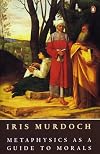
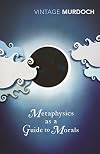
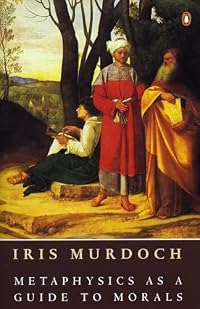
The decline of religion and ever increasing influence of science pose acute ethical issues for us all. Can we reject the literal truth of the Gospels yet still retain a Christian morality? Can we defend any 'moral values' against the constant encroachments of technology? Indeed, are we in danger of losing most of the qualities which make us truly human? Here, drawing on a novelist's insight into art, literature and abnormal psychology, Iris Murdoch conducts an ongoing debate with major show more writers, thinkers and theologians--from Augustine to Wittgenstein, Shakespeare to Sartre, Plato to Derrida--to provide fresh and compelling answers to these crucial questions. show lessTags
Recommendations







Member Reviews
Reader -- I made my way through this work over a six month period -- I will attempt coherent comments! I will likely revise it more than once!
Iris Murdoch's aim is to help envision a way of being that includes both the rational and the ineffable aspects of life, my take on the word she uses: value, that is, ideas that are abstract and evade definition, like love. She saw the west moving toward abandoning the personified God and along with that the baggage of organised religious beliefs which encourage exclusivity, but that would also leave many people adrift, unsure about how to lead moral lives without that structure. She wished to offer an inspiring way for all to approach the problem (a big problem for human beings) of living morally show more sound lives. The whole book moves with slow, steady, humourous grace and dignity toward this end. I found it fascinating and helpful. You may not.
The argument begins with an examination of metaphysics, beginning with Plato, particularly as regards the idea of good, and more or less ending in the 20th century with Wittgenstein, Weil, Derrida. Kant was really the last philosopher of stature to cling to formal religion--and she shows how difficult that reconciliation was for him. After that philosophers have an increasing tendency to dump the 'value' side -- including even what we experience as individuals! All of this, the mystery, spiritual side of our lives is so inexplicable, slippery, difficult, unmanageable . . . and to focus on what can be truly known more appealing. (I am horribly simplifying, but I will add an image that grew on me as I read . . . men with means sitting in their pleasant studies, surrounded by books, thinking thinking thinking while their women work, have babies (because the men do have their real life desires after all), plan and cook meals, run a household -- how hard they really work depending on how affluent -- in other words these women are LIVING and EXPERIENCING while their men sit in their shadowy rooms thinking thinking thinking. It's very disturbing really, Wittgenstein apparently was very distrustful of experience being of any real worth, if I read this right!). By the 20th century, the concept of the Good is separated from the concept of Duty and Will (largely thanks to Kant). The first just IS, an internal compass knows the difference between Good and Evil. The latter, Duty, provides the structure that human beings need to stay on course--and Will must be deployed to achieve it, as many duties, that lead to the good, are not easy.
An important point tackled by both philosophers and theologians is that Good cannot exist without an opposite. Evil is inextricable from life. Forget about doing away with it, learn to live with it. I interpret that as do your best, learn to compromise, etceterea. Live moderately.
After the philosophers Irish tackles some of the theologians, Anselm, Augustine, Tillich, Buber, et al. She brings in a third concept--pulling the experiential piece back into focus--both the deep artists and deeply religious people seem to move toward an apprehension of the world -- call it Nature? but on a lesser level ordinary humans who spend time on what Keats would call 'negative capability' -- imagining themselves into other people, other animals, even the rocks and waves and wind access the Good in a different way, just as fulfilling and helpful as doing Duty and exerting Will.
She admits that religion's great strength is in ritual. Humans just love ritual, it is comforting.
A final thought she offers is of the existence of a fourth aspect -- the void -- I would say -- where we go when we die? where we are when we are depressed? Or grief stricken? . . . I don't know, but it is a place. A terrible irony in this is that Iris developed Alzheimers and truly lived in the void for the last few years of her life.
A five star book. ***** show less
Iris Murdoch's aim is to help envision a way of being that includes both the rational and the ineffable aspects of life, my take on the word she uses: value, that is, ideas that are abstract and evade definition, like love. She saw the west moving toward abandoning the personified God and along with that the baggage of organised religious beliefs which encourage exclusivity, but that would also leave many people adrift, unsure about how to lead moral lives without that structure. She wished to offer an inspiring way for all to approach the problem (a big problem for human beings) of living morally show more sound lives. The whole book moves with slow, steady, humourous grace and dignity toward this end. I found it fascinating and helpful. You may not.
The argument begins with an examination of metaphysics, beginning with Plato, particularly as regards the idea of good, and more or less ending in the 20th century with Wittgenstein, Weil, Derrida. Kant was really the last philosopher of stature to cling to formal religion--and she shows how difficult that reconciliation was for him. After that philosophers have an increasing tendency to dump the 'value' side -- including even what we experience as individuals! All of this, the mystery, spiritual side of our lives is so inexplicable, slippery, difficult, unmanageable . . . and to focus on what can be truly known more appealing. (I am horribly simplifying, but I will add an image that grew on me as I read . . . men with means sitting in their pleasant studies, surrounded by books, thinking thinking thinking while their women work, have babies (because the men do have their real life desires after all), plan and cook meals, run a household -- how hard they really work depending on how affluent -- in other words these women are LIVING and EXPERIENCING while their men sit in their shadowy rooms thinking thinking thinking. It's very disturbing really, Wittgenstein apparently was very distrustful of experience being of any real worth, if I read this right!). By the 20th century, the concept of the Good is separated from the concept of Duty and Will (largely thanks to Kant). The first just IS, an internal compass knows the difference between Good and Evil. The latter, Duty, provides the structure that human beings need to stay on course--and Will must be deployed to achieve it, as many duties, that lead to the good, are not easy.
An important point tackled by both philosophers and theologians is that Good cannot exist without an opposite. Evil is inextricable from life. Forget about doing away with it, learn to live with it. I interpret that as do your best, learn to compromise, etceterea. Live moderately.
After the philosophers Irish tackles some of the theologians, Anselm, Augustine, Tillich, Buber, et al. She brings in a third concept--pulling the experiential piece back into focus--both the deep artists and deeply religious people seem to move toward an apprehension of the world -- call it Nature? but on a lesser level ordinary humans who spend time on what Keats would call 'negative capability' -- imagining themselves into other people, other animals, even the rocks and waves and wind access the Good in a different way, just as fulfilling and helpful as doing Duty and exerting Will.
She admits that religion's great strength is in ritual. Humans just love ritual, it is comforting.
A final thought she offers is of the existence of a fourth aspect -- the void -- I would say -- where we go when we die? where we are when we are depressed? Or grief stricken? . . . I don't know, but it is a place. A terrible irony in this is that Iris developed Alzheimers and truly lived in the void for the last few years of her life.
A five star book. ***** show less
Ratings
Members
- Recently Added By
Lists

Art of Reading
188 works; 5 members

In Our Time books
4,934 works; 2 members
Author Information

97+ Works 29,201 Members
Iris Murdoch was one of the twentieth century's most prominent novelists, winner of the Booker Prize for The Sea. She died in 1999. (Publisher Provided) Iris Murdoch was born in Dublin, Ireland on July 15, 1919. She was educated at Badminton School in Bristol and Oxford University, where she read classics, ancient history, and philosophy. After show more several government jobs, she returned to academic life, studying philosophy at Newnham College, Cambridge. In 1948, she became a fellow and tutor at St. Anne's College, Oxford. She also taught at the Royal College of Art in London. A professional philosopher, she began writing novels as a hobby, but quickly established herself as a genuine literary talent. She wrote over 25 novels during her lifetime including Under the Net, A Severed Head, The Unicorn, and Of the Nice and the Good. She won several awards including the James Tait Black Memorial Prize for The Black Prince in 1973 and the Booker Prize for The Sea, The Sea in 1978. She died on February 8, 1999 at the age of 79. (Bowker Author Biography) show less

Iris Murdoch has a Legacy Library. Legacy libraries are the personal libraries of famous readers, entered by LibraryThing members from the Legacy Libraries group.
Series

Common Knowledge
- Original title
- Metaphysics as a Guide to Morals
- Original publication date
- 1992
- Dedication
- To Elizabeth Anscombe
- First words
- The idea of a self-contained unity or limited whole is a fundamental instinctive concept.
- Last words
- (Click to show. Warning: May contain spoilers.)'If I take the wings of the morning and dwell in the uttermost parts of the sea, even there shall thy hand lead me, and thy right hand shall hold me.'
- Original language
- English
Classifications
Statistics
- Members
- 595
- Popularity
- 49,028
- Reviews
- 2
- Rating
- (4.14)
- Languages
- English
- Media
- Paper, Ebook
- ISBNs
- 9
- UPCs
- 1
- ASINs
- 3