Natural Theology
by William Paley
On This Page
Description
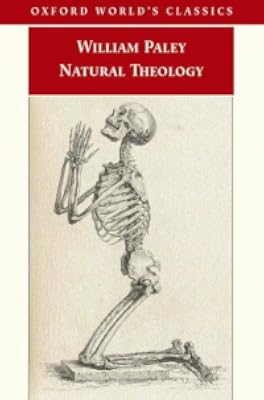
The consciousness of knowing little, need not beget a distrust of that which he does not know.' In "Natural Theology," William Paley set out to prove the existence of God from the evidence of the beauty and order of the natural world. Famously beginning by comparing the world to a watch, whose design is self-evident, he goes on to provide examples from biology, anatomy, and astronomy in order to demonstrate the intricacy and ingenuity of design that could only come from a wise and benevolent show more deity. Paley's legalistic approach and skilful use of metaphor and analogy were hugely successful, and equally controversial. Charles Darwin, whose investigations led to very different conclusions in the "Origin of Species," was greatly influenced by the book's cumulative structure and accessible style. This edition reprints the original text of 1802, and sets the book in the context of the theological, philosophical, and scientific debates of the nineteenth century. show lessTags
Recommendations




























Member Reviews
An attempt, using the known scientific discoveries as of the end of the eighteenth century, to demonstrate how the complexity of the natural world demonstrates that it was the creation of a Creator.
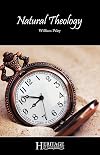
Paley's book is most famous for its opening and prevailing image-- the watch. Any who would find a watch, even if he knew nothing else, would understand from its inner working that it had an origin in a creative power. Paley attempts to show that such is the case for the natural world. Most of the book is devoted to descriptions of various features of the natural world that demonstrate design.
One striking thing about the book is just how much more we understand about the natural world since the beginning of the 1800s. Most of what is show more written, beyond any scientific misunderstandings that do not change any of the arguments, would be agreed upon scientific explanation to this day. The challenge involves the interpretations that Paley provides for the origin of the creatures.
Although written long before Darwin's treatise on origin by evolution by natural selection, the book casts light on the real issue in the disputation. The actual scientific evidence is not the issue-- the model into which the evidence is understood and interpreted is the issue. Models have their failings.
If one is interested in the history of natural theology, or the backdrop to the scientific disputations of the 19th and 20th centuries, this is a great place to go. show less
Paley's book is most famous for its opening and prevailing image-- the watch. Any who would find a watch, even if he knew nothing else, would understand from its inner working that it had an origin in a creative power. Paley attempts to show that such is the case for the natural world. Most of the book is devoted to descriptions of various features of the natural world that demonstrate design.
One striking thing about the book is just how much more we understand about the natural world since the beginning of the 1800s. Most of what is show more written, beyond any scientific misunderstandings that do not change any of the arguments, would be agreed upon scientific explanation to this day. The challenge involves the interpretations that Paley provides for the origin of the creatures.
Although written long before Darwin's treatise on origin by evolution by natural selection, the book casts light on the real issue in the disputation. The actual scientific evidence is not the issue-- the model into which the evidence is understood and interpreted is the issue. Models have their failings.
If one is interested in the history of natural theology, or the backdrop to the scientific disputations of the 19th and 20th centuries, this is a great place to go. show less
Ratings
Members
- Recently Added By
Lists

GreatBooks Worldview Academy Lists
133 works; 4 members
Author Information

45+ Works 559 Members
Series
Belongs to Publisher Series
Common Knowledge
- Canonical title
- Natural Theology
Classifications
- Genres
- Nonfiction, Religion & Spirituality, General Nonfiction, Philosophy
- DDC/MDS
- 210 — Religion Philosophy & theory of religion Philosophy and theory of religion
- LCC
- BL183 .P35 — Philosophy, Psychology and Religion Religions. Mythology. Rationalism Religions. Mythology. Rationalism Natural theology General
- BISAC
Statistics
- Members
- 262
- Popularity
- 124,092
- Reviews
- 1
- Rating
- (3.28)
- Languages
- English, French
- Media
- Paper, Audiobook, Ebook
- ISBNs
- 20
- ASINs
- 6