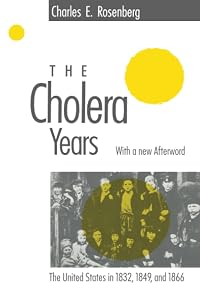
The Cholera Years: The United States in 1832, 1849, and 1866
by Charles E. Rosenberg
On This Page
Description
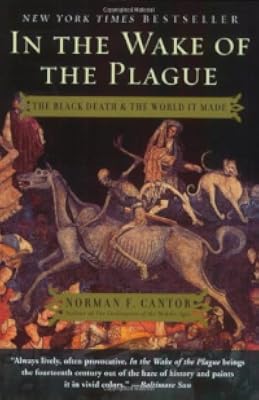
Cholera was the classic epidemic disease of the nineteenth century, as the plague had been for the fourteenth. Its defeat was a reflection not only of progress in medical knowledge but of enduring changes in American social thought. Rosenberg has focused his study on New York City, the most highly developed center of this new society. Carefully documented, full of descriptive detail, yet written with an urgent sense of the drama of the epidemic years, this narrative is as absorbing for show more general audiences as it is for the medical historian. In a new Afterword, Rosenberg discusses changes in show lessTags
Recommendations
















Member Reviews
Why did I want to read about cholera epidemics? Misery loves company? I hope not; that seems quite callous in 2021. Medical curiosity? Not my area of expertise. Insomnia? No, thank goodness.
The Cholera Years by Charles E. Rosenberg was described as an analysis of the confluence of the medical, intellectual and social history of the three American cholera epidemics – 1832, 1849 and 1866. The attraction of learning about the interweaving the scientific and societal causes of a devastating disease was something I could not resist. Causes, who doesn't want to learn about the inducements and catalysts of dangerous systems?
Rosenberg chooses to focus his discussion on New York City, thus avoiding necessary repetition of explication from city show more to city. It was only in the populated cities of the 1830s that cholera as an epidemic struck: Boston, Charleston, Chicago, but New York was the largest and most populated at the time.
Causes – improvement in trade and transportation, industrialization; inadequate attention to humane architecture (tenements) and support services for the poor leading to slums; denial of the necessity of a Board of Health and condemnation of the medical profession's theories and warnings, Puritanical belief in the special dispensation of the pious, the temperate, the clean; lack of knowledge of fermentation and enzyme reaction and of scientific habits of mind. That's just some of it.
This is definitely worth your time, a well and clearly-written presentation which reads like a movie camera zoom into 40-some years of American life. show less
The Cholera Years by Charles E. Rosenberg was described as an analysis of the confluence of the medical, intellectual and social history of the three American cholera epidemics – 1832, 1849 and 1866. The attraction of learning about the interweaving the scientific and societal causes of a devastating disease was something I could not resist. Causes, who doesn't want to learn about the inducements and catalysts of dangerous systems?
Rosenberg chooses to focus his discussion on New York City, thus avoiding necessary repetition of explication from city show more to city. It was only in the populated cities of the 1830s that cholera as an epidemic struck: Boston, Charleston, Chicago, but New York was the largest and most populated at the time.
Causes – improvement in trade and transportation, industrialization; inadequate attention to humane architecture (tenements) and support services for the poor leading to slums; denial of the necessity of a Board of Health and condemnation of the medical profession's theories and warnings, Puritanical belief in the special dispensation of the pious, the temperate, the clean; lack of knowledge of fermentation and enzyme reaction and of scientific habits of mind. That's just some of it.
This is definitely worth your time, a well and clearly-written presentation which reads like a movie camera zoom into 40-some years of American life. show less
The Cholera Years: the United States in 1832, 1849, and 1866 is only tangentially a medical history. Charles Rosenberg used the opening year of the three worst epidemics of cholera in the United States as lenses through which he could take snapshots of American society. In each year examined the disease spread westward across Europe to inevitably reach the shores North America. By looking at how the medical and religious communities, public officials, and the people, those represented by newspaper editorials, reacted to the stress of the impending epidemics Rosenberg was able to clearly show changes in our society.
“The nest of college-birds are three
Law, Physic, and Divinity
And while these three remain combined
They keep the world show more oppressed and blind.
On Lab’rers money lawyers feast
Also the Doctor and the Priest.”
This poem from 1832 shows that popular American distrust for academics is long held. However by 1848 even the upper-class was turning its back on physicians. Rosenberg attributes this to the medical communities inability to cope with epidemics, the 1832 outbreak of cholera in particular. In fact Galenic physician's had never been effective. I was left wondering what was it that changed between 1832 and 1848 that made their ineffectiveness unacceptable?
Perhaps that is what makes this such a good work of history. It reveals truths while at the same time uncovering new questions. Originally published in 1962 Rosenberg’s book is still readable and relevant and I recommend it to anyone interested in 19th century American history. show less
“The nest of college-birds are three
Law, Physic, and Divinity
And while these three remain combined
They keep the world show more oppressed and blind.
On Lab’rers money lawyers feast
Also the Doctor and the Priest.”
This poem from 1832 shows that popular American distrust for academics is long held. However by 1848 even the upper-class was turning its back on physicians. Rosenberg attributes this to the medical communities inability to cope with epidemics, the 1832 outbreak of cholera in particular. In fact Galenic physician's had never been effective. I was left wondering what was it that changed between 1832 and 1848 that made their ineffectiveness unacceptable?
Perhaps that is what makes this such a good work of history. It reveals truths while at the same time uncovering new questions. Originally published in 1962 Rosenberg’s book is still readable and relevant and I recommend it to anyone interested in 19th century American history. show less
In a concise, businesslike ,manner Charles Rosenberg takes us through the cholera epidemics that afflicted the United States (New York City in particular) in the nineteenth century. Along with this we see the medical profession and city health administration grow from irrepute to something more respectable and useful. Americans knowledge and attitudes changed towards the afflicted. If you were unfortunate to get cholera you were not so readily considered morally deficient and thus other remedys were sought out. Science's star was rising and religious views not quite so predominate. This is a good reminder of how far we have come and developed as a society.
Quotes: (page 52) “Talk of fast days and divine mercy was merely a part of a show more clerical plot to effect the union of Church and State. So at least the radicals charged; pious wailings over cholera were but one link in the chain of bigotry and superstition which the orthodox would fasten upon the American people.”
(page 72) “Spokesmen of the regular medical corps were quite conscious that the attack made upon their status was only part of a thoroughgoing assault which menaced all the learned professions. In the words of one physician arguing against the incorporation of a botanic medical society in New York, the prosperity of the medical profession was' inseparable from the prosperity of every well-regulated community. If it fall, the other liberal professions will be weakened in their character, impaired in their usefulness, and finally they will sink into mere trades, for the cunning, the avaricious, and the unprincipled.'”
(page 135) “Famine and revolution in Europe crowded American cities with newly arrived immigrants. Poor, ignorant, friendless, and often unaccustomed to city life, they tenanted the dirtiest boarding houses and the most decayed tenements. They were first to be attacked by cholera.” show less
Quotes: (page 52) “Talk of fast days and divine mercy was merely a part of a show more clerical plot to effect the union of Church and State. So at least the radicals charged; pious wailings over cholera were but one link in the chain of bigotry and superstition which the orthodox would fasten upon the American people.”
(page 72) “Spokesmen of the regular medical corps were quite conscious that the attack made upon their status was only part of a thoroughgoing assault which menaced all the learned professions. In the words of one physician arguing against the incorporation of a botanic medical society in New York, the prosperity of the medical profession was' inseparable from the prosperity of every well-regulated community. If it fall, the other liberal professions will be weakened in their character, impaired in their usefulness, and finally they will sink into mere trades, for the cunning, the avaricious, and the unprincipled.'”
(page 135) “Famine and revolution in Europe crowded American cities with newly arrived immigrants. Poor, ignorant, friendless, and often unaccustomed to city life, they tenanted the dirtiest boarding houses and the most decayed tenements. They were first to be attacked by cholera.” show less
When I first thumbed through the book, I noticed the 18 page bibliography of primary and secondary sources. Intrigued by the documentation and period reviewed, I started the book almost immediately. It does answer many more questions that it raises. And Rosenberg avoids straying from the history of cholera to the many tangential conflicts arising during the period. However his work does touch on many issues still relevant today, such as the role of religion in politics, the interests of state and local government, the mobilization of the public opinion to enact change, and distrust of physicians.
To quote another reviewer on LT - "Unfortunately, as a weakness, Rosenberg is very repetitive. A lot of information and points are stressed show more repeatedly throughout the book, and in that way it sort of losses focus a few times. - morbidromantic | Nov 21, 2009."
Utilizing more complete quotes from the newspapers and other sources might have allowed the author to emphasize key points in a more interesting manner, rather than his repetitive style of paraphrasing. Such as the following from "J.L.G." Boston Investigator, August 01, 1849, "They can't clean the cellars, and the lanes-visit the hovels of the poor, the destitute, the widow, and the orphan, especially if they are sick; and more especially if they are vicious, and their sickness is the cholera. But they must do something, and what can they do but pray? This is easy. It neither soils their fine clothes, blisters their soft hands, offends their nostrils by noisome smells, nor shocks their fine sensibilities by witnessing constant instances of misery, sickness, destitution, and death." [p124]
This work could be the basis of a compelling narrative history. show less
To quote another reviewer on LT - "Unfortunately, as a weakness, Rosenberg is very repetitive. A lot of information and points are stressed show more repeatedly throughout the book, and in that way it sort of losses focus a few times. - morbidromantic | Nov 21, 2009."
Utilizing more complete quotes from the newspapers and other sources might have allowed the author to emphasize key points in a more interesting manner, rather than his repetitive style of paraphrasing. Such as the following from "J.L.G." Boston Investigator, August 01, 1849, "They can't clean the cellars, and the lanes-visit the hovels of the poor, the destitute, the widow, and the orphan, especially if they are sick; and more especially if they are vicious, and their sickness is the cholera. But they must do something, and what can they do but pray? This is easy. It neither soils their fine clothes, blisters their soft hands, offends their nostrils by noisome smells, nor shocks their fine sensibilities by witnessing constant instances of misery, sickness, destitution, and death." [p124]
This work could be the basis of a compelling narrative history. show less
In the Republic era of America, people were assaulted daily by their own visions of success, failure, the expectations and weaknesses of a still developing concept of democracy, poverty, and illness. One such illness, Cholera, infected America three times during this period: 1832, 1849, and 1866. In America, “Cholera represented a constant and randomly reoccurring stimulus against which the varying reactions and systems of Americans could be judged”, and it caused gradual changes in social attitudes, government, religious thought, and medicine as people tried to understand and cope with the disease. Historians have recently given little attention to defining and then writing about the social changes brought about by cholera, both as show more a process and its final result. It is part of history’s recent interest in social aspects such as family and school, which medicine is a part of because the two are linked by every day life concerns.
The Cholera Years is an interesting and easy to read book. One of its strengths lies in its readability and in how it engages the reader through primary sources. Historical books that tell stories and relate true life accounts and words are more interesting than those that simply move from one fact to the next. Also, Rosenberg is very organized in his presentation of information. The sections, chopped up by cholera year, follow the same patterns as far as how information is addressed. As a result, though we are reading from one year to the next, the progressions of society and thought are easy to follow and connect together. It actually made more sense this way than if Rosenberg had approached the book topically, which would have jumped around and only confused. Unfortunately, as a weakness, Rosenberg is very repetitive. A lot of information and points are stressed repeatedly throughout the book, and in that way it sort of losses focus a few times.
Rosenberg gives an annotated bibliography at the end of his book, which lists aids, manuscripts, public documents, newspapers, printed medical documents, other printed material, and secondary sources consulted. He does make note in his section on printed material other than medical literature that he has not listed all the documents consulted because they are too numerous, but instead listed those that are most interesting or relevant, which he also does with newspapers. The primary sources include such documents as hospital reports, newspapers, Board of Health and committee minutes, and religious sermons. As such, we are provided with a lot of “from the mouth” accounts of cholera to support the progressions in thought and practice that Rosenberg takes us through from one outbreak to the next.
This book fits well into the genre of medical history, as well as cultural history because Cholera had a direct and distinct impact on life, the concept of a person, social equality, and medical care. You won’t get the sort of copious gory details that medical history books are known for, which is a shame, but you will certainly come out of reading the book understanding a bit more how America evolved into the country it is now, and how something like one disease could shape a nation. show less
The Cholera Years is an interesting and easy to read book. One of its strengths lies in its readability and in how it engages the reader through primary sources. Historical books that tell stories and relate true life accounts and words are more interesting than those that simply move from one fact to the next. Also, Rosenberg is very organized in his presentation of information. The sections, chopped up by cholera year, follow the same patterns as far as how information is addressed. As a result, though we are reading from one year to the next, the progressions of society and thought are easy to follow and connect together. It actually made more sense this way than if Rosenberg had approached the book topically, which would have jumped around and only confused. Unfortunately, as a weakness, Rosenberg is very repetitive. A lot of information and points are stressed repeatedly throughout the book, and in that way it sort of losses focus a few times.
Rosenberg gives an annotated bibliography at the end of his book, which lists aids, manuscripts, public documents, newspapers, printed medical documents, other printed material, and secondary sources consulted. He does make note in his section on printed material other than medical literature that he has not listed all the documents consulted because they are too numerous, but instead listed those that are most interesting or relevant, which he also does with newspapers. The primary sources include such documents as hospital reports, newspapers, Board of Health and committee minutes, and religious sermons. As such, we are provided with a lot of “from the mouth” accounts of cholera to support the progressions in thought and practice that Rosenberg takes us through from one outbreak to the next.
This book fits well into the genre of medical history, as well as cultural history because Cholera had a direct and distinct impact on life, the concept of a person, social equality, and medical care. You won’t get the sort of copious gory details that medical history books are known for, which is a shame, but you will certainly come out of reading the book understanding a bit more how America evolved into the country it is now, and how something like one disease could shape a nation. show less
Excellent narrative of the cholera epidemics during the mid-19the century.
Ratings
Members
- Recently Added By
Lists

Best History Books about Epidemics
27 works; 24 members

Best Books About Plagues and Epidemics
99 works; 17 members

Vlogbrothers Book Recommendations
307 works; 4 members
Author Information

16 Works 598 Members
Awards and Honors
Awards
Common Knowledge
- Original publication date
- 1962
- Important places
- New York, New York, USA
- Dedication
- For Laura
- First words
- It had been an unhealthy winter and the dry spring promised a sickly summer.
- Quotations
- A disease is no absolute physical entity but a complex intellectual construct, an amalgam of biological state and social definition. The reactions of Americans to cholera changed between 1832 and 1849, between 1849 and 1866, ... (show all)this is unquestionable. My task has been to understand something of the factors which enabled Americans to perceive this old phenomenon in a new way. [author's footnote p5]
The state was not a limited liability corporation; every American was morally responsible for its actions. Not that Americans were not culpable as individuals. Intemperance, Sabbath-breaking, and infidelity were prevalent eno... (show all)ugh, sermons accused, to provoke a judgement far hasher than cholera. [p126] - Last words
- (Click to show. Warning: May contain spoilers.)Coming events had already begun to cast their shadow.
- Blurbers
- Duffy, John; Blake, John B.; Rosen, George
Classifications
- Genres
- Nonfiction, History, General Nonfiction, Science & Nature
- DDC/MDS
- 614.5 — Applied science & technology Medicine & health Epidemics, Poisons, Alternative Medicine Incidence of and public measures to prevent specific diseases and kinds of diseases
- LCC
- RC131 .A2 .R67 — Medicine Internal medicine Internal medicine Infectious and parasitic diseases
- BISAC
Statistics
- Members
- 231
- Popularity
- 140,889
- Reviews
- 6
- Rating
- (4.02)
- Languages
- English
- Media
- Paper, Ebook
- ISBNs
- 4
- ASINs
- 3