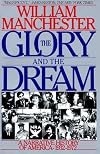
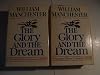
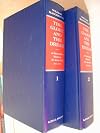
The Glory and the Dream: A Narrative History of America, 1932-1972
by William Manchester
On This Page
Description
Award-winning historian and biographer William Manchester, author of The Last Lion, an epic three-volume biography of Winston Churchill, brings us an evocative and powerful exploration of the American way of life from 1932 to 1972. Covering almost every facet of American culture during a very diverse and tumultuous period in history, Manchester's account is both dramatic and surprisingly intimate--with compelling details that could only be known by a dedicated historian who lived through and show more documented this fascinating time in history. For several decades, William Manchester was the most popular and highly regarded historian and biographer of his time--and this book provides the reader with a powerful example of the reason for that reputation. show lessTags
Recommendations




















Member Recommendations
Member Reviews
This is history that reads like a novel. Beginning with the advent of the Roosevelt administration in 1932 William Manchester chronicles the cultural history of America through the subsequent four decades ending with the beginning of the second Nixon administration. Through all those years Manchester highlights the events that animated the American people and had a profound impact on life in America. Whether it was life during the depression, the home front of WWII, the rise of corporate America, or the turbulent sixties with protest and more war the book provides a clear if breathtaking narrative of the immensity of change. His coverage includes the famous whether they are political like Truman and McCarthy or cultural icons like show more Hepburn and Tracy. Fads are not neglected as evidenced by discussions of Swing music, victory gardens, and hula hoops. The major social movements range from the bonus marchers to The Silent Generation to the Woodstock Generation. For those readers, like myself, who experienced some of those events (the fifties and sixties in my case) the book becomes an interesting blend of history and nostalgia. But no matter what your age, Manchester is a good historian and writer who is a joy to read. show less
An interesting—and unusual—approach to history. It works well, really. I didn't entirely trust the history presented; it seemed a bit too . . . pro-establishment, I guess. Sometimes in ways that look naive with hindsight. But I did trust it enough to continue with it, and it was fun to go along with the ride. You'd have to be a bit of a history junkie to even consider a volume this size, and if you are one, you may find that it's not as serious as you'd like. But myself, I thought it struck a decent balance.
This is pop history that richly deserves its place on the shelf beside the deeper books of the higher brows. What they achieve through rigors of distillation, Manchester achieves through sheer abundance; almost as if he had deliberately chosen to flaunt the normal process of historical analysis. He gives us pointillist history: the masses of detail of American life merge & resolve into their own meanings, without need of interpretation. This is no mere blizzard of social confetti: every item is carefully fitted to the flow of the whole. Paradoxically, it's all delivered in parsimonious prose, so brisk & lucid that it's like reading a 1300-page telegram. You'll be surprised at how quickly 40 years can pass when you're enjoying every show more page! show less
I've been reading bio's of U.S. Presidents and this book was a terrific addition to the history of the era it covers. From FDR through Nixon it covered politics, economy, labor, the arts, giving a broader view of the times then the president bio's that look at everything through the subjects eyes.
I had read a few similar books, American Colossus by H.W. Brands, which did the Gilded Age, and Page Smiths America Enters The World and Redeeming The Time which did the early 1900's through FDR.
All were enjoyable, if long, and made understanding a presidents decisions a little easier.
A little more dense then the previous mentioned books, it still offered a great compliment to the period. It brought up many things I wouldn't have considered on show more my own which made it fun to read, and think about.
I would definitely recommend this, along with the others, to get a good sense of America during the times they cover. show less
I had read a few similar books, American Colossus by H.W. Brands, which did the Gilded Age, and Page Smiths America Enters The World and Redeeming The Time which did the early 1900's through FDR.
All were enjoyable, if long, and made understanding a presidents decisions a little easier.
A little more dense then the previous mentioned books, it still offered a great compliment to the period. It brought up many things I wouldn't have considered on show more my own which made it fun to read, and think about.
I would definitely recommend this, along with the others, to get a good sense of America during the times they cover. show less
I've been reading bio's of U.S. Presidents and this book was a terrific addition to the history of the era it covers. From FDR through Nixon it covered politics, economy, labor, the arts, giving a broader view of the times then the president bio's that look at everything through the subjects eyes.
I had read a few similar books, American Colossus by H.W. Brands, which did the Gilded Age, and Page Smiths America Enters The World and Redeeming The Time which did the early 1900's through FDR.
All were enjoyable, if long, and made understanding a presidents decisions a little easier.
A little more dense then the previous mentioned books, it still offered a great compliment to the period. It brought up many things I wouldn't have considered on show more my own which made it fun to read, and think about.
I would definitely recommend this, along with the others, to get a good sense of America during the times they cover. show less
I had read a few similar books, American Colossus by H.W. Brands, which did the Gilded Age, and Page Smiths America Enters The World and Redeeming The Time which did the early 1900's through FDR.
All were enjoyable, if long, and made understanding a presidents decisions a little easier.
A little more dense then the previous mentioned books, it still offered a great compliment to the period. It brought up many things I wouldn't have considered on show more my own which made it fun to read, and think about.
I would definitely recommend this, along with the others, to get a good sense of America during the times they cover. show less
A survey of interesting times, well written and informative. Lots of insights and personal references make it a very easy and quick history of the time in which the USA became the dominant power in the world.
A forty-year study of the American national character. At various times thrilling, grotesque, encouraging, depressing. What must be said about it is that it's spectacular - and all true. Easily the best book I've read in 2009.
Members
- Recently Added By
Lists

Fake Top 100 Nonfiction
79 works; 3 members
Awards and Honors
Distinctions
Work Relationships
Contains
Common Knowledge
- Canonical title
- The Glory and the Dream: A Narrative History of America, 1932-1972
- Original publication date
- 1974-11
- Important places*
- Verenigde Staten
- Epigraph
- Whither is fled the visionary gleam? Where is it now, the glory and the dream? - Wordsworth
- Dedication
- To Laurie Manchester and to her future
- First words
- "In the desperate summer of 1932, Wahington, D.C., resembled the besieged capital of an obscure European state.
- Quotations
- "The low point for that train, according to Clifford, came toward the middle of October. As they paused in a small Midwest town, a member of the staff jumped off and bought the October 11 issue of Newsweek. The big black type... (show all) read: FIFTY POLITICAL EXPERTS UNANIMOUSLY PREDICT A DEWEY VICTORY. "Unaminously," someone said hollowly, and there was a long silence. One of them trudged back and showed it to Truman. He blinked, grinned, and said lightly, "Oh, those damned fellows; they're always wrong anyway. Forget it, boys, and let's get on with the job." At that point, Clifford believes, neither Bess nor Margaret believed that the President had a chance. He himself did, however, and afterward he could prove it. On the afternoon of October 13, while riding from Duluth to St. Paul, he wrote out his state-by-state analysis of the coming vote on the back of a mimeographed copy of his Duluth speech and handed it to George Elsey, who sealed it and put it away until the day after the election. It then developed that Truman had predicted 340 electoral votes for himself, 108 for Dewey, 42 for Thurmond, with 37 marked "doubtful." It wasn't on the nose, and it omitted four electoral votes, but a great many men whose job was forecasting elections would have given almost anything to have written it."
- Last words
- (Click to show. Warning: May contain spoilers.)And they are smiling.
- Canonical DDC/MDS
- 917.30392; 973.917
- Canonical LCC
- E806
*Some information comes from Common Knowledge in other languages. Click "Edit" for more information.
Classifications
- Genres
- Nonfiction, History, General Nonfiction
- DDC/MDS
- 917.30392 — History & geography Geography & travel Geography of and travel in North America United States subdivisions and modified standard subdivisions
- LCC
- E806 — History of the United States United States Twentieth century Franklin Delano Roosevelt's administrations,
- BISAC
Statistics
- Members
- 931
- Popularity
- 28,661
- Reviews
- 12
- Rating
- (4.32)
- Languages
- Dutch, English, Spanish
- Media
- Paper, Audiobook, Ebook
- ISBNs
- 20
- ASINs
- 17