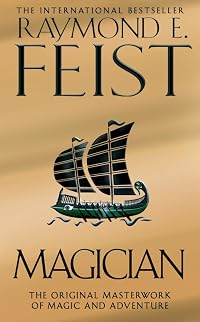
Magician
by Raymond E. Feist
The Riftwar Saga (1), The Riftwar Cycle: Publication (Series Blocks) (1), The Riftwar Cycle, Alternative Reading Order (01 (Riftwar Saga 01)), The Riftwar Cycle: Publication (Series Name) (The Riftwar Saga, 1), The Riftwar Cycle: Chronological (01 (Riftwar Saga 01))
On This Page
Description
At Crydee, a frontier outpost in the tranquil Kingdom of the Isles, an orphan boy, Pug, is apprenticed to a master magician and the destinies of two worlds are changed forever.Tags
Recommendations


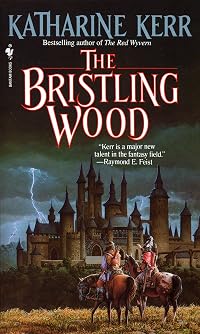
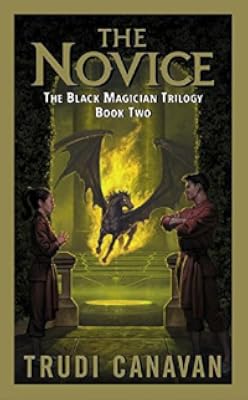
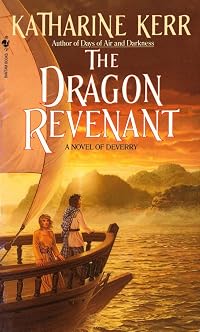
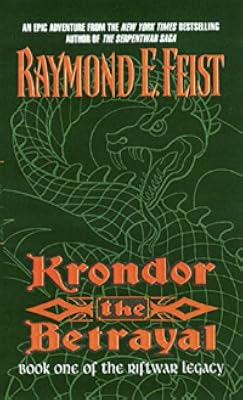
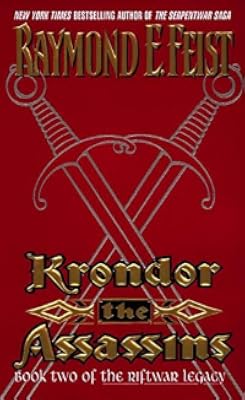
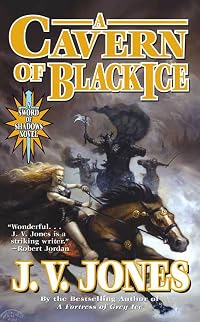
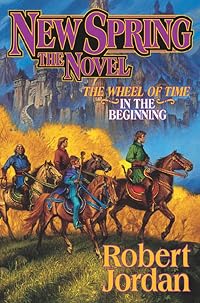
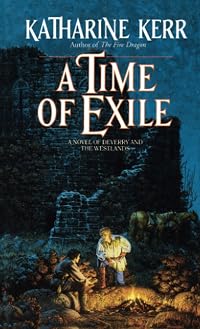
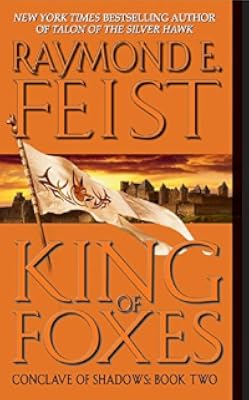
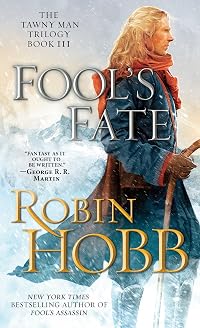
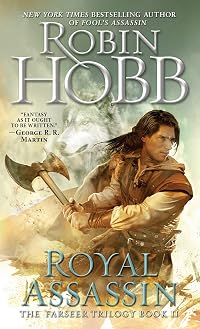
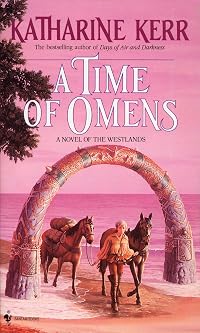
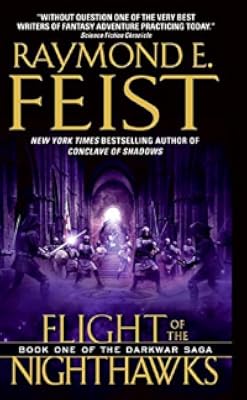
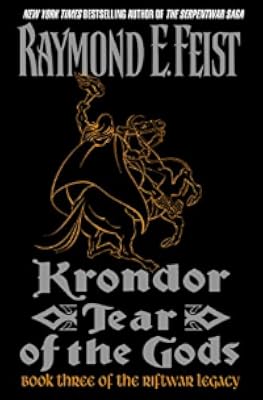
Member Recommendations
Member Reviews
Le prime 100 pagine sono piane semplici prevedibili - ma piacevoli.
Poi c'è uno sprint inatteso, e ti domandi dove vuole andare a parare.
Se superi una 50ina di pagine noiosette, arrivi nella seconda parte, e qui Feist dà il meglio di sé.
A momenti ricorda qualcosa di Martin; ci sono pagine che richiamano la migliore Le Guin; e non manca lo sguardo affettuoso di un certo Tolkien.
Fa piacere leggere un libro con un suo carattere così particolare.
Poi c'è uno sprint inatteso, e ti domandi dove vuole andare a parare.
Se superi una 50ina di pagine noiosette, arrivi nella seconda parte, e qui Feist dà il meglio di sé.
A momenti ricorda qualcosa di Martin; ci sono pagine che richiamano la migliore Le Guin; e non manca lo sguardo affettuoso di un certo Tolkien.
Fa piacere leggere un libro con un suo carattere così particolare.
This book was one of my favourites seven years ago. I recently re-read it in english instead of dutch, and I was again immediately swept away to the two worlds that Feist describes in Magician. To this day it is still one of the most enjoyable fantasy novels I've read.
My fascination for samurai-like cultures was satisfied by the war-loving Tsuranni, and the charming, somewhat medieval world of Midkemia reminded me of the many online post-by-post RPGs I used to partake in when I was 14.
This book has a very good balance between politics and court culture, magic and legends. The overal storyline is of the well-known young-boy-grows-up-to-become-a-hero-that-saves-the-world sort, but Feist brings it with a very charming cast of characters show more and the occasional unexpected sidetrack. Especially Milambers transformation is of a very interesting and philosohical nature. Well worth a read if you haven't tried it yet. Also the best entrance into the books of Feist. show less
My fascination for samurai-like cultures was satisfied by the war-loving Tsuranni, and the charming, somewhat medieval world of Midkemia reminded me of the many online post-by-post RPGs I used to partake in when I was 14.
This book has a very good balance between politics and court culture, magic and legends. The overal storyline is of the well-known young-boy-grows-up-to-become-a-hero-that-saves-the-world sort, but Feist brings it with a very charming cast of characters show more and the occasional unexpected sidetrack. Especially Milambers transformation is of a very interesting and philosohical nature. Well worth a read if you haven't tried it yet. Also the best entrance into the books of Feist. show less
A 3.5 star was really needed for this. It's definitely better than good, but I'm not sure it quite makes it to great.
I've come to the The Riftwar Saga rather late in my list of fantasy to-reads, especially given the age of the series. Unfortunately, I think it is that age which drags it down a little. The story itself is pretty awesome - the whole notion of a young magician, coming into his own against the background of an inter-world cross-cultural clash and domestic political upheaval, and learning about the extent of his power across both worlds, is a thrilling and exciting premise with the potential for great plotlines, expansive world building and complex characters. However, while I enjoyed seeing the story unfold, I felt my show more engagement with Midkemia and Kelewan rather lacking.
The main issues that I had with Magician were the character tropes, the passage of time, and how magic actually worked. I read somewhere that Feist's inspiration for this book arose from games of Dungeons and Dragons, and I think this is definitely reflected in the characters. Aside from Pug, Tomas and Arutha, most of the characters seemed to very clearly fit pre-existing tropes and conventions, and had rather little personality development beyond how they were influenced by events within the story. Familiar and easy to acquaint with, but also not always terribly interesting.
The time issue is linked to this - while characters aged, the majority of them did not depart from their expected 'progression' as it were. The amount of time passing between certain events also seemed completely arbitrary in nature- sometimes chapters would follow day by day, only to then skip forward by months, or even years. The scale of a 9 year war is significantly diminished when you only see events from 2 or 3 years of it.
The magic system is probably a bit of a personal gripe for me. Having come from The Wheel of Time and The Kingkiller Chronicles where the magic systems are cleverly constructed and weaved into the fabric of their universes, the magic in a book titled 'Magician' seemed underwhelming and shallow in terms of what a magician could do and how it was done. Often, it seemed impossible to determine whether something could or couldn't be done by magic, and I almost felt I knew understood less about the magic even as Pug grew to understand it more. Perhaps it lends itself to the mysterious quality of magic, but it made it difficult to connect with as a reader.
Ultimately, I think I set my expectations a bit high going into this series. I'm curious as to where it goes next, as most of the ends in Magician seem pretty well tied off (aside from whatever Macros is up to), but it'll also be interesting to see how Feist's writing develops. For this book though, my verdict is that it's an enjoyable read, but nothing to lose sleep over. show less
I've come to the The Riftwar Saga rather late in my list of fantasy to-reads, especially given the age of the series. Unfortunately, I think it is that age which drags it down a little. The story itself is pretty awesome - the whole notion of a young magician, coming into his own against the background of an inter-world cross-cultural clash and domestic political upheaval, and learning about the extent of his power across both worlds, is a thrilling and exciting premise with the potential for great plotlines, expansive world building and complex characters. However, while I enjoyed seeing the story unfold, I felt my show more engagement with Midkemia and Kelewan rather lacking.
The main issues that I had with Magician were the character tropes, the passage of time, and how magic actually worked. I read somewhere that Feist's inspiration for this book arose from games of Dungeons and Dragons, and I think this is definitely reflected in the characters. Aside from Pug, Tomas and Arutha, most of the characters seemed to very clearly fit pre-existing tropes and conventions, and had rather little personality development beyond how they were influenced by events within the story. Familiar and easy to acquaint with, but also not always terribly interesting.
The time issue is linked to this - while characters aged, the majority of them did not depart from their expected 'progression' as it were. The amount of time passing between certain events also seemed completely arbitrary in nature- sometimes chapters would follow day by day, only to then skip forward by months, or even years. The scale of a 9 year war is significantly diminished when you only see events from 2 or 3 years of it.
The magic system is probably a bit of a personal gripe for me. Having come from The Wheel of Time and The Kingkiller Chronicles where the magic systems are cleverly constructed and weaved into the fabric of their universes, the magic in a book titled 'Magician' seemed underwhelming and shallow in terms of what a magician could do and how it was done. Often, it seemed impossible to determine whether something could or couldn't be done by magic, and I almost felt I knew understood less about the magic even as Pug grew to understand it more. Perhaps it lends itself to the mysterious quality of magic, but it made it difficult to connect with as a reader.
Ultimately, I think I set my expectations a bit high going into this series. I'm curious as to where it goes next, as most of the ends in Magician seem pretty well tied off (aside from whatever Macros is up to), but it'll also be interesting to see how Feist's writing develops. For this book though, my verdict is that it's an enjoyable read, but nothing to lose sleep over. show less
This is the first book in Raymond Feist's huge, mega volume saga set on the worlds of Midkemia and Kelewan. As a games designer, Feist is familiar with a fantasy setting and this book, detailing the invasion of Midkemia by the Tsurani of Kelewan is set in a world that would be almost familiar to the average inhabitant of mediaeval Europe, though some of the tactics and weaponry presented here would seem to be more at home a few centuries later - that's Midkemia. Kelewan, The home world of the Tsurani seems more happily based on an idea of Japan of a similar time period, though Kelewan is more of a cypher than Midkemia in this particular book.
Like a lot of fantasy books of this era, we have a young boy who dreams of better things - first show more a rather improbable (though not improper!) friendship with his lord's daughter then a magician's apprentice, though he's not very good at putting his master's lessons into practice. When an alien ship arrives off the coast of Crydee - Pug's home town, the Duke decides that news of this possible invasion has to get to the King in the far off east. He takes Pug and his friend Tomas along as witnesses but there are aliens in the forests between Crydee and the rest of the Kingdom who decimate the duke's party, chasing them into the deep mines of the dwarves. There, Tomas gets separated from the rest of the party. In this edition we get the full story of what the participants think of as the Rift War - later editions split the story into two sections.
Although not quite as obvious in this book as in others in the series, the fact of Feist's game design background can sometimes have the sound of dice rattling around in the background, and the 'powering up' of the various characters can be seen as the series continues. This reread actually went quite well show less
Like a lot of fantasy books of this era, we have a young boy who dreams of better things - first show more a rather improbable (though not improper!) friendship with his lord's daughter then a magician's apprentice, though he's not very good at putting his master's lessons into practice. When an alien ship arrives off the coast of Crydee - Pug's home town, the Duke decides that news of this possible invasion has to get to the King in the far off east. He takes Pug and his friend Tomas along as witnesses but there are aliens in the forests between Crydee and the rest of the Kingdom who decimate the duke's party, chasing them into the deep mines of the dwarves. There, Tomas gets separated from the rest of the party. In this edition we get the full story of what the participants think of as the Rift War - later editions split the story into two sections.
Although not quite as obvious in this book as in others in the series, the fact of Feist's game design background can sometimes have the sound of dice rattling around in the background, and the 'powering up' of the various characters can be seen as the series continues. This reread actually went quite well show less
I love the book, but was annoyed with the narrator.
While his normal in-character narrating voice is just fine (the kind of voice I associate with big, bearded, pipe-smoking old wizards), any time he tried to act out some strong emotion it sounded... constipated. And it's very much not fun listening to a young lady sobbing in the voice of a constipated middle-aged man.
And then there's all changing voices for minor characters (sometimes even in the middle of a sentence).
So yeah, not really in love with the narrator, but the books is still great fun, in writing and in audio :)
While his normal in-character narrating voice is just fine (the kind of voice I associate with big, bearded, pipe-smoking old wizards), any time he tried to act out some strong emotion it sounded... constipated. And it's very much not fun listening to a young lady sobbing in the voice of a constipated middle-aged man.
And then there's all changing voices for minor characters (sometimes even in the middle of a sentence).
So yeah, not really in love with the narrator, but the books is still great fun, in writing and in audio :)
Stands the test of time not too badly - women characters are plucky if not protagonists, though the one-way culture comparison doesn't age well. The book is subjectively long as it is objectively - there isn't enough an arc pulling together the whole book to be a page turner. So many likable characters their very dearth is a potential problem - the only villain stayed off screen the entire book. World building is great for its time, standard medieval Europe (but not just white!) plus a more alien world.
I enjoyed the first third or so of this novel, after which things slowed down considerably and I trudged through the remainder of the book. It began as a medieval-tinged coming of age story, with young boys being apprenticed to masters of arms, woodsmanship, and magic; swerved into science fiction with aliens from another universe invading through a rift, seeking precious metals, and finally became a bit of a political thriller with kings and dukes and lines of succession and hidden heirs to the throne. Individually each of the story lines could have held their own, but all together I felt that they detracted rather than supported each other.
Members
- Recently Added By
Lists

Best Fantasy Novels
821 works; 357 members

BBC Big Read
191 works; 46 members

Favorite Series
238 works; 94 members
Favourite High Fantasy Books
113 works; 23 members

Top Five Books of 2013
1,562 works; 715 members
Best SciFi and Fantasy Classics
53 works; 6 members

Favourite Books
1,819 works; 316 members

KayStJ's to-read list
1,616 works; 11 members

Books Read in 2016
4,666 works; 199 members

Books Read in 2024
4,623 works; 126 members
Books I Read Before The Invention Of The Internet.
144 works; 1 member

Books We Want To Read Again For The First Time
384 works; 160 members

Elaina's
183 works; 1 member

EGBERTINA'S List of childhood books worthy of merit or unspeakable delight
155 works; 6 members
Talk Discussions
Past Discussions
Teen Sci Fi 90's Book in Name that Book (September 2012)
Author Information

153+ Works 96,524 Members
Fantasy writer Raymond E. Feist was born in Southern California. He received a B.A. in Communication Arts with honors from the University of California at San Diego in 1977. His first novel, Magician, published in 1982 is the first book of The Riftwar Saga. His other series include The Serpentwar Saga, The Empire Trilogy, The Riftwar Legacy, show more Krondor's Sons, Legends of the Riftwar, Conclave of Shadows, Darkwar Saga, Chaoswar Saga, Demonwar Saga, and The Firemane Saga. Feist's work appears regularly on the bestseller lists of The New York Times and The Times of London. He has also worked with Sierra Studios and PyroTechnix to produce a role-playing game. (Bowker Author Biography) show less
Some Editions
Awards and Honors
Awards
Notable Lists
Series

The Riftwar Saga
3 works (1)

The Riftwar Cycle: Publication (Series Blocks)
30 works (1)

The Riftwar Cycle, Alternative Reading Order
33 works (01 (Riftwar Saga 01))

The Riftwar Cycle: Publication (Series Name)
31 works (The Riftwar Saga, 1)

The Riftwar Cycle: Chronological
32 works (01 (Riftwar Saga 01))
Belongs to Publisher Series
Work Relationships
Is contained in
Contains
Is abridged in
Inspired
Common Knowledge
- Canonical title
- Magician
- Original title
- Magician Apprentice
- Alternate titles*
- Der Lehrling des Magier
- Original publication date
- 1982-11
- People/Characters
- Pug; Tomas / Ashen-Shugar; Kulgan; Carline conDoin; Borric conDoin; Laurie (show all 8); Martin Longbow; Arutha conDoin
- Important places
- Crydee; Krondor, Kingdom of the Isles, Midkemia; Kelewan; Sorcerers Isle
- Epigraph
- A boy's will is the wind's will.
And the thoughts of youth are long, long thoughts.
—Longfellow, My Lost Youth
We were, fair queen,
Two lads that thought there was no more behind
But such a day ... (show all)to-morrow as to-day,
And to be boy eternal.
-SHAKESPEARE,
The Winter's Tale,
Act 1, Scene 2 - Dedication
- This book is dedicated to the memory of my father, Felix E. Feist, in all ways, a magician.
- First words
- The storm had broken.
- Last words
- (Click to show. Warning: May contain spoilers.)'Ah, Arutha, you take all the fun out of life!'
- Disambiguation notice
- This work contains both "Magician: Apprentice" and "Magician: Master".
The original UK editions in one volume (this work) were split into two volumes for the US market.
*Some information comes from Common Knowledge in other languages. Click "Edit" for more information.
Classifications
Statistics
- Members
- 5,020
- Popularity
- 2,771
- Reviews
- 65
- Rating
- (4.17)
- Languages
- 8 — Czech, Dutch, English, French, German, Hungarian, Italian, Spanish
- Media
- Paper, Audiobook, Ebook
- ISBNs
- 39
- ASINs
- 22