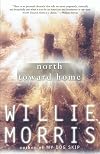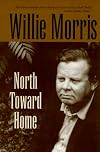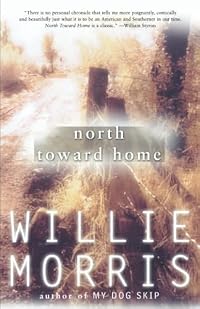
North Toward Home
by Willie Morris
On This Page
Description
The journalist and author offers a memoir of coming of age during a time of great cultural, social, and political change, from his Southern childhood to his time in New York during the 1960s as editor of Harper's magazine.Tags
Recommendations











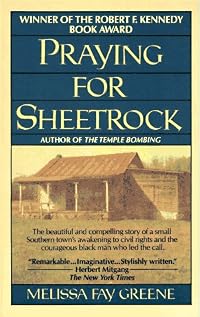
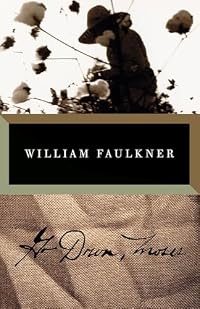

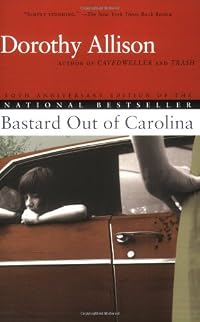
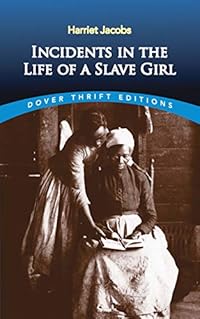



Member Recommendations
Member Reviews
I read Morris's charming little book about his boyhood, MY DOG SKIP, about ten years ago and rather enjoyed it. That book led me, if a bit belatedly, to this more comprehensive memoir, NORTH TOWARD HOME. The book is divided into three distinct parts: his boyhood and youth in Yazoo City, Mississippi; his college years in Texas (UT Austin) and his years as a Rhodes scholar at Oxford; and his early years in the publishing world, with Harper's Magazine, in NYC.
In order then, I was quite charmed by the first part and could relate easily to his descriptions of a small-town childhood, then high school and the English teacher he tried hard to impress, telling of how kids made fun of her seriousness about literature and books. "She had little show more patience with the slow ones, or the ones who refused to work, but for those who tried, or who performed with some natural intelligence, she was the most loyal and generous of souls." This description matched that of my own HS English teacher here in west Michigan back in the late fifties. Morris even tells of how the kids tried to "cheat," by reading the Classics Comics versions of the books assigned, rather than the real thing. That was a ploy still used in my own wayward high school days.
Part two, the college years in Texas, began to drag very quickly, as soon as Morris gets involved with the college newspaper and seems to lose his way in details of Texas politics, the governors and board of regents and the whole "good ol' boy" system then holding sway in Texas. I began skimming here, and skimmed through most of the middle section. Perhaps the high point of the Texas section was a quote attributed to a young liberal politician who came within 25,000 votes of being elected governor. This candidate, who is not named, says: "Any man who can get the money necessary to be elected Governor of Texas doesn't deserve to be Governor of Texas." If I hadn't known this book was published over forty years ago, I'd have sworn Morris was thinking of Dubya himself.
After his college years, when Morris finally arrives in New York, things picked up considerably and he told much more interesting - to me - anecdotes about authors, publishing and the whole literary scene through the 1960s in the Big Apple. Morris has much to say here about his friendship with the writer, Ralph Ellison, who called his craft a "stern discipline." From this, Morris makes his own comment that "A young writer's work rests in a very real way on his own private ego - on his own personal faith that what he has to write and the way he writes it are importan in themselves, important to his own time and to future generations. Why else subject oneself to the miseries of writing." Well, said, Willie. Why indeed?
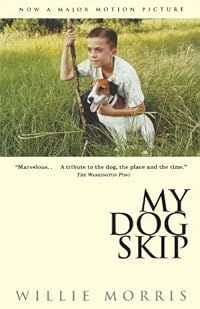
I know that Morris did go on to quite an illustrious career in writing and publishing world, but this book, while it has its bright moments, came off as just a little too uneven. The Texas part in particular seems dated and tedious. But I'm still glad I read it. Truth be told though, MY DOG SKIP was a better book - and made a sweet family film too. show less
In order then, I was quite charmed by the first part and could relate easily to his descriptions of a small-town childhood, then high school and the English teacher he tried hard to impress, telling of how kids made fun of her seriousness about literature and books. "She had little show more patience with the slow ones, or the ones who refused to work, but for those who tried, or who performed with some natural intelligence, she was the most loyal and generous of souls." This description matched that of my own HS English teacher here in west Michigan back in the late fifties. Morris even tells of how the kids tried to "cheat," by reading the Classics Comics versions of the books assigned, rather than the real thing. That was a ploy still used in my own wayward high school days.
Part two, the college years in Texas, began to drag very quickly, as soon as Morris gets involved with the college newspaper and seems to lose his way in details of Texas politics, the governors and board of regents and the whole "good ol' boy" system then holding sway in Texas. I began skimming here, and skimmed through most of the middle section. Perhaps the high point of the Texas section was a quote attributed to a young liberal politician who came within 25,000 votes of being elected governor. This candidate, who is not named, says: "Any man who can get the money necessary to be elected Governor of Texas doesn't deserve to be Governor of Texas." If I hadn't known this book was published over forty years ago, I'd have sworn Morris was thinking of Dubya himself.
After his college years, when Morris finally arrives in New York, things picked up considerably and he told much more interesting - to me - anecdotes about authors, publishing and the whole literary scene through the 1960s in the Big Apple. Morris has much to say here about his friendship with the writer, Ralph Ellison, who called his craft a "stern discipline." From this, Morris makes his own comment that "A young writer's work rests in a very real way on his own private ego - on his own personal faith that what he has to write and the way he writes it are importan in themselves, important to his own time and to future generations. Why else subject oneself to the miseries of writing." Well, said, Willie. Why indeed?
I know that Morris did go on to quite an illustrious career in writing and publishing world, but this book, while it has its bright moments, came off as just a little too uneven. The Texas part in particular seems dated and tedious. But I'm still glad I read it. Truth be told though, MY DOG SKIP was a better book - and made a sweet family film too. show less
Willie Morris autobiography about the three place that molded his life. First was Yazoo City, Mississippi where he grew up. Growing up he was exposed to the racism of his day and the Southern charm as long as one was white. Second place was Austin, Texas and the University of Texas where he saw a different side of life. The end desegregation, the rise of LBJ during the 50's and 60's. Third was New York City where he started working for eventually Harper's magazine. Each place leaving it's mark on him.
This is a memoir by Willie Morris covering his childhood in Yazoo City, MS, his tenure as editor of the University of Texas paper, his time as editor of the Texas Observer, & his time at Harper's Magazine in New York.
I have connections to a lot of this - my mother's family is from Mississippi (Eupora, MS). I was a little girl in Austin for the brief period my father was there in graduate school for his MFA. This period is most notable for me because I learned to read there. I did part of high school in Dallas (& found it just as creepy as Willie Morris did). & I always wanted to run away to New York (instead I ran away to the West Coast & haven't stopped being glad I did).
I've read & re-read this book several times in my life & show more different pieces of it struck me in different ways. Reading it as a college student living away from the South for the first time I felt the sense of exile keenly - all the things that are different, all the things that you miss, all the things that you don't miss.
This time I was once again fascinated by the politics, particularly the Texas politics which were a precursor for later American politics. Reading this time I made a mental note to go look for Lyndon Johnson & the American Dream by Doris Kearns Goodwin. I've been told repeatedly that it's worth reading & I really ought to get to it.
Morris writes well & his attempt to come to terms with being a liberal from the South living far from home is an interesting one. Throw in his friendships with folks like William Styron & Richard Wright it makes for interesting thinking. show less
I have connections to a lot of this - my mother's family is from Mississippi (Eupora, MS). I was a little girl in Austin for the brief period my father was there in graduate school for his MFA. This period is most notable for me because I learned to read there. I did part of high school in Dallas (& found it just as creepy as Willie Morris did). & I always wanted to run away to New York (instead I ran away to the West Coast & haven't stopped being glad I did).
I've read & re-read this book several times in my life & show more different pieces of it struck me in different ways. Reading it as a college student living away from the South for the first time I felt the sense of exile keenly - all the things that are different, all the things that you miss, all the things that you don't miss.
This time I was once again fascinated by the politics, particularly the Texas politics which were a precursor for later American politics. Reading this time I made a mental note to go look for Lyndon Johnson & the American Dream by Doris Kearns Goodwin. I've been told repeatedly that it's worth reading & I really ought to get to it.
Morris writes well & his attempt to come to terms with being a liberal from the South living far from home is an interesting one. Throw in his friendships with folks like William Styron & Richard Wright it makes for interesting thinking. show less
4178 North Toward Home, by Willie Morris (read 18 June 2006) Last month I read a memoir of Willie Morris which made me want to read this 1967 book of his. It tells of his boyhood in Yazoo City, Miss., and his tumultuous time at the University of Texas and as editor of the Texas Observer. Some of this is told in his later books--the superlative My Dog Skip (read 13 Jan 2003) and in his novel Taps (read 18 Aug 2004). The account of the Texas years are heavy on Texas politics, and are some out of date now, but is consistently interest-holding. The third part of the book deals with his years in New York as editor of Harper's from 1961 to 1967. He is so conscious of Mississippi it almost hurts, and much about New York he does not like, show more though he does not talk about his work. He became a better writer in the four previous books by him I've read, but this book foreshadows so much which makes his writing so poignant. show less
A memoir of a boy coming of age in the South during a period of tumultuous cultural, social, and political change. Morris chronicles desegration and the rise of Lyndon Johnson in Texas in the 50's and 60's, and New York in the 1960's, where he became the controversial editor of Harper's magazine. Walker Percy wrote, " a touching, deeply felt and memorable account of one man's pilgrimage.
Perhaps the most influential book of my young adulthood, one that I felt compelled to share with others.
Ratings
Members
- Recently Added By
Author Information

27+ Works 2,065 Members
Willie Morris is the author of "North Toward Home", "New York Days", "My Dog Skip", "My Cat Spit McGee", and numerous other works of fiction & nonfiction. As the imaginative and creative editor of "Harper's Magazine" in the 1960s, he published such writers as William Styron, Gay Talese, David Halberstam, and Norman Mailer. He was a major influence show more in changing our postwar literary & journalistic history. He died in August 1999 at the age of sixty-four. (Bowker Author Biography) Willie Morris, 1934 - 1999 William Weaks Morris was born in Jackson, Mississippi in 1934 to a family of storytellers. He graduated valedictorian of his high school class in 1952 and went on to attend the University of Texas in Austin. He was the editor of their newspaper the Daily Texan. He continued his education as a Rhodes Scholar studying history at Oxford University. Morris was the editor of the liberal weekly newspaper, Texas Observer, from 1960-62. He was associate editor of Harper's magazine in 1963 and then became their youngest editor-in-chief, in1967. Morris turned Harper's into one of the most influential magazines in the country, attracting contributions from well-known writers, but because of editorial disputes, he quit in 1971. His leaving caused mass resignations of most of Harper's contributing editors. In 1980, Morris returned to Mississippi as writer-in-residence at the University of Mississippi in Oxford. Morris' publications included nonfiction, fiction, children's books and essay collections. "North Toward Home" (1967) was a bestseller and received the prestigious Houghton Mifflin Literary Fellowship Award for nonfiction and was a selection of the Literary Guild. "Yazoo: Integration in a Deep-Southern Town" (1971) was published not long after a difficult divorce. The book tells how a Deep-Southern town is affected by forced integration of the public schools. "Good Old Boy: A Delta Boyhood" (1971) and "Good Old Boy and the Witch of Yazoo" (1989) are two of the children's classics by Morris. His fiction novel "The Last of the Southern Girls" (1973) tells of a Southern debutante who goes to Washington D.C. In 1996, Morris received the third annual Richard Wright Medal for Literary Excellence. On August 2, 1999, Willie Morris died of a heart attack in Jackson, Mississippi. He was almost finished with a project he was working on with his son about Mississippi's history and future. (Bowker Author Biography) show less
Awards and Honors
Distinctions
Work Relationships
Is contained in
Is abridged in
Common Knowledge
- Epigraph
- The past is never dead. It's not even past.
---Gavin Stevens in Intruder in the Dust - Dedication
- For Mamie and my mother, two Mississippi people
- First words
- Half an hour north of Jackson on U.S. 49, not far beyond the Big Black River, the casual rolling land gives way to a succession of tall, lush hills, one after another for twelve or fifteen miles.
- Last words
- (Click to show. Warning: May contain spoilers.)Then, slowly, with a lifting heavy as steel, it circled once more, and turned north toward home.
- Blurbers
- Kaplan, Justin; Galbraith, John Kenneth; Harrington, Michael; Coles, Robert
Classifications
Statistics
- Members
- 260
- Popularity
- 124,151
- Reviews
- 6
- Rating
- (4.04)
- Languages
- English
- Media
- Paper
- ISBNs
- 5
- ASINs
- 10