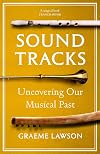
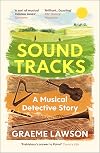
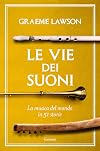
Sound Tracks: Uncovering Our Musical Past
by Graeme Lawson
On This Page
Description
Here is the history of humankind's relationship with music in fifty detective stories. Sound Tracks is a transporting and extraordinary voyage of discovery, each chapter a time-machine focusing on musical finds uncovered in archaeological digs around the world. From the present day all the way back to the dawn of time; from dark caves, murky swamps and open deserts to rivers, oceans and the depths of the earth, we can now hear the past release its musical secrets. As we enter the sound show more worlds of those who knew them, we rediscover long-lost musical experiences. On this grand tour through some of the world's greatest musical discoveries, we learn that music is part of what makes us human - not just as a pastime or religious expression but as a way of commemorating our pasts, communicating with each other, and shaping our lives. Brimming with astonishing insights, Sound Tracks provides an enthralling alternative history of humanity in which the silences of the past are filled with a treasure hoard of vanished sounds and voices. As if by magic, we find ourselves eavesdropping on lost music across the centuries. show lessTags
Recommendations































Member Reviews
Despite the clickbait title, this turns out to be a perfectly serious book about how much archaeology has told us about human musical practice since earliest times. Lawson takes us in reverse chronological order (the way archaeology works!) back through finds, many of which he has worked on himself, from nineteenth century shipwrecks to palaeolithic cave floors. Each case-study gives him the opportunity to show us something about the questions archaeology can and can’t answer, and the way archeological evidence can be combined with information from other sources like documents and contemporary illustrations.
Whilst music itself is a notoriously evanescent experience, it leaves physical traces in the shape of instruments and components show more of instruments, buildings or other spaces adapted for musical performance, and representations of musical activity in carvings and sculptures. Occasionally there are even fragments of musical notation to be found — the earliest so far dates back to about three and a half thousand years ago.
Lawson has built and played replicas of various instruments found in archaeological sites, and he discusses how the practical insights of musicians and instrument-makers can often complement simple observation. For example, the “bone flutes” found in the Dordogne turn out not to be flutes at all — when Lawson attempted to play them in replica it was clear that the only way to get them to play a satisfactory note was to use the lips, as in modern brass instruments, so they were really something more like a renaissance cornett.
A fascinating book, not only for those interested in musical history, but in general for anyone who wants to get a better idea of how archaeologists think and what kinds of things archaeological evidence can tell us about the past. show less
Whilst music itself is a notoriously evanescent experience, it leaves physical traces in the shape of instruments and components show more of instruments, buildings or other spaces adapted for musical performance, and representations of musical activity in carvings and sculptures. Occasionally there are even fragments of musical notation to be found — the earliest so far dates back to about three and a half thousand years ago.
Lawson has built and played replicas of various instruments found in archaeological sites, and he discusses how the practical insights of musicians and instrument-makers can often complement simple observation. For example, the “bone flutes” found in the Dordogne turn out not to be flutes at all — when Lawson attempted to play them in replica it was clear that the only way to get them to play a satisfactory note was to use the lips, as in modern brass instruments, so they were really something more like a renaissance cornett.
A fascinating book, not only for those interested in musical history, but in general for anyone who wants to get a better idea of how archaeologists think and what kinds of things archaeological evidence can tell us about the past. show less
Members
- Recently Added By
Lists

Non-Fiction Worth Reading
1,016 works; 257 members

Books Read in 2025
4,128 works; 98 members

Music Journalism and Biography
56 works; 1 member
Author Information
3 Works 27 Members
Awards and Honors
Common Knowledge
- Canonical title
- Sound Tracks: Uncovering Our Musical Past
Classifications
Statistics
- Members
- 25
- Popularity
- 1,076,987
- Reviews
- 1
- Rating
- (4.00)
- Languages
- English, German
- Media
- Paper, Ebook
- ISBNs
- 4
- ASINs
- 2