On This Page
Description
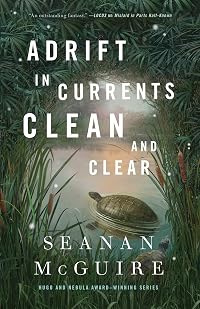
Giant turtles, impossible ships, and tidal rivers ridden by a Drowned girl in search of a family in the latest in the bestselling Hugo and Nebula Award-Winning Wayward Children series from Seanan McGuire. Nadya had three mothers: the one who bore her, the country that poisoned her, and the one who adopted her. Nadya never considered herself less than whole, not until her adoptive parents fitted her with a prosthetic arm against her will, seeking to replace the one she'd been missing from show more birth. It was cumbersome; it was uncomfortable; it was wrong. It wasn't her. Frustrated and unable to express why, Nadya began to wander, until the day she fell through a door into Belyrreka, the Land Beneath the Lake--and found herself in a world of water, filled with child-eating amphibians, majestic giant turtles, and impossible ships that sailed as happily beneath the surface as on top. In Belyrreka, she found herself understood for who she was: a Drowned Girl, who had made her way to her real home, accepted by the river and its people. But even in Belyrreka, there are dangers, and trials, and Nadya would soon find herself fighting to keep hold of everything she had come to treasure. show lessTags
Recommendations













Member Reviews
Nadya was born in Russia to a young mother who gives her up; she is raised in a state orphanage, where she is reasonably cared for and happy. But when a couple of Americans adopt her and take her to Colorado at age nine, it's a huge adjustment, and though Carl and Pansy provide for Nadya materially, she feels more like a thing than a person - a thing they want to fix by providing her with a prosthetic arm she doesn't want or need. When eleven-year-old Nadya falls through a door in the turtle pond and ends up in Belyyreka, the Land Beneath the Lake, she finds herself in a world more suited to her, and more accepting. She lives there for years, bonds with a turtle, grows up, becomes a scout, falls in love, and gets married - and then, show more exploring after a storm, is swept back into the turtle pond she fell through, and back into her eleven-year-old body. (Though I knew this was coming, it feels even more unfair than in most of the other Wayward Children books, because Nadya didn't experience a moment of uncertainty; she was happy in Belyyreka and wanted to stay. As with all the other books, there's little to no denouement.)
Quotes
"Sometimes people, like tales, begin where they do not belong." (Borya to Nadya, 75)
"Many things here will be familiar, Nadya, and many will be strange. I think the doors understand us well enough to know how much strangeness each of our hearts can handle, and they choose their children accordingly." (Inna to Nadya, 90)
No one can warn the eager and excited away from their own future. A future is a monster of its own breed, different for everyone, and ever inescapable. (112)
It was a day-by-day economy, sustained by the environment's passive interference with any form of hoarding or resource complication....No one was wealthy No one who had the ability to work and chose to actually do so was poor. They all had enough. (126) show less
Quotes
"Sometimes people, like tales, begin where they do not belong." (Borya to Nadya, 75)
"Many things here will be familiar, Nadya, and many will be strange. I think the doors understand us well enough to know how much strangeness each of our hearts can handle, and they choose their children accordingly." (Inna to Nadya, 90)
No one can warn the eager and excited away from their own future. A future is a monster of its own breed, different for everyone, and ever inescapable. (112)
It was a day-by-day economy, sustained by the environment's passive interference with any form of hoarding or resource complication....No one was wealthy No one who had the ability to work and chose to actually do so was poor. They all had enough. (126) show less
★ ★ ★ ★ 1/2 (rounded up)
This originally appeared at The Irresponsible Reader.
---
WHAT'S ADRIFT IN CURRENTS CLEAN AND CLEAR ABOUT?
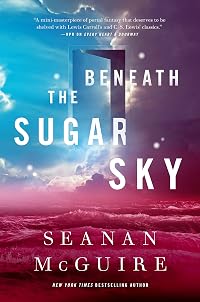
One of the advantages (and, to be fair, aggravating parts) of this series is that each book can be from anywhere on the series timeline. Here in the tenth installment, we get the origin story of someone that we got to know in the third book ( Beneath the Sugar Sky ). Reality itself is wibbly-wobbly in this series, why not timey wimey?
We meet Nadya at birth—where a young Russian woman who is not ready to be a mother is rushing to give her up—even before she's freaked out that Nadya is missing an arm. As we watch Nadya growing up, she doesn't really seem to care about the arm she never had. But when a show more couple of Americans come to adopt a disadvantaged Russian child, it starts to become a factor in her life.
She's not comfortable with her new life in the States (yet?), but when a prosthetic arm is imposed on her (in the name of help—see below), she's made to feel incomplete as well as Other. Her only solace is the pond a short walk from her adoptive parents' home where she can watch turtles—an animal that has long fascinated her.
Before she knows it, she falls through a Door and ends up in a world she doesn't understand or recognize (but really isn't that much stranger than the change from a Russian orphanage to a Colorado suburb).
THE LOST AND THE LONELY
I probably shouldn't have—but I laughed when she got the "Be Sure" message. It's in a seemingly-cruel place, but it was original and it meant the story was progressing. I also found her Door rather intriguing.
But better than that was the way her arrival in Belyrreka, the Land Beneath the Lake, was explained to her. Sometimes people come to Belyrreka* because a hero is needed to do something. But sometimes, it's just that someone isn't at home in their world and they need a place to fit in. Nadya is the latter, so it seems. Given that most of the children we've seen go through a Door to do something heroic, it's nice to see this option.
This doesn't mean she's incapable of heroism, or of doing something important. It just means that she probably ended up in Belyrreka because she belonged there more than on Earth.
This is really a slice-of-life story. We just get to see how Nadya lives and matures in a place where she feels that she belongs, with family, friends, and a purpose. Yes, in the back of our minds, we know that something is going to happen and she's going to end up at Eleanor West’s Home for Wayward Children. But until then... This novella is like the years between Aslan coronating the Pevensies and the fateful hunt for the White Stag—nothing heroic, nothing particularly notable. Just...life. Regular, ordinary, day-to-day life.
Well, "ordinary" in a world that's described as Beneath a Lake, where everyone is underwater to one degree or another (breathing without gills), full of talking animals, and where a river can magically endow people with gifts/obligations. So it's a loose use of the word "ordinary."
* And by implication, other worlds
I'M NOT ENTIRELY SURE THIS ONE IS FAIR
Many of the children we've met—particularly if we've met their parents, too—aren't all that fond of their parents. They're critical of them (even before their Doors appear, definitely afterward). By and large, I've been with the children in their critiques and evaluations of the parents—even when it's clear that the parents are doing their best (which doesn't happen as often as it should).
I'm not convinced that Nadya is entirely fair when thinking about the adults in her life. Her appraisal of the orphanage staff (at least after they arranged for her to get adopted) is harsh when they really just did what they could to help her get out of the orphanage (which she sees, but attributes it to less-than-altruistic ends). Her parents really don't understand her (beyond the language) and are clumsy at best in their attempts to help her fit into Colorado. It's hard to tell how much of the assessment of their motivations and attempts comes from the omniscient narrator and how much is Nadya's. But really, I think whoever is doing the assessing could be more charitable (without giving blanket approval).
Particularly her adoptive father—I really get the sense that his affection is real and that in time, he'd have become what she needs. I'm not so sure about his wife, however... On some level, they are trying to make life better. But her ideas of better and what needs improved differ.
Now, Nadya is a prepubescent child yanked out of the only home she ever knew, brought to another country and culture without warning (or consent), and forced into a mold and environment that she's unprepared for. So, sure, she's going to be less than charitable—it's justified and understandable. I just wish the narration did a slightly better job of showing that.
SO, WHAT DID I THINK ABOUT ADRIFT IN CURRENTS CLEAN AND CLEAR?
That aside...I loved Nadya. Getting to know her like this was great.
This is a book about home. About acceptance. About finding your place in the world, with people who "get" you, who care about you, and who want the best for you—even if that best doesn't necessarily make a lot of sense to them.
It's nice, it's comforting, and it's reassuring to see Nadya find this for herself and getting to enjoy it for as long as she does. Yes, it's hard to see her end up back in the "real world" knowing that means some misery before Eleanor comes to her (at least partial) rescue.
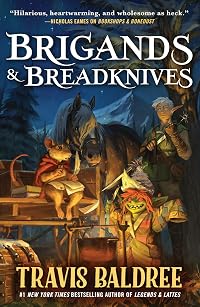
There's a little less whimsy to this novella than many of the other installments in the series—outside of the construction of the world. But if I had to tag this with any description, I'd probably use "cozy." If I didn't know this series, I'd assume it would belong with Travis Baldtree or S.L. Rowland. Maybe Heather Fawcett. But I do know better—this series continues to transcend easy categorization. Wayward Children is its own subgenre.
McGuire brings the emotional depth that Nadya and her story need. Belyrreka is a great world that operates on its own (self-aware) logic—it's a place I'd love to visit (assuming I wouldn't panic at the whole living underwater thing, which I can't promise), but wouldn't want to live. But McGuire brings it to life and fills it with people I wish I could get to know more.
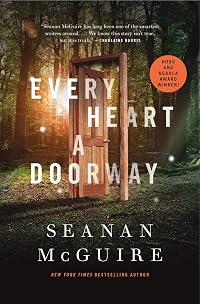
This is definitely one of the stronger books in this series that is on a great roll lately, I commend it to your attention. As with just about every book in the series, it can be read as a stand-alone or as an entry point (but I strongly encourage reading at least Every Heart a Doorway before any of the others). I was sad when it ended—not because of the way it ended, I just wasn't ready to move on. I predict I won't be alone in that.
Now, excuse me...I need to go figure out a way to cram in a re-read of Beneath a Sugar Sky to my schedule.
Disclaimer: I received this eARC from Tordotcom Publishing via NetGalley in exchange for this post—thanks to both for this. show less
This originally appeared at The Irresponsible Reader.
---
WHAT'S ADRIFT IN CURRENTS CLEAN AND CLEAR ABOUT?
One of the advantages (and, to be fair, aggravating parts) of this series is that each book can be from anywhere on the series timeline. Here in the tenth installment, we get the origin story of someone that we got to know in the third book ( Beneath the Sugar Sky ). Reality itself is wibbly-wobbly in this series, why not timey wimey?
We meet Nadya at birth—where a young Russian woman who is not ready to be a mother is rushing to give her up—even before she's freaked out that Nadya is missing an arm. As we watch Nadya growing up, she doesn't really seem to care about the arm she never had. But when a show more couple of Americans come to adopt a disadvantaged Russian child, it starts to become a factor in her life.
She's not comfortable with her new life in the States (yet?), but when a prosthetic arm is imposed on her (in the name of help—see below), she's made to feel incomplete as well as Other. Her only solace is the pond a short walk from her adoptive parents' home where she can watch turtles—an animal that has long fascinated her.
Before she knows it, she falls through a Door and ends up in a world she doesn't understand or recognize (but really isn't that much stranger than the change from a Russian orphanage to a Colorado suburb).
THE LOST AND THE LONELY
I probably shouldn't have—but I laughed when she got the "Be Sure" message. It's in a seemingly-cruel place, but it was original and it meant the story was progressing. I also found her Door rather intriguing.
But better than that was the way her arrival in Belyrreka, the Land Beneath the Lake, was explained to her. Sometimes people come to Belyrreka* because a hero is needed to do something. But sometimes, it's just that someone isn't at home in their world and they need a place to fit in. Nadya is the latter, so it seems. Given that most of the children we've seen go through a Door to do something heroic, it's nice to see this option.
This doesn't mean she's incapable of heroism, or of doing something important. It just means that she probably ended up in Belyrreka because she belonged there more than on Earth.
This is really a slice-of-life story. We just get to see how Nadya lives and matures in a place where she feels that she belongs, with family, friends, and a purpose. Yes, in the back of our minds, we know that something is going to happen and she's going to end up at Eleanor West’s Home for Wayward Children. But until then... This novella is like the years between Aslan coronating the Pevensies and the fateful hunt for the White Stag—nothing heroic, nothing particularly notable. Just...life. Regular, ordinary, day-to-day life.
Well, "ordinary" in a world that's described as Beneath a Lake, where everyone is underwater to one degree or another (breathing without gills), full of talking animals, and where a river can magically endow people with gifts/obligations. So it's a loose use of the word "ordinary."
* And by implication, other worlds
I'M NOT ENTIRELY SURE THIS ONE IS FAIR
Many of the children we've met—particularly if we've met their parents, too—aren't all that fond of their parents. They're critical of them (even before their Doors appear, definitely afterward). By and large, I've been with the children in their critiques and evaluations of the parents—even when it's clear that the parents are doing their best (which doesn't happen as often as it should).
I'm not convinced that Nadya is entirely fair when thinking about the adults in her life. Her appraisal of the orphanage staff (at least after they arranged for her to get adopted) is harsh when they really just did what they could to help her get out of the orphanage (which she sees, but attributes it to less-than-altruistic ends). Her parents really don't understand her (beyond the language) and are clumsy at best in their attempts to help her fit into Colorado. It's hard to tell how much of the assessment of their motivations and attempts comes from the omniscient narrator and how much is Nadya's. But really, I think whoever is doing the assessing could be more charitable (without giving blanket approval).
Particularly her adoptive father—I really get the sense that his affection is real and that in time, he'd have become what she needs. I'm not so sure about his wife, however... On some level, they are trying to make life better. But her ideas of better and what needs improved differ.
Now, Nadya is a prepubescent child yanked out of the only home she ever knew, brought to another country and culture without warning (or consent), and forced into a mold and environment that she's unprepared for. So, sure, she's going to be less than charitable—it's justified and understandable. I just wish the narration did a slightly better job of showing that.
SO, WHAT DID I THINK ABOUT ADRIFT IN CURRENTS CLEAN AND CLEAR?
That aside...I loved Nadya. Getting to know her like this was great.
This is a book about home. About acceptance. About finding your place in the world, with people who "get" you, who care about you, and who want the best for you—even if that best doesn't necessarily make a lot of sense to them.
It's nice, it's comforting, and it's reassuring to see Nadya find this for herself and getting to enjoy it for as long as she does. Yes, it's hard to see her end up back in the "real world" knowing that means some misery before Eleanor comes to her (at least partial) rescue.
There's a little less whimsy to this novella than many of the other installments in the series—outside of the construction of the world. But if I had to tag this with any description, I'd probably use "cozy." If I didn't know this series, I'd assume it would belong with Travis Baldtree or S.L. Rowland. Maybe Heather Fawcett. But I do know better—this series continues to transcend easy categorization. Wayward Children is its own subgenre.
McGuire brings the emotional depth that Nadya and her story need. Belyrreka is a great world that operates on its own (self-aware) logic—it's a place I'd love to visit (assuming I wouldn't panic at the whole living underwater thing, which I can't promise), but wouldn't want to live. But McGuire brings it to life and fills it with people I wish I could get to know more.
This is definitely one of the stronger books in this series that is on a great roll lately, I commend it to your attention. As with just about every book in the series, it can be read as a stand-alone or as an entry point (but I strongly encourage reading at least Every Heart a Doorway before any of the others). I was sad when it ended—not because of the way it ended, I just wasn't ready to move on. I predict I won't be alone in that.
Now, excuse me...I need to go figure out a way to cram in a re-read of Beneath a Sugar Sky to my schedule.
Disclaimer: I received this eARC from Tordotcom Publishing via NetGalley in exchange for this post—thanks to both for this. show less
Pros: great characters, thought provoking
Cons:
Nadya was abandoned to a Russian orphanage on birth, having been born without a right hand. She never considers herself lacking something until a Christian American couple adopts her and gets her a prosthetic. Unsure of her future, she falls through a door into a world with giant talking turtles.
This is book 10 of the Wayward Children series, but it is an origin story novella, so while Nadya is a main character in Beneath the Sugar Sky (book 3), you don’t need to read that to understand her story here. Nor do you need to have read any of the previous book to have a full understanding of this book.
McGuire is a master of creating empathy with her characters. Her clear but lyrical prose show more allows you to follow Nadya’s thoughts regarding her missing hand - how she doesn’t feel its lack, nor does she feel it needs replacing to be ‘whole’. Too often books align with the parents in this situation, expecting gratefulness from the recipient of their ‘aid’, unwanted and unnecessary as it may be.
It’s a thought provoking read, not only for the prosthetic, but also about Nadya’s adoption and some reasons why families choose that option and how it can affect the child in question.
I loved Nadya’s spirit and cleverness. Her kindness. Her resilience.
Belyyreka’s a challenging world to get your head around. I loved the giant turtles and how they were used in the story.
The ending, as usual for the origin novellas in this series, has an abrupt ending. We do know what happens to Nadya next, after this story ends. Strangely, that knowledge left me with more questions of how things go after the end of Beneath the Sugar Sky. Maybe those will be answered in a future novella.
If you haven’t read any of the Wayward Children books, this is another entry point that requires no previous knowledge, and it’s a great little story. show less
Cons:
Nadya was abandoned to a Russian orphanage on birth, having been born without a right hand. She never considers herself lacking something until a Christian American couple adopts her and gets her a prosthetic. Unsure of her future, she falls through a door into a world with giant talking turtles.
This is book 10 of the Wayward Children series, but it is an origin story novella, so while Nadya is a main character in Beneath the Sugar Sky (book 3), you don’t need to read that to understand her story here. Nor do you need to have read any of the previous book to have a full understanding of this book.
McGuire is a master of creating empathy with her characters. Her clear but lyrical prose show more allows you to follow Nadya’s thoughts regarding her missing hand - how she doesn’t feel its lack, nor does she feel it needs replacing to be ‘whole’. Too often books align with the parents in this situation, expecting gratefulness from the recipient of their ‘aid’, unwanted and unnecessary as it may be.
It’s a thought provoking read, not only for the prosthetic, but also about Nadya’s adoption and some reasons why families choose that option and how it can affect the child in question.
I loved Nadya’s spirit and cleverness. Her kindness. Her resilience.
Belyyreka’s a challenging world to get your head around. I loved the giant turtles and how they were used in the story.
The ending, as usual for the origin novellas in this series, has an abrupt ending. We do know what happens to Nadya next, after this story ends. Strangely, that knowledge left me with more questions of how things go after the end of Beneath the Sugar Sky. Maybe those will be answered in a future novella.
If you haven’t read any of the Wayward Children books, this is another entry point that requires no previous knowledge, and it’s a great little story. show less
Russian orphan Nadya has never felt handicapped by the fact that she was born with only one hand, but those around her sometimes have a hard time understanding otherwise. When she is adopted by American do-gooders and fitted with a prosthesis, she has a hard time articulating just how much she doesn't want this. And then, visiting a nearby turtle pond (the one place that soothes her soul), she falls through a doorway to another world, one with layers of water instead of air, with giant turtles to ride and giant frogs to fight, and with a family who both wants and understands her. But just as one door took her to this new place, another unexpected door could take her away...
The even numbered volumes of this series tend to stand alone, as show more they provide the backstory for the Wayward Children. I loved this one, as Nadya's portal world is such a perfect fit for her. It does make me want to revisit the odd-numbered books where Nadya is a character, now that I have gotten to know her better. Fans of the series should certainly pick this one up! show less
The even numbered volumes of this series tend to stand alone, as show more they provide the backstory for the Wayward Children. I loved this one, as Nadya's portal world is such a perfect fit for her. It does make me want to revisit the odd-numbered books where Nadya is a character, now that I have gotten to know her better. Fans of the series should certainly pick this one up! show less
The Wayward Children books are always an absolute delight, and coming from someone who normally has avoided short storied most of her life this series has changed my mind about them for the most part. If you've read any of this series you know how the plot goes and this one was just as unique and magical as all of the previous stories. Though this one left me a little more sad than previous books I'm hopeful that Nadya finds her way to Elenore West's school for Wayward Children quickly.
I received an advance copy from the publisher via NetGalley.
The Wayward Children series, now in its 10th iteration, follows children who venture into portals to far distant realms. Sometimes the stories are about the aftermath, the often tragic return of the children to an Earth that they no longer consider home, or about how they came to cross in the first place. A few of them, I regard to be among the best novellas I have ever read; others fall flat. This one falls in the middle.
Nadya, born without an arm, doesn't miss the limb as she grows up in a Russian orphanage. Strong willed and pleasant, she has no expectation of am adopted home of her own, but is glad to help others find families. But when a Christian adoption agency comes, show more Nadya gains their attention because of her one arm. She is soon in Colorado, living awkwardly with people she must call Mom and Dad, missing the tortoise she raised to health back in Russia. Her one sanctuary is a nearby pond with turtles. After her parents force her to don a prosthetic arm--never asking her what she wants--she falls through a portal in the pond, landing in a world where water is strange and massive turtles form special bonds with their people.
One of the problems with the series conceit, really, is that all too often, the end must be tragic. I won't go beyond that, just in case this book is someone's first foray into the series. Here, however, the end is not only disturbing, but painfully abrupt. I was left feeling almost as if pages were missing, but there weren't.
Something I loved about this book was how it depicted disability and how it shows how different people regard disability. There is a powerful message here about agency, empowerment, and the importance of choice. show less
The Wayward Children series, now in its 10th iteration, follows children who venture into portals to far distant realms. Sometimes the stories are about the aftermath, the often tragic return of the children to an Earth that they no longer consider home, or about how they came to cross in the first place. A few of them, I regard to be among the best novellas I have ever read; others fall flat. This one falls in the middle.
Nadya, born without an arm, doesn't miss the limb as she grows up in a Russian orphanage. Strong willed and pleasant, she has no expectation of am adopted home of her own, but is glad to help others find families. But when a Christian adoption agency comes, show more Nadya gains their attention because of her one arm. She is soon in Colorado, living awkwardly with people she must call Mom and Dad, missing the tortoise she raised to health back in Russia. Her one sanctuary is a nearby pond with turtles. After her parents force her to don a prosthetic arm--never asking her what she wants--she falls through a portal in the pond, landing in a world where water is strange and massive turtles form special bonds with their people.
One of the problems with the series conceit, really, is that all too often, the end must be tragic. I won't go beyond that, just in case this book is someone's first foray into the series. Here, however, the end is not only disturbing, but painfully abrupt. I was left feeling almost as if pages were missing, but there weren't.
Something I loved about this book was how it depicted disability and how it shows how different people regard disability. There is a powerful message here about agency, empowerment, and the importance of choice. show less
I like the stories in this series that involve the strange school of lost children, and that was missing here. This is still excellent, I think we spend a little more time in the real world at the start than usual, but the door world is beautiful and full of turtles!
Members
- Recently Added By
Lists

2026 Hugo Awards -- Eligible Works -- Novellas
8 works; 3 members

Books Read in 2025
4,128 works; 98 members

Books With Complete Sentence Titles
501 works; 17 members
Author Information

420+ Works 66,213 Members
Some Editions
Awards and Honors
Distinctions
Series

Common Knowledge
- Canonical title
- Adrift in Currents Clean and Clear
- Original publication date
- 2025-01-07
- Epigraph
- Sing to me a river song, wide and swift and running:
Sing to me of river fish, silver-bright and cunning.
Sing to me an ocean song, deep and wide and true.
Sing to me of ocean fish, and they will sing of you.
-tra... (show all)ditional greeting song, Belyyreka - Dedication
- For Catherynne, and for Naomi. You have both led me through forests. Now let me guide you here.
- First words
- Nadya Sokolov, as she grew older, would come to say that she had three mothers: the one who bore her, the country that poisoned her, and the one who adopted her.
- Last words
- (Click to show. Warning: May contain spoilers.)She no longer remembered the way home from the edge of the water, after all.
- Publisher's editor
- Harris, Lee
Classifications
Statistics
- Members
- 344
- Popularity
- 92,179
- Reviews
- 18
- Rating
- (3.94)
- Languages
- English
- Media
- Paper, Audiobook, Ebook
- ISBNs
- 4
- ASINs
- 3