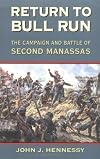
Return to Bull Run: The Campaign and Battle of Second Manassas
by John J. Hennessy
On This Page
Description
A comprehensive account of the Second Manassas campaign reveals the stories of the men who participated in the battle and traces the misjudgments and ill-conceived tactics that led to defeat for Union forces.Tags
Recommendations













Member Reviews
In Return to Bull Run, John J. Hennessy does an excellent job of describing how the Union was whipped at Second Manassas. A “well-oiled performance of the Confederate army” under Lee, Jackson, and Longstreet “contrasted sharply with the disorganized toil of Pope’s Army of Virginia.” “The Union army at Second Manassas toiled under poor or average leadership at every level of the high command,“ but “the primary architect of the calamity was John Pope.” Once Jackson marched around Pope’s right flank and into his rear, Pope tried to pin him down and destroy him in a “series of misguided lunges.” “He failed to recognize the possibilities offered by blocking the Bull Run Mountain gaps. He failed to gauge the skills show more of his opponents. He presumed always that the Confederates would do precisely as he expected. Then, when they did not (as on August 28 and 29), he sought to cast the blame on others, notably [Fifth Corps commander Fitz John] Porter.”
Once battle was joined, Pope “utterly failed in the basic responsibilities of commanding an army on the battlefield. Insufficient attention to the army’s logistics left his army wilted and dispirited. Inadequate reconnaissance left him with a wishful, wholly inaccurate view of the battlefield. Failure to put the attacks of August 29 into a larger tactical context, by making concurrent diversions or at least providing additional support, doomed each [Union] assault to failure.” In the end, he had to go. show less
Once battle was joined, Pope “utterly failed in the basic responsibilities of commanding an army on the battlefield. Insufficient attention to the army’s logistics left his army wilted and dispirited. Inadequate reconnaissance left him with a wishful, wholly inaccurate view of the battlefield. Failure to put the attacks of August 29 into a larger tactical context, by making concurrent diversions or at least providing additional support, doomed each [Union] assault to failure.” In the end, he had to go. show less
The Second Bull Run battle was the low point of the attempt to build a competent Union Army in the East. It pointed out the degree to which George McClellan had been useful in creating a useful army. Pope's conglomeration was badly used and Henessey gets a bit lost in the details, but has the right idea of this battle.
Return to Bull Run: The Campaign and Battle of Second Manassas This is a very well written narrative history of one of the significant battles in Virginia in the second year of the Civil War. I read the book because I was not very familiar with the details of this campaign.
This is the first book I have read written by this author. His writing style makes for an enjoyable read. The narration moves at a good pace in straight forward non-academic language. He has no discernible bias for either side as he describes the military struggle between the parties.
The author previously served as a historian at the Manassas National Battlefield. His knowledge of the battlefield and how the topography of the site influenced the course of the battle show more gives an added dimension to his narration of the events.
He makes excellent use of primary sources. There are many short segments of moment to moment descriptions of various events as they happen throughout the battle that allow the participants to relate the events in their own words. The author also provides personal details of the main participants.
The book had 15 maps that closely followed the battle narration and were a real help to me in following the action.
The campaign begins with Lee outnumbered and the Union general John Pope receiving additional troops. Lee takes the initiative and attacks Pope's army by splitting up his forces and having Stonewall Jackson's army attack the Union supply base at Manassas, Virginia. This also cuts the railroad that is the supply line to Pope's army. The base has acres and acres of everything a soldier could ever need or want. When it is captured the soldiers of Jackson's army go on a binge, looting through the supplies. The image of the Confederate soldiers, half of whom have no shoes, looting through millions of dollars of army supplies is one I will remember.
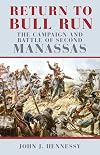
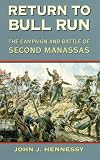
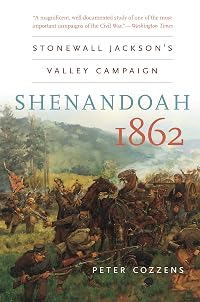
Pope turns his army and moves to attack Jackson. Even though the Union army is much larger Pope is a poor general and Jackson's army holds their position inflicting heavy casualties. On the dust jacket of the book is a painting that shows Confederate soldiers throwing rocks at the Federals. As it happened Jackson's soldiers did at one time run low on ammunition and in desperation actually throw rocks at the Union soldiers.
While Pope is attacking Jackson the other portion of Lee's army marches to join Jackson. Pope doesn't believe the reports of other Confederate troops in the area and continues his attacks on Jackson. Longstreet at the head of the other Confederate troops attacks Pope from the flank and comes close to destroying the Army of Virginia. The Union soldiers manage to retreat but suffer many unnecessary casualties because of poor leadership. There are quotations from Union soldiers in the book that show they understood that their generals were getting them killed.
The improvements in military technology and the low level of medical care contributed to a high level of deaths and serious casualties in the Civil War. The standard rifle bullet was .53 caliber, bigger than a .45 or 9mm. Amputation was the only known treatment for many of the wounds inflicted by this bullet. The courage of the soldiers as they charge into volleys of rifle fire is awe inspiring. There were 25,000 casualties out of a total of approximately 125,000 soldiers involved in the fighting. The Union casualties were much higher but they had more troops. Each side suffered about 20% casualties. Some units in the thick of the fighting suffered 50% casualties. This was one of the last wars where the generals led the charge and officers suffered a high rate of casualties.
After the battle ends with a victory for the Confederates the Union side engages in the blame game. Pope was fired and McClellan put back in charge. Pope had one of his generals court-martialed which became a story that went on for many years.
The last chapter has some very good analysis about the campaign and the final battle. The author points out some critical mistakes and examples of good performance on both sides. It is clear that John Pope was not competent and became overwhelmed by events as the battle went on. This campaign climaxed a three month period where Lee turned the military situation in favor of the Confederates.
Now I know a lot more about what happened during the 21 days covered by the book and the long term effects of those events. I really enjoyed this book and for those interested in this topic I can highly recommend it. show less
This is the first book I have read written by this author. His writing style makes for an enjoyable read. The narration moves at a good pace in straight forward non-academic language. He has no discernible bias for either side as he describes the military struggle between the parties.
The author previously served as a historian at the Manassas National Battlefield. His knowledge of the battlefield and how the topography of the site influenced the course of the battle show more gives an added dimension to his narration of the events.
He makes excellent use of primary sources. There are many short segments of moment to moment descriptions of various events as they happen throughout the battle that allow the participants to relate the events in their own words. The author also provides personal details of the main participants.
The book had 15 maps that closely followed the battle narration and were a real help to me in following the action.
The campaign begins with Lee outnumbered and the Union general John Pope receiving additional troops. Lee takes the initiative and attacks Pope's army by splitting up his forces and having Stonewall Jackson's army attack the Union supply base at Manassas, Virginia. This also cuts the railroad that is the supply line to Pope's army. The base has acres and acres of everything a soldier could ever need or want. When it is captured the soldiers of Jackson's army go on a binge, looting through the supplies. The image of the Confederate soldiers, half of whom have no shoes, looting through millions of dollars of army supplies is one I will remember.
Pope turns his army and moves to attack Jackson. Even though the Union army is much larger Pope is a poor general and Jackson's army holds their position inflicting heavy casualties. On the dust jacket of the book is a painting that shows Confederate soldiers throwing rocks at the Federals. As it happened Jackson's soldiers did at one time run low on ammunition and in desperation actually throw rocks at the Union soldiers.
While Pope is attacking Jackson the other portion of Lee's army marches to join Jackson. Pope doesn't believe the reports of other Confederate troops in the area and continues his attacks on Jackson. Longstreet at the head of the other Confederate troops attacks Pope from the flank and comes close to destroying the Army of Virginia. The Union soldiers manage to retreat but suffer many unnecessary casualties because of poor leadership. There are quotations from Union soldiers in the book that show they understood that their generals were getting them killed.
The improvements in military technology and the low level of medical care contributed to a high level of deaths and serious casualties in the Civil War. The standard rifle bullet was .53 caliber, bigger than a .45 or 9mm. Amputation was the only known treatment for many of the wounds inflicted by this bullet. The courage of the soldiers as they charge into volleys of rifle fire is awe inspiring. There were 25,000 casualties out of a total of approximately 125,000 soldiers involved in the fighting. The Union casualties were much higher but they had more troops. Each side suffered about 20% casualties. Some units in the thick of the fighting suffered 50% casualties. This was one of the last wars where the generals led the charge and officers suffered a high rate of casualties.
After the battle ends with a victory for the Confederates the Union side engages in the blame game. Pope was fired and McClellan put back in charge. Pope had one of his generals court-martialed which became a story that went on for many years.
The last chapter has some very good analysis about the campaign and the final battle. The author points out some critical mistakes and examples of good performance on both sides. It is clear that John Pope was not competent and became overwhelmed by events as the battle went on. This campaign climaxed a three month period where Lee turned the military situation in favor of the Confederates.
Now I know a lot more about what happened during the 21 days covered by the book and the long term effects of those events. I really enjoyed this book and for those interested in this topic I can highly recommend it. show less
Ratings
Members
- Recently Added By
Author Information

5+ Works 486 Members
John J. Hennessy began his career in history at Manassas and is currently chief historian at Fredericksburg and Spotsylvania National Military Park. He is author of the definitive book on Second Manassas, Return to Bull Run.
Common Knowledge
- Original publication date
- 1993
- People/Characters
- John Bell Hood; Robert E. Lee; John Pope; Richard Heron Anderson; James J. Archer; Nathaniel P. Banks (show all 41); Lawrence O'Bryan Branch; Abner Doubleday; Jubal A. Early; Nathan G. Evans; Richard S. Ewell; William B. Franklin; John Gibbon; Maxcy Gregg; John P. Hatch; Samuel P. Heintzelmann; A. P. Hill; Joseph Hooker; Stonewall Jackson (Thomas Jonathan Jackson); Bradley T. Johnson; Philip Kearney; Evander M. Law; Alexander R. Lawton; Fitzhugh Lee; Stephen D. Lee; James Longstreet; George B. McClellan; Irvin McDowell; Nathaniel McLean; Robert H. Milroy; Marsena R. Patrick; William Dorsey Pender; Fitz-John Porter; Jesse L. Reno; John F. Reynolds; James B. Ricketts; Beverly H. Robertson; Franz Sigel; William E. Starke; James Ewell Brown "Jeb" Stuart; Cadmus M. Wilcox
- Important places
- Bull Run River, Virginia, USA; Manassas, Virginia, USA; Virginia, USA; USA; Alexandria, Virginia, USA; Bristoe Station, Virginia, USA (show all 15); Centreville, Virginia, USA; Chinn Ridge, Virginia, USA; Dogan Ridge, Virginia, USA; Gainesville, Virginia, USA; Groveton, Virginia, USA; Manassas Junction, Virginia, USA; Orange and Alexandria Railroad, Virginia, USA; Sulphur Springs, Virginia, USA; Thoroughfare Gap, Virginia, USA
- Important events
- American Civil War (1861 | 1865); Second Battle of Bull Run (1862-08-28 | 1862-08-30)
- Dedication
- To Joseph M. Hennessy
Whose service to his country has inspired me,
and whose devotion to his family has shaped me.
In an age that has produced so few truly admirablemen,
I am proud to have one as... (show all) my father. - First words
- Preface
In July 1861, the armies of North and South had come to Bull Run full of boyish enthusiasm, naive misconceptions, and unabashed confidence. - Blurbers
- Robertson, James I., Jr.; McPherson, James M.; Sears, Stephen W.; Thomas, Emory M.; Current, Richard N.
Classifications
- Genres
- History, Nonfiction, General Nonfiction
- DDC/MDS
- 973.732 — History & geography History of North America United States Civil War Era (1857-1865) Abraham Lincoln (1861-1865) Campaign of 1862
- LCC
- E473.77 .H46 — History of the United States United States Civil War period, 1861-1865 The Civil War, 1861-1865
- BISAC
Statistics
- Members
- 359
- Popularity
- 87,701
- Reviews
- 3
- Rating
- (4.23)
- Languages
- English
- Media
- Paper, Ebook
- ISBNs
- 4
- ASINs
- 7