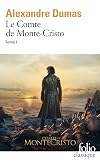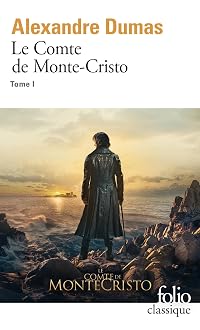
Le Comte de Monte-Cristo, tome 1
by Alexandre Dumas
On This Page
Description
On the day of his wedding to Mercedes, Edmond Dantes, first mate of the Pharaon, is accused of treason, arrested, and imprisoned without trial in the Chateau d'If, a grim island fortress off Marseille. A fellow prisoner, Abbe Faria, correctly deduces that his jealous rival Fernand Mondego, envious crewmate Danglars, and double-dealing Magistrate De Villefort, betrayed him. Faria inspires his escape and guides him to a fortune in treasure. As the powerful and mysterious Count of Monte Cristo, show more he arrives from the Orient to enter the fashionable Parisian world of the 1830s and avenge himself on the men who conspired to destroy him. show lessTags
Recommendations





































Member Reviews
This review I've posted on both Volume I and Volume II.
I’m glad I finally read this book: I loved working my way through it, and I wish I’d read it much sooner.
This was a long read, though. Dumas definitely takes a sprawling approach to this tale of wrongful imprisonment and subsequent revenge: some parts took their time to become relevant to the main plot, but even those were entertaining to read (e.g. Franz and Albert gallivanting around during the Carnival in Rome, Benedetto’s backstory, or the tale of Luigi Vampa the bandit). Eventually, though, he plugs all diversions into the main storyline. As the book goes on, the plot speeds up and converges tightly onto its central premise, and you find out that all the digressions were show more more than worth it. The book even answers the question ofwhat happens after the revenge is complete , which not many revenge tales do.
One of the reasons I liked this so much is that it made effective use of some of my favourite adventure tropes. For one, there’s the basic “unfairly accused innocent exacts a carefully planned revenge” plot. Dumas also includes an uninhabited island; a faked death, complete with a corpse-that-is-really-asleep (and bonus points for accomplishing this by means of a potion); the digging of a secret passageway; a sweet polly oliver; a challenge to a duel; a hidden treasure; a courtroom trial with dramatic revelations; a character’s covered-up indiscretions that come back to bite them; the bullied kid who later in life shows off their massive superiority over their one-time bullies; and so on.
And it isn’t just these tropes (cool and evergreen though they may be) that made this book such an entertaining read for me; it’s their measured use among long dialogues and pieces of character development.
One of my favourite scenes is the one where the Count has assembled some of his enemies at his house in Auteuil for dinner, and serves them rare fish from two small lakes countries apart. First he has two of his international guests explain to the rest why those fish are so rare; then he amazes them by telling them how he transported live fish to Paris from their remote locations, acknowledging that he got the idea from the ancient Romans who did this on a lesser scale and then decided to one-up the Ancients. This establishes his exoticness, his extravagance, his delicate taste, and his practical cleverness, all of which surpass that of his guests; at the same time it’s an unsubtle demonstration that he’s better-travelled than they will ever be, wealthy beyond their dreams, multilingual, and well-read in the Ancients; his interests and his lifestyle are leaps beyond their daily life. Yet the count himself eats nothing of the meal, driving home the point that all the meticulous planning -- either rare fish is known to one of the guests -- and the extravagant expenses incurred were for showing off to these specific guests only: the count is vastly superior to them all, more accomplished than they had imagined was possible up till then. He wants them to be mightily impressed, and he wants them to realize this. It’s at this point that he casually reminds some of his enemies of the dirty secrets they covered up in the past, sowing seeds of anxiety as a subtle punishment for their misdeeds.
The whole scene is shameless wish-fulfillment, but I loved every word of it.
Another thing I liked very much about this book is that several characters (well, the ones that count) are not pitted against each other as black-vs-white morality pawns; there’s much more of a gray-on-gray morality present here, which makes the characters stand out more against their background and against more straightforward characters. This goes for the count himself (but more on that later), but also for Caderousse, Mercédès, Albert de Morcerf, and Mme de Villefort, to name but a few.
To be fair, though, some parts I disliked. Some of the subplots relevant to the main plot later on do take a long time to become so, and while they pay off later, it may initially feel like a bit of a slog. Then there’s the cultural superiority that pervades the text: exoticized Oriental cultures are consistently portrayed as superior to Parisian bourgeois lifestyles; Italians are reduced to curious carnivals and exotic bands of charming bandits living in their ancestor’s ruins; and Christianity is a given, to the point of including a drawn-out deathbed conversion.
Also, Dumas has his characters display some attitudes that are rather problematic. Sometimes these (intentionally?) add to character depth, but that excuse cannot be given across the board. For one thing, the count is unapologetic about owning slaves, who, of course, love being in his service (to the point of refusing to be set free), and about getting a kick out of the life-or-death power he has over them. One of them, a black muslim named Ali, he saved halfway through a cruel punishment -- after his tongue had been cut out but before he was decapitated -- but the count intentionally did not step in sooner because he claims to always have wanted a mute slave. Our hero, everyone! His other slave, a girl named Haydéewho he raises from age 11, falls in love with her father figure, the only adult male she’s exposed to . Also troubling is the attitude of and about several female characters that it’s noble for them to die if they are no longer attached to a male guardian -- Mercédes is a case in point: her marriage to someone else after she believes her fiancé to be gone forever is presented as unfaithfulness and betrayal by all involved, including herself, and at one point she comments that it would have been better had she died instead of turning her back on one she believed lost . In addition, while the men are off doing things and talking shop, the women faint regularly, wring their hands in indecision, tragically resign themselves to their fate, and assume beautiful and/or dramatic poses when an observer enters the room. Admirable exceptions to all this are, of course, Mlle Eugenie Danglars, who I like to think of as a lesbian, and who makes her own decisions, and Mme. Héloise de Villefort .
But I can accept digressions and attitudes towards other cultures and towards women as a sign of the times -- the book is some 170 years old, after all. Overall, then, I can honestly say that loved this wonderfully complex and sprawling novel for the sheer grand-scale revenge fantasy it is. show less
I’m glad I finally read this book: I loved working my way through it, and I wish I’d read it much sooner.
This was a long read, though. Dumas definitely takes a sprawling approach to this tale of wrongful imprisonment and subsequent revenge: some parts took their time to become relevant to the main plot, but even those were entertaining to read (e.g. Franz and Albert gallivanting around during the Carnival in Rome, Benedetto’s backstory, or the tale of Luigi Vampa the bandit). Eventually, though, he plugs all diversions into the main storyline. As the book goes on, the plot speeds up and converges tightly onto its central premise, and you find out that all the digressions were show more more than worth it. The book even answers the question of
One of the reasons I liked this so much is that it made effective use of some of my favourite adventure tropes. For one, there’s the basic “unfairly accused innocent exacts a carefully planned revenge” plot. Dumas also includes an uninhabited island; a faked death, complete with a corpse-that-is-really-asleep (and bonus points for accomplishing this by means of a potion); the digging of a secret passageway; a sweet polly oliver; a challenge to a duel; a hidden treasure; a courtroom trial with dramatic revelations; a character’s covered-up indiscretions that come back to bite them; the bullied kid who later in life shows off their massive superiority over their one-time bullies; and so on.
And it isn’t just these tropes (cool and evergreen though they may be) that made this book such an entertaining read for me; it’s their measured use among long dialogues and pieces of character development.
One of my favourite scenes is the one where the Count has assembled some of his enemies at his house in Auteuil for dinner, and serves them rare fish from two small lakes countries apart. First he has two of his international guests explain to the rest why those fish are so rare; then he amazes them by telling them how he transported live fish to Paris from their remote locations, acknowledging that he got the idea from the ancient Romans who did this on a lesser scale and then decided to one-up the Ancients. This establishes his exoticness, his extravagance, his delicate taste, and his practical cleverness, all of which surpass that of his guests; at the same time it’s an unsubtle demonstration that he’s better-travelled than they will ever be, wealthy beyond their dreams, multilingual, and well-read in the Ancients; his interests and his lifestyle are leaps beyond their daily life. Yet the count himself eats nothing of the meal, driving home the point that all the meticulous planning -- either rare fish is known to one of the guests -- and the extravagant expenses incurred were for showing off to these specific guests only: the count is vastly superior to them all, more accomplished than they had imagined was possible up till then. He wants them to be mightily impressed, and he wants them to realize this. It’s at this point that he casually reminds some of his enemies of the dirty secrets they covered up in the past, sowing seeds of anxiety as a subtle punishment for their misdeeds.
The whole scene is shameless wish-fulfillment, but I loved every word of it.
Another thing I liked very much about this book is that several characters (well, the ones that count) are not pitted against each other as black-vs-white morality pawns; there’s much more of a gray-on-gray morality present here, which makes the characters stand out more against their background and against more straightforward characters. This goes for the count himself (but more on that later), but also for Caderousse, Mercédès, Albert de Morcerf, and Mme de Villefort, to name but a few.
To be fair, though, some parts I disliked. Some of the subplots relevant to the main plot later on do take a long time to become so, and while they pay off later, it may initially feel like a bit of a slog. Then there’s the cultural superiority that pervades the text: exoticized Oriental cultures are consistently portrayed as superior to Parisian bourgeois lifestyles; Italians are reduced to curious carnivals and exotic bands of charming bandits living in their ancestor’s ruins; and Christianity is a given, to the point of including a drawn-out deathbed conversion.
Also, Dumas has his characters display some attitudes that are rather problematic. Sometimes these (intentionally?) add to character depth, but that excuse cannot be given across the board. For one thing, the count is unapologetic about owning slaves, who, of course, love being in his service (to the point of refusing to be set free), and about getting a kick out of the life-or-death power he has over them. One of them, a black muslim named Ali, he saved halfway through a cruel punishment -- after his tongue had been cut out but before he was decapitated -- but the count intentionally did not step in sooner because he claims to always have wanted a mute slave. Our hero, everyone! His other slave, a girl named Haydée
But I can accept digressions and attitudes towards other cultures and towards women as a sign of the times -- the book is some 170 years old, after all. Overall, then, I can honestly say that loved this wonderfully complex and sprawling novel for the sheer grand-scale revenge fantasy it is. show less
Turns out to be very long and quite weird in places.
EDIÇÃO: 2000
IDIOMA: FRANCÊS
IDIOMA: FRANCÊS
Ratings
Members
- Recently Added By
Lists

Books I've Read
7 works; 1 member
Author Information

1,609+ Works 98,567 Members
Common Knowledge
- Canonical title*
- Le Comte de Monte-Cristo. Tome 1
- Original title
- Le Comte de Monte-Cristo. Tome 1
- Original publication date
- 1844 (1e édition originale française en feuilleton, Le Journal des débats) (1e édition originale française en feuilleton, Le Journal des débats)
- People/Characters*
- Edmond Dantès; Mercédès Herrera; Abbé Faria; Fernand Mondego; Danglars; Gérard de Villefort (show all 14); Maximilien Morrel; Albert de Morcerf; Gaspard Caderousse; Haydée; Bertuccio; Benedetto; Noirtier de Villefort; Valentine de Villefort
- Important places*
- île d'Elbe; Château d'If, Marseille, Bouches-du-Rhône, Provence-Alpes-Côte d'Azur, France; île de Monte-Cristo
- Related movies*
- The Count of Monte Cristo (2024 | IMDb); The Count of Monte Cristo (2002 | IMDb); Monte Cristo (1929 | IMDb); Monte Cristo (1922 | IMDb); The Count of Monte Cristo (1934 | IMDb)
- Original language*
- Français
*Some information comes from Common Knowledge in other languages. Click "Edit" for more information.
Classifications
- Genres
- Fiction and Literature, General Fiction, Historical Fiction
- DDC/MDS
- 843.7 — Literature & rhetoric French Literature French fiction Constitutional monarchy 1815–48
- LCC
- PQ2226 .A42 .S54 — Language and Literature French, Italian, Spanish and Portuguese literatures French literature Modern literature 19th century
Statistics
- Members
- 313
- Popularity
- 102,111
- Reviews
- 4
- Rating
- (4.23)
- Languages
- English, French
- Media
- Paper, Ebook
- ISBNs
- 13
- ASINs
- 2