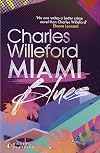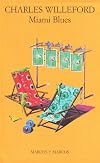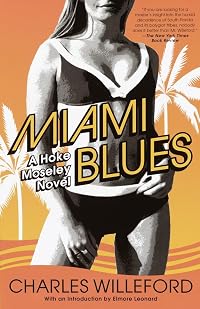
On This Page
Description
After a brutal day investigating a quadruple homicide, Detective Hoke Moseley settles into his room at the un-illustrious Eldorado Hotel and nurses a glass of brandy. With his guard down, he doesn't think twice when he hears a knock on the door. The next day, he finds himself in the hospital, badly bruised and with his jaw wired shut. He thinks back over ten years of cases, wondering who would want to beat him into unconsciousness, steal his gun and badge, and most importantly, make off with show more his prized dentures. But the pieces never quite add up to revenge, and the few clues he has keep connecting to a dimwitted hooker, her ex-con boyfriend, and the bizarre murder of a Hare Krishna pimp.Chronically depressed, constantly strapped for money, always willing to bend the rules a bit, Hoke Moseley is hardly what you'd think of as the perfect cop, but he is one of the greatest detective creations of all time. show lessTags
Recommendations
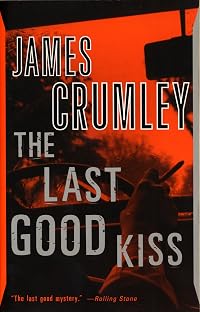
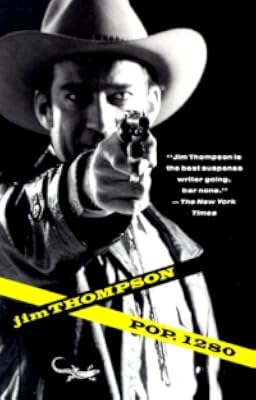
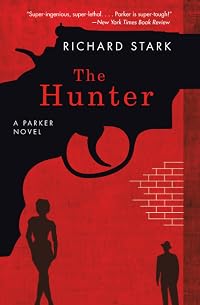















Member Recommendations
ckNikka More Florida Noir
Member Reviews
I first read Miami Blues sometime in the eighties - before the 1990 movie - but rereading it now thirty years later, it's hard to read it without picturing the characters as portrayed in the movie. That there is the power of cinema. It's still an awesome book even rereading it and knowing full well what's going to happen. It is strikingly different in tone and affect from Willeford's earlier pulp works so much so that you wonder how that could be.
What's really remarkable about Miami Blues and its sequels (and no I haven't read the secret unpublished manuscript of the original dark nasty sequel) is how could Willeford really became at storytelling. Each page and even each paragraph tells a whole story. There are oddities that he throws show more in seemingly effortlessly like the Hare Krishna dying of a broken finger or the casual mentions of incest.
And then there are these amazing characters like the dimwitted prostitute who wakes up each day as wide-eyed and innocent as the day she was born. Or the psychopathic killer who decides to become her platonic husband. Or the homicide detective who is forever losing his chompers (dentures) and lives in a fleabag hotel because he sends every other paycheck for alimony.
The actual plot plays second fiddle to all these classic scenes like the ex-con and the cop having dinner together or Junior going to "work" at the mall. Some of what takes place is the gallows humor of the police station but it's do funny you almost forget the one-man crime wave Junior is.
An absolutely breathtaking work. show less
What's really remarkable about Miami Blues and its sequels (and no I haven't read the secret unpublished manuscript of the original dark nasty sequel) is how could Willeford really became at storytelling. Each page and even each paragraph tells a whole story. There are oddities that he throws show more in seemingly effortlessly like the Hare Krishna dying of a broken finger or the casual mentions of incest.
And then there are these amazing characters like the dimwitted prostitute who wakes up each day as wide-eyed and innocent as the day she was born. Or the psychopathic killer who decides to become her platonic husband. Or the homicide detective who is forever losing his chompers (dentures) and lives in a fleabag hotel because he sends every other paycheck for alimony.
The actual plot plays second fiddle to all these classic scenes like the ex-con and the cop having dinner together or Junior going to "work" at the mall. Some of what takes place is the gallows humor of the police station but it's do funny you almost forget the one-man crime wave Junior is.
An absolutely breathtaking work. show less
It's a mystery. Not the book, but why I started reading it. I start and abandon books all the time but there were three of them this week. I know why I started those others. The writers were on lists of literary prize winners. They came highly recommended, and yet I bailed on them all. Instead I found myself reading Miami Blues. I found it because I searched for Charles Willeford in some context other than fiction. Poetry? Literary criticism? But instead I turned up crime novels and was surprised to find he wrote them; surprised enough to obtain one of them. So when I rejected three books in a row (maybe there were four!) that I had been expecting to be something special, I started this one expecting it to be unspecial but it's all I show more had with me.
This turned out to be the special book. Instead of the cliches I associate with the genre, this book had things like incest (but not as a major plot point), a discussion of the literary form of haiku, a recipe for vinegar pie, a police detective whose wife subscribes to Ms. magazine, a Hare Krishna beggar who dies of shock from a broken finger. None of these were gratuitous references put in to be clever but made sense in their context.
I still can't figure out what led me to Mr. Willeford, but I'm now going to read the next book in the series. show less
This turned out to be the special book. Instead of the cliches I associate with the genre, this book had things like incest (but not as a major plot point), a discussion of the literary form of haiku, a recipe for vinegar pie, a police detective whose wife subscribes to Ms. magazine, a Hare Krishna beggar who dies of shock from a broken finger. None of these were gratuitous references put in to be clever but made sense in their context.
I still can't figure out what led me to Mr. Willeford, but I'm now going to read the next book in the series. show less
I lived in Miami at the time that Miami Blues was first published, and I love the references to the Miami of the 1980s: the beloved late columnist John Keasler; South Beach before it became an exorbitant destination for the pretty people and the plutocrats, when it was still a shopworn, cheap place for retired Jews from the Northeast and dubious Mariel refugees; Kendall still nestled next to tomato farms, and the Omni Mall still existed so that I could get highlights and a haircut at the salon.
The novel, the debut in a noir series that features divorced, sad-sack Detective Sergeant Hoke Moseley, does evoke a lot of nostalgia in me. It was a time when I was a girl reporter, footloose and fancy free in one of the nation’s most show more cosmopolitan and exciting cities. But even without that frisson, I would still have really enjoyed this novel. Author Charles Willeford, who died in 1988, knew how to plot a suspenseful page-turner. (That’s the same year I left Miami.) Willeford portrays the Magic City’s sinners (no saints here) sympathetically yet realistically; he doesn’t shy away from the cocaine cowboys, the runaways, the hookers, the soulless grifters or the racism and misogyny of the era. Still, I enjoyed the novel enough to want more.
In the interest of full disclosure, I briefly worked with Willeford’s third wife (now widow) at the late, lamented Miami News while he was writing this. It was a while before someone mentioned that her husband was a “famous mystery writer,” but I’d never heard of him and didn’t read any of his work until now, nearly 40 years later. Betsy Willeford and I weren’t really friends, and I don’t think it has affected this review, but you can be the judge. show less
The novel, the debut in a noir series that features divorced, sad-sack Detective Sergeant Hoke Moseley, does evoke a lot of nostalgia in me. It was a time when I was a girl reporter, footloose and fancy free in one of the nation’s most show more cosmopolitan and exciting cities. But even without that frisson, I would still have really enjoyed this novel. Author Charles Willeford, who died in 1988, knew how to plot a suspenseful page-turner. (That’s the same year I left Miami.) Willeford portrays the Magic City’s sinners (no saints here) sympathetically yet realistically; he doesn’t shy away from the cocaine cowboys, the runaways, the hookers, the soulless grifters or the racism and misogyny of the era. Still, I enjoyed the novel enough to want more.
In the interest of full disclosure, I briefly worked with Willeford’s third wife (now widow) at the late, lamented Miami News while he was writing this. It was a while before someone mentioned that her husband was a “famous mystery writer,” but I’d never heard of him and didn’t read any of his work until now, nearly 40 years later. Betsy Willeford and I weren’t really friends, and I don’t think it has affected this review, but you can be the judge. show less
They don't write them like this anymore, which is probably just as well. As far as crime novels go, this is great. I almost admired 'Junior' Frenger for being such a horrible, psychotic lunatic. It's gritty, very funny and a bit dated, but a fabulous page-turner. Charles Willeford was a remarkable character - ex professional soldier, professor of English, professional boxer, actor, painter and author. Miami is the perfect backdrop for his Hoke Moseley series. Highly entertaining.
My first Hoke book, though I have read a few other earlier Willefords. Hoke is indeed a fine creation... all kinds of personal problems (no money from divorce, false teeth flying away all the time, not always right about things) but dogged. This is the story of the ex-con from California taking off for Miami and immediately killing a Hare Krishna by breaking his finger at the airport (Krishna had offended him by putting a flower in his expensive stolen jacket). Of course he immediately stumbles across the dead man's hooker sister (huh? how is that possible- give me a break, Mr. Willeford)? They settle down to a contended semi platonic marriage. Hoke is on their trail, of course. I do like the direct, non thinking (psychopathic?) show more thinking of the criminal and yes there are deaths and it all works out well in the end. The plot: ridiculous. the characters: great. the setting: good. show less
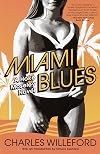
Terrific. I had always liked the film with Fred Ward, Jennifer Jason leigh, and Alec Baldwin and remember reading the book 20 or so years ago. I just listened to it read by Stephen Bowlby, who does a great job of capturing the book's voices and vibe. (Incidentally, the cover here on Goodreads is hilariously misleading: Miami Blues is no fun-in-the-sun caper.) Willford is a great portrayer of stupidity and he does this so well that the reader pities rather than scorns Susan Waggoner and reviles rather than roots for Freddie Frenger. Each is stupid in the literal sense of the term in a way that we don't always see in novels but that we often do in life. Susan's stupidity manifests itself in naivete; Freddie's manifests itself in erratic show more acts of cruelty. They are perfectly-drawn characters.
It's like Elmore Leonard without all of the coolness and perfect-chapter-ending remarks. The parts in which Hoke can't piece together what's going on with Junior are great, since cops in novels always think as quickly as Deep Blue. This is exactly the kind of novel that may seem easy to write, but that anyone who has ever tried to make real people interesting knows takes a lot of talent. Recommended. show less
It's like Elmore Leonard without all of the coolness and perfect-chapter-ending remarks. The parts in which Hoke can't piece together what's going on with Junior are great, since cops in novels always think as quickly as Deep Blue. This is exactly the kind of novel that may seem easy to write, but that anyone who has ever tried to make real people interesting knows takes a lot of talent. Recommended. show less
The massive coincidence at the beginning almost ruined the book for me. I demand not to be put out of the story... Fortunately what comes next more than makes up for the faltering beginning.
Miami Blues is a wonderful novel: off-the-wall, fun, off-target with a clean, sublime prose style. Detective Hoke Moseley is quite pathetic (he even has false teeth...), but what I really liked were the villain and the hooker. Junior Frenger is a very convincing psychopath and Susan Waggoner, the abused hooker he teams up with, is a mystery for me. The last chapter demands a re-assessment of Susan and who's been playing who...
When I think of crime fiction that really works for me, it all comes down to the bad guys. They want the same things we show more want. They want money and success, remain undisturbed by life's hassles, be loved, and to stop the voices in their head. They’re flesh and blood people with wants and needs, just like Moseley, it’s just that in order to get these things, they sometimes do terrible, terrible things.
This book is not really a mystery in the usual literary sense of the word. Sparse details throughout the book, which leaves lots of room for the imagination. What's surprising is how much Willeford does with so few details. That's how I like it. As I said, it’s not a mystery, it’s just a story, about two frantic people who collide heads-on with a cop at the bottom of his inner collapse, told as spare and lyrically as an haiku." show less
Members
- Recently Added By
Lists

Donald E. Westlake's Top Ten Mystery Books
20 works; 3 members

Books
85 works; 1 member

Books I Read Before The Invention Of The Internet.
144 works; 1 member
Author Information

54+ Works 3,964 Members
Some Editions
Awards and Honors
Notable Lists
Series

Belongs to Publisher Series
Common Knowledge
- Canonical title
- Miami Blues
- Original title
- Miami Blues
- Original publication date
- 1984
- People/Characters
- Hoke Moseley; Bill Henderson; Susan Waggoner; Frederick J. Frenger, Jr.
- Important places
- Miami, Florida, USA; Florida, USA; Miami Beach, Florida, USA
- Related movies
- Miami Blues (1990 | IMDb)
- Epigraph
- Haiku
Morning sun stripes cell.
Five fingers feel my hard heart.
It hurts, hurts, like hell.
-F.j.Frenger, Jr. - Dedication
- For Betsy
- First words
- Frederick J. Frenger, Jr., a blithe psychopath from California, asked the flight attendant in first class for another glass of champagne and some writing materials.
- Blurbers
- Leonard, Elmore; Justice, Donald ; Ellin, Stanley
- Original language*
- Inglese
*Some information comes from Common Knowledge in other languages. Click "Edit" for more information.
Classifications
Statistics
- Members
- 624
- Popularity
- 46,544
- Reviews
- 21
- Rating
- (3.76)
- Languages
- 10 — Danish, Dutch, English, Finnish, French, German, Italian, Polish, Spanish, Swedish
- Media
- Paper, Audiobook, Ebook
- ISBNs
- 44
- UPCs
- 1
- ASINs
- 9