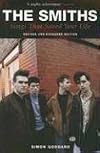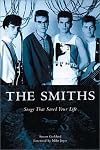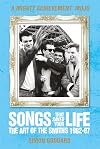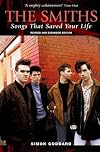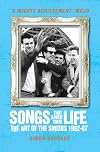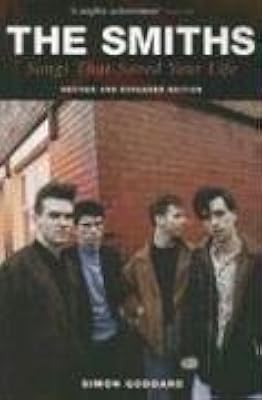
The Smiths: Songs That Saved Your Life
by Simon Goddard
On This Page
Description
The Smiths' brief but brilliant career lasted only five years, long enough to carve their name as the greatest and most influential British band of the 1980s. From the perfect pop of ?This Charming Man' to their iconic masterpiece The Queen Is Dead, songwriters Morrissey and Johnny Marr created a body of work which saw them championed as the Lennon and McCartney of their day Songs That Saved Your Life has been hailed by both fans and critics as the essential book on The Smiths' music. The show more first examination of the group by acclaimed Mozipedia author Simon Goddard, it details the writing and recording of the entire Morrissey/Marr catalogue from their first bedroom demo to the band's sudden split including lost tracks and rare outtakes. This brand new edition has been thoroughly revised by the author to include an even more comprehensive studio chronology and easily referenced appendices covering live, radio and TV appearances. For new and diehard apostles alike, Songs That Saved Your Life remains the definitive document on the art of The Smiths. show lessTags
Recommendations















Member Reviews
Acknowledges its debt to Revolution in the Head and then goes on to knock it out of the park. Simply delicious review of song genesis and structure. Written by an unashamed fan for unashamed fans. What a treat.
http://www.tangents.co.uk/tangents/main/2002/dec/ramones.html
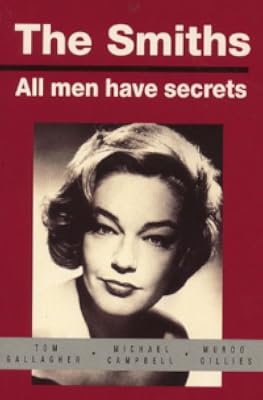
...This tactic, of defining the music through the reactions of the faithful, is only truly successful when applied to a band whose appeal is cultish and selective. Unsurprisingly, The Smiths are a prime example of this. The 1995 book All Men Have Secrets was an alphabetical compilation of fans' jottings about almost every Morrissey/Marr composition. Not reviews, note - it was a mix of anecdotes, autobiographies, jokes, confessions, self-therapy, even obituaries for lamented friends, each sparked by a particular song. Like lyrics scrawled over an exercise book, they offer a profound, if elliptical, view on why some bands are important, whether you like it or not. Willy show more Russell's The Wrong Boy is also important; like The Catcher In The Rye being read aloud to a backing of "Oscillate Wildly", we see the decline and redemption of a moderately fucked-up but essentially decent teenager. The novelty is that the whole narrative is told through young Raymond's (presumably unsent) letters to Morrissey. Like an indie-pop variant of transactional analysis, the key to understanding either party is in the relationship between them, in this instance the one-way dynamic between the fan and the idol.
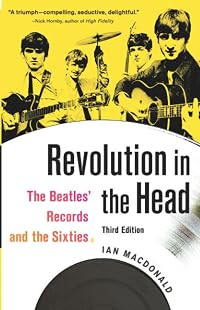
If this is the most effective way to get under the pasty skin of The Smiths, it seems perverse of Simon Goddard to follow the quasi-academic, analytical method, as he does in The Smiths: Songs That Saved Your Life (Reynolds & Hearn, £14.99). Every author who attempts to encapsulate a band in this way has a massive presence looking over his shoulder, in the form of Ian Macdonald, whose Revolution In The Head, covering the music of The Beatles, combines a musicologist's deconstruction technique with social and historical context. Goddard is keen to stress the link between the two books - he mentions (twice) that his book is inspired by Macdonald's, with the latter's blessing.
But this is where Songs That Saved Your Life falls down. Even if The Beatles had never done or said anything noteworthy beyond the grooves of their records, Macdonald would have had plenty to say about the music itself. Love or loathe them, they redefined the notion of how a pop record could sound, bringing in classical, jazz, and Indian musicians, and making crucial innovations in the use of tape manipulation and synthesisers.
While The Smiths came up with plenty of good tunes, and Johnny Marr is an inventive guitarist and studio technician, that's not what makes the band special. The key attraction (or, for the doubters, the main problem) has always been the personality of Morrissey, and his lush, moving, infuriating, indulgent, savage, daft lyrics. Presumably for copyright reasons, Goddard quotes only sparingly from Steven Patrick's gemstones, and is left to describe, time after time, Marr's multi-tracked fingerwork, with occasional nods to Rourke's and Joyce's dexterity. Not until their third (and penultimate) studio album did The Smiths make serious attempts to flesh out their sound, and then it was usually a case of Marr coming up with a new noise on his Emulator. And surely everybody on the planet knew already that the strings on "There Is A Light That Never Goes Out" aren't real?
Another problem with Goddard's approach is that it requires absolute precision. In most pop journalism, the occasional slip-up can be passed off as an appropriate avoidance of sterile perfection, like a broken string, or getting struck in the mouth by a pasty. But when you're digging this deep, and attempting to tell the definitive story, there's no room for even a minor goof. Misspelling John Gielgud's name (he's sampled on "Rubber Ring") is tolerable, as he's only really of peripheral interest; doing the same for Andrew Ridgeley is amusing, but sloppy; mangling the names of Morrissey's treasured girl group favourites, The Marvelettes and The Velvelettes, is out of order. Minor matters, perhaps, and ultimately the responsibility of the proofreader, but Goddard then goes on to slam the Very Best Of The Smiths compilation for "unforgivable typo errors". He proceeds to misuse that critical favourite, the word "antithesis", and also blithely dismisses as "urban myth" the idea that the "melting Walkman" line in "Bigmouth Strikes Again" was inspired by a Kenny Everett sketch, because cuddly Ken was "an aggressive supporter of Thatcher". As if indeterminate sexuality and confused political ideas ever stopped, say, Kenneth Williams or Oscar Wilde being suitable role models. Or, indeed, Morrissey himself... show less
...This tactic, of defining the music through the reactions of the faithful, is only truly successful when applied to a band whose appeal is cultish and selective. Unsurprisingly, The Smiths are a prime example of this. The 1995 book All Men Have Secrets was an alphabetical compilation of fans' jottings about almost every Morrissey/Marr composition. Not reviews, note - it was a mix of anecdotes, autobiographies, jokes, confessions, self-therapy, even obituaries for lamented friends, each sparked by a particular song. Like lyrics scrawled over an exercise book, they offer a profound, if elliptical, view on why some bands are important, whether you like it or not. Willy show more Russell's The Wrong Boy is also important; like The Catcher In The Rye being read aloud to a backing of "Oscillate Wildly", we see the decline and redemption of a moderately fucked-up but essentially decent teenager. The novelty is that the whole narrative is told through young Raymond's (presumably unsent) letters to Morrissey. Like an indie-pop variant of transactional analysis, the key to understanding either party is in the relationship between them, in this instance the one-way dynamic between the fan and the idol.
If this is the most effective way to get under the pasty skin of The Smiths, it seems perverse of Simon Goddard to follow the quasi-academic, analytical method, as he does in The Smiths: Songs That Saved Your Life (Reynolds & Hearn, £14.99). Every author who attempts to encapsulate a band in this way has a massive presence looking over his shoulder, in the form of Ian Macdonald, whose Revolution In The Head, covering the music of The Beatles, combines a musicologist's deconstruction technique with social and historical context. Goddard is keen to stress the link between the two books - he mentions (twice) that his book is inspired by Macdonald's, with the latter's blessing.
But this is where Songs That Saved Your Life falls down. Even if The Beatles had never done or said anything noteworthy beyond the grooves of their records, Macdonald would have had plenty to say about the music itself. Love or loathe them, they redefined the notion of how a pop record could sound, bringing in classical, jazz, and Indian musicians, and making crucial innovations in the use of tape manipulation and synthesisers.
While The Smiths came up with plenty of good tunes, and Johnny Marr is an inventive guitarist and studio technician, that's not what makes the band special. The key attraction (or, for the doubters, the main problem) has always been the personality of Morrissey, and his lush, moving, infuriating, indulgent, savage, daft lyrics. Presumably for copyright reasons, Goddard quotes only sparingly from Steven Patrick's gemstones, and is left to describe, time after time, Marr's multi-tracked fingerwork, with occasional nods to Rourke's and Joyce's dexterity. Not until their third (and penultimate) studio album did The Smiths make serious attempts to flesh out their sound, and then it was usually a case of Marr coming up with a new noise on his Emulator. And surely everybody on the planet knew already that the strings on "There Is A Light That Never Goes Out" aren't real?
Another problem with Goddard's approach is that it requires absolute precision. In most pop journalism, the occasional slip-up can be passed off as an appropriate avoidance of sterile perfection, like a broken string, or getting struck in the mouth by a pasty. But when you're digging this deep, and attempting to tell the definitive story, there's no room for even a minor goof. Misspelling John Gielgud's name (he's sampled on "Rubber Ring") is tolerable, as he's only really of peripheral interest; doing the same for Andrew Ridgeley is amusing, but sloppy; mangling the names of Morrissey's treasured girl group favourites, The Marvelettes and The Velvelettes, is out of order. Minor matters, perhaps, and ultimately the responsibility of the proofreader, but Goddard then goes on to slam the Very Best Of The Smiths compilation for "unforgivable typo errors". He proceeds to misuse that critical favourite, the word "antithesis", and also blithely dismisses as "urban myth" the idea that the "melting Walkman" line in "Bigmouth Strikes Again" was inspired by a Kenny Everett sketch, because cuddly Ken was "an aggressive supporter of Thatcher". As if indeterminate sexuality and confused political ideas ever stopped, say, Kenneth Williams or Oscar Wilde being suitable role models. Or, indeed, Morrissey himself... show less
Ratings
Members
- Recently Added By
Author Information
23 Works 539 Members
Simon Goddard is a regular contributor to Uncut magazine and various other music and cinema titles.
Classifications
- Genres
- Music, Nonfiction, General Nonfiction, Biography & Memoir
- DDC/MDS
- 782.421660922 — Arts & recreation Music Vocal music Secular forms of vocal music Songs General principles and musical forms Traditions of secular songs {genres} Rock songs modified standard subdivisions History, geographic treatment, biography Biography Collected biography
- LCC
- ML421 .S614 .G63 — Music Literature on music Literature on music History and criticism Biography
- BISAC
Statistics
- Members
- 259
- Popularity
- 125,663
- Reviews
- 2
- Rating
- (3.93)
- Languages
- English, German
- Media
- Paper, Ebook
- ISBNs
- 7
- UPCs
- 1
- ASINs
- 2