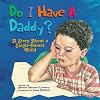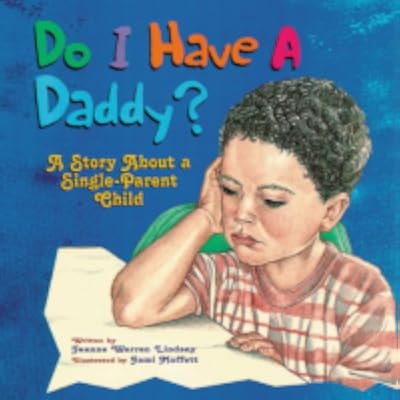
Do I Have a Daddy?: A Story About a Single-Parent Child
by Jeanne Warren Lindsay
On This Page
Description
A single mother explains to her son that his daddy left soon after he was born. Includes a section with suggestions for answering the question, "Do I have a daddy?"Tags
Recommendations




Member Reviews
Do I Have A Daddy? actually made me cry, but I enjoyed that fact. I really liked how real this book felt, from the crayon illustrations and the simple language tackling such a hard subject as being a child in a single parent household. The dialogue felt like something parents and children actually would say in a conversation about why the father is not around, and helps explain all of the different types of families there can be without saying anything that may be questionable or offensive. I also enjoyed that the children were of different races, and that the mother told the child that there is a chance she may get remarried and a chance she wont. The latter shows that the situation can be different for each family, and leaves it open show more ended and relatable to any readers in this situation. I feel that the overlying message is that every family type is perfectly fine, and it’s okay to ask questions like “where is daddy?”, because children need to know. show less
I liked this story. I really liked the illustrations throughout this story. The tears and frown on Erik’s face show how he feels because he does not have a dad. I also liked the dialogue between the mother and the son because it is sincere and honest. The mother says “Your daddy and I never lived together. We were very young when you were born. We weren’t ready to get married. But I wanted you very much. I was so happy to have you.” This dialogue from the mother to her son shows how much she loves him. The main idea of this story is that not everyone has two parents, but there are still people who love that child.
I believe the message of this story is that even if your family is not like everyone else's, that there are still many people who love you. Although many children may not understand at such as young age (Erik was in preschool), children may question when their lives are not the same as other children. As parents, it is necessary to be honest with your children, but also to remind them that they are still loved just as much!
I did enjoy this book because I felt some connections to parts of the story. In the beginning, Erik was playing with a friend when she began to taunt him for not having a daddy. He became upset and ran home to his mother and asked her "Do I have a daddy?". Erik was being raised by a single mother, which I sometimes show more felt was the case with me. Although my father was in my life, my parents separated when I was only 6 years old. My mother did a lot of the raising of my sister and I. I sometimes questioned my mother about why my father and her weren't together, just as Erik questioned his mom in the story as to why she was never married to his father.
Another thing I enjoyed about this story was that I felt the characters were very well developed. The reader felt the sadness in Erik's voice when he asked his mom "Do I have a daddy?". I could feel the sympathy in his mothers response when she tried to explain that "everyone has a father", although his was not in his life. However, the story still ended on a happy note when she told Erik that she loved him enough for two parents.
Lastly, I liked the language used in this book. I feel that this topic is a lot more common among children than people like to believe. The author did a very good job at using simple words to still convey the same point. A good example of this was toward the end when Erik's mom was telling him that he could have a new daddy one day. "You might have a different daddy someday. If I get married, the man I marry will be your daddy, too". All of the words can be easily replaced with more complex words, but the author understood that the audience was for small children and used the appropriate language to still get across the mood. show less
I did enjoy this book because I felt some connections to parts of the story. In the beginning, Erik was playing with a friend when she began to taunt him for not having a daddy. He became upset and ran home to his mother and asked her "Do I have a daddy?". Erik was being raised by a single mother, which I sometimes show more felt was the case with me. Although my father was in my life, my parents separated when I was only 6 years old. My mother did a lot of the raising of my sister and I. I sometimes questioned my mother about why my father and her weren't together, just as Erik questioned his mom in the story as to why she was never married to his father.
Another thing I enjoyed about this story was that I felt the characters were very well developed. The reader felt the sadness in Erik's voice when he asked his mom "Do I have a daddy?". I could feel the sympathy in his mothers response when she tried to explain that "everyone has a father", although his was not in his life. However, the story still ended on a happy note when she told Erik that she loved him enough for two parents.
Lastly, I liked the language used in this book. I feel that this topic is a lot more common among children than people like to believe. The author did a very good job at using simple words to still convey the same point. A good example of this was toward the end when Erik's mom was telling him that he could have a new daddy one day. "You might have a different daddy someday. If I get married, the man I marry will be your daddy, too". All of the words can be easily replaced with more complex words, but the author understood that the audience was for small children and used the appropriate language to still get across the mood. show less
In today's society, many children live in single-parent homes. Whether it be the mother or the father who is absent from a child's life, it is becoming more and more common that children only have one parent. In this particular story, Erik's father left when he was very young and he is now being raised by his mother. What I enjoyed most about this story was the open dialogue between Erik and his mother. As Erik questions his mother as to why he does not have a daddy, she responds by saying, "We weren't ready to get married. But I wanted you very much. I was so happy to have you.” The open conversation and honesty between Erik and his mother shows what a close relationship they have with one another and how much his mother truly loves show more him. I also very much enjoyed the illustrations throughout the book. They capture the true emotions of both Erik and his mother as they talk about why Erik does not have a daddy, which strengthens the message of the story to the reader. The big idea of this story is that although all families do not fit the "norm" of having both a mother and a father present, it is still important to enjoy and be grateful for the immediate and extended family that one does have and for children to know they are still loved and cared for regardless of the situation. show less
I really enjoyed reading Do I Have a Daddy? Two reasons I liked the book are the extensive use of dialogue and the illustrations. The dialogue between the mother and son is extremely open and honest. The mother answers all of her son’s questions about where his father is. She tells her son, “We weren’t ready to get married. But I wanted you very much.” I think the honesty that the mother has towards her son is commendable and touching. I also loved that the illustrations were all drawings. Each drawing captured the emotions of both the little boy and his mother beautifully. The page where the little boy asks, “Where is my Daddy?” is accompanied by a large drawing of his face crying. This image is very realistic and show more emotional. The main message of this book is that it is okay if you do not have a dad around. You need to enjoy and be grateful for the relationships that you do have and for the people who love you. show less
Summary: "Do I Have a Daddy?: A Story About a Single Parent Child" tells the story of a boy named Erik who is playing with his friend named Jennifer. When there is an accident and Jennifer is hurt, she gets mad at Erik and taunts him about not having a father. As a result, Erik leaves Jennifer and talks to his mother about where his father is. This leads to a conversation between Erik and his mother where she answers all his questions about his father. The mother explains to Erik that he has a father but he is not around. She tries to explain to him that his father was around when he was young but he left and it had nothing to do with anything Erik did. Erik's mother also explains to him that there are all kinds of daddies and one day show more he may get a new daddy if she gets married. Lastly, Erik mother suggests that he should start hanging out with the other men in his life like his Grandpa and Uncle Bob, which he does.
Review: The central message of this story is that there are all kinds of daddies in the world. Some dads may go away and not see their children while others may live with their children and take care of them. This book tries to display a conversation between a mother and son where the mother is explaining to him where his father is and why he is not around. In my opinion, I thought the book was honest and straight to the point when discussing absent fathers while saying it delicately for a child to understand. For example, Erik asks his mother "Will my daddy come back?" She replies "No I don't think so". Even though the mother seen that her child wants a daddy who is always around, she honestly tells him that his father will probably never come back. Also, I like how the book had a section in the back for single parents that explained how to deal with real life situations of a child asking about their absent father and other topics such as a parent's own feelings and when is the "right" time to talk. I thought it was a great idea for the book to be for both adults and children. show less
Review: The central message of this story is that there are all kinds of daddies in the world. Some dads may go away and not see their children while others may live with their children and take care of them. This book tries to display a conversation between a mother and son where the mother is explaining to him where his father is and why he is not around. In my opinion, I thought the book was honest and straight to the point when discussing absent fathers while saying it delicately for a child to understand. For example, Erik asks his mother "Will my daddy come back?" She replies "No I don't think so". Even though the mother seen that her child wants a daddy who is always around, she honestly tells him that his father will probably never come back. Also, I like how the book had a section in the back for single parents that explained how to deal with real life situations of a child asking about their absent father and other topics such as a parent's own feelings and when is the "right" time to talk. I thought it was a great idea for the book to be for both adults and children. show less
Summary:
This story is about a young boy who grows up without a father and one day become curious about him. He realizes that he’s never seen or spent time with his father and begins to question his mother about his whereabouts. The little boy’s mother tries to explain why some families have both mommies and daddies and some just have one parent. Regardless, the mother explains that she will always love him and that one day he might have a father again. For now she explains that he can spend as much time as he wishes with his Uncle Bob and grandpa. The central message of this story is to help children understand why some kids grow up with one parent. It’s meant to show children that even if your only raised by one parent, that show more it’s ok and they still love you.
Comments (opinions/arguments):
I liked that this story was very simple and straight forward. I think it’s important to be honest with children when it comes to such a hard topic to discuss and this book was very honest and open. I also really like that this story is meant to help children understand that their not the only ones growing up and being raised by one parent. It’s meant to be relatable to children that grow up in different families and help them understand that it’s perfectly normal. I also liked that the mother suggested that the boy spend more time with his uncle and grandfather because they could serve as male role models in his life. This book also offers great information and advice for parents in the back of the book. It offers information about divorced parents, never-married parents, about being honest with your children, how to approach it positively, and how to handle absent parents. show less
This story is about a young boy who grows up without a father and one day become curious about him. He realizes that he’s never seen or spent time with his father and begins to question his mother about his whereabouts. The little boy’s mother tries to explain why some families have both mommies and daddies and some just have one parent. Regardless, the mother explains that she will always love him and that one day he might have a father again. For now she explains that he can spend as much time as he wishes with his Uncle Bob and grandpa. The central message of this story is to help children understand why some kids grow up with one parent. It’s meant to show children that even if your only raised by one parent, that show more it’s ok and they still love you.
Comments (opinions/arguments):
I liked that this story was very simple and straight forward. I think it’s important to be honest with children when it comes to such a hard topic to discuss and this book was very honest and open. I also really like that this story is meant to help children understand that their not the only ones growing up and being raised by one parent. It’s meant to be relatable to children that grow up in different families and help them understand that it’s perfectly normal. I also liked that the mother suggested that the boy spend more time with his uncle and grandfather because they could serve as male role models in his life. This book also offers great information and advice for parents in the back of the book. It offers information about divorced parents, never-married parents, about being honest with your children, how to approach it positively, and how to handle absent parents. show less
Members
- Recently Added By
Author Information
25 Works 500 Members
Some Editions
Classifications
- Genres
- Picture Books, Children's Books
- DDC/MDS
- 306.85 — Society, government, & culture Social sciences, sociology & anthropology Social Behavior - Dating, Marriage, Divorce Marriage, partnerships, unions; family Family
- LCC
- HQ777.4 .L56 — Social sciences The family. Marriage, Women and Sexuality The Family. Marriage. Women The family. Marriage. Home
- BISAC
Statistics
- Members
- 208
- Popularity
- 157,047
- Reviews
- 86
- Rating
- (4.16)
- Languages
- English, Spanish
- Media
- Paper
- ISBNs
- 8
- ASINs
- 2