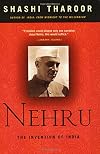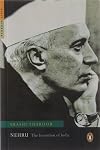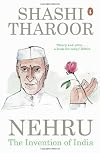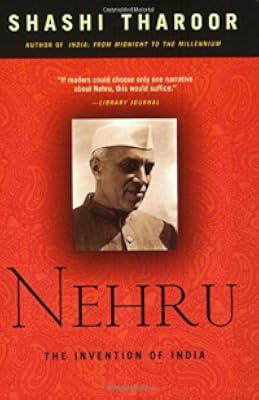
Nehru: The Invention of India
by Shashi Tharoor
On This Page
Description
"Born into a wealthy, politically influential Indian family in the waning years of the Raj, Jawaharlal Nehru was raised, under his father's careful guidance, on Western secularism and the humanist ideas of the Enlightenment. But it was not until he met Gandhi in 1916 that Nehru was transformed from an uninspired student into a fiery and motivated activist. The theories of democracy, human dignity, and self-determination from his student days became ideals to fight and live for. In Nehru and show more Gandhi, India found an invincible team - a spiritual father who could move millions and a political tactician who could galvanize them into action. Together, they led the nonviolent struggle for India's independence, a struggle that wasn't won until 1947. But neither Nehru nor Gandhi could prevent the horrific price for independence: partition." "In this fascinating account of an extraordinary life and career, Shashi Tharoor, eminent United Nations diplomat and author of India: From Midnight to the Millennium, traces Nehru's development from privileged child, posturing young nationalist, and valiant fighter for independence, to unchallengeable prime minister and global statesman. Tharoor casts an unflinching eye on Nehru's heroic efforts for, and stewardship of, independent, India and gives us a careful appraisal of his legacy to the world."--Jacket. show lessTags
Recommendations





Member Reviews
Tharoor's biography of Nehru starts out a bit slow, but ends as an engaging meditation on the life of one of India's founding fathers. Tharoor does a thorough job chronicling Nehru's early years as a student in England and as a member of the Indian independence movement. At times, this part of the book moves a bit slowly and Tharoor often assumes too much knowledge of people, places, and events (at least he assumes too much from me, a Westerner). As a result, the earlier chapters become a somewhat mind-numbing collection of dates and events. When the author gets to Nehru's years in the Republic, however, he gets on more solid footing and does an excellent job of outlining Nehru's achievements and shortcomings. Indeed, Tharoor is show more darn-near brilliant in analyzing Nehru's role in Indian history. Jawaharlal comes across as a complex figure indeed, alternating between haughty English old boy and kindly patron of democracy. The best part of the book for me is toward the end where Tharoor shows how Nehru instilled a commitment to democracy in the Indian people as well as a commitment to tolerance and secularism. I think Tharoor's critique of Nehru's economic policy as too socialist and statist is fundamentally correct, but it's also comes across as a touch too neoliberal. In all, this is a great introduction to India's first PM. I don't suspect the volume broke any new ground in terms of research, but it's set the stage for me to learn more about this, one of the greatest of all modern Indian leaders. show less
Another well written piece from this author. Provides some detailed insights into the life of this great man. A truly international figure who left an indelible mark on both the Gloabal and National scenes. His enduring legacies that he has left this country are the democratic and secular fabric and ethos, his love for science and technology that resulted in the creation of the IITs, the space and nuclear programs and of course one we could have lived without, a moribund and anemic economy that limped along with a 3% growth rate.
Another well written piece from this author. Provides some detailed insights into the life of this great man. A truly international figure who left an indelible mark on both the Gloabal and National scenes. His enduring legacies that he has left this country are the democratic and secular fabric and ethos, his love for science and technology that resulted in the creation of the IITs, the space and nuclear programs and of course one we could have lived without, a moribund and anemic economy that limped along with a 3% growth rate.
Asia, biography, history, India, nonfiction, signed
A comienzos del siglo xx, pocos podían prever que el joven abogado indio jawaharlal nehru estaba llamado, junto con su maestro espiritual Mohandas Gandhi, a conducir a su país a la independencia del Imperio británico y a ser su primer ministro desde 1947, cuando India alcanzó la soberanía nacional, hasta su muerte. Sobre las ruinas del dominio inglés, Nehru tuvo que «inventar» un país en medio de feroces luchas religiosas y de atavismos sociales. En su denodado esfuerzo por imponer la modernidad y construir los cimientos de la mayor democracia del mundo, se convirtió en uno de los líderes internacionales más admirados y respetados del Tercer Mundo gracias a su política de no alineamiento y a su defensa del socialismo de show more corte democrático. show less
Aug 10, 2010Spanish
Ratings
Members
- Recently Added By
Lists

Best Biographies, Autobiographies and Memoirs
465 works; 160 members

Best Biographies
216 works; 24 members

All Things India
95 works; 21 members

Works Cited in The Life and Death of Democracy by John Keane
278 works; 1 member
Author Information

42+ Works 3,399 Members
Some Editions
Common Knowledge
- Canonical title
- Nehru: The Invention of India
- Original publication date
- 2003
- People/Characters
- Jawaharlal Nehru; Mohandas Gandhi; Indira Gandhi; Muhammad Ali Jinnah; Motilal Nehru
- Important places
- India
- Important events
- Indian independence
Classifications
Statistics
- Members
- 159
- Popularity
- 205,799
- Reviews
- 5
- Rating
- (3.33)
- Languages
- English, French, German, Spanish
- Media
- Paper, Ebook
- ISBNs
- 12
- ASINs
- 2