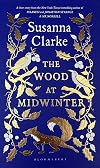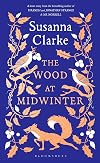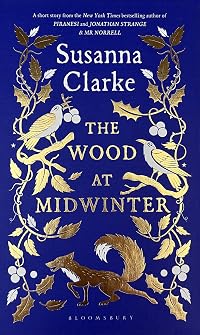
The Wood at Midwinter
by Susanna Clarke
On This Page
Description
"Nineteen-year-old Merowdis Scot is an unusual girl. She can talk to animals and trees--and she is only ever happy when she is walking in the woods. One snowy afternoon, out with her dogs and Apple the pig, Merowdis encounters a blackbird and a fox. As darkness falls, a strange figure enters in their midst--and the path of her life is changed forever." --Back cover.Tags
Recommendations





Member Reviews
This was the perfect follow-up to the previous story I read, Blackwood's The Man Whom the Trees Loved. Another tale in which the forest is alive and holds communion with souls sensitive to its slow, vital energy.
In The Wood in Midwinter, Merowdis is the beloved sister of Ysolde, an unearthly child whose connection to animals and the woods is discouraged by her parents, and enabled by her sister. The story is a gothic fairytale full of Jungian archetypes, interweaving Christian and pagan mythic elements: an ideal Yuletide tale.
Clarke's story is shorter than I'd imagined as, in addition to its copious illustrations and large font, it has an afterword in which she speaks of her creative process, and the influences out of which she spun show more both this work and Piranesi. If I thought I couldn't love Clarke more, I was wrong, as she tells of her lifelong love of Kate Bush's music (and the album 50 Words for Snow is a direct influence here), and that Merowdis's saintly demeanor is partly explained as an aspect of the neurodivergence of Clarke's father.
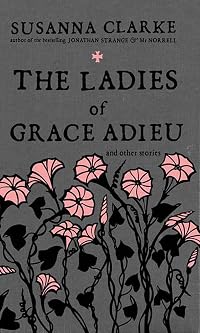
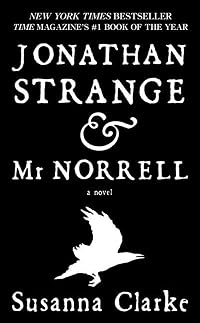
On its own, it is an interesting and atmospheric, if small, tale, but taken in context of Clarke's other works, it has a larger dimension. Sit it alongside the stories in The Ladies of Grace Adieu, and it becomes a vibrant miniature, or another silver thread in the tapestry of the world of Jonathan Strange and Mister Norrel. 5❄️ show less
In The Wood in Midwinter, Merowdis is the beloved sister of Ysolde, an unearthly child whose connection to animals and the woods is discouraged by her parents, and enabled by her sister. The story is a gothic fairytale full of Jungian archetypes, interweaving Christian and pagan mythic elements: an ideal Yuletide tale.
Clarke's story is shorter than I'd imagined as, in addition to its copious illustrations and large font, it has an afterword in which she speaks of her creative process, and the influences out of which she spun show more both this work and Piranesi. If I thought I couldn't love Clarke more, I was wrong, as she tells of her lifelong love of Kate Bush's music (and the album 50 Words for Snow is a direct influence here), and that Merowdis's saintly demeanor is partly explained as an aspect of the neurodivergence of Clarke's father.
On its own, it is an interesting and atmospheric, if small, tale, but taken in context of Clarke's other works, it has a larger dimension. Sit it alongside the stories in The Ladies of Grace Adieu, and it becomes a vibrant miniature, or another silver thread in the tapestry of the world of Jonathan Strange and Mister Norrel. 5❄️ show less
The Wood at Midwinter by Susanna Clarke is a beautifully crafted and illustrated book. I was completely captivated by the magical storytelling—each word felt like a portal, transporting me straight into this enchanting world. Although the narrative is short, it is filled with so much wonder and charm.
I love Susanna Clarke. I've read Jonathan Strange & Mr Norrell and Piranesi twice, and enjoyed the The Ladies of Grace Adieu and Other Stories. This one... not so much. Far slenderer than I had hoped, and when I got to the part where Merowdis starts to talk about how desperately she yearned for a child of her own, born in midwinter without a husband, I thought, oh, please, not a Christian allegory of some kind. Please, no. Well, it isn't, quite. But too close for comfort.
Personally, I yearned for even a very small serving of Clarke's exuberant, funny, expansive sensibility and imagination, and it's not much in evidence here. The epilogue is the best part, where she muses on how this story came to her. I kind of wish she had waited till show more it bloomed more fully before publishing this very slight, lots-of-white-space, *almost* kid-lit-fairy-tale. Still, I don't mind spending a few bucks to support and thank her for the great pleasures I've already had from her. And will donate this one to my local library. show less
Personally, I yearned for even a very small serving of Clarke's exuberant, funny, expansive sensibility and imagination, and it's not much in evidence here. The epilogue is the best part, where she muses on how this story came to her. I kind of wish she had waited till show more it bloomed more fully before publishing this very slight, lots-of-white-space, *almost* kid-lit-fairy-tale. Still, I don't mind spending a few bucks to support and thank her for the great pleasures I've already had from her. And will donate this one to my local library. show less
Merowdis Scot's family struggles to understand her, and she has nearly given up on bridging the distance between them, even with her favorite sister Ysolde, who thinks Merowdis is a saint ("You have visions You can't see any difference between animals and people...And you're really only happy when you're in church. Or in a wood"). It's in a wood, surrounded by animals both wild and domestic, that Merowdis makes a wish for a child of her own, and receives, in answer, a bear cub.
"Sometimes new stories are just old stories badly remembered." (from the Author's Note)
See also: The Skull by Jon Klassen, Lyra's Oxford by Philip Pullman
"Sometimes new stories are just old stories badly remembered." (from the Author's Note)
See also: The Skull by Jon Klassen, Lyra's Oxford by Philip Pullman
This is a nicely illustrated book with a beautiful cover that absolutely never would have been published if it hadn't been written by the author of Jonathan Strange and Mr. Norrell. It's about 3,000 words long and I read it in a quarter of an hour, including the time I spent looking at the drawings. This is maybe more vignette than short story, more twee than it is whimsical, with little craft to the prose and no real heft to what it's saying. There's the kernel of an interesting story here, but it needed a lot more development. It's tempting to categorise this as a cash grab on the part of Susanna Clarke and/or her publishers—which, given the fairly explicit Christian themes, seems kind of tacky? On the whole, a disappointment.
An unfortunately short, short story that would fit right in with Clarke's The Ladies of Grace Adieu and Other Stories collection. Like some other reviewers and readers, I was hoping for a longer book with a more direct connection to Clarke's main novel. Instead, "The Wood at Midwinter" is its own insular thing, akin to one of the many footnote stories found in JS&MN. In fact, Clarke confirms that very thing in this short story's afterword:
At any rate, I'm glad to see something new from Clarke, even if it's not the larger work that I've been hoping for. This is very much a Pagan-inspired fairy tale about curiosity and freedom, and Clarke's whimsical language and wordplay make this an enjoyable read. The stylized artwork is in tune with the writing, elevating it in an apt way. In a way, this book scratches the "footnote story" itch that Clarke's first novel left me with. Again, I hope to one day see a longer story from Clarke, but this is also satisfying in its own way. show less
"I am fairly certain that Jonathan Strange and Mr Norrell contained at one time a long footnote with a careful explanation of Merowdis’s city – the city that is near the wood, the city where she lives. I had intended to refer you to that footnote, so that you could find out all about it (how it isshow more
very beautiful, how it was built in the twelfth century by John Uskglass, the King of the North, and William Lanchester, his chancellor, etc. etc.). But I cannot do that because the footnote has vanished. I imagine that some fairy has removed it for reasons of his or her own. (Fairies are like that.)"
At any rate, I'm glad to see something new from Clarke, even if it's not the larger work that I've been hoping for. This is very much a Pagan-inspired fairy tale about curiosity and freedom, and Clarke's whimsical language and wordplay make this an enjoyable read. The stylized artwork is in tune with the writing, elevating it in an apt way. In a way, this book scratches the "footnote story" itch that Clarke's first novel left me with. Again, I hope to one day see a longer story from Clarke, but this is also satisfying in its own way. show less
No notes. For what this is, it's perfect. What a lovely little story to read on a midwinter day (in my case, on Christmas morning while I waited for the rest of the household to rouse). Just delightful. I imagine Merowdis (the saint) and her bear cub... let me rephrase... I *choose* to imagine Merowdis (the saint) and her bear cub happy together in the woods. End of sentence. That's how I read this book. That's what I took away from it. Let's not think too much about what happened to Apple (the pig) without her saint to protect her.
Members
- Recently Added By
Published Reviews
ThingScore 100
«Midtvinterskogen» er akkurat så fortryllende og tidløs som en god julefortelling bør være. Den er tilsynelatende enkel og kan leses av både store og små, men leser du nøye, er det masse å bryne hodet på.
Fortellingen kan også hjelpe deg med å finne hvilepulsen i førjulsstria.
Fortellingen kan også hjelpe deg med å finne hvilepulsen i førjulsstria.
added by private library
Lists

Books Read in 2024
4,623 works; 126 members

Sandra's Wishlist
57 works; 1 member

2024-25 reading
36 works; 1 member

Books Read in 2025
4,091 works; 97 members
Author Information

21+ Works 44,912 Members
Some Editions
Awards and Honors
Awards
Notable Lists
Common Knowledge
- Original publication date
- 2024-10-20
- People/Characters
- Ysolde Scot; Merowdis Scot; Apple (pig); Pretty (dog); Amandier (dog)
- First words
- It was winter, just a few days before Christmas.
- Quotations
- Saints do shocking things. It's what makes them saints.
Sometimes new stories are just old stories badly remembered. - Last words
- (Click to show. Warning: May contain spoilers.)Her expression is fierce, but also triumphant.
- Original language
- English
- Canonical DDC/MDS
- 823.08766
Classifications
- Genres
- Fantasy, Fiction and Literature, General Fiction
- DDC/MDS
- 823.08766 — Literature & rhetoric English & Old English literatures English fiction By type Genre fiction Adventure fiction Speculative fiction Fantasy fiction
- LCC
- PR6103 .L375 .W66 — Language and Literature English English Literature 2001-
- BISAC
Statistics
- Members
- 901
- Popularity
- 29,857
- Reviews
- 43
- Rating
- (3.54)
- Languages
- English, Italian, Spanish
- Media
- Paper, Audiobook, Ebook
- ISBNs
- 11
- ASINs
- 5