On This Page
Description
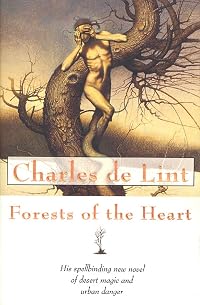
In the Old Country, they called them the Gentry: ancient spirits of the land, magical, amoral, and dangerous. When the Irish emigrated to North America, some of the Gentry followed...only to find that the New World already had spirits of its own, calledmanitou and other such names by the Native tribes. Now generations have passed, and the Irish have made homes in the new land, but the Gentry still wander homeless on the city streets. Gathering in the city shadows, they bide their time and show more dream of power. As their dreams grow harder, darker, fiercer, so do the Gentry themselves--appearing, to those with the sight to see them, as hard and dangerous men, invariably dressed in black. Bettina can see the Gentry, and knows them for what they are. Part Indian, part Mexican, she was raised by her grandmother to understand the spirit world. Now she lives in Kellygnow, a massive old house run as an arts colony on the outskirts of Newford, a world away from the Southwestern desert of her youth. Outsider her nighttime window, she often spies the dark men, squatting in the snow, smoking, brooding, waiting. She calls themlos lobos, the wolves, and stays clear of them--until the night one follows her to the woods, and takes her hand.... Ellie, an independent young sculptor, is another with magic in her blood, but she refuses to believe it, even though she, too, sees the dark men. A strange old woman has summoned Ellie to Kellygnow to create a mask for her based on an ancient Celtic artifact. It is the mask of the mythic Summer King--another thing Ellie does not believe in. Yet lack of belief won't dim the power of the mast, or its dreadful intent. Donal, Ellie's former lover, comes from an Irish family and knows the truth at the heart of the old myths. He thinks he can use the mask and the "hard men" for his own purposes. And Donal's sister, Miki, a punk accordion player, stands on the other side of the Gentry's battle with the Native spirits of the land. She knows that more than her brother's soul is at stake. All of Newford is threatened, human and mythic beings alike. Once again Charles de Lint weaves the mythic traditions of many cultures into a seamless cloth, bringing folklore, music, and unforgettable characters to life on modern city streets. show lessTags
Recommendations













Member Reviews
3½ stars. This entry in Charles de Lint's Newford series didn't sweep me away quite as much as the others I have read. I liked the main character, Bettina, who is a curandera raised in southern Arizona. But somehow the battle between the Irish Gentry versus the local manitou was not a battle between those two at all & I didn't care for the direction the book took. Maybe I just wasn't in the right mood for it at this time...
This is an inspiring and gritty adventure full of treks in to the otherworld and the spirits who inhabit both that world and this one. The beginning was a little slow for me, but once the characters started getting more intertwined with each other the stakes were raised. I really did not want to put it down toward the end.
De Lint's writing has a beautiful way of sandwiching the urban and the supernatural into a wonderful blend of reality. Many of his books are in the city of Newford that he's created. The characters begin as slightly connected and eventually are all dependent on one another on what boils down to a monster hunt (though it's much more complicated than that, especially on an emotional level). They are all very different show more with varying backgrounds, a couple immigrants from Ireland with harsh histories, a recently broken-hearted music shop owner, a desert curandera (my personal favorite character), and a variety of spirits and friends.
On a personal note, the character from the desert made me realize the things that I miss in New Mexico. How the desert speaks to you differently than anywhere else can. It is also a story of forgiveness and healing - which seems to be a common thread in de Lint's writing as far as I can tell. But I'm not complaining. It struck a chord with me, and I ran back to the store for another of his books: The Onion Girl. show less
De Lint's writing has a beautiful way of sandwiching the urban and the supernatural into a wonderful blend of reality. Many of his books are in the city of Newford that he's created. The characters begin as slightly connected and eventually are all dependent on one another on what boils down to a monster hunt (though it's much more complicated than that, especially on an emotional level). They are all very different show more with varying backgrounds, a couple immigrants from Ireland with harsh histories, a recently broken-hearted music shop owner, a desert curandera (my personal favorite character), and a variety of spirits and friends.
On a personal note, the character from the desert made me realize the things that I miss in New Mexico. How the desert speaks to you differently than anywhere else can. It is also a story of forgiveness and healing - which seems to be a common thread in de Lint's writing as far as I can tell. But I'm not complaining. It struck a chord with me, and I ran back to the store for another of his books: The Onion Girl. show less
The title's a bit lame, but I enjoyed the story. It was a typical de Lint with a cast of characters from different walks of life. This one focused on a clash of supernatural beings - and journeys into a spirit world where the homeless Irish hard men and looking to hone in on the Manitous' territory. Much of it takes place during that crazy ice storm back in '98 in the usual city of Newford.
I've read some of De Lint's other books. Jack of Kinrowan and Into the Green. I enjoyed those two books but never really pursued his other works. Well I saw Forests of the Heart lying on a table in the book store - read the back cover, was intrigued by the hispanic protagonist (I'm Latina) and when I got home I started to read it. I finished it at three in the morning. And then I dreamt of the characters; and I didn't mind their visits. It's an amazing book- left me speechless. My only choice was to mail it directly to a friend who was also struck by the sheer brilliance of the writing. It's poetry really. Each word weighed out carefully like gold. The plot you can read in the main review to the book, but the power of the words are what show more draws you down into his world. A lovely book. Left me feverishly remembering the few other books that affected me that way: Tam Lin by Pamela Dean; Stranger in a Strange Land by Robert A. Heinlein; Sometimes After Sunset by Tanith Lee; American Gods by Neil Gaiman... Dream Well, you'll be with good company. show less
'So these wolves that come to our yard,' Bettina tried. 'En otros palabras - in other words. They are evil?'
Nuala shook her head. 'Not as you're using the word. Long ago, they followed the Irish emigrants to the New World, but this land already had its own guardian spirits. So there was no place for them. But here they remain all the same. They are homeless, unbound, and they neither feel nor think the way we do. When the Gentry gather in a pack they can be like a wild hunt, ravening and hungry for blood, but even on an individual basis, they're not to be trusted.'
There are a couple of very stupid people in this book. For all their knowledge about the Gentry and other fairy folk, they have not grasped this one basic truth about the show more inhabitants of the spirit world. They are dangerous and untrustworthy and anyone who thinks that they will stick to their side of a bargain is a fool. Miki understands this and I am sure that even Chantal, whose only knowledge of such things comes from fairy tales she was told as a child, would too, so why don't they?
Charles de Lint does irritate me quite a lot. In this book there is the way he has Bettina say a phrase in Spanish and immediately afterward repeat it in English, which gets tiresome quickly. And then there's the info dump about music since some of this book's characters work in a record shop. In the last book of his that I read the info dump was about guitar making since the protagonist was a luthier. But music and especially Celtic music seems to be an obsession of the author's. So your characters have great taste in music and are therefore cool and artistic and allowed to have contact with the spirit world. I get it! You can stop the constant name-dropping of musicians!
But the story was good, and I did enjoy it. show less
Nuala shook her head. 'Not as you're using the word. Long ago, they followed the Irish emigrants to the New World, but this land already had its own guardian spirits. So there was no place for them. But here they remain all the same. They are homeless, unbound, and they neither feel nor think the way we do. When the Gentry gather in a pack they can be like a wild hunt, ravening and hungry for blood, but even on an individual basis, they're not to be trusted.'
There are a couple of very stupid people in this book. For all their knowledge about the Gentry and other fairy folk, they have not grasped this one basic truth about the show more inhabitants of the spirit world. They are dangerous and untrustworthy and anyone who thinks that they will stick to their side of a bargain is a fool. Miki understands this and I am sure that even Chantal, whose only knowledge of such things comes from fairy tales she was told as a child, would too, so why don't they?
Charles de Lint does irritate me quite a lot. In this book there is the way he has Bettina say a phrase in Spanish and immediately afterward repeat it in English, which gets tiresome quickly. And then there's the info dump about music since some of this book's characters work in a record shop. In the last book of his that I read the info dump was about guitar making since the protagonist was a luthier. But music and especially Celtic music seems to be an obsession of the author's. So your characters have great taste in music and are therefore cool and artistic and allowed to have contact with the spirit world. I get it! You can stop the constant name-dropping of musicians!
But the story was good, and I did enjoy it. show less
culture clash - but not SF, nor HF - could be interesting...
but will I be lost in Newford, this being #7?
---
Well. I got to p. 110, more than 1/4 through, but cannot mark it as dnf because that would imply I had a problem with it. I didn't. I found it engaging, and the jacket blurb sufficient to keep the characters straight. It does seem to stand alone sufficiently, too.
It's smart, and seems respectful of the different traditional cultures upon which it draws. I don't mind that it's a bit old (CDs and payphones). I believe that I highly recommend it to ppl who like modern fantasy, for example fans of [b:Tam Lin|763538|Tam Lin|Pamela show more Dean|https://i.gr-assets.com/images/S/compressed.photo.goodreads.com/books/1387754767l/763538._SY75_.jpg|49879]. Esp. those interested in reading about musicians and artists.
But I got to the point where the 'horror' aspect is starting to come through, and I realized that I just am not into this sort of mythological stuff. So I'm going to let it go back to the library. November 2021. Onward up Mt. TBR! show less
but will I be lost in Newford, this being #7?
---
Well. I got to p. 110, more than 1/4 through, but cannot mark it as dnf because that would imply I had a problem with it. I didn't. I found it engaging, and the jacket blurb sufficient to keep the characters straight. It does seem to stand alone sufficiently, too.
It's smart, and seems respectful of the different traditional cultures upon which it draws. I don't mind that it's a bit old (CDs and payphones). I believe that I highly recommend it to ppl who like modern fantasy, for example fans of [b:Tam Lin|763538|Tam Lin|Pamela show more Dean|https://i.gr-assets.com/images/S/compressed.photo.goodreads.com/books/1387754767l/763538._SY75_.jpg|49879]. Esp. those interested in reading about musicians and artists.
But I got to the point where the 'horror' aspect is starting to come through, and I realized that I just am not into this sort of mythological stuff. So I'm going to let it go back to the library. November 2021. Onward up Mt. TBR! show less
Set in de Lint's imaginary modern American city of Newford (which seems a lot like Minneapolis to me, from the perspective of someone who's never been to Minneapolis...(it's cold, and it's not coastal)) tongue.gif
I have a feeling some of the characters have appeared in de Lint's other books as well, but I don't remember clearly enough to vouch for it.
Here we meet Bettina, a Mexican/Native American who's been brought up in the mystic healing traditions by her grandmother, and who has long had an ambivalent relationship with dog spirits.
Now, in Newford, a group of toughs who spend their time at the Irish pub, listening to Celtic music, drinking Guinness and beating people up, may be more than they seem... the 'hard men' are also known as show more 'los lobos' - the wolves, and they may be following an agenda of their own... a plan which may cast the spirit world into turmoil.
Bettina knows she must deal with the situation in some way...
Into this mess are (mostly unwillingly) dragged: Ellie, a sculptor and volunteer who works with the homeless; her volunteer partner, Tommy, an ex-alcoholic Native American; Ellie's ex-, Donal, a grumpy and depressed Irishman, Donal's sister, Miki, a cheery hippie-punk musician, her boss at a record store, Hunter; Miki's co-worker, the goth chick Fiona... and an assortment of other characters.
The plot centers around the 'hard men' and an art commission offered to Ellie that gets her into a prestigious artist's colony - but although the plot is fine, the book is more about spending time in de Lint's world, with his characters. He's consistently excellent as a writer at creating a social circle of people that by the end of a book, you feel you could be hanging out with later...
That said, I also tend to feel that he tries just a tiny bit too hard to have his characters be 'hip,' to include representatives of disenfranchised or marginalized groups, and to include plugs for musical groups that he likes. That last is particularly problematic - a writer can talk about the emotional impact of a song on his characters, but if he insists on *telling* you that the song is by Ani DiFranco, and you happen to personally think that Ani DiFranco is whiny and irritating, it just rather spoils the effect.
I have to also note, however, that de Lint does a much better job than nearly anyone else I can think of at writing fiction involving different ethnic spiritual traditions, and not having it come off as either cheesy or exploitative. show less
I have a feeling some of the characters have appeared in de Lint's other books as well, but I don't remember clearly enough to vouch for it.
Here we meet Bettina, a Mexican/Native American who's been brought up in the mystic healing traditions by her grandmother, and who has long had an ambivalent relationship with dog spirits.
Now, in Newford, a group of toughs who spend their time at the Irish pub, listening to Celtic music, drinking Guinness and beating people up, may be more than they seem... the 'hard men' are also known as show more 'los lobos' - the wolves, and they may be following an agenda of their own... a plan which may cast the spirit world into turmoil.
Bettina knows she must deal with the situation in some way...
Into this mess are (mostly unwillingly) dragged: Ellie, a sculptor and volunteer who works with the homeless; her volunteer partner, Tommy, an ex-alcoholic Native American; Ellie's ex-, Donal, a grumpy and depressed Irishman, Donal's sister, Miki, a cheery hippie-punk musician, her boss at a record store, Hunter; Miki's co-worker, the goth chick Fiona... and an assortment of other characters.
The plot centers around the 'hard men' and an art commission offered to Ellie that gets her into a prestigious artist's colony - but although the plot is fine, the book is more about spending time in de Lint's world, with his characters. He's consistently excellent as a writer at creating a social circle of people that by the end of a book, you feel you could be hanging out with later...
That said, I also tend to feel that he tries just a tiny bit too hard to have his characters be 'hip,' to include representatives of disenfranchised or marginalized groups, and to include plugs for musical groups that he likes. That last is particularly problematic - a writer can talk about the emotional impact of a song on his characters, but if he insists on *telling* you that the song is by Ani DiFranco, and you happen to personally think that Ani DiFranco is whiny and irritating, it just rather spoils the effect.
I have to also note, however, that de Lint does a much better job than nearly anyone else I can think of at writing fiction involving different ethnic spiritual traditions, and not having it come off as either cheesy or exploitative. show less
Members
- Recently Added By
Lists

Saiyuki Reload Best Summer Reads
159 works; 2 members
Author Information

196+ Works 43,464 Members
Charles de Lint, an extraordinarily prolific writer of fantasy works, was born in the Netherlands in 1951. Due to his father's work as a surveyor, the family lived in many different places, including Canada, Turkey, and Lebanon. De Lint was influenced by many writers in the areas of mythology, folklore, and science fiction. De Lint originally show more wanted to play Celtic music. He only began to write seriously to provide an artist friend with stories to illustrate. The combination of the success of his work, The Fane of the Grey Rose (which he later developed into the novel The Harp of the Grey Rose), the loss of his job in a record store, and the support of his wife, Mary Ann, helped encourage de Lint to pursue writing fulltime. After selling three novels in one year, his career soared and he has become a most successful fantasy writer. De Lint's works include novels, novellas, short stories, chapbooks, and verse. He also publishes under the pseudonyms Wendelessen, Henri Cuiscard, and Jan Penalurick. He has received many awards, including the 2000 World Fantasy Award for Best Collection for Moonlight and Vines, the Ontario Library Association's White Pine Award, as well as the Great Lakes Great Books Award for his young adult novel The Blue Girl. His novel Widdershins won first place, Amazon.com Editors' Picks: Top 10 Science Fiction & Fantasy Books of 2006. In 1988 he won Canadian SF/Fantasy Award, the Casper, now known as the Aurora for his novel Jack, the Giant Killer. Also, de Lint has been a judge for the Nebula Award, the World Fantasy Award, the Theodore Sturgeon Award and the Bram Stoker Award. (Bowker Author Biography) show less
Some Editions
Awards and Honors
Awards
Distinctions
Notable Lists
Series

Belongs to Publisher Series
Varraku F-sari (93)
Common Knowledge
- Canonical title
- Forests of the Heart
- Original publication date
- 2000
- Important places
- Newford (fictitious city)
- Epigraph
- In the middle of the journey of our life, I came to myself within a dark wood where the straight way was lost.
---Dante Alighieri, from The Devine Comedy
El lobo pierde los dientes mas no las mientes
The wolf loses his teeth, not his nature.
--Mexican-American saying - Dedication
- for Karen Shaffer and Charles Vess
The stars shine brighter where you walk - First words
- Like her sister, Bettina San Miguel was a small, slender woman in her mid-twenties, dark-haired and darker-eyed; part Indio, part Mexican, part something older still.
- Last words
- (Click to show. Warning: May contain spoilers.)The story has ended.
- Original language
- English
Classifications
Statistics
- Members
- 1,356
- Popularity
- 17,668
- Reviews
- 16
- Rating
- (3.98)
- Languages
- English, Estonian
- Media
- Paper, Audiobook, Ebook
- ISBNs
- 13
- ASINs
- 4