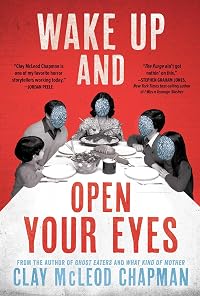
Wake Up and Open Your Eyes
by Clay Chapman
On This Page
Description
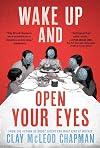
"From master of horror Clay McLeod Chapman, a relentless social horror novel about a family on the run from a demonic possession epidemic that spreads through media. Noah has been losing his polite Southern parents to far-right cable news for years, so when his mother leaves him a voicemail warning him that the "Great Reawakening" is here, he assumes it's related to one of her many conspiracy theories. But when his phone calls go unanswered, Noah makes the drive from Brooklyn to Richmond, show more Virginia. There, he discovers his childhood home in shambles and his parents locked in a terrifying trancelike state in front of the TV. Panicked, Noah attempts to snap them out of it. Then Noah's mother brutally attacks him. But Noah isn't the only person to be attacked by a loved one. Families across the country are tearing each other apart -- literally -- as people succumb to a form of possession that gets worse the more time they spend glued to a screen. In Noah's Richmond-based family, only he and his young nephew Marcus are unaffected. Together, they must race back to the safe haven of Brooklyn -- but can they make it before they fall prey to the violent hordes? This ambitious, searing novel from one of horror's modern masters holds a mirror to our divided nation, and will shake readers to the core."-- show lessTags
Recommendations



Member Reviews
Clay McLeod Chapman’s *Wake Up and Open Your Eyes* is a chilling and relevant horror novel that taps into the anxieties of our modern, hyper-connected world. The story follows Noah, who, after receiving increasingly frantic messages from his mother, journeys back to his childhood home in Virginia to find his parents in the throes of a bizarre, media-induced possession. This sets off a desperate race against time as Noah tries to understand what's happening and how to protect himself and his family from a rapidly spreading phenomenon.
Chapman masterfully crafts a narrative that is both terrifying and thought-provoking. The horror in *Wake Up and Open Your Eyes* isn't derived from jump scares or supernatural monsters, though there are show more monstrous elements. Rather, it’s rooted in the insidious nature of misinformation, the allure of online echo chambers, and the very real dangers of unchecked groupthink. The novel presents a world where people are becoming “possessed” by the media they consume, their identities and personalities twisted by a constant barrage of sensationalized news, wellness gurus, and conspiracy theories.
The narrative is divided into three sections – “Sleeper Cells,” “Recruits,” and “Holy War” – each charting the progression of the phenomenon. This structure allows Chapman to explore the many different ways that this possession takes hold. We see characters like Devon, a mother who becomes obsessed with online wellness influencers, and Caleb, a teenager drawn into a dangerous online community. Through these characters, Chapman explores the vulnerability of individuals searching for meaning and connection in a world saturated with information. These different stories all contribute to the overall sense of dread and unease as the infection spreads from person to person.
Chapman’s writing style is gripping and visceral, with moments of stark, unflinching horror mixed with dark humor and social commentary. He does not shy away from depicting the grotesque nature of the possession. The author also explores the psychological impact on the characters who are trying to resist this force. The sense of helplessness and confusion felt by Noah, in particular, makes the narrative all the more unsettling.
The characters in *Wake Up and Open Your Eyes* are compelling and complex. Noah is a relatable protagonist, a man trying to make sense of the world around him as it crumbles into chaos. His relationships with his family, including his wife Alicia, and daughter Kelsey, add emotional depth to the story. We see him struggle with the loss of his parents, while his memories of them as he grew up in Virginia are juxtaposed with the monsters they have become. The supporting characters, such as Devon, her husband Asher, and their son Caleb, are equally well-developed, each with their own internal conflicts and struggles. Their stories intertwine and overlap with Noah's and each other's, building a powerful sense of mounting dread.
* **Themes and Social Commentary**: The novel’s exploration of social media and its impact on society is particularly insightful. Chapman highlights the dangers of blindly following online trends and the way that algorithms can manipulate our beliefs and behaviors. The way in which the characters in the novel seek out validation and community online resonates with our own experiences. The novel serves as a warning about the importance of critical thinking and independent thought, especially when it comes to information we find online. The book also grapples with the current political climate, referencing protests and riots. It also highlights how easily people can become radicalized by a constant barrage of extreme content.
* **Horror Elements**: Chapman effectively uses body horror to amplify the sense of unease and disgust. The descriptions of the possessed are both terrifying and disturbing, often involving graphic depictions of bodily decay and transformation. This element enhances the overall horror experience, creating a sense of physical as well as psychological dread. Additionally, the book makes use of the concept of a repeating, insidious song that appears to have some power over the possessed individuals.
* **Pacing and Structure:** The novel is well-paced, with the tension building steadily throughout. The three-part structure effectively divides the narrative, allowing for exploration of the multiple perspectives of the unfolding chaos. The inclusion of "video" transcripts within the novel adds a found-footage element that heightens the sense of realism and immediacy, mirroring our real-world consumption of online content.
* **Conclusion**: *Wake Up and Open Your Eyes* is a powerful and unsettling novel that will stay with you long after you’ve finished reading. It is a timely and relevant horror story that explores the darkest aspects of our increasingly digital world, urging readers to be wary of the information we consume and the communities we join. With its chilling premise, visceral writing, and compelling characters, this book is a must-read for fans of contemporary horror and anyone interested in social commentary within the genre. This book is not for the faint of heart, but it's a worthwhile read for those who are willing to confront the unsettling truths it presents.
*Wake Up and Open Your Eyes* is a disturbing and thought-provoking novel that will leave you questioning the nature of truth and the dangers of our increasingly connected world. show less
Chapman masterfully crafts a narrative that is both terrifying and thought-provoking. The horror in *Wake Up and Open Your Eyes* isn't derived from jump scares or supernatural monsters, though there are show more monstrous elements. Rather, it’s rooted in the insidious nature of misinformation, the allure of online echo chambers, and the very real dangers of unchecked groupthink. The novel presents a world where people are becoming “possessed” by the media they consume, their identities and personalities twisted by a constant barrage of sensationalized news, wellness gurus, and conspiracy theories.
The narrative is divided into three sections – “Sleeper Cells,” “Recruits,” and “Holy War” – each charting the progression of the phenomenon. This structure allows Chapman to explore the many different ways that this possession takes hold. We see characters like Devon, a mother who becomes obsessed with online wellness influencers, and Caleb, a teenager drawn into a dangerous online community. Through these characters, Chapman explores the vulnerability of individuals searching for meaning and connection in a world saturated with information. These different stories all contribute to the overall sense of dread and unease as the infection spreads from person to person.
Chapman’s writing style is gripping and visceral, with moments of stark, unflinching horror mixed with dark humor and social commentary. He does not shy away from depicting the grotesque nature of the possession. The author also explores the psychological impact on the characters who are trying to resist this force. The sense of helplessness and confusion felt by Noah, in particular, makes the narrative all the more unsettling.
The characters in *Wake Up and Open Your Eyes* are compelling and complex. Noah is a relatable protagonist, a man trying to make sense of the world around him as it crumbles into chaos. His relationships with his family, including his wife Alicia, and daughter Kelsey, add emotional depth to the story. We see him struggle with the loss of his parents, while his memories of them as he grew up in Virginia are juxtaposed with the monsters they have become. The supporting characters, such as Devon, her husband Asher, and their son Caleb, are equally well-developed, each with their own internal conflicts and struggles. Their stories intertwine and overlap with Noah's and each other's, building a powerful sense of mounting dread.
* **Themes and Social Commentary**: The novel’s exploration of social media and its impact on society is particularly insightful. Chapman highlights the dangers of blindly following online trends and the way that algorithms can manipulate our beliefs and behaviors. The way in which the characters in the novel seek out validation and community online resonates with our own experiences. The novel serves as a warning about the importance of critical thinking and independent thought, especially when it comes to information we find online. The book also grapples with the current political climate, referencing protests and riots. It also highlights how easily people can become radicalized by a constant barrage of extreme content.
* **Horror Elements**: Chapman effectively uses body horror to amplify the sense of unease and disgust. The descriptions of the possessed are both terrifying and disturbing, often involving graphic depictions of bodily decay and transformation. This element enhances the overall horror experience, creating a sense of physical as well as psychological dread. Additionally, the book makes use of the concept of a repeating, insidious song that appears to have some power over the possessed individuals.
* **Pacing and Structure:** The novel is well-paced, with the tension building steadily throughout. The three-part structure effectively divides the narrative, allowing for exploration of the multiple perspectives of the unfolding chaos. The inclusion of "video" transcripts within the novel adds a found-footage element that heightens the sense of realism and immediacy, mirroring our real-world consumption of online content.
* **Conclusion**: *Wake Up and Open Your Eyes* is a powerful and unsettling novel that will stay with you long after you’ve finished reading. It is a timely and relevant horror story that explores the darkest aspects of our increasingly digital world, urging readers to be wary of the information we consume and the communities we join. With its chilling premise, visceral writing, and compelling characters, this book is a must-read for fans of contemporary horror and anyone interested in social commentary within the genre. This book is not for the faint of heart, but it's a worthwhile read for those who are willing to confront the unsettling truths it presents.
*Wake Up and Open Your Eyes* is a disturbing and thought-provoking novel that will leave you questioning the nature of truth and the dangers of our increasingly connected world. show less
Clay McLeod Chapman’s Wake Up and Open Your Eyes is a goddamned primal scream, the literary equivalent of being locked in a panic room with a Fox News broadcast cranked to 11. From the first page, it grabs you by the scruff and shouts, “WAKE UP! OPEN YOUR EYES!” And if you’re not awake by the end of it, well, you’re probably the kind of person who’d watch “Just the Fax” and think, “Yeah, this seems reasonable.”
Chapman, one of horror’s modern masters, channels his fury into a scathing social commentary dressed up as a possession story. It’s like if The Exorcist and The Americans had a love child, then dropped it into the cesspool of modern American media culture. The result is terrifying, hilarious, and painfully show more relevant. Let’s break it down.
Noah Fairchild—a liberal Brooklynite—makes the mistake of checking on his parents in Richmond, Virginia, after they’ve gone radio silent. These aren’t just any parents; they’re Southern boomers mainlining conspiracy theories and guzzling the poison Kool-Aid of a far-right network called “Fax News” (I wonder what that could be). But when Noah finds them locked in a trance—rotting food in the fridge, TV blaring like it’s their life support machine—things take a turn for the horrifying. His parents attack him, not with words but with fists, teeth, and a batshit demonic rage with a disturbingly sexual twist.
Oh, but it’s not just Noah’s family. Across the country, families are imploding in waves of violent, cult-like fervor. And the glue holding it all together? Screens. Whether it’s TVs, social media, or wellness influencers, this plague of possession spreads through digital channels, turning ordinary people into rage-filled, bloodthirsty zealots. Noah’s only hope of survival is to team up with his young nephew Marcus and flee—but how do you outrun a monster when it lives in every screen around you?
At its core, this novel isn’t about zombies or demons. It’s about us—our addiction to media, our ideological divides, and the way unchecked technology worms its way into our brains like some malevolent parasite. Chapman doesn’t shy away from naming names either. “Just the Fax” is a thinly veiled stand-in for Fox News, and the book’s satire hits with the subtlety of a wrecking ball.
But don’t think Chapman lets the left off the hook. Noah, our protagonist, is the quintessential armchair liberal: full of righteous indignation but utterly ineffective when it counts. He’s just as complicit in this societal collapse as the possessed hordes, a point Chapman makes with gleeful venom, hilariously making his inner dialogue narrated by Anderson “the Coop” Copper in the second half of the book. By the end, you’re left wondering if anyone—liberal or conservative—deserves to survive this nightmare.
The symbolism here is as in-your-face as it gets. The screens are literal portals for demonic possession, a metaphor for how media hijacks our brains. But Chapman doesn’t stop there. He’s got wellness influencers peddling “purifying” juice cleanses that turn people into actual monsters. He’s got algorithm-fed radicalization pipelines that transform teenagers into incels. And then there’s the “Great Reawakening,” a conspiracy-laced apocalypse event that’s part QAnon fever dream, part The Purge on meth.
Chapman’s imagery is grotesque and visceral. There’s a family dinner scene that will make you reconsider ever sitting down to eat again. His descriptions of possessed bodies—twisted, twitching, vomiting black bile—are so vivid you want to shower. It’s body horror at its finest, and it’s impossible to look away.
If there’s one thing Chapman excels at, it’s creating tension. The pacing is relentless, each chapter ratcheting up the stakes until you’re practically chewing your own arm off in suspense. And the gore? Chef’s kiss. Chapman doesn’t flinch from the gruesome details, which makes the horror feel immediate and real.
The narrative structure is another win. The book is divided into three “phases,” each with its own unique tone and style. Phase One is a claustrophobic horror story centered on Noah’s family. Phase Two zooms out to explore how his brother’s suburban household succumbs to the madness. Phase Three—a road trip through an apocalyptic America—is a cacophony of found footage, social media snippets, and raw survival horror. It’s ambitious, and it works.
Chapman’s decision to blend horror tropes with sharp social commentary is very enjoyable. He doesn’t just aim for scares; he’s holding up a mirror to our current societal predicament, daring us to confront the monsters we’ve created. It’s a bold approach, and it pays off well. The sheer creativity on display here, from the chilling character arcs to the disturbing “set pieces,” is something you rarely find in genre fiction.
Here’s the thing: if you’re looking for nuanced, understated commentary, look elsewhere. Chapman’s sledgehammer approach won’t be everyone’s cup of tea. The repetition of the book’s titular mantra, “Wake up and open your eyes,” can feel heavy-handed. But honestly, when the world’s burning, maybe subtlety isn’t what we need. Character development is another sticking point. While Noah and Marcus are compelling, some of the side characters—like Noah’s brother Asher and his Instagram-obsessed wife—feel more like caricatures than fully fleshed-out people. Then again, when the message is this urgent, who has time for nuance?
That said, even the weaknesses feel deliberate, as if Chapman is leaning into the chaos to make a point. The over-the-top nature of the narrative mirrors the hysteria of the world it’s portraying. It’s a calculated risk, and while it might alienate some readers, it’s likely to resonate deeply with others.
In interviews, Chapman’s admitted that the book is deeply personal. He’s seen members of his own family radicalized by conservative media, a transformation he likens to possession. “It’s like my parents are possessed by demons,” he’s said. “So I made that literal.” Chapman also pulls from real-world horrors, like social media’s role in radicalizing young people. He’s unflinching in his critique of how we’ve let algorithms and echo chambers dictate our lives. And while the book’s satire leans heavily on conservative targets, Chapman doesn’t spare liberals either. As he’s put it: “If there’s a demonic apocalypse, we’re all fucked.”
The author’s ability to weave personal experiences into a broader cultural critique gives the book its emotional core. It’s clear that Chapman isn’t just writing to entertain; he’s writing to provoke, to unsettle, and to spark conversation. His unapologetic approach to storytelling is refreshing in a genre that often plays it safe. Wake Up and Open Your Eyes is a wake-up call, a slap in the face, and a gut punch all rolled into one. It’s a book that forces you to confront the ugliness of our media landscape and the ways we’ve all been complicit in its rise.
Is it perfect? No. But it doesn’t need to be. Its raw, chaotic energy is part of its charm. If you’re a fan of horror with something to say—or if you’ve ever looked at the state of the world and thought, “What the actual fuck?”—this book is for you. Just be prepared to smash a screen or two. Whether you come away from this book inspired to make a change or just thoroughly creeped out, one thing’s for sure: Wake Up and Open Your Eyes will leave a mark.
So yeah, fuck you, Clay McLeod Chapman. You’ve written a book that’ll haunt me. And also, thank you. Because maybe—just maybe—we all needed this. show less
Chapman, one of horror’s modern masters, channels his fury into a scathing social commentary dressed up as a possession story. It’s like if The Exorcist and The Americans had a love child, then dropped it into the cesspool of modern American media culture. The result is terrifying, hilarious, and painfully show more relevant. Let’s break it down.
Noah Fairchild—a liberal Brooklynite—makes the mistake of checking on his parents in Richmond, Virginia, after they’ve gone radio silent. These aren’t just any parents; they’re Southern boomers mainlining conspiracy theories and guzzling the poison Kool-Aid of a far-right network called “Fax News” (I wonder what that could be). But when Noah finds them locked in a trance—rotting food in the fridge, TV blaring like it’s their life support machine—things take a turn for the horrifying. His parents attack him, not with words but with fists, teeth, and a batshit demonic rage with a disturbingly sexual twist.
Oh, but it’s not just Noah’s family. Across the country, families are imploding in waves of violent, cult-like fervor. And the glue holding it all together? Screens. Whether it’s TVs, social media, or wellness influencers, this plague of possession spreads through digital channels, turning ordinary people into rage-filled, bloodthirsty zealots. Noah’s only hope of survival is to team up with his young nephew Marcus and flee—but how do you outrun a monster when it lives in every screen around you?
At its core, this novel isn’t about zombies or demons. It’s about us—our addiction to media, our ideological divides, and the way unchecked technology worms its way into our brains like some malevolent parasite. Chapman doesn’t shy away from naming names either. “Just the Fax” is a thinly veiled stand-in for Fox News, and the book’s satire hits with the subtlety of a wrecking ball.
But don’t think Chapman lets the left off the hook. Noah, our protagonist, is the quintessential armchair liberal: full of righteous indignation but utterly ineffective when it counts. He’s just as complicit in this societal collapse as the possessed hordes, a point Chapman makes with gleeful venom, hilariously making his inner dialogue narrated by Anderson “the Coop” Copper in the second half of the book. By the end, you’re left wondering if anyone—liberal or conservative—deserves to survive this nightmare.
The symbolism here is as in-your-face as it gets. The screens are literal portals for demonic possession, a metaphor for how media hijacks our brains. But Chapman doesn’t stop there. He’s got wellness influencers peddling “purifying” juice cleanses that turn people into actual monsters. He’s got algorithm-fed radicalization pipelines that transform teenagers into incels. And then there’s the “Great Reawakening,” a conspiracy-laced apocalypse event that’s part QAnon fever dream, part The Purge on meth.
Chapman’s imagery is grotesque and visceral. There’s a family dinner scene that will make you reconsider ever sitting down to eat again. His descriptions of possessed bodies—twisted, twitching, vomiting black bile—are so vivid you want to shower. It’s body horror at its finest, and it’s impossible to look away.
If there’s one thing Chapman excels at, it’s creating tension. The pacing is relentless, each chapter ratcheting up the stakes until you’re practically chewing your own arm off in suspense. And the gore? Chef’s kiss. Chapman doesn’t flinch from the gruesome details, which makes the horror feel immediate and real.
The narrative structure is another win. The book is divided into three “phases,” each with its own unique tone and style. Phase One is a claustrophobic horror story centered on Noah’s family. Phase Two zooms out to explore how his brother’s suburban household succumbs to the madness. Phase Three—a road trip through an apocalyptic America—is a cacophony of found footage, social media snippets, and raw survival horror. It’s ambitious, and it works.
Chapman’s decision to blend horror tropes with sharp social commentary is very enjoyable. He doesn’t just aim for scares; he’s holding up a mirror to our current societal predicament, daring us to confront the monsters we’ve created. It’s a bold approach, and it pays off well. The sheer creativity on display here, from the chilling character arcs to the disturbing “set pieces,” is something you rarely find in genre fiction.
Here’s the thing: if you’re looking for nuanced, understated commentary, look elsewhere. Chapman’s sledgehammer approach won’t be everyone’s cup of tea. The repetition of the book’s titular mantra, “Wake up and open your eyes,” can feel heavy-handed. But honestly, when the world’s burning, maybe subtlety isn’t what we need. Character development is another sticking point. While Noah and Marcus are compelling, some of the side characters—like Noah’s brother Asher and his Instagram-obsessed wife—feel more like caricatures than fully fleshed-out people. Then again, when the message is this urgent, who has time for nuance?
That said, even the weaknesses feel deliberate, as if Chapman is leaning into the chaos to make a point. The over-the-top nature of the narrative mirrors the hysteria of the world it’s portraying. It’s a calculated risk, and while it might alienate some readers, it’s likely to resonate deeply with others.
In interviews, Chapman’s admitted that the book is deeply personal. He’s seen members of his own family radicalized by conservative media, a transformation he likens to possession. “It’s like my parents are possessed by demons,” he’s said. “So I made that literal.” Chapman also pulls from real-world horrors, like social media’s role in radicalizing young people. He’s unflinching in his critique of how we’ve let algorithms and echo chambers dictate our lives. And while the book’s satire leans heavily on conservative targets, Chapman doesn’t spare liberals either. As he’s put it: “If there’s a demonic apocalypse, we’re all fucked.”
The author’s ability to weave personal experiences into a broader cultural critique gives the book its emotional core. It’s clear that Chapman isn’t just writing to entertain; he’s writing to provoke, to unsettle, and to spark conversation. His unapologetic approach to storytelling is refreshing in a genre that often plays it safe. Wake Up and Open Your Eyes is a wake-up call, a slap in the face, and a gut punch all rolled into one. It’s a book that forces you to confront the ugliness of our media landscape and the ways we’ve all been complicit in its rise.
Is it perfect? No. But it doesn’t need to be. Its raw, chaotic energy is part of its charm. If you’re a fan of horror with something to say—or if you’ve ever looked at the state of the world and thought, “What the actual fuck?”—this book is for you. Just be prepared to smash a screen or two. Whether you come away from this book inspired to make a change or just thoroughly creeped out, one thing’s for sure: Wake Up and Open Your Eyes will leave a mark.
So yeah, fuck you, Clay McLeod Chapman. You’ve written a book that’ll haunt me. And also, thank you. Because maybe—just maybe—we all needed this. show less
The style with which Chapman pulled this book off is incredible. The different voices, points of view, and overall project is a masterclass in bringing a variety of characters alive through voice and showing their characters progress on the page. In too many books, every POV character sounds the same, but Chapman managed to make the different characters utterly different while also making it feel effortless. I also don't want to imply there are too many POVs--honestly, there's just the right amount for exactly what he pulled off. So, again, writing-wise, this book is incredible.
But, all that said...I think a reader's response here is largely going to come down to concept. If you read about the concept--a form of possession taking hold show more of people as they fall down internet/mass media rabbit holes, and then tearing families apart--and feel like it's a fascinating one you want to fall into, you'll probably love this book. For me personally, I admit that the concept put me off, if anything--I love Chapman's work, so I wanted to read it, but if it had been written by anyone else, I probably would have passed. I read for escapism, and people being changed by internet rabbit holes--however drastically--just felt a little too close to reality right now. In any case, I think because of this, parts of the middle of the book dragged for me, even as I could appreciate what Chapman was doing it and the nuance of the story.
So, would I recommend this? If you're interested in the story concept, or if you're a writer wanting to get a masterclass in writing different characters in POV, this is a fantastic book to pick up. If you're just thinking about trying Chapman for the first time and less sure of the concept, then I might suggest starting with one of his other works... show less
But, all that said...I think a reader's response here is largely going to come down to concept. If you read about the concept--a form of possession taking hold show more of people as they fall down internet/mass media rabbit holes, and then tearing families apart--and feel like it's a fascinating one you want to fall into, you'll probably love this book. For me personally, I admit that the concept put me off, if anything--I love Chapman's work, so I wanted to read it, but if it had been written by anyone else, I probably would have passed. I read for escapism, and people being changed by internet rabbit holes--however drastically--just felt a little too close to reality right now. In any case, I think because of this, parts of the middle of the book dragged for me, even as I could appreciate what Chapman was doing it and the nuance of the story.
So, would I recommend this? If you're interested in the story concept, or if you're a writer wanting to get a masterclass in writing different characters in POV, this is a fantastic book to pick up. If you're just thinking about trying Chapman for the first time and less sure of the concept, then I might suggest starting with one of his other works... show less
Chapman pulls no punches in satirizing the state of American politics and society. This novel follows the (mostly conservative) Fairchild family in three parts as Noah, the token liberal, journeys from Brooklyn to his parents' and then brother's house in Richmond. What he finds there is twisted and demented and also humorous in a gore-filled, campy horror romp kind of way. The apocalypse is here, delivered straight to American eyeballs by any number of screens - tablets, TV, phones - broadcasting extreme wellness rituals, disinformation, and Baby Ghost doo-doo, doo-doo doo. The effects send watchers into a catatonic state, after which extreme violent behavior takes hold.
A grotesque parody of our current social mores, there were some show more downright horrific, blood-soaked scenes. Our main protagonist, Noah, is a stereotypical stand in for self-important liberals, who do not escape Chapman's critique. The one thing I wanted more of was a resolution, a "what happens next" in the apocalyptic scenario. However, not giving readers this neat ending might be one of Chapman's points in telling this story. Fans of Max Booth & King's The Stand will enjoy this one.
Thank you to NetGalley and the publisher for the advanced digital review copy! show less
A grotesque parody of our current social mores, there were some show more downright horrific, blood-soaked scenes. Our main protagonist, Noah, is a stereotypical stand in for self-important liberals, who do not escape Chapman's critique. The one thing I wanted more of was a resolution, a "what happens next" in the apocalyptic scenario. However, not giving readers this neat ending might be one of Chapman's points in telling this story. Fans of Max Booth & King's The Stand will enjoy this one.
Thank you to NetGalley and the publisher for the advanced digital review copy! show less
I received a free copy of this book for review.
I've got to say, the blurbs from a lot of well respected authors and this author's own writing credits had my hopes up for a good read. I was, unfortunately, underwhelmed.
The characters, all of them, are pretty unlikable. Primarily because they suffer from the same issue as the rest of the book...everything is just a little too on the nose. Everyone feels like a caricature, just as many of the names are bad obvious puns/plays on words of real world things. It feels like too obvious, almost slapstick level, satire of literally everyone in the real world.
Split into roughly three sections, the entire first section is almost unreadable. Which is unfortunate because the *action* and horror show more there is actually pretty good. But the internal and external monologues, and how they needlessly pad the scenes, are just awful. Section two, focusing on a related nuclear family, is better, but still feels *very* padded and drawn out, despite being a fast read. I get we're looking at different paths to radicalization for different family members, but the repetition and how long it is really kind of destroys the tension and atmosphere. The third section is probably the best, despite some truly weird scenes (multi-thousand person orgies?...that a guy carrying a sixty pound kid can somehow outrun?) that I'm not sure work super well.
The demon stuff is great, the intersection between demons and the modern world and psyche is also great. There are some really good ideas and scenes here (the rest stop bathroom, the initial attack by the elderly mother excised of all the mommy nonsense, the attacks in the kitchen, the brief and disturbing views of the demon).
Interestingly though, there's a couple of pages of sources, inspirations, and thank yous at the end, and while reading this I kept thinking...'this feels like a rehash of elements from x story'...or...'I bet this guy is a fan of/has read y'...and sure enough, just about everything was mentioned in those pages at the end. Similarly, finding out this is sort of a novel length re-write of what was originally a short story or novella makes a lot of sense. While reading I felt like there was a lot of space filler (if I have read 'mommy', 'wake up', or 'open your eyes' or some longer variation thereof repeated one more time...), and I think it probably worked a lot better as a shorter, more focused work. In fact, a tight, novella length version of this that stayed just with the family, ignored the outer world almost entirely, and either went a *lot* lighter or more subtle on the satire probably would have worked amazingly well. I can also see, wanting to explore more of what's going on in the world I think a World War Z like assemblage of shorter vignettes built around the various social media and news reports he wrote for this, would have been great. I also think, written as is, this is a solid start for screenplay. Doing this as a movie would eliminate a lot of what felt repetitive and stodgy about the internal monologues and description, and I think there are some really cool options for visuals here. Overall not amazing, but with some definite strengths. show less
I've got to say, the blurbs from a lot of well respected authors and this author's own writing credits had my hopes up for a good read. I was, unfortunately, underwhelmed.
The characters, all of them, are pretty unlikable. Primarily because they suffer from the same issue as the rest of the book...everything is just a little too on the nose. Everyone feels like a caricature, just as many of the names are bad obvious puns/plays on words of real world things. It feels like too obvious, almost slapstick level, satire of literally everyone in the real world.
Split into roughly three sections, the entire first section is almost unreadable. Which is unfortunate because the *action* and horror show more there is actually pretty good. But the internal and external monologues, and how they needlessly pad the scenes, are just awful. Section two, focusing on a related nuclear family, is better, but still feels *very* padded and drawn out, despite being a fast read. I get we're looking at different paths to radicalization for different family members, but the repetition and how long it is really kind of destroys the tension and atmosphere. The third section is probably the best, despite some truly weird scenes (multi-thousand person orgies?...that a guy carrying a sixty pound kid can somehow outrun?) that I'm not sure work super well.
The demon stuff is great, the intersection between demons and the modern world and psyche is also great. There are some really good ideas and scenes here (the rest stop bathroom, the initial attack by the elderly mother excised of all the mommy nonsense, the attacks in the kitchen, the brief and disturbing views of the demon).
Interestingly though, there's a couple of pages of sources, inspirations, and thank yous at the end, and while reading this I kept thinking...'this feels like a rehash of elements from x story'...or...'I bet this guy is a fan of/has read y'...and sure enough, just about everything was mentioned in those pages at the end. Similarly, finding out this is sort of a novel length re-write of what was originally a short story or novella makes a lot of sense. While reading I felt like there was a lot of space filler (if I have read 'mommy', 'wake up', or 'open your eyes' or some longer variation thereof repeated one more time...), and I think it probably worked a lot better as a shorter, more focused work. In fact, a tight, novella length version of this that stayed just with the family, ignored the outer world almost entirely, and either went a *lot* lighter or more subtle on the satire probably would have worked amazingly well. I can also see, wanting to explore more of what's going on in the world I think a World War Z like assemblage of shorter vignettes built around the various social media and news reports he wrote for this, would have been great. I also think, written as is, this is a solid start for screenplay. Doing this as a movie would eliminate a lot of what felt repetitive and stodgy about the internal monologues and description, and I think there are some really cool options for visuals here. Overall not amazing, but with some definite strengths. show less
I cannot recommend this book. Nor can I NOT recommend this book. It comes so close to exposing the scourge of our time and then pulls its punches, staggering back to workaday horror jog trots guaranteed to ruin your appetite. As a "zombie apocalypse," it is just one of many such books. As a finger on the pulse of what created The Great Reawakening, it might have been a stand-out.
Many Americans will relate to this story of their parents and neighbors being turned into a hoard of mindless violent zombies by social media and conservative cable. Clever and sometimes fun, although I wonder if this kind of (literal) demonization of people because you disagree with them isn’t exactly why he criticizes Fox News
Members
- Recently Added By
Lists

Books Read in 2026
1,950 works; 66 members
Author Information
71+ Works 2,218 Members
Awards and Honors
Common Knowledge
- Dedication
- For my family
- First words
- December 18
Get your family out of there, Noah. Please. The city isn't safe anymore. None of them are. If you'd been watching the news, you'd know this by now. Please, honey. Please. For me. For your mother. You need t... (show all)o leave New York before it's too late, before your family gets hurt... - Last words
- (Click to show. Warning: May contain spoilers.)"Daddy's home, baby."
- Canonical DDC/MDS
- 813.6
- Canonical LCC
- PS3603.H36 W35
Classifications
Statistics
- Members
- 324
- Popularity
- 98,226
- Reviews
- 17
- Rating
- (3.19)
- Languages
- English
- Media
- Paper, Audiobook, Ebook
- ISBNs
- 12
- ASINs
- 2