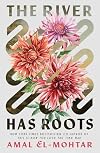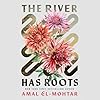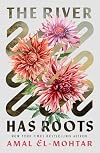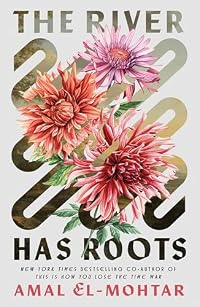
The River Has Roots
by Amal El-Mohtar 
On This Page
Description
In the small town of Thistleford, on the edge of Faerie, the mysterious Hawthorn family tends the willow trees there. For as long as anyone can remember, the Hawthorns have paid tribute to the willow trees, honouring an ancient compact to sing to them in thanks for their magic. None, though, have taken up this calling more devotedly than the family's latest daughters, Esther and Ysabel, who cherish each other as much as they cherish the trees. But when Esther rejects a forceful suitor in show more favour of a lover from the land of Faerie, not only the sisters' bond but also their lives will be at risk.-- show lessTags
Recommendations






Member Recommendations

Member Reviews
It’s possible that this might end up being my least favorite read of the year. I am not anti-purple prose. I actually do like writing that would be considered by some readers to be flowery, but this novella featured truly awful purple prose by anyone's standards and very little in the way of plot. In order for a book to work, you can have no plot but with great writing, or mediocre writing with a great plot; you can’t have an absence of both. It’s unforgivable.
Also, the magic system, or lack thereof, was a massive letdown. If you have a magic system in your book, you either have to give no explanation (“it’s just magic”) or an adequate explanation of your magic system, even if it’s only a novella you’re writing. Using show more the words “grammar” and “conjugating” to represent your magic system over and over again just isn’t going to cut it. When we were eventually given a very brief explanation by Agnes later in the book, it was confusing and convoluted. It’s one of those explanations that sounds intelligent, but actually isn’t at all when you consider it further.
While the story starts to have more of a discernible structure near the end, everything feels kind of pointless for the majority of it, and even the ending doesn’t do much to solve that. You’re left with a feeling of: why did I read this and what was the point? show less
Also, the magic system, or lack thereof, was a massive letdown. If you have a magic system in your book, you either have to give no explanation (“it’s just magic”) or an adequate explanation of your magic system, even if it’s only a novella you’re writing. Using show more the words “grammar” and “conjugating” to represent your magic system over and over again just isn’t going to cut it. When we were eventually given a very brief explanation by Agnes later in the book, it was confusing and convoluted. It’s one of those explanations that sounds intelligent, but actually isn’t at all when you consider it further.
While the story starts to have more of a discernible structure near the end, everything feels kind of pointless for the majority of it, and even the ending doesn’t do much to solve that. You’re left with a feeling of: why did I read this and what was the point? show less
Honestly, Amal El-Mohtar might be the best fantasy prose stylist alive. Every word she writes feels like a fairy tale and this slim novella, which is a fairy tale of her own making spun from the threads of other stories older than silk, is so rich with her language that one has to read it like a favorite dessert. I gobbled it up in the space of an hour and it was, I assure you, delicious. If you have a love of Tam Lin (I do) or murder ballads (I mean, who doesn't?) or liminal spaces (too right) or new stories that feel older than the earth that sprouted the trees that grew the paper on which they are printed, then this book is absolutely calling to you.
I'll probably read it again sometime, more slowly if I can, to consume it in smaller show more bites and to taste exactly how the words work.
It's that kind of book. show less
I'll probably read it again sometime, more slowly if I can, to consume it in smaller show more bites and to taste exactly how the words work.
It's that kind of book. show less
In the small town of Thistleford, on the border between the human world and Arcadia — the land of Faerie — the Hawthorn family tends enchanted willow trees along the River Liss. The river runs with grammar, which in this world is not just language but magic itself: the archaic meaning of the word, related to glamour and grimoire. Sisters Esther and Ysabel sing to the willows each morning as part of an ancient compact, and their bond is the emotional core of everything. Esther is being pursued by a loathsome local man named Samuel Pollard, whom she has no interest in — she's fallen for Rin, a fairy from Arcadia. The two court each other with riddles and exchanges, and eventually agree to marry. Pollard, furious and jealous, pushes show more Esther into the River Liss — which, being full of grammar, transforms her into a swan. He then sets his sights on Ysabel. What follows is a retelling of the seventeenth century murder ballad The Two Sisters — but rewritten so that sisterhood is unbreakable rather than severed. Grammar as magic, riddles as currency, songs woven through the text, and linocut illustrations in the hardcover edition. The audiobook features music performed by the author and her actual sister. From the co-author of This Is How You Lose the Time War.
[May contain spoilers]
Ysabel, with the help of Agnes Crow — a brilliant grammarian who everyone wishes had more page time — works to undo what Pollard has done and save Esther. Pollard's villainy is resolved somewhat swiftly, which some readers found too neat. Esther ultimately chooses to go to Arcadia with Rin, which means leaving Ysabel behind — a genuinely bittersweet separation rather than a tidy happy ending. The sisters' bond transcends physical distance, existing in memory and song. The ending is earned but quiet.
What I think: This is a poet's novella — lyrical, atmospheric, deeply concerned with language and sisterhood and the dark beauty of folk ballads. It's genuinely gorgeous but at 150 pages it's closer to a long short story than a novel. If you love the idea of fairy tale retellings done with literary precision you'd probably find it beautiful. If you need momentum and plot mechanics you might find it a little wispy. show less
[May contain spoilers]
Ysabel, with the help of Agnes Crow — a brilliant grammarian who everyone wishes had more page time — works to undo what Pollard has done and save Esther. Pollard's villainy is resolved somewhat swiftly, which some readers found too neat. Esther ultimately chooses to go to Arcadia with Rin, which means leaving Ysabel behind — a genuinely bittersweet separation rather than a tidy happy ending. The sisters' bond transcends physical distance, existing in memory and song. The ending is earned but quiet.
What I think: This is a poet's novella — lyrical, atmospheric, deeply concerned with language and sisterhood and the dark beauty of folk ballads. It's genuinely gorgeous but at 150 pages it's closer to a long short story than a novel. If you love the idea of fairy tale retellings done with literary precision you'd probably find it beautiful. If you need momentum and plot mechanics you might find it a little wispy. show less
This is a lovely tale of sisterly love and magic and music. I'm quite familiar with the basics of the ballad of the two sisters that was the inspiration for this retelling, and I've seen lots of references to it among fantasy novels, but I don't think I've ever seen an actual retelling of it before. I was so happy to see it here! The way this story ends is generally mixed based on who's talking about the song—or perhaps songs, I'm not sure if there were more than one—but I really appreciated the way this one turned out.
I also appreciated the telling of this story. There's a lot of mix between music and language in the prose of this novella, and I loved it. I'm the type of person who reads the acknowledgements, and I was not at all show more surprised to see in there that El-Mohtar knows how to play the harp. You can see the love of that instrument in the way this story was told.
Though I adored this story, I don't know that all readers will. There is a dual storytelling style, with about half in second-person tense and half in third-person. The second-person sections were in tone a little reminiscent of Seanan McGuire's style in the Wayward Children books, while the third-person parts felt more like a traditional folk tale. The parts flowed well together, but I did get different vibes from the different story elements. (On the other hand, it's short, so if you're unsure if it's your style, why not try it and see?) show less
I also appreciated the telling of this story. There's a lot of mix between music and language in the prose of this novella, and I loved it. I'm the type of person who reads the acknowledgements, and I was not at all show more surprised to see in there that El-Mohtar knows how to play the harp. You can see the love of that instrument in the way this story was told.
Though I adored this story, I don't know that all readers will. There is a dual storytelling style, with about half in second-person tense and half in third-person. The second-person sections were in tone a little reminiscent of Seanan McGuire's style in the Wayward Children books, while the third-person parts felt more like a traditional folk tale. The parts flowed well together, but I did get different vibes from the different story elements. (On the other hand, it's short, so if you're unsure if it's your style, why not try it and see?) show less
Two sisters, Esther and Ysabel Hawthorn tend to the Willow Trees along the banks of the River Liss. In the tiny town of Thistleford, the Willows along the River give magic to their users and serve as a portal to the land of Faerie, Arcadia. The sisters sing to the Willows in order to pay them tribute, together Esther and Ysabel weave the strongest songs. A neighbor to the Hawthorn's, Samuel Pollard seeks to make a land deal by marrying into the Hawthorn family and forcefully courts Esther despite her interest in Rin, a citizen of Arcadia. Samuel takes Esther's refusal badly and turns worlds upside down with his actions.
The River Has Roots is a fantasy novella written in flowery prose. Much like the River Liss, you have to let this show more story take you as it flows along. The story begins by setting the scene and describing the unique magic that exists in this world, Grammar, or words create magic. I was entranced by the system and wished there were more and deeper examples of how residents used this magic. The sisters are the main focus of the story, their strong relationship and reliance upon one another as well as the power of their voices together. The songs that the sisters created and sang were charming and clever, I wish I could hear their melody. I enjoyed seeing the sisters interact and navigate within town and with the other residents. Rin's character adds another element of magic and mystery, I was entranced with their many forms and abilities. I would have loved to stay in Arcadia longer and see the many ways that Grammar can work. The ending combines magic, song and sisterhood to solve a riddle of a missing sister. show less
The River Has Roots is a fantasy novella written in flowery prose. Much like the River Liss, you have to let this show more story take you as it flows along. The story begins by setting the scene and describing the unique magic that exists in this world, Grammar, or words create magic. I was entranced by the system and wished there were more and deeper examples of how residents used this magic. The sisters are the main focus of the story, their strong relationship and reliance upon one another as well as the power of their voices together. The songs that the sisters created and sang were charming and clever, I wish I could hear their melody. I enjoyed seeing the sisters interact and navigate within town and with the other residents. Rin's character adds another element of magic and mystery, I was entranced with their many forms and abilities. I would have loved to stay in Arcadia longer and see the many ways that Grammar can work. The ending combines magic, song and sisterhood to solve a riddle of a missing sister. show less
Yes. This is a satisfying book about faerie and folk songs and sisterhood and murder ballads. Marvelous that it also includes willow working. And my very favorite bit is that Peri Meri Dictum Domine is at the heart of it, and discussed very cleverly as a riddle of both past and future. I’ve never thought of it like that — so brilliant, and such a gift to my evening. I was once deeply enamored of fairy tales and have gone off them somewhat due to over exposure, but this is, like T. kingfisher’s books, the style of story that digs down to the heart of a folktale and brings up something new and rich and spicy. I love the characters. I experienced vast emotions from such a short book. The short story at the end matched it in pure show more unadulterated narrative wonder. Glorious.
Advanced Readers Copy provided by edelweiss. show less
Advanced Readers Copy provided by edelweiss. show less
In the small town of Thistleford the Hawthorn family has long taken care of the land between the River Liss and Faerie. Sisters Esther and Ysabel are the two latest Hawthorns to sing to the trees each night. Their love for one another, and their duty to family and upholding the Hawthorn responsibility to the land, knows no bounds. Esther does not want to settle for the local man whose every interaction makes her feel like a cold fish. Instead she has set her sights on someone from Faerie. Can the sister's bond withstand diverging paths when their lives are on the line?
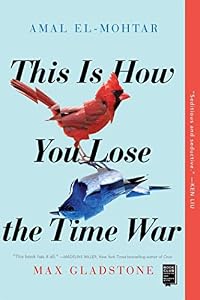
I, like many people, were completely taken in by Amar El-Mohtar's collaboration with Max Gladstone on "This is How you Lose the Time War" so when I heard about "The River show more Has Roots" I didn't even need to read what it was about, I just knew I was going to read this.
Actually, I'll say I knew I would listen to this one. Because, in all honestly, the best experience of this book is in its audiobook format. I cannot imagine what it would be to experience this beautiful story without all the sounds and voices lifting everything just that much higher.
I absolutely loved this book. It's such a beautiful rumination on love, and sisterhood, and promises made, and grammar. How twisting words one way or another changes their trajectory entirely.
It's such a quick and easy read / listen. Fully immersive.
Mostly, I have to give El-Mohtar major flowers for how she crafted this story together. The poetry and flow - kind of reminiscent of the River itself , is a wonderful experience. The aforementioned Time War was similarly lavish and this makes me excited for more work from her.
Just go ahead and put this on your TBR list, move it to the top, you won't be disappointed. show less
I, like many people, were completely taken in by Amar El-Mohtar's collaboration with Max Gladstone on "This is How you Lose the Time War" so when I heard about "The River show more Has Roots" I didn't even need to read what it was about, I just knew I was going to read this.
Actually, I'll say I knew I would listen to this one. Because, in all honestly, the best experience of this book is in its audiobook format. I cannot imagine what it would be to experience this beautiful story without all the sounds and voices lifting everything just that much higher.
I absolutely loved this book. It's such a beautiful rumination on love, and sisterhood, and promises made, and grammar. How twisting words one way or another changes their trajectory entirely.
It's such a quick and easy read / listen. Fully immersive.
Mostly, I have to give El-Mohtar major flowers for how she crafted this story together. The poetry and flow - kind of reminiscent of the River itself , is a wonderful experience. The aforementioned Time War was similarly lavish and this makes me excited for more work from her.
Just go ahead and put this on your TBR list, move it to the top, you won't be disappointed. show less
Members
- Recently Added By
Lists

Books With Water Words in the Title
186 works; 12 members

Globe and Mail | Canadian Fiction: March 15, 2025
10 works; 1 member

2026 Hugo Awards -- Eligible Works -- Novellas
8 works; 2 members

Books Read in 2025
4,090 works; 97 members

Books With Complete Sentence Titles
374 works; 15 members

Books Read in 2026
1,717 works; 62 members
Author Information

27+ Works 8,667 Members
Amal El-Mohtar won the Locus Awards 2015 award in the Short Story category with her title The Truth About Owls, which is featured in the anthology Kaleidoscope. (Bowker Author Biography)
Amal El-Mohtar is a LibraryThing Author, an author who lists their personal library on LibraryThing.
Some Editions
Awards and Honors
Awards
Distinctions
Common Knowledge
- Original title
- The River Has Roots
- Original publication date
- 2025-03-04
- People/Characters
- Esther Hawthorn; Ysabel Hawthorn; Samuel Pollard; Rin [The River Has Roots]; Agnes Crow; Rowan Crow (show all 8); Eileen Hawthorn; Hugh Hawthorn
- Important places
- Thistleford; Arcadia
- Epigraph
- (What is a river but an open throat; what is water but a voice?)
- Dedication
- For Hoda Nassim,
who taught me to play,
and for my sister Dounya,
who taught me to sing. - First words
- The River Liss runs north to south, and its water brim with grammar.
- Last words
- (Click to show. Warning: May contain spoilers.)And their joy runs together like rivers, like voices, like families.
- Blurbers
- Kingfisher, T.; Black, Holly; Durst, Sarah Beth; Lima, Ananda; Lee, Fonda; Törzs, Emma (show all 7); Córdova, Zoraida
- Original language
- English
Classifications
Statistics
- Members
- 848
- Popularity
- 33,845
- Reviews
- 32
- Rating
- (4.01)
- Languages
- English, Spanish
- Media
- Paper, Audiobook, Ebook
- ISBNs
- 10
- ASINs
- 4