On This Page
Description
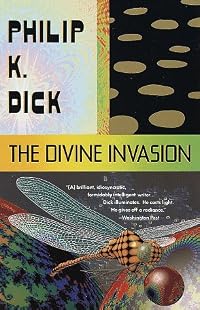
What if God--or a being called Yah--were alive and in exile on a distant planet? How could a second coming succeed against the high technology and finely tuned rationalized evil of the modern police state? --P. [4] of cover.Tags
Recommendations


















Member Reviews
Well this was weird but fantastic book. First of all if you are not familiar with Philip K. Dick's books you might start with something easier (to be honest I find all of his books very easy to read but you might try his short stories first to see if you will like them) - works of this author are very psychedelic but ultimately coherent and easy to follow (at least for me :)).
Book is allegory on spiritual awakening of human society after millennia spent in the prison of purely materialist view of the world. Presenting human institutions (be it religious or secular - both bent on control and nothing else) as elements that have put ordinary man under oppression author gives us a story of spiritual awakening, return of the man to show more something more, to knowledge of universe that was once available to humankind but lost when people decided to accept only material.
Lots of things are mixed up here, alternate realities, religion and philosophy, strange deities that exist among us and subtly control humanity, stories told from so many perspectives that you wont know which one is real one ... all is here. But most important thing is story of journey to self-knowledge, being able to let oneself to learn the truth and finally become one with oneself.
Interesting book, recommended to fans of SF weird tales and Philip K Dick in particular. show less
Book is allegory on spiritual awakening of human society after millennia spent in the prison of purely materialist view of the world. Presenting human institutions (be it religious or secular - both bent on control and nothing else) as elements that have put ordinary man under oppression author gives us a story of spiritual awakening, return of the man to show more something more, to knowledge of universe that was once available to humankind but lost when people decided to accept only material.
Lots of things are mixed up here, alternate realities, religion and philosophy, strange deities that exist among us and subtly control humanity, stories told from so many perspectives that you wont know which one is real one ... all is here. But most important thing is story of journey to self-knowledge, being able to let oneself to learn the truth and finally become one with oneself.
Interesting book, recommended to fans of SF weird tales and Philip K Dick in particular. show less
This was a much better installment in the VALIS trilogy than the previous book, which I believe was meant to set up the foundation of the story. The characters here seem vivid, real, and inspired by the various people that Philip K. Dick knew amongst himself. There is also a deep intersection of Dick's own personality intertwining itself within the motivations, thoughts, and feelings of the main character. The logic in illogic, the paranoia, and the schizophrenic combination of plot-line and theme are all deeply reciprocal to the suspense that sent me, as a reader, spiraling page by page until the conclusion of the novel.
Overall, it was a good work. Just shy of great, but impressive nonetheless.
3.75.
Overall, it was a good work. Just shy of great, but impressive nonetheless.
3.75.
Whether you enjoy him or not, I think that it'd be difficult to argue that our dear, departed Philip K. didn't write some of the most jarringly original novels that ever made it to print. From a certain perspective, "The Divine Invasion" covers a lot ground that will be familiar to PKD fans: psychic meddling, conspiracies, an obsession with multiple realities. (Really was there ever a writer who got more millage out of the idea that life could be but a dream?) Even so, "The Divine Invasion's inclusion of overtly religious and supernatural elements sets it apart from most SF: this isn't Asimov imagining a religious pseudo-future for science; the author's interest in religion-as-such seems genuine and well-informed. It's obvious that Dick show more spent a lot of time with some very arcane texts and little-known heresies while writing this one. Folklore, Gnostic musings, and obscure Jewish creation stories abound here, but they're more than just window dressing. The fact that they're essential to the book's plot sometimes gives one the impression that PKD's doing his darndest to invent a genre that might be termed "hard fantasy." Esoteric as a lot of this might seem, much of "The Divine Invasion," which also has its share of interstellar space travel and cryogenic suspension, comes off as shockingly immediate. A two or three decades worth of spooky little kids in horror movies didn't quite prepare me for the decidedly unnerving spectacle of two ten year olds, Manny, our Christ analogue, and his mysterious, playfully seductive friend Zina discussing the fate of the universe in a run-down special-needs school.
The plot of "The Divine Invasion" is, in places frustratingly twisty, and, this being PKD, you the author's not too keen to give the question "is this really happening" a straight answer. I suspect that many committed PKD fans will have to read this one more than once to figure out exactly what's going on. Still, at the heart of the book there's a serious theological debate about the potential character flaws of the Old Testament God and the role of play in His creation. The theology in this one is almost entirely Jewish: Jesus barely gets a cameo appearance here. But as the novel nears its end, Dick makes a convincing case that evil tends to be dead serious: a distinct lack of a sense of humor is one of true evil's hallmarks. Of course, that's you could say that that's a typically Phildickian argument, but it's one worth taking away. I should track down the first book in this trilogy next, just to catch up. show less
The plot of "The Divine Invasion" is, in places frustratingly twisty, and, this being PKD, you the author's not too keen to give the question "is this really happening" a straight answer. I suspect that many committed PKD fans will have to read this one more than once to figure out exactly what's going on. Still, at the heart of the book there's a serious theological debate about the potential character flaws of the Old Testament God and the role of play in His creation. The theology in this one is almost entirely Jewish: Jesus barely gets a cameo appearance here. But as the novel nears its end, Dick makes a convincing case that evil tends to be dead serious: a distinct lack of a sense of humor is one of true evil's hallmarks. Of course, that's you could say that that's a typically Phildickian argument, but it's one worth taking away. I should track down the first book in this trilogy next, just to catch up. show less
I would be curious to know what was happening in Dick's life that would influence him to make this quasi-mystical tome. Whatever the case, it doesn't really disappoint. He sets up a lot of characters that could be good or evil and even in the end, it's not clear who is and who isn't. But what is clear is that if you're hearing string versions of South Pacific tunes, evil is afoot. Lots of real Western occult stuff is in here. My only beef is equating Belial with Lucifer. A common problem since Milton, at least.
This isn’t even close to a recap of the plot of this book. We start out by going back in forth in time, only to find out some of the “back” is false memory. A man winds up marrying a pregnant woman to smuggle the unborn “savior” back to earth. The savior gets born. There is confrontation with a “devil”. And an artificial intelligence tries to jump in and mess up the plans. There is a lot more strangeness, but trying to describe or explain it would only confuse. It is a weird trip as Dick tackles his thoughts about God in the second of three books that are loosely linked on the subject.
It is not to everyone’s taste. And many fans of Dick dismiss or actively hate this part of Dick’s writing. Yet, in its own way, it is show more classic Dick – unsure of which reality is real, trying to determine how it all fits together, and exploration of broad themes through bizarre circumstances.
This book stands well on its own. And it reads well as the follow-up to VALIS. It will not be an easy read (good Philip K. Dick never is), but it contains rewards worth working for. show less
It is not to everyone’s taste. And many fans of Dick dismiss or actively hate this part of Dick’s writing. Yet, in its own way, it is show more classic Dick – unsure of which reality is real, trying to determine how it all fits together, and exploration of broad themes through bizarre circumstances.
This book stands well on its own. And it reads well as the follow-up to VALIS. It will not be an easy read (good Philip K. Dick never is), but it contains rewards worth working for. show less
God Returns, in a Virgin, on a Space Rocket
When you read a sentence like the above headline, you can be in only one place, the mind of Philip K. Dick, the seminal American science fiction writer of the latter 20th century. In early 1974, Dick began hallucinating, after at tooth extraction for which he was administered sodium pentathol, and later a visit from a girl wearing an ichthyic necklace. Dick said, as quoted by Charles Platt in Dream Makers: The Uncommon People Who Write Science Fiction, Volume 1, "I experienced an invasion of my mind by a transcendentally rational mind, as if I had been insane all my life and suddenly I had become sane.” From this grew the VALIS trilogy, The Divine Invasion being the second in the series.
In show more The Divine Invasion, protagonist Herb Asher discovers that salvation is a personal experience, that each individual must choose between order and disorder, or sanity and insanity, or in terms of the novel itself, between good (Yahweh) or evil (Belial). So, while rages the titanic global war between good and evil, the battlefield reduces down to the conflict within the mind of each individual.
On a planet in a faraway binary star system, CY30-CY30B, which symbolically mirrors the dual nature of humans, Herb Asher lives in a dome, receiving and distributing entertainment transmissions to other dome dwellers. He finds his fulfillment into listening to Linda Fox, a galactic singing star. All is sameness, until Yah, a rumored god on the planet, enters Herb’s life, urging him to establish a relationship with Rybys Rommey, who works in another dome and who suffers from multiple sclerosis. She lives a life of despondency in her squalidly disordered dome, a personalized representation of the general disorder of the world under the influence of the evil Belial. The pair learn she is pregnant by Yaw, though a virgin, reflecting Christian belief. They must secret the unborn child Emmanuel (deliver from evil) to earth to take up the battle against Belial.
In the process of returning, a fly taxi accident occurs. Rybys dies; Herb’s placed in cryogenic suspension; Emmanuel is born with brain damage. Elias Tate, the current incarnation of the prophet Elijah, variously portrayed as a beggar and partner of Herb in an audio equipment business, spirits the baby from the hospital, saving him from execution by the religious powers that be, the Christian-Islamic Church in the West and the Communist Scientific Legate in the East. Emmanuel grows up under the care of Elias and his older companion-tutor Zina Pallas, Shekhinah, basically the Jewish concept of God dwelling within.
Since the child Emmanuel suffers from a type of amnesia, Zina’s role is helping him understand who he is. And it’s this journey of discovery on his and Herb’s parts, the removal of the delusion of the world as it exist, that is, as a disordered place dominated by evil, a world in which Belial rules in the background. Zina helps Emmanuel discover his role as God in part through dialectic exchanges and by showing him her parallel world in which Belial has been banished, literally reduced to a baby goat, a buckling, a state that seduces both Emmanuel and Zina for an unfortunate moment to free him.
Belial seeks out Herb, who he attempts to win over, Herb’s individual struggle for his salvation. Fortunately, Linda Fox, his Advocate (you might think of the Advocate as your representative before God, or perhaps as your Guardian Angel), rescues him by killing Belial, thus restoring his salvation and his sanity. Dick sums this up with Linda Fox singing one of her John Dowland (English Renaissance composer and lutenist) musical adaptations (though these are Dowland’s words, from the last stanza of his A Pilgrim’s Solace):
When the poor cripple by the pool did lie
Full many years in misery and pain,
No sooner he on Christ had set his eye,
But he was well, and comfort came again.
If you are new to Philip K. Dick, this may not be the best book to begin with. However, if his later mystical side intrigues you, you may find The Divine Invasion enlightening. show less
When you read a sentence like the above headline, you can be in only one place, the mind of Philip K. Dick, the seminal American science fiction writer of the latter 20th century. In early 1974, Dick began hallucinating, after at tooth extraction for which he was administered sodium pentathol, and later a visit from a girl wearing an ichthyic necklace. Dick said, as quoted by Charles Platt in Dream Makers: The Uncommon People Who Write Science Fiction, Volume 1, "I experienced an invasion of my mind by a transcendentally rational mind, as if I had been insane all my life and suddenly I had become sane.” From this grew the VALIS trilogy, The Divine Invasion being the second in the series.
In show more The Divine Invasion, protagonist Herb Asher discovers that salvation is a personal experience, that each individual must choose between order and disorder, or sanity and insanity, or in terms of the novel itself, between good (Yahweh) or evil (Belial). So, while rages the titanic global war between good and evil, the battlefield reduces down to the conflict within the mind of each individual.
On a planet in a faraway binary star system, CY30-CY30B, which symbolically mirrors the dual nature of humans, Herb Asher lives in a dome, receiving and distributing entertainment transmissions to other dome dwellers. He finds his fulfillment into listening to Linda Fox, a galactic singing star. All is sameness, until Yah, a rumored god on the planet, enters Herb’s life, urging him to establish a relationship with Rybys Rommey, who works in another dome and who suffers from multiple sclerosis. She lives a life of despondency in her squalidly disordered dome, a personalized representation of the general disorder of the world under the influence of the evil Belial. The pair learn she is pregnant by Yaw, though a virgin, reflecting Christian belief. They must secret the unborn child Emmanuel (deliver from evil) to earth to take up the battle against Belial.
In the process of returning, a fly taxi accident occurs. Rybys dies; Herb’s placed in cryogenic suspension; Emmanuel is born with brain damage. Elias Tate, the current incarnation of the prophet Elijah, variously portrayed as a beggar and partner of Herb in an audio equipment business, spirits the baby from the hospital, saving him from execution by the religious powers that be, the Christian-Islamic Church in the West and the Communist Scientific Legate in the East. Emmanuel grows up under the care of Elias and his older companion-tutor Zina Pallas, Shekhinah, basically the Jewish concept of God dwelling within.
Since the child Emmanuel suffers from a type of amnesia, Zina’s role is helping him understand who he is. And it’s this journey of discovery on his and Herb’s parts, the removal of the delusion of the world as it exist, that is, as a disordered place dominated by evil, a world in which Belial rules in the background. Zina helps Emmanuel discover his role as God in part through dialectic exchanges and by showing him her parallel world in which Belial has been banished, literally reduced to a baby goat, a buckling, a state that seduces both Emmanuel and Zina for an unfortunate moment to free him.
Belial seeks out Herb, who he attempts to win over, Herb’s individual struggle for his salvation. Fortunately, Linda Fox, his Advocate (you might think of the Advocate as your representative before God, or perhaps as your Guardian Angel), rescues him by killing Belial, thus restoring his salvation and his sanity. Dick sums this up with Linda Fox singing one of her John Dowland (English Renaissance composer and lutenist) musical adaptations (though these are Dowland’s words, from the last stanza of his A Pilgrim’s Solace):
When the poor cripple by the pool did lie
Full many years in misery and pain,
No sooner he on Christ had set his eye,
But he was well, and comfort came again.
If you are new to Philip K. Dick, this may not be the best book to begin with. However, if his later mystical side intrigues you, you may find The Divine Invasion enlightening. show less
God Returns, in a Virgin, on a Space Rocket
When you read a sentence like the above headline, you can be in only one place, the mind of Philip K. Dick, the seminal American science fiction writer of the latter 20th century. In early 1974, Dick began hallucinating, after at tooth extraction for which he was administered sodium pentathol, and later a visit from a girl wearing an ichthyic necklace. Dick said, as quoted by Charles Platt in Dream Makers: The Uncommon People Who Write Science Fiction, Volume 1, "I experienced an invasion of my mind by a transcendentally rational mind, as if I had been insane all my life and suddenly I had become sane.” From this grew the VALIS trilogy, The Divine Invasion being the second in the series.
In show more The Divine Invasion, protagonist Herb Asher discovers that salvation is a personal experience, that each individual must choose between order and disorder, or sanity and insanity, or in terms of the novel itself, between good (Yahweh) or evil (Belial). So, while rages the titanic global war between good and evil, the battlefield reduces down to the conflict within the mind of each individual.
On a planet in a faraway binary star system, CY30-CY30B, which symbolically mirrors the dual nature of humans, Herb Asher lives in a dome, receiving and distributing entertainment transmissions to other dome dwellers. He finds his fulfillment into listening to Linda Fox, a galactic singing star. All is sameness, until Yah, a rumored god on the planet, enters Herb’s life, urging him to establish a relationship with Rybys Rommey, who works in another dome and who suffers from multiple sclerosis. She lives a life of despondency in her squalidly disordered dome, a personalized representation of the general disorder of the world under the influence of the evil Belial. The pair learn she is pregnant by Yaw, though a virgin, reflecting Christian belief. They must secret the unborn child Emmanuel (deliver from evil) to earth to take up the battle against Belial.
In the process of returning, a fly taxi accident occurs. Rybys dies; Herb’s placed in cryogenic suspension; Emmanuel is born with brain damage. Elias Tate, the current incarnation of the prophet Elijah, variously portrayed as a beggar and partner of Herb in an audio equipment business, spirits the baby from the hospital, saving him from execution by the religious powers that be, the Christian-Islamic Church in the West and the Communist Scientific Legate in the East. Emmanuel grows up under the care of Elias and his older companion-tutor Zina Pallas, Shekhinah, basically the Jewish concept of God dwelling within.
Since the child Emmanuel suffers from a type of amnesia, Zina’s role is helping him understand who he is. And it’s this journey of discovery on his and Herb’s parts, the removal of the delusion of the world as it exist, that is, as a disordered place dominated by evil, a world in which Belial rules in the background. Zina helps Emmanuel discover his role as God in part through dialectic exchanges and by showing him her parallel world in which Belial has been banished, literally reduced to a baby goat, a buckling, a state that seduces both Emmanuel and Zina for an unfortunate moment to free him.
Belial seeks out Herb, who he attempts to win over, Herb’s individual struggle for his salvation. Fortunately, Linda Fox, his Advocate (you might think of the Advocate as your representative before God, or perhaps as your Guardian Angel), rescues him by killing Belial, thus restoring his salvation and his sanity. Dick sums this up with Linda Fox singing one of her John Dowland (English Renaissance composer and lutenist) musical adaptations (though these are Dowland’s words, from the last stanza of his A Pilgrim’s Solace):
When the poor cripple by the pool did lie
Full many years in misery and pain,
No sooner he on Christ had set his eye,
But he was well, and comfort came again.
If you are new to Philip K. Dick, this may not be the best book to begin with. However, if his later mystical side intrigues you, you may find The Divine Invasion enlightening. show less
When you read a sentence like the above headline, you can be in only one place, the mind of Philip K. Dick, the seminal American science fiction writer of the latter 20th century. In early 1974, Dick began hallucinating, after at tooth extraction for which he was administered sodium pentathol, and later a visit from a girl wearing an ichthyic necklace. Dick said, as quoted by Charles Platt in Dream Makers: The Uncommon People Who Write Science Fiction, Volume 1, "I experienced an invasion of my mind by a transcendentally rational mind, as if I had been insane all my life and suddenly I had become sane.” From this grew the VALIS trilogy, The Divine Invasion being the second in the series.
In show more The Divine Invasion, protagonist Herb Asher discovers that salvation is a personal experience, that each individual must choose between order and disorder, or sanity and insanity, or in terms of the novel itself, between good (Yahweh) or evil (Belial). So, while rages the titanic global war between good and evil, the battlefield reduces down to the conflict within the mind of each individual.
On a planet in a faraway binary star system, CY30-CY30B, which symbolically mirrors the dual nature of humans, Herb Asher lives in a dome, receiving and distributing entertainment transmissions to other dome dwellers. He finds his fulfillment into listening to Linda Fox, a galactic singing star. All is sameness, until Yah, a rumored god on the planet, enters Herb’s life, urging him to establish a relationship with Rybys Rommey, who works in another dome and who suffers from multiple sclerosis. She lives a life of despondency in her squalidly disordered dome, a personalized representation of the general disorder of the world under the influence of the evil Belial. The pair learn she is pregnant by Yaw, though a virgin, reflecting Christian belief. They must secret the unborn child Emmanuel (deliver from evil) to earth to take up the battle against Belial.
In the process of returning, a fly taxi accident occurs. Rybys dies; Herb’s placed in cryogenic suspension; Emmanuel is born with brain damage. Elias Tate, the current incarnation of the prophet Elijah, variously portrayed as a beggar and partner of Herb in an audio equipment business, spirits the baby from the hospital, saving him from execution by the religious powers that be, the Christian-Islamic Church in the West and the Communist Scientific Legate in the East. Emmanuel grows up under the care of Elias and his older companion-tutor Zina Pallas, Shekhinah, basically the Jewish concept of God dwelling within.
Since the child Emmanuel suffers from a type of amnesia, Zina’s role is helping him understand who he is. And it’s this journey of discovery on his and Herb’s parts, the removal of the delusion of the world as it exist, that is, as a disordered place dominated by evil, a world in which Belial rules in the background. Zina helps Emmanuel discover his role as God in part through dialectic exchanges and by showing him her parallel world in which Belial has been banished, literally reduced to a baby goat, a buckling, a state that seduces both Emmanuel and Zina for an unfortunate moment to free him.
Belial seeks out Herb, who he attempts to win over, Herb’s individual struggle for his salvation. Fortunately, Linda Fox, his Advocate (you might think of the Advocate as your representative before God, or perhaps as your Guardian Angel), rescues him by killing Belial, thus restoring his salvation and his sanity. Dick sums this up with Linda Fox singing one of her John Dowland (English Renaissance composer and lutenist) musical adaptations (though these are Dowland’s words, from the last stanza of his A Pilgrim’s Solace):
When the poor cripple by the pool did lie
Full many years in misery and pain,
No sooner he on Christ had set his eye,
But he was well, and comfort came again.
If you are new to Philip K. Dick, this may not be the best book to begin with. However, if his later mystical side intrigues you, you may find The Divine Invasion enlightening. show less
Members
- Recently Added By
Author Information

668+ Works 146,449 Members
Phillip Kindred Dick was an American science fiction writer best known for his psychological portrayals of characters trapped in illusory environments. Born in Chicago, Illinois, on December 16, 1928, Dick worked in radio and studied briefly at the University of California at Berkeley before embarking on his writing career. His first novel, Solar show more Lottery, was published in 1955. In 1963, Dick won the Hugo Award for his novel, The Man in the High Castle. He also wrote a series of futuristic tales about artificial creatures on the loose; notable of these was Do Androids Dream of Electric Sheep?, which was later adapted into film as Blade Runner. Dick also published several collections of short stories. He died of a stroke in Santa Ana, California, in 1982. (Bowker Author Biography) show less
Some Editions
Awards and Honors
Awards
Series

Belongs to Publisher Series
PKD composition order (1980)
Colecção Argonauta (328)
Moewig Science Fiction (3650)
Gallimard, Folio SF (249-733)
Présence du futur (338)
Science Fiction Book Club (5941)
Work Relationships
Common Knowledge
- Canonical title
- The Divine Invasion
- Original title
- The Divine Invasion
- Original publication date
- 1981-06; 1980-05/06 (manuscript) (manuscript)
- People/Characters
- Herb Asher; Rybys Rommey; Elias Tate; Linda Fox
- Epigraph*
- Die Zeit, auf die ihr gewartet habt, ist gekommen. Die Arbeit ist vollbracht; hier ist die endgültige Welt. Ihn hat man hierherversetzt, und er lebt. Geheimnisvolle Stimme in der Nacht
- First words*
- Es wurde Zeit, Manny einzuschulen.
- Last words*
- (Click to show. Warning: May contain spoilers.)Über ihnen arbeitete die Maschine und sammelte Belials Überreste auf. Fegte die zerborstenen Bruchstücke eines Wesens zusammen, das einst Licht gewesen war.
- Publisher's editor
- Hartwell, David G.
- Original language
- English
*Some information comes from Common Knowledge in other languages. Click "Edit" for more information.
Classifications
Statistics
- Members
- 2,331
- Popularity
- 8,422
- Reviews
- 28
- Rating
- (3.73)
- Languages
- 13 — Czech, English, Finnish, French, German, Greek, Hungarian, Italian, Japanese, Polish, Portuguese, Romanian, Spanish
- Media
- Paper, Audiobook, Ebook
- ISBNs
- 34
- ASINs
- 17