On This Page
Description
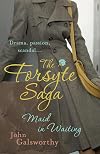
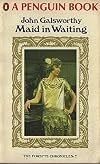
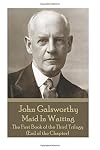
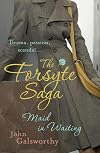
Maid in Waiting is the first novel in the third and final trilogy of John Galsworthy's Forsyte Chronicles. In this seventh installment, the story continues the lives and times, loves and losses, and fortunes and deaths of the fictional but entirely representative family of propertied Victorians, the Forsytes. The trilogy here begun is called End of the Chapter and concerns the cousins of the younger Forsytes, the Cherrells.The Forsyte Chronicles has become established as one of the most show more popular and enduring works of twentieth-century literature, described by the New York Times as "a social satire of epic proportions and one that does not suffer by comparison with Thackeray's Vanity Fair…(A) comedy of manners, convincing both in its fidelity to life and as a work of art.". show lessTags
Recommendations



















Member Reviews
I was concerned about continuing the story of the Forsytes, as the last few books had been very focussed on Fleur and I find her difficult to get on with. She strikes me as rather selfish and not terribly likeable.
This book follows more closely Michael Mont's cousins and the Uncles that seem to tie them together. Dinny is the main character (Elizabeth, but called Dinny throughout) and she has far more about her, her main concerns are he brother and family and she is a much more engaging character.
The are a very different family frm the Forsytes, in that they have been landed gentry since the conquest, and have now fallen on harder times. They have in their ranks a judge, scholar, soldier, clergyman and landowner and have the solidity show more of knowing who their great (times many) grandfather was. They have none of Soames' insecurities about property and origins, probably because they are from a different class. But they are far more class-less than Soames.
I thoroughly enjoyed this, it has significant degrees of light and shade and is a marked imrpovement on the last couple of books. Now looking foward to book 8 and finishing the sequence. show less
This book follows more closely Michael Mont's cousins and the Uncles that seem to tie them together. Dinny is the main character (Elizabeth, but called Dinny throughout) and she has far more about her, her main concerns are he brother and family and she is a much more engaging character.
The are a very different family frm the Forsytes, in that they have been landed gentry since the conquest, and have now fallen on harder times. They have in their ranks a judge, scholar, soldier, clergyman and landowner and have the solidity show more of knowing who their great (times many) grandfather was. They have none of Soames' insecurities about property and origins, probably because they are from a different class. But they are far more class-less than Soames.
I thoroughly enjoyed this, it has significant degrees of light and shade and is a marked imrpovement on the last couple of books. Now looking foward to book 8 and finishing the sequence. show less
The focus of the seventh book switches from the Forsytes to Fleur's husband, Michael Mont's cousins by marriage, the Cherrells. Dinny Cherrell is much nicer than Fleur, but just as interesting. Her brother Hubert is facing a possible murder charge. Her cousin is threatened by her mentally unstable husband. Dinny resists two eligible suitors, while trying to help her brother and cousin. The Forsytes were new money, the Cherrell's are of old established families, and while money is a little short, they have beautiful estates and pride of heritage. Galsworthy shows how society is changing in each of the books. I really enjoyed this one.
This is the first book in the last trilogy of Galsworthy's monumental 9-volume saga of the a family from the late 19th Century through the early 1930's. Although I have read the first 6 books, I never read the last three because they center on a totally different family - the Cherrells - who are cousins of Michael Mont (husband to Fleur nee Forsyte).
For centuries, the Cherrell sons have left their home of Condaford Grange to serve the state as soldiers, clergymen and administrators, but the 1930s bring uncertainty in a world of rapidly altering morals and unemployment. Galsworthy’s portrayal of the effect of political change on the characters illustrate the difficulty the upper classes had in adjusting to post World War I life.
The show more main character in this book is Elizabeth 'Dinny' Cherrel, a young woman of 22, clever, beautiful and witty, who has no intention to marry and likes to solve the problems of the people she loves.
The main problem throughout this novel is Dinny's brother, Hubert. He is a soldier and while on medical leave from the RAF, went with an American scientist to Bolivia, was left alone with the expedition, and he ended up shooting a man (though he claims it was in self-defense). Unfortunately for him, the American Scientist, writes a newspaper article about his failed research and expresses dismay at Hubert's behavior, which stirs up the matter both with the Bolivian authorities that want to extradite him to their country for trial, and with the House of Commons when an MP excoriates him from the floor of Parliament
Of course, it's an unbearable thought that a Cherrell should go through all this – and that the English court should believe a "half-caste" Bolivian's word against an Englishmen. (Modern readers need to be prepared for multiple racist expressions that would not be allowed in today's fiction). For example, Dinny's Aunt Em (Michael Mont's mother) expresses herself about Hubert's situation as follows:
Ah! Hubert, yes. You know, I think he made a mistake to flog those men. Shootin' them one can quite understand, but floggin' is so physical and like the old Duke."
"Don't you feel inclined to flog carters when they lash overloaded horses up-hill, Auntie?"
"Yes, I do. Was that what they were doin'?"
"Practically, only worse. They used to twist the mules' tails and stick their knives into them, and generally play hell with the poor brutes."
"Did they? I'm so glad he flogged them; though I've never liked mules ever since we went up the Gemmi. Do you remember, Lawrence?"
Sir Lawrence nodded. On his face was the look, affectionate but quizzical, which Dinny always connected with Aunt Em.
"Why, Auntie?"
"They rolled on me; not they exactly, but the one I was ridin'. They tell me it's the only time a mule has ever rolled on anybody--surefooted."
Hubert if pretty much a drip - the kind of British man who would be parodied decades later by Monty Python as an upper-middle class twit, so it's a good thing that he has someone as resourceful as Dinny around to bail him out. not only does she lobby various men of influence on her brother's behalf, she also finds him a wife in the person of Jean Tasberg, another member of the landed aristocracy
In the end, all ends well, and the comfortable life of the British upper classes lives to rule another day. However, the handwriting of their demise is on the wall. show less
For centuries, the Cherrell sons have left their home of Condaford Grange to serve the state as soldiers, clergymen and administrators, but the 1930s bring uncertainty in a world of rapidly altering morals and unemployment. Galsworthy’s portrayal of the effect of political change on the characters illustrate the difficulty the upper classes had in adjusting to post World War I life.
The show more main character in this book is Elizabeth 'Dinny' Cherrel, a young woman of 22, clever, beautiful and witty, who has no intention to marry and likes to solve the problems of the people she loves.
The main problem throughout this novel is Dinny's brother, Hubert. He is a soldier and while on medical leave from the RAF, went with an American scientist to Bolivia, was left alone with the expedition, and he ended up shooting a man (though he claims it was in self-defense). Unfortunately for him, the American Scientist, writes a newspaper article about his failed research and expresses dismay at Hubert's behavior, which stirs up the matter both with the Bolivian authorities that want to extradite him to their country for trial, and with the House of Commons when an MP excoriates him from the floor of Parliament
Of course, it's an unbearable thought that a Cherrell should go through all this – and that the English court should believe a "half-caste" Bolivian's word against an Englishmen. (Modern readers need to be prepared for multiple racist expressions that would not be allowed in today's fiction). For example, Dinny's Aunt Em (Michael Mont's mother) expresses herself about Hubert's situation as follows:
Ah! Hubert, yes. You know, I think he made a mistake to flog those men. Shootin' them one can quite understand, but floggin' is so physical and like the old Duke."
"Don't you feel inclined to flog carters when they lash overloaded horses up-hill, Auntie?"
"Yes, I do. Was that what they were doin'?"
"Practically, only worse. They used to twist the mules' tails and stick their knives into them, and generally play hell with the poor brutes."
"Did they? I'm so glad he flogged them; though I've never liked mules ever since we went up the Gemmi. Do you remember, Lawrence?"
Sir Lawrence nodded. On his face was the look, affectionate but quizzical, which Dinny always connected with Aunt Em.
"Why, Auntie?"
"They rolled on me; not they exactly, but the one I was ridin'. They tell me it's the only time a mule has ever rolled on anybody--surefooted."
Hubert if pretty much a drip - the kind of British man who would be parodied decades later by Monty Python as an upper-middle class twit, so it's a good thing that he has someone as resourceful as Dinny around to bail him out. not only does she lobby various men of influence on her brother's behalf, she also finds him a wife in the person of Jean Tasberg, another member of the landed aristocracy
In the end, all ends well, and the comfortable life of the British upper classes lives to rule another day. However, the handwriting of their demise is on the wall. show less
In this, the first book of the trilogy End of the Chapter, the main characters are members of Fleur's husband, Michael Mont’s’s family. Initially I found the writing style less polished than the books that went before, and thought it might have been an early piece reworked. However, when I started to read Simonson's The Summer Before the War alongside, it proved that less than perfect writing by Galsworthy is still a cut above. So, although the beginning was less engaging than some of the previous books in the Forsyte Chronicles, its merit held up when compared to the contemporary work.
There are repercussions following an expedition when Hubert Cherrell, Mont’s cousin, killed a Bolivian muleteer in a violent altercation. His show more sister Dinny tries to solve his predicament through negotiations and receives a couple of marriage proposals along the way. The other storyline was about the mental health issues of the husband of a family friend. Galsworthy’s characters are vivid, he is insightful about his era and brings it to life. While not up to the high drama of the Forsytes, this is well worth reading. show less
There are repercussions following an expedition when Hubert Cherrell, Mont’s cousin, killed a Bolivian muleteer in a violent altercation. His show more sister Dinny tries to solve his predicament through negotiations and receives a couple of marriage proposals along the way. The other storyline was about the mental health issues of the husband of a family friend. Galsworthy’s characters are vivid, he is insightful about his era and brings it to life. While not up to the high drama of the Forsytes, this is well worth reading. show less
Dinny the meddler
matchmaking, mental patients
nothing is sacred.
matchmaking, mental patients
nothing is sacred.
La novela se desarrolla en la década de los años treinta, con la amenaza de una nueva guerra en Europa, llena de incertidumbre un mundo de valores morales que evolucionan de modo vertiginoso, espoleados por el desempleo.
Nov 15, 2022Spanish
"la fin du chapitre" est le dernier volet de la saga des Forsyte, où nous quittons le monde prpremant dit des Forsyte, pour entreer par le bieias d'une alliance familiale, dans l'univers très différent d'une famille peu fortunée, mais de la "gentry"
Jun 5, 2009French
Members
- Recently Added By
Lists

Best family sagas
244 works; 34 members

Publisher's Weekly Bestsellers Part I - 1895-1939
399 works; 8 members
Author Information

346+ Works 11,772 Members
At age 28, after a gentlemanly education at Harrow and Oxford, and a training at law, Galsworthy settled into simultaneous careers as a novelist and a playwright. The Silver Box, Galsworthy's first successful drama, was staged in 1906, the year he published the first volume of what was to become The Forsyte Saga. His one-word titles - Justice show more (1910), Strife (1909), Loyalties (1922)---suggest the nature of Galsworthy's artistic ambition: to generalize a social indictment, keeping faith with the objective methods of naturalism. In each, Galsworthy favors an austere irony and unresolvable situations, and balanced moral positions are displayed in the cabinetwork of "well-made" playwrighting. Reputed to have led to reforms in its time, his realism today seems contrived to produce aesthetic distance and a sense of resignation that is precisely what contemporary political dramatists strain hardest to avoid. Not surprisingly, critics have come away from revivals with the sense that (especially in his spare language) Galsworthy anticipates Harold Pinter rather than more socially engaged playwrights. Galsworthy wrote novels and plays alternately throughout his life. His masterwork, The Forsyte Saga, begun in 1906 and finished in 1928, and consisting of six separate novels and two linking interludes, is the most famous example of the sequence novel in English literature. It is a study of the property sense, the possessive spirit, in different individuals and generations of English middle-class society. He also completed a second trilogy dealing with the Forsyte family, called A Modern Comedy (1928). His last trilogy, a study of the Charwell family, is called End of the Chapter (1933). Galsworthy's later years brought him many honors, including the presidency of P.E.N. and honorary degrees from Oxford, Cambridge, and several other universities. After World War I, he was offered a knighthood, which he refused. He did, however, accept the Order of Merit in 1929, and in 1932 he was awarded the Nobel Prize. He was, however, too ill to attend the Nobel ceremony and died within two months of receiving the award. Although his posthumous reputation had waned, the centenary of his death, in 1967, brought a re-creation of The Forsyte Saga on British and American television in serial form. Interest in him skyrocketed, and the Forsyte novels again became bestsellers. With new popularity came fresh critical analysis. Pamela Hansford Johnson called The Forsyte Saga "a work of profound social insight and patchy psychological insight" (N.Y. Times). His critical writings include The Inn of Tranquility: Studies and Essays (1911) and Author and Critic. (Bowker Author Biography) show less
Some Editions
Awards and Honors
Distinctions
Series


Belongs to Publisher Series
Work Relationships
Is contained in
Common Knowledge
- Canonical title
- Maid In Waiting
- Original title
- Maid In Waiting
- Original publication date
- 1931
- People/Characters
- Elizabeth "Dinny" Cherrell
- Important places
- England, UK
- Disambiguation notice
- Vol 24 Maid in Waiting
Classifications
Statistics
- Members
- 238
- Popularity
- 137,025
- Reviews
- 8
- Rating
- (3.95)
- Languages
- 10 — English, Estonian, Finnish, French, German, Italian, Norwegian (Bokmål), Romanian, Spanish, Swedish
- Media
- Paper, Audiobook, Ebook
- ISBNs
- 34
- ASINs
- 25