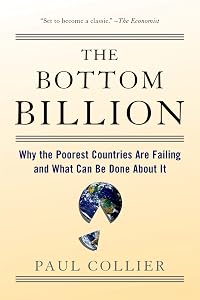
The Bottom Billion: Why the Poorest Countries are Failing and What Can Be Done About It
by Paul Collier
On This Page
Description
Global poverty, economist Collier points out, is actually falling quite rapidly for about 80% of the world. The real crisis lies in a group of about 50 failing states, the bottom billion, whose problems defy traditional approaches to alleviating poverty. Here, Collier contends that these fifty failed states pose the central challenge of the developing world in the twenty-first century. This group of small nations, largely unnoticed by the industrialized West, are dropping further and further show more behind the majority of the world's people, often falling into an absolute decline in living standards. A struggle rages within each of these nation between reformers and corrupt leaders--and the corrupt are winning. Collier analyzes the causes of failure, and offers a bold new plan.--From publisher description. show lessTags
Recommendations
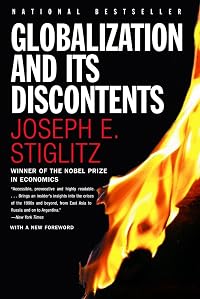
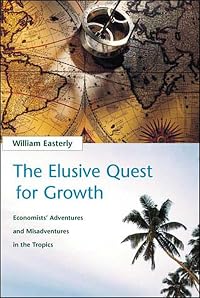
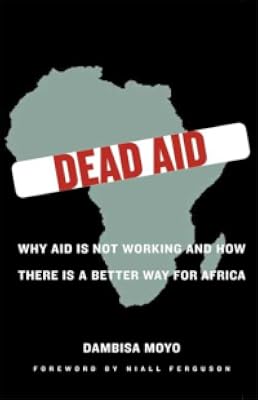
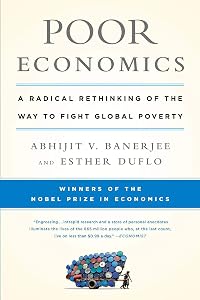
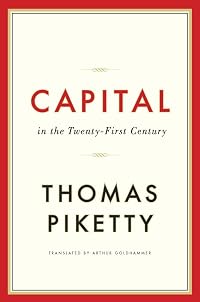

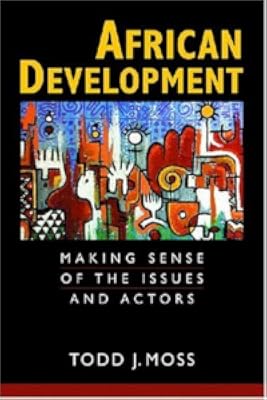
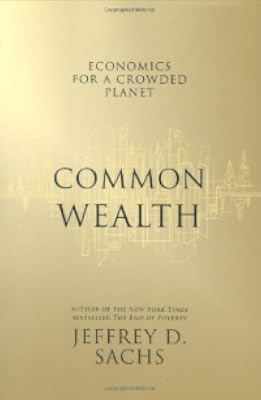

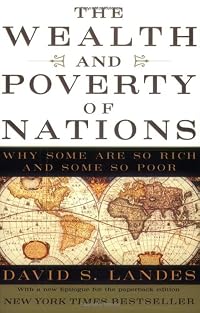




















Member Recommendations

Member Reviews
I have decayed into a skimming/sampling mode at the moment, but overall I have found Collier impressive. I never know quite what to make about arguments sustained by regression models across multiple societies over a limited (50 year) period -- can we trust these correlations, or are they artifacts of a specific set of circumstances? Can culture really be so neatly excised from the account? This is a quibble, however, with an excellent and thoughtful book. Anyone who wants to understand the disaster in which a fifth of the world finds itself should read it.
Като слушам как всички се оплакват колко зле живеем, направо ми иде да им плесна по един задвратник. Буквално милиарди хора по света мечтаят за твоя живот, стига се оплаква, тееба в мрънкалника. Освен, че българите изобщо не са зле икономически, в световен план даже са доста добре. Да не говорим пък в сравнение с "милиарда на дъното", които са най-бедните държави в света - намиращи се изцяло в Африка.
Това е show more поредната книга, опитваща се да намери отговор на въпроса защо бедните на света са толкова бедни и как вече да не са бедни. Въпреки, че има малко по-трезв поглед върху проблемите на бедността и неуспешните опити тя да бъде преодоляна (помощи и т.н.), въпреки, че се опитва да търси тия отговори в изследвания и статистики, авторът, според мен, не е особено убедителен в тезите си.
Да, той ги базира на статистически данни и емпирични наблюдения, но размерът на тия данни е прекалено малък, за да може да се направят някакви значими изводи от тях или да не може едно избирателно представяне на данните да не даде съвършенно различни резултати. Да, вече за всички по-сериозни изследователи е ясно, че международната хуманитарна помощ по-скоро вреди на държавите, които я получават, отколкото им помага, но Пол Колие въпреки, че признава това, отново и отново се опитва да търси начини, по който тя да "проработи". Да, закъсалите държави имат общи проблеми, но много други държави са преодолели същите проблеми и са се развили.
Книгата представя един специфичен поглед върху проблемите на най-бедните и закъсали държави, но не е нищо повече от поредното полу-академично многословие, с нищо по-различно от Джефри Сакс и останалите "хуманитаристи"-кариеристи, на чиито виждания смята, че се противопоставя. show less
Това е show more поредната книга, опитваща се да намери отговор на въпроса защо бедните на света са толкова бедни и как вече да не са бедни. Въпреки, че има малко по-трезв поглед върху проблемите на бедността и неуспешните опити тя да бъде преодоляна (помощи и т.н.), въпреки, че се опитва да търси тия отговори в изследвания и статистики, авторът, според мен, не е особено убедителен в тезите си.
Да, той ги базира на статистически данни и емпирични наблюдения, но размерът на тия данни е прекалено малък, за да може да се направят някакви значими изводи от тях или да не може едно избирателно представяне на данните да не даде съвършенно различни резултати. Да, вече за всички по-сериозни изследователи е ясно, че международната хуманитарна помощ по-скоро вреди на държавите, които я получават, отколкото им помага, но Пол Колие въпреки, че признава това, отново и отново се опитва да търси начини, по който тя да "проработи". Да, закъсалите държави имат общи проблеми, но много други държави са преодолели същите проблеми и са се развили.
Книгата представя един специфичен поглед върху проблемите на най-бедните и закъсали държави, но не е нищо повече от поредното полу-академично многословие, с нищо по-различно от Джефри Сакс и останалите "хуманитаристи"-кариеристи, на чиито виждания смята, че се противопоставя. show less
It's hard for me to critique this adequately because I'm not an economist. It does impress me that the author identifies which of his own referenced articles or studies have been peer reviewed and which haven't. This is my most marked-up book of the last few years, but mostly in a good and dialogical way. I agree with some of the author's assertions, think some of his arguments are made at the wrong level (e.g., statements about NGOs that may be true of larger organizations but aren't true of smaller ones), and note that perhaps not all forms of licit development are equally good for a country. I liked the ways in which he looked at the bottom billion problem from perspectives such as corruption, revolution, and landlock. It gave me a show more lot to think about as I consider how to be useful in the world. show less
I had high hopes for The Bottom Billion. It seemed like it would be an interesting discussion of what to do about poverty in the worst economies on the planet. In fact, I think Collier has some good things to say about the subject. Unfortunately, he didn't do such a good job of saying them here.
My biggest complaint about the book is that it presents ideas without a shred of work to discuss the ideas. What's sad is that he did the work to back up his ideas, and he tells the reader frequently that he did the work. But the nature of a book like this requires the author do more than just tell us about his results. It should let the reader evaluate whether we believe the arguments, and that just isn't possible here. In fact, he didn't show more include footnotes or endnotes to reference specific works in favor of a bibliography at the end with relatively few detailsto point to a specific paper for a specific issue. The average reader will not have the resources to track down all the papers discussed.
The book could have been really good. It's only 192 pages long, and Collier could easily have doubled the length and put in details of the work behind his discussion. Instead, it just felt like he wanted to throw off a quick book without too much work. If he was concerned about getting bogged down in details, he could easily have used a two-track system where the first half of each chapter is the published material and the second half of each chapter is the detail. Then readers not so interested in the details could just skip over the second track material. show less
My biggest complaint about the book is that it presents ideas without a shred of work to discuss the ideas. What's sad is that he did the work to back up his ideas, and he tells the reader frequently that he did the work. But the nature of a book like this requires the author do more than just tell us about his results. It should let the reader evaluate whether we believe the arguments, and that just isn't possible here. In fact, he didn't show more include footnotes or endnotes to reference specific works in favor of a bibliography at the end with relatively few detailsto point to a specific paper for a specific issue. The average reader will not have the resources to track down all the papers discussed.
The book could have been really good. It's only 192 pages long, and Collier could easily have doubled the length and put in details of the work behind his discussion. Instead, it just felt like he wanted to throw off a quick book without too much work. If he was concerned about getting bogged down in details, he could easily have used a two-track system where the first half of each chapter is the published material and the second half of each chapter is the detail. Then readers not so interested in the details could just skip over the second track material. show less
The bottom billion are Africa, Afghanistan, and any nation so bereft it lacks governance and economic development for its people. Caused by four traps: natural resources, repeated civil conflict, landlockedness, bad governance combined with smallness. Remedies: targeted aid for development infrastructure, trade policies for development, military intervention against coups, codes of ethics for businesses and countries dealing with kleptocracies.
Value to me has been to add complexity to an overly simplified discussion of Africa's many problems. The book is a set of views derived from economic data analysis aimed at teasing out causal arrows: does civil war cause poverty or does poverty cause civil war, eg. Causal conclusions and policy show more recommendations are thought-provoking, even if flawed. A great discussion opener.
Scathing criticism of aid organizations and old, jaded ways of framing Africa, a door opener to re-thinking a complex of situations with a more sophisticated complex of solutions. show less
Value to me has been to add complexity to an overly simplified discussion of Africa's many problems. The book is a set of views derived from economic data analysis aimed at teasing out causal arrows: does civil war cause poverty or does poverty cause civil war, eg. Causal conclusions and policy show more recommendations are thought-provoking, even if flawed. A great discussion opener.
Scathing criticism of aid organizations and old, jaded ways of framing Africa, a door opener to re-thinking a complex of situations with a more sophisticated complex of solutions. show less
A sober, often counterintuitive roadmap for global development. Part academic analytics, part quite manifesto, "The Bottom Billion" is poignet, timely and surprisingly readable.
A sober, often counterintuitive roadmap for global development. Part academic analytics, part quite manifesto, "The Bottom Billion" is poignet, timely and surprisingly readable.
Members
- Recently Added By
Published Reviews
ThingScore 75
At the core of this fluent, thought-provoking book is an analysis of why these states continue to fall behind and fall apart. Civil wars are caused not by colonial legacies or fractious ethnic populations, he argues, but by the appeal of a shot at riches to uneducated, impoverished young men.
added by mikeg2
Lists

The Enlightened Economist
107 works; 1 member

Mind Expanding Books by hackerkid
581 works; 8 members

Economics
16 works; 1 member
Author Information

19 Works 2,242 Members
Paul Collier is Professor of Economics and Public Policy at the Blavatnik School of Government, Oxford University. He is the author of The Bottom Billion, which won the Lionel Gelber Prize and the Arthur Ross Prize awarded by the Council on Foreign Relations; The Plundered Planet; Exodus; and Refuge (with Alexander Betts). Collier has held chairs show more at Harvard and at Sciences Po, Paris, was knighted in 2014, and in 2016 won the President's Medal of the British Academy. show less
Awards and Honors
Common Knowledge
- Canonical title
- The Bottom Billion: Why the Poorest Countries are Failing and What Can Be Done About It
- Original title
- The Bottom Billion: Why the Poorest Countries are Failing and What Can Be Done About It
- Original publication date
- 2007
- Important places
- Failing states; Third world
Classifications
- Genres
- Economics, Nonfiction, General Nonfiction, Politics and Government
- DDC/MDS
- 338.90091724 — Society, government, & culture Economics Production Economic Development And Growth Biography And History Other Geographic Classifications Socioeconomic Regions By Development Level Developing World
- LCC
- HC79 .P6 .C634 — Social sciences Economic history and conditions Economic history and conditions Special topics
- BISAC
Statistics
- Members
- 1,225
- Popularity
- 20,226
- Reviews
- 16
- Rating
- (3.72)
- Languages
- 8 — English, Estonian, German, Italian, Japanese, Norwegian (Bokmål), Portuguese, Spanish
- Media
- Paper, Audiobook, Ebook
- ISBNs
- 24
- UPCs
- 1
- ASINs
- 11