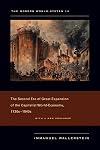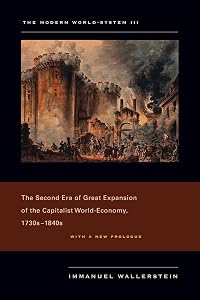
The Modern World-System III: The Second Era of Great Expansion of the Capitalist World-Economy, 1730-1840s
by Immanuel Wallerstein
The Modern World-System (III), Studies in Social Discontinuity (1989)
On This Page
Description
Immanuel Wallerstein's highly influential, multi-volume opus, The Modern World-System, is one of this century's greatest works of social science. An innovative, panoramic reinterpretation of global history, it traces the emergence and development of the modern world from the sixteenth to the twentieth century.Tags
Recommendations





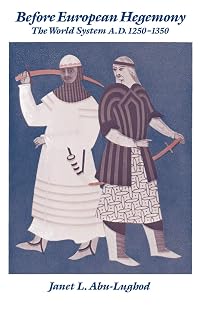
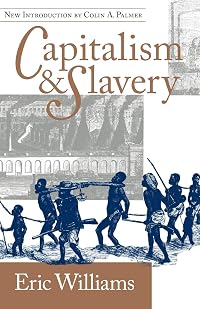
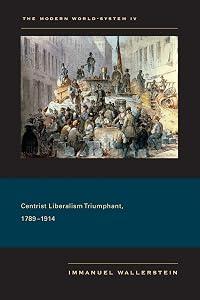

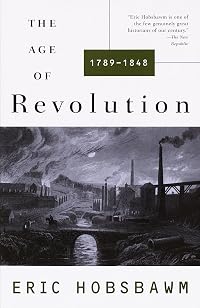










Member Reviews
Members
- Recently Added By
Author Information

129+ Works 3,318 Members
Wallerstein studied at Columbia University, where he received his Ph.D. in sociology in 1959. His work has focused primarily on what he calls "world systems theory," which deals with the socioeconomic dynamics of global dependence and interdependence. As Wallerstein sees it, the wealthy nations of the world control and manipulate the destinies of show more weaker nations and keep them dependent. The world system is an outcome of historic global, political, and ideological forces leading to Western hegemony. (Bowker Author Biography) show less
Series


Work Relationships
Is contained in
Common Knowledge
- Canonical title
- The Modern World-System III: The Second Era of Great Expansion of the Capitalist World-Economy, 1730-1840s
- Important events
- American Revolution (1775 ∙ 1783); French Revolution (1789)
Classifications
Statistics
- Members
- 140
- Popularity
- 234,302
- Reviews
- 1
- Rating
- (3.75)
- Languages
- Chinese, English, Italian, Spanish
- Media
- Paper, Ebook
- ISBNs
- 11
- ASINs
- 1