
The New Spaniards
by John Hooper
On This Page
Description
A fully revised, expanded and updated edition of this masterly portrayal of contemporary Spain. The restoration of democracy in 1977 heralded a period of intense change that continues today. Spain has become a land of extraordinary paradoxes in which traditional attitudes and contemporary preoccupations exist side by side. Focussing on issues which affect ordinary Spaniards, from housing to gambling, from changing sexual mores to rising crime rates. John Hooper's fascinating study brings to show more life the new Spain of the twenty-first century. show lessTags
Recommendations





















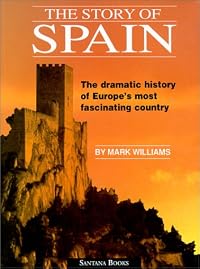




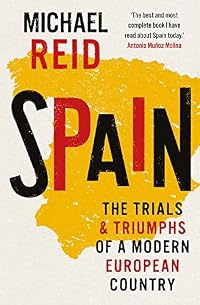

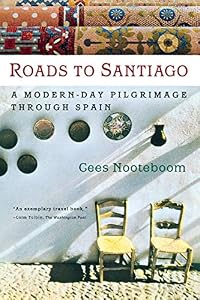







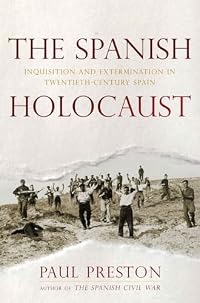







Member Reviews
As someone who has lived in Spain for the last 21 years and an interested observer of Spanish affairs, I'd say that 1) that there's plenty in here that I didn't know 2) that it's an invaluable guide to modern Spain.
It's a very refreshing read after the acres of nonsense written about the "real Spain" by non-Spanish speaking romantically inclined ex-patriats. The author thoroughly explores the "Autonomies" question which is still the principal political hot potato 11 years after this book was published.
He has some doubts about the depth of Spanish democracy, quoting the opinion that it's necessary to have two electoral changes of government for a genuine democracy. He was writing at a time when the PSOE was the only real party to hold show more government since the death of Franco, but since then the Partido Popular has gained power under Aznar and the PSOE has recently regained power under Zapatero - so his condition has been fulfilled, I'm sure to Spain's great benefit. He also had doubts about Spain's ability to close the economic gap with the rest of Europe, and I think that this would have made an extra chapter if the book had been revised in 2006.
He highlights the stop-go nature of the post-Franco economy with it's inflationary booms, high interest rates and weak currency, but of course this situation has been radically altered by Spain's adoption of the Euro. Now it can run it's traditionally enormous (boom time) trade deficit without high interest rates or a depreciating currency and the boom just goes on and on. Spain is currently using more concrete every year than any other country in Europe and it's growth is consistently outstripping that of France and Germany.
The book is full of very relevant, but not very well known information, such as the history of the major internal migrations in search of work, or the lack of an industrial revolution leading to a notable lack of "class" ideas with regionalism having much greater importance. Above all there is the (vacuous) general hedonistic materialism that he writes about so well. show less
It's a very refreshing read after the acres of nonsense written about the "real Spain" by non-Spanish speaking romantically inclined ex-patriats. The author thoroughly explores the "Autonomies" question which is still the principal political hot potato 11 years after this book was published.
He has some doubts about the depth of Spanish democracy, quoting the opinion that it's necessary to have two electoral changes of government for a genuine democracy. He was writing at a time when the PSOE was the only real party to hold show more government since the death of Franco, but since then the Partido Popular has gained power under Aznar and the PSOE has recently regained power under Zapatero - so his condition has been fulfilled, I'm sure to Spain's great benefit. He also had doubts about Spain's ability to close the economic gap with the rest of Europe, and I think that this would have made an extra chapter if the book had been revised in 2006.
He highlights the stop-go nature of the post-Franco economy with it's inflationary booms, high interest rates and weak currency, but of course this situation has been radically altered by Spain's adoption of the Euro. Now it can run it's traditionally enormous (boom time) trade deficit without high interest rates or a depreciating currency and the boom just goes on and on. Spain is currently using more concrete every year than any other country in Europe and it's growth is consistently outstripping that of France and Germany.
The book is full of very relevant, but not very well known information, such as the history of the major internal migrations in search of work, or the lack of an industrial revolution leading to a notable lack of "class" ideas with regionalism having much greater importance. Above all there is the (vacuous) general hedonistic materialism that he writes about so well. show less
Ratings
Members
- Recently Added By
Author Information

4 Works 696 Members
Work Relationships
Is an expanded version of
Common Knowledge
- Canonical title
- The New Spaniards
- Original publication date
- 1986 (The Spaniards) (The Spaniards); 1987 (revised edition - The Spaniards) (revised edition - The Spaniards); 1995 (new and completely revised edition - The New Spaniards) (new and completely revised edition - The New Spaniards); 2006 (second edition - The New Spaniards) (second edition - The New Spaniards)
- Important places
- Spain
- Epigraph
- The fight for freedom is always easier than the practice of freedom. -- Matija Beckovic
- Dedication
- To Lucy
- First words
- Chapter 1 : Although Franco's regime was frequently referred to as a fascist dictatorship, the description was never wholly correct.
- Last words
- (Click to show. Warning: May contain spoilers.)... 'there are times when I think back to my childhood and what things were like in those days, and I say to myself "My God! I must be 200 years old." But I'm not. It's just that Spain has changed so much.'
- Original language
- English
- Canonical DDC/MDS
- 306.09460904
Classifications
- Genres
- Nonfiction, History, General Nonfiction
- DDC/MDS
- 306.09460904 — Society, Government, and Culture Social sciences, sociology & anthropology Social Behavior - Dating, Marriage, Divorce Social history Europe Iberia
- LCC
- HN583.5 .H66 — Social sciences Social history and conditions. Social problems. Social reform Social history and conditions. Social problems. By region or country
- BISAC
Statistics
- Members
- 334
- Popularity
- 94,658
- Reviews
- 1
- Rating
- (3.75)
- Languages
- English, Spanish
- Media
- Paper, Ebook
- ISBNs
- 4
- ASINs
- 5