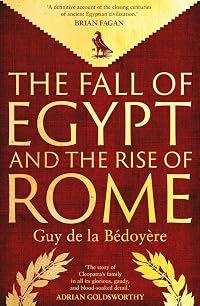
The Fall of Egypt and the Rise of Rome: A History of the Ptolemies
by Guy De la Bédoyère
On This Page
Description
A compelling history of the Ptolemies, the decline of Egypt, and the rising power of the Roman Empire The Ptolemaic era, Egypt’s last and one of its longest dynasties, was in many ways a gilded age. Its early rulers restored and even expanded Egyptian power. Over a span of 300 years the period was witness to intellectual enlightenment, imaginative state-building, and some of the most memorable characters in ancient history, including Alexander the Great and Cleopatra VII. But these show more Macedonian Greek pharaohs embarked on ruinous warfare, faced rebellion, and descended into murderous family feuds. Increasingly reliant on the dizzying rise of Roman power, Ptolemaic Egypt was finally annexed by Augustus in 30 BCE. How did such an ancient civilization come to this? Exploring the lives of the Ptolemaic pharaohs, de la Bédoyère reveals the jealousy, greed, and murderous ambition in their Egypt and the legendary city of Alexandria, their capital. This is a lively, accessible account of Ancient Egypt’s last days—and of the new power rising in its place. show lessTags
Recommendations












Member Reviews
As Guy de la Bédoyère rightly points out, the "Ptolemies generally exist at the end of books of Egyptian history or as a preamble to a biography of Cleopatra VII." Being that there is 300 years of history within the Ptolemaic dynasty, it's quite an injustice. Setting the record straight, Bédoyère attempts to create an up-to-date timeline of the Ptolemies, beginning with Alexander the Great. While it is true that Alexander never formally ruled Egypt, he established a foothold and declared the site for the future city of Alexandria. After his sudden death, it was one of his general/bodyguards, Ptolemy I Soter, who would become the dynasty's founder.
All the Ptolemies, in some form or another, embraced Egyptian religion, myth and show more tradition. This is a kingdom that had lasted three millennia, and most native Egyptians couldn't even read hieroglyphs, but they recognized the importance of a facade of assimilation. The problem is, with a Greek pharaoh came a Greek ruling class. Rebellion became endemic in Egypt at this time. Those who spoke and read Greek were given greater privileges. In a world at war, Ptolemaic Egypt instead followed a course of Enlightenment and showmanship, exemplified in the Library and Pharos of Alexandria. The glory days of conquest like that of the 18th dynasty were long gone.
As much of a crash course this book is, it was easy to follow as far as the monarchy was concerned. I was never confused on who was related to whom, next in line, currently on the throne, etc. However, I am so glad I took notes as I read because the way it is structured is very cumbersome. For example, instead of incorporating famous monuments under the pharaohs who ordered their construction, they are described separately in Part 2. There's a lot of backtracking, which results in repetition and plenty of "see Chapter _" throughout. The evolving life of its rebellious citizens is also never fully explored, so I'm left wondering why the Greek nobility was so disliked. There's not a gradual "rise" of Rome either, appearing mainly in Part 3. In the end, Egypt's "fall" was not a fall at all, but adaptation to inevitable global change. show less
All the Ptolemies, in some form or another, embraced Egyptian religion, myth and show more tradition. This is a kingdom that had lasted three millennia, and most native Egyptians couldn't even read hieroglyphs, but they recognized the importance of a facade of assimilation. The problem is, with a Greek pharaoh came a Greek ruling class. Rebellion became endemic in Egypt at this time. Those who spoke and read Greek were given greater privileges. In a world at war, Ptolemaic Egypt instead followed a course of Enlightenment and showmanship, exemplified in the Library and Pharos of Alexandria. The glory days of conquest like that of the 18th dynasty were long gone.
As much of a crash course this book is, it was easy to follow as far as the monarchy was concerned. I was never confused on who was related to whom, next in line, currently on the throne, etc. However, I am so glad I took notes as I read because the way it is structured is very cumbersome. For example, instead of incorporating famous monuments under the pharaohs who ordered their construction, they are described separately in Part 2. There's a lot of backtracking, which results in repetition and plenty of "see Chapter _" throughout. The evolving life of its rebellious citizens is also never fully explored, so I'm left wondering why the Greek nobility was so disliked. There's not a gradual "rise" of Rome either, appearing mainly in Part 3. In the end, Egypt's "fall" was not a fall at all, but adaptation to inevitable global change. show less
As usual the author uses droll humor to discuss the modern myths about the Ptolemaic rulers (notably Cleopatra VII) while acknowledging that much of Egyptology is conjecture because of incomplete--come on, it happened a long time ago!--evidence. He emphasizes that, "in antiquity, especially Egypt, the symbolic always obscured the truth. What really happened was of secondary importance, or even irrelevant." It does make the reader consider the nature of, and societal/political uses for, "history." Recommended for all libraries.
Like many Egyptologists, the Ptolemies make me rather uncomfortable. It is a cliché to say that the Ptolemaic period (323-30 BC) has been thought of as too Egyptian for most classicists and too Greek for many Egyptologists. Much has been written about the period from both perspectives, but a good quality synthesis has proven elusive.
Many studies have, understandably, focused on the glamorous final star of the Ptolemaic stage, Queen Cleopatra VII (50-30 BC). But given the comparative dominance of Egypt, Greece and Rome in studies of the ancient world, it is surprising that the whole Ptolemaic period has not been subject to more popular interest. Like the proverbial bus, you wait ages for one and two show up at once.
Toby Wilkinson show more trained as an Egyptologist and is known for his popular treatments of a range of Pharaonic subjects. Here he turns his attention to the last dynasty, proving especially adept at connecting the Ptolemies with Egypt’s ancient traditions. While a more recent convert to Egyptological pursuits, Romanist Guy de la Bédoyère covers the same timespan with similar aplomb. He frames his narrative with the gradual appearance of Rome on the horizon.
Both make extensive use of official texts – often the same ones – but compare and contrast them with a wide range of contemporary documentary accounts (which have survived in profusion) and the words of (usually later and biased) classical authors. This synthesis of sources builds a dynamic picture of the period, something often missing for much of the rest of the ancient world and Egypt in particular.
Although most people know about the ignominious end of the Ptolemies, the ambition of the dynasty’s establishment is breathtaking. Ptolemy I (367-283 BC) emerges in both books as an extremely compelling character, even compared to his childhood friend and predecessor Alexander of Macedon. Having had the audacity to essentially kidnap Alexander’s body in Syria while still only satrap (‘governor’) of Egypt, Ptolemy was responsible for developing Alexandria into the magnificent hub it became, while also maintaining military sense and pursuing an impressive amount of learning. It is probably not too much of a spoiler to say that his successors were not nearly so adept at the business of government.
Read the rest of the review at https://www.historytoday.com/archive/review/last-dynasty-and-fall-egypt-and-rise...
Campbell Price is Curator of Egypt and Sudan at Manchester Museum and Chair of the Egypt Exploration Society. show less
Many studies have, understandably, focused on the glamorous final star of the Ptolemaic stage, Queen Cleopatra VII (50-30 BC). But given the comparative dominance of Egypt, Greece and Rome in studies of the ancient world, it is surprising that the whole Ptolemaic period has not been subject to more popular interest. Like the proverbial bus, you wait ages for one and two show up at once.
Toby Wilkinson show more trained as an Egyptologist and is known for his popular treatments of a range of Pharaonic subjects. Here he turns his attention to the last dynasty, proving especially adept at connecting the Ptolemies with Egypt’s ancient traditions. While a more recent convert to Egyptological pursuits, Romanist Guy de la Bédoyère covers the same timespan with similar aplomb. He frames his narrative with the gradual appearance of Rome on the horizon.
Both make extensive use of official texts – often the same ones – but compare and contrast them with a wide range of contemporary documentary accounts (which have survived in profusion) and the words of (usually later and biased) classical authors. This synthesis of sources builds a dynamic picture of the period, something often missing for much of the rest of the ancient world and Egypt in particular.
Although most people know about the ignominious end of the Ptolemies, the ambition of the dynasty’s establishment is breathtaking. Ptolemy I (367-283 BC) emerges in both books as an extremely compelling character, even compared to his childhood friend and predecessor Alexander of Macedon. Having had the audacity to essentially kidnap Alexander’s body in Syria while still only satrap (‘governor’) of Egypt, Ptolemy was responsible for developing Alexandria into the magnificent hub it became, while also maintaining military sense and pursuing an impressive amount of learning. It is probably not too much of a spoiler to say that his successors were not nearly so adept at the business of government.
Read the rest of the review at https://www.historytoday.com/archive/review/last-dynasty-and-fall-egypt-and-rise...
Campbell Price is Curator of Egypt and Sudan at Manchester Museum and Chair of the Egypt Exploration Society. show less
Ratings
Members
- Recently Added By
Lists

Library Non-Fiction
164 works; 1 member
Author Information

43+ Works 1,618 Members
Archaeologist and historian Guy de la Bedoyere specialises in Roman Britain
Common Knowledge
- Canonical title
- The Fall of Egypt and the Rise of Rome: A History of the Ptolemies
- Original title
- The Fall of Egypt and the Rise of Rome: A History of the Ptolemies
- Alternate titles
- The Fall of Egypt and the Rise of Rome
- Original publication date
- 2024
- People/Characters
- Cleopatra VII; Ptolemy I Soter
- Important places
- Alexandria, Egypt
- First words
- From 323-330 BC Egypt was ruled by the Macedonian Ptolemaic dynasty descended from Ptolemy I Soter (king from 305 BC), one of Alexander the Great's generals.
- Last words
- (Click to show. Warning: May contain spoilers.)Today, the old gods still watch over Egypt and the Nile from the temples embellished with their images, and this antique land is once more in charge of its own destiny.
- Blurbers
- Scott, Michael; Goldsworthy, Adrian; Fagan, Brian; Dodson, Aidan M.
- Original language
- English
Classifications
- Genres
- History, Nonfiction, Biography & Memoir, General Nonfiction
- DDC/MDS
- 932.021 — History & geography History of ancient world (to ca. 499) Egypt to 640 Hellenistic, Roman, Byzantine periods, 332 b.c-640 ad. Hellenistic period, 332-30 b.c.
- LCC
- DT92 .D42 — History of Europe, Asia, Africa and Oceania Africa History of Africa Egypt History
- BISAC
Statistics
- Members
- 68
- Popularity
- 460,037
- Reviews
- 3
- Rating
- (3.17)
- Languages
- English
- Media
- Paper, Ebook
- ISBNs
- 3