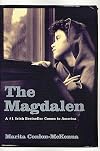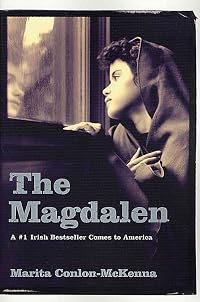
The Magdalen
by Marita Conlon-McKenna
On This Page
Description
The wide open spaces of Connemara, filled with nothing but sea and sky, are all lost to Esther Doyle when she is betrayed by her lover, Conor. Rejected by her family, she is sent to join the 'fallen women' of the Holy Saints Convent in Dublin where, behind high granite walls, she works in the infamous Magdalen laundry while she awaits the birth of her baby. At the mercy of nuns, and working mostly in silence alongside the other 'Maggies, ' Esther spends her days in the steamy, sweatshop show more atmosphere of the laundry. It is a grim existence, but Esther has little choice--the convent is her only refuge, and its orphanage will provide shelter for her newborn child. Yet despite the harsh reality of her life, Esther gains support from this isolated community of women. Learning through the experiences and the mistakes of the other 'Maggies, ' she begins to recognize her own strengths and determination to survive. She recognizes, too, that it will take every ounce of courage to realize her dream of a new life for her and her child beyond they grey walls of the Holy Saints Convent. show lessTags
Recommendations


























Member Reviews
This one really didn't live up to the hype. It's a pretty straightforward tale about a naive young girl from County Connemara who loves well but not wisely, and is introduced to harsh reality when she becomes pregnant and the child's father refuses to marry her, having better prospects at hand.
As was not unusual in Ireland in the 1950s, Esther's only practical choice is to enter a Catholic convent specializing in the housing of "wayward girls and fallen women" to await the birth of her child, which she must agree to place in the attached orphanage and make available for adoption. During her confinement, she works in the convent's commercial laundry and undergoes various hardships both physical and emotional.
At the end, she gives birth, show more realizes she loves her baby, has second thoughts about releasing it for adoption, is told she has no choice in the matter, and chooses to stay in Dublin afterwards rather than returning to the family which scorned her. She is sure she can survive and still holds the dream of someday being united with her lost child.
And while there's nothing really wrong with the book, there's nothing particularly significant about it, either. The characters are internally consistent; Esther's actions in the throes of first love are believable; the reader can tell from a mile away where the boyfriend's true intentions lie; the nuns are suitably unsympathetic to their charges; and the girls with whom Esther shares her confinement fall neatly into various categories.
Readers looking for an overview of the whole Magdalene Laundry system would probably be better off with nonfiction studies. Those looking for an engrossing fictional tale of one of its graduates will need to keep searching. show less
As was not unusual in Ireland in the 1950s, Esther's only practical choice is to enter a Catholic convent specializing in the housing of "wayward girls and fallen women" to await the birth of her child, which she must agree to place in the attached orphanage and make available for adoption. During her confinement, she works in the convent's commercial laundry and undergoes various hardships both physical and emotional.
At the end, she gives birth, show more realizes she loves her baby, has second thoughts about releasing it for adoption, is told she has no choice in the matter, and chooses to stay in Dublin afterwards rather than returning to the family which scorned her. She is sure she can survive and still holds the dream of someday being united with her lost child.
And while there's nothing really wrong with the book, there's nothing particularly significant about it, either. The characters are internally consistent; Esther's actions in the throes of first love are believable; the reader can tell from a mile away where the boyfriend's true intentions lie; the nuns are suitably unsympathetic to their charges; and the girls with whom Esther shares her confinement fall neatly into various categories.
Readers looking for an overview of the whole Magdalene Laundry system would probably be better off with nonfiction studies. Those looking for an engrossing fictional tale of one of its graduates will need to keep searching. show less
While plainly told, this book provides insight into the experience of thousands of unwed mothers and other "undesirable" women in the Ireland of the last century. Sent off to convents, the women more or less became slaves in huge laundries, and many spent entire lives there--becoming well aware of the underbelly of Irish life as they washed bed sheets and undergarments, including those of the well-to-do and the clergy. Conlon McKenna's book relates the story of young, naive Esther Doyle and her hardscrabble life in Connemara. After the death of her father, Esther is powerfully attracted to Con, the handsome and opportunistic young stranger who works a "spinster" neighbour's land. Esther's journey to Dublin to a Magdalen home and her show more experiences there with other women form the content of the book. Somewhat slow at the beginning, the book does gain momentum and some scenes are powerfully told. While not stellar, this is a solid story and a part of Irish social history that is certainly worth treatment. show less
This is the second book I've read by Marita Conlon-McKenna. She has a very engaging story-telling style, and as someone who prefers nonfiction, I'm impressed. Her story here is a hard one, of an unwed pregnant young woman in 1950's Ireland who has few options but to enter a home for unwed mothers. The Magdalen(e) homes are run by nuns who are often harsh and punitive. Some of the parts of the story were painful to read, but there were also enjoyable parts, with great character development and interesting dialogue.
Conlon-McKenna bases her story lines on history; she has done her research well.
I'll definitely look into reading more of her writing.
Conlon-McKenna bases her story lines on history; she has done her research well.
I'll definitely look into reading more of her writing.
This book tells the sad story of Ireland in the 1950's. The author does a good job of telling the story but the writing is somewhat simple.
Easy read. Not great writing and ending was abrupt and left the reader hanging.
Ratings
Members
- Recently Added By
Author Information

32+ Works 1,541 Members
Common Knowledge
- Original publication date
- 1999
- People/Characters
- Esther Doyle
- Important places
- Connemara, County Galway, Ireland
- Important events
- Magdalene laundries
- Dedication
- To my beautiful daughter Laura. You helped me every step of the way.
- First words
- Esther Doyle closed her eyes.
- Last words
- (Click to show. Warning: May contain spoilers.)She was a Connemara woman, a survivor, a Magdalen ready to put the past behind her and begin again.
- Publisher's editor
- Eddy, Claire
- Disambiguation notice
- "[The] same story was dramatized by Patricia Burke Brogan in a popular play, Eclipsed, first performed in Great Britain in 1992." Amazon.com, retrieved 6/2/2014. Please do not combine.
Classifications
Statistics
- Members
- 120
- Popularity
- 270,892
- Reviews
- 5
- Rating
- (3.55)
- Languages
- English
- Media
- Paper, Audiobook, Ebook
- ISBNs
- 11
- ASINs
- 2