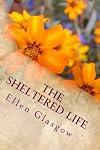
The Sheltered Life
by Ellen Glasgow
On This Page
Description
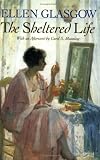
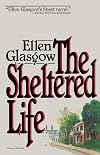
" "The Sheltered Life,"" writes Carol S. Manning in her Afterword to this new paperback edition, is "a jewel of American literature and deserves recognition as a masterpiece of the Southern Renaissance." It is a remarkably unsentimental look at the old South, a society that blindly holds to past values enforced by a strict code of conduct, being overtaken by the new age of industrialization. Ellen Glasgow's career-long attempt to expose the cruelty of the "cult of beauty worship" and the show more "philosophy of evasive idealism" that she saw as prevalent in the South's conversations, manners, customs, and literature reaches its zenith in "The Sheltered Life." show lessTags
Recommendations



















Member Reviews
Set in a fictionalised version of her own home town of Richmond in the years leading up to the First World War, Ellen Glasgow’s The Sheltered Life depicts a way of life on the brink of shattering change. With the class barriers breaking down in Queensborough, Virginia, and industrialisation thrusting itself into ugly prominence, Glasgow’s story focuses upon the representatives of “the old way”, the Archbalds and the Birdsongs, whose homes sit stubbornly in what used to be the exclusive quarter of their town, but which is now the slender margin between old and new. The two houses stand alone, overlooking the factory district, the homes of the poor and the coloured, and the local prison; the residents’ attempts to ignore the show more evolving world beyond their high fences thwarted by a foul odour that wafts into their preserves whenever the wind shifts.
Glasgow’s narrative is split between two observers, the elderly David Archbald and his granddaughter, Jenny Blair Archbald; and what the two of them are mostly set upon observing is their neighbour, Eva Birdsong. Some twenty years earlier, Eva was the reigning beauty not merely of Queensborough, but Virginia. With her world at her feet, she then stunned her admirers by eloping with a man who was, as we are told baldly at the outset, “quite unworthy of her”, the superficially charming but profoundly selfish George Birdsong. It is through Eva that Ellen Glasgow criticises the false values of Southern society, a world of hard surfaces and brittle interiors, as Eva makes a career out of being “beautiful”, “charming” and “gracious”, clinging obsessively to the vision of herself as George’s ideal even as he betrays her almost openly with a series of other women, even risking her life rather than disturb the image of herself she has spent a lifetime creating. Eva’s house is one built upon the sand, and sooner or later it must fall...
David Archbald, too, is a victim of this false code. Now an old man, he looks back at himself across the years: at a boy too aware of the world’s pain and cruelty, spurned by his family for a lack of proper “manliness”; at his war service, fighting for a cause in which he did not believe; at a life of unfulfilled dreams and happiness sacrificed to the demands of others:
No man needed protection less, but because he had lived a solitary male among women, he could never escape it, and because these women depended upon him, he had remained at their mercy. It was impossible to wound the feelings of women who owed him the bread they ate and the roof over their heads, and so long as he did not hurt their feelings, they would be stronger than he was.
But if Ellen Glasgow is profoundly critical of this dying world and its warped values, she is also apprehensive about the one that is taking its place, as represented by the facile Jenny Blair. The little girl who embraces life with an internal cry of, “I’m alive, alive, alive, and I’m Jenny Blair Archbald!” grows into a young woman no less self-centred; and if she is more “real” than the transcendent Eva Birdsong, she is also ominously lacking in the very qualities that, in their overabundance, have made her grandfather’s life one of voluntary if reluctant sacrifice: compassion and empathy. Always “meaning well”, Jenny Blair is nevertheless capable of a selfishness quite equal to George Birdsong’s own, with an internal monologue of self-exculpation to match:
“Anything is better than this,” she thought, as she walked down the block to the Birdsongs’ gate. “It isn’t,” she changed the bag and fan to her left hand, and opened the gate, “as if I were to blame. It isn’t,” she stooped to detach a muslin flounce from the thorn of a rose, “as if I had chosen to suffer like this...”
Though beautifully written, The Sheltered Life is quite a disturbing book, its initial ripples of sadness building to a breaking wave of what seems, in retrospect, inevitable tragedy. There is little relief here, apart perhaps from the clarity of General Archbald’s introspection; if we do not have comfort, in the end we at least have understanding. But the General himself is not free of guilt: although he has been a victim, he has also in a sense been a victimiser, one of those whose idealisation has helped to create the idea of Eva Birdsong, whose unspoken devotion has compelled the real and vital woman to retreat behind the beautiful mask:
So seldom had he, or any other man, he imagined, surprised her with the animation drained from her face, that he had thought of her spirit as effortless. Not until the last few months had he suspected that the sudden radiance of her smile was less natural than the upward flight of her eyebrows. But, as he looked at her now, a quiver ran through his heart, and he felt, with agitated senses, that he was seeing her stripped naked, that he was helplessly watching a violation. For they were looking at her through the ruin of her pride... show less
Glasgow’s narrative is split between two observers, the elderly David Archbald and his granddaughter, Jenny Blair Archbald; and what the two of them are mostly set upon observing is their neighbour, Eva Birdsong. Some twenty years earlier, Eva was the reigning beauty not merely of Queensborough, but Virginia. With her world at her feet, she then stunned her admirers by eloping with a man who was, as we are told baldly at the outset, “quite unworthy of her”, the superficially charming but profoundly selfish George Birdsong. It is through Eva that Ellen Glasgow criticises the false values of Southern society, a world of hard surfaces and brittle interiors, as Eva makes a career out of being “beautiful”, “charming” and “gracious”, clinging obsessively to the vision of herself as George’s ideal even as he betrays her almost openly with a series of other women, even risking her life rather than disturb the image of herself she has spent a lifetime creating. Eva’s house is one built upon the sand, and sooner or later it must fall...
David Archbald, too, is a victim of this false code. Now an old man, he looks back at himself across the years: at a boy too aware of the world’s pain and cruelty, spurned by his family for a lack of proper “manliness”; at his war service, fighting for a cause in which he did not believe; at a life of unfulfilled dreams and happiness sacrificed to the demands of others:
No man needed protection less, but because he had lived a solitary male among women, he could never escape it, and because these women depended upon him, he had remained at their mercy. It was impossible to wound the feelings of women who owed him the bread they ate and the roof over their heads, and so long as he did not hurt their feelings, they would be stronger than he was.
But if Ellen Glasgow is profoundly critical of this dying world and its warped values, she is also apprehensive about the one that is taking its place, as represented by the facile Jenny Blair. The little girl who embraces life with an internal cry of, “I’m alive, alive, alive, and I’m Jenny Blair Archbald!” grows into a young woman no less self-centred; and if she is more “real” than the transcendent Eva Birdsong, she is also ominously lacking in the very qualities that, in their overabundance, have made her grandfather’s life one of voluntary if reluctant sacrifice: compassion and empathy. Always “meaning well”, Jenny Blair is nevertheless capable of a selfishness quite equal to George Birdsong’s own, with an internal monologue of self-exculpation to match:
“Anything is better than this,” she thought, as she walked down the block to the Birdsongs’ gate. “It isn’t,” she changed the bag and fan to her left hand, and opened the gate, “as if I were to blame. It isn’t,” she stooped to detach a muslin flounce from the thorn of a rose, “as if I had chosen to suffer like this...”
Though beautifully written, The Sheltered Life is quite a disturbing book, its initial ripples of sadness building to a breaking wave of what seems, in retrospect, inevitable tragedy. There is little relief here, apart perhaps from the clarity of General Archbald’s introspection; if we do not have comfort, in the end we at least have understanding. But the General himself is not free of guilt: although he has been a victim, he has also in a sense been a victimiser, one of those whose idealisation has helped to create the idea of Eva Birdsong, whose unspoken devotion has compelled the real and vital woman to retreat behind the beautiful mask:
So seldom had he, or any other man, he imagined, surprised her with the animation drained from her face, that he had thought of her spirit as effortless. Not until the last few months had he suspected that the sudden radiance of her smile was less natural than the upward flight of her eyebrows. But, as he looked at her now, a quiver ran through his heart, and he felt, with agitated senses, that he was seeing her stripped naked, that he was helplessly watching a violation. For they were looking at her through the ruin of her pride... show less
Ratings
Members
- Recently Added By
Lists

Favourite Virago Modern Classics
183 works; 38 members

BOOKS READ IN 1980's and 1990's
52 works; 4 members
Best Books of 1926-1935
403 works; 10 members

Publisher's Weekly Bestsellers Part I - 1895-1939
399 works; 8 members

Canon de la narrativa universal del s. XX (cicutadry)
499 works; 3 members
Author Information

42+ Works 1,420 Members
Ellen Anderson Gholson Glasgow (April 22, 1873 -November 21, 1945) was an American novelist who portrayed the changing world of the contemporary south. Glasgow was born in Richmond, Virginia, of a mother who traced her ancestry to the Cavalier settlers of Tidewater Virginia and a father who descended from the Scotch-Irish of the Shenandoah Valley. show more She was a writer whose divided background helps explain her ability to combine romantic sensibility with tough-minded realism. For the Virginia Edition of her works, published by Scribner in 1938 and now out of print, she chose 12 of her 18 novels and divided them into two main groups. What she called "novels of character and comedies of manners" consist of five works: The Battle-Ground (1902); The Deliverance (1904); They Stooped to Folly (1929); Virginia (1913); and Barren Ground (1925). The remaining seven novels she grouped under the heading "social history in the form of fiction." Covering almost 100 years of life in the Old Dominion, they are perhaps better read in historical sequence rather than the order in which they were originally published: The Miller of Old Church (1911); The Romantic Comedians (1926); The Voice of the People (1900); The Romance of a Plain Man (1909); Life and Gabriella (1916); The Sheltered Life (1932); and Vein of Iron (1935). The new prefaces that she wrote for each volume of the Virginia Edition form a valuable record of her literary growth and a treatise on novel writing that compares favorably with the prefaces that Henry James wrote for the New York Edition of his works. With the addition of an introduction to the one novel she published subsequently, the Pulitzer Prize-winning In This Our Life (1941), these prefaces were brought together and published as A Certain Measure (1943). The Woman Within (1954), her own story of her inner life, parallels her fiction in its account of a courageous woman who refused to become a victim of the outmoded codes of chivalry and male domination that characterized the Old South of her heritage. She remains a transitional figure of considerable importance in the literary history of America. (Bowker Author Biography) show less
Awards and Honors
Series
Belongs to Publisher Series
Common Knowledge
- Canonical title
- The Sheltered Life
- Original publication date
- 1932
- People/Characters
- Eva Birdsong; Jenny Blair Archbald; David Archbald; George Birdsong
- Dedication
- FOR
Arthur Graham Glasgow,
WHOSE AFFECTION IS A SHELTER
WITHOUT WALLS - First words
- By the open French window of the dining-room Jenny Blair Archbald was reading Little Women for the assured reward of a penny a page.
Only occasionally in The Woman Within, an extraordinary and disturbing autobiographical document written for posthumous publication, does Ellen Glasgow (1873-1945) touch on her novels. (Introduction)
Nothing, except the weather report or a general maxim of conduct, is so unsafe to rely upon as a theory of fiction. (Preface) - Last words
- (Click to show. Warning: May contain spoilers.)"Oh, Grandfather, I didn't mean anything," she cried, as she sank down into blackness. "I didn't mean anything in the world!"
(Click to show. Warning: May contain spoilers.)Ellen Glasgow had every reason to feel, as she did, proud of her achievement. (Introduction)
(Click to show. Warning: May contain spoilers.)In my modest way, these rules have helped me, not only to pursue the one calling for which I was designed alike by character and inclination, but even to enjoy the prolonger study of a world that, as the sardonic insight of Henry Adams perceived, no "sensitive and timid natures could regard without a shudder." (Preface)
Classifications
Statistics
- Members
- 159
- Popularity
- 206,746
- Reviews
- 1
- Rating
- (3.46)
- Languages
- English, Spanish
- Media
- Paper, Ebook
- ISBNs
- 10
- ASINs
- 6